When Not To Use AI

The other day LinkedIn served me up a post from a photo retoucher who made the perfectly valid point that while AI can’t fix an inherently bad photo, it can be used to rescue one from disaster. I’m kicking myself for not saving the post, because while it made some interesting points, it also reminded me that context and purpose matter as much as the content of the image.

Let me explain that a bit (ok, a lot) more.

Macaroongate

Their example was a photo sent to them by a client. It was a food photo of a macaroon on a bright pink background. There was a spatula sticking out from under the macaroon which needed to be removed, the depth of field was wrong (more of the product needed to be in focus) and the background needed to be plain white.

The retoucher said they’d used AI extensively to correct the flaws and created a commercially usable image. All good then, except the casual reader might have been left with the impression that it’s ok to do this kind of twiddling on any photo, regardless of the content or the purpose of the mage. However, here is where I would advise caution.

Content and Context

When considering where, how and why a photo is to be published, context becomes a critical consideration.

Photos which are intended to represent reality mustn’t be altered. It doesn’t matter if it’s for a newspaper or just a tweet, if the context is to illustrate a PR event or news story, alteration of the image beyond what the camera saw at the moment of capture is wrong. In the case of newspapers (and their associated websites and social media channels), image manipulation beyond certain specified basics are considered a breach of the Editors’ Code of Practice.

Even in the Wild West Frontier of social media, brand credibility can be trashed if images are manipulated. Adding logos to clothing or signage, moving or removing irritating background items or changing colours (amongst many other dodgy options) should all be considered no-nos when the purpose of the photography is to illustrate an event.

All of which brings me to a recent failing of my own.

Kicking Myself (for the second time in this article)

In the group photo below taken for University of Bath, what irritates me the most is the fan lurking at the back of the stage. I’d already shifted it as much as I could before the event kicked off so it didn’t show up behind speakers at the lectern. However when I had only a few seconds to get the group shot at the end (I needed to be quick, or risk making Sir Christ Whitty miss his train), I failed to notice it was now visible again.
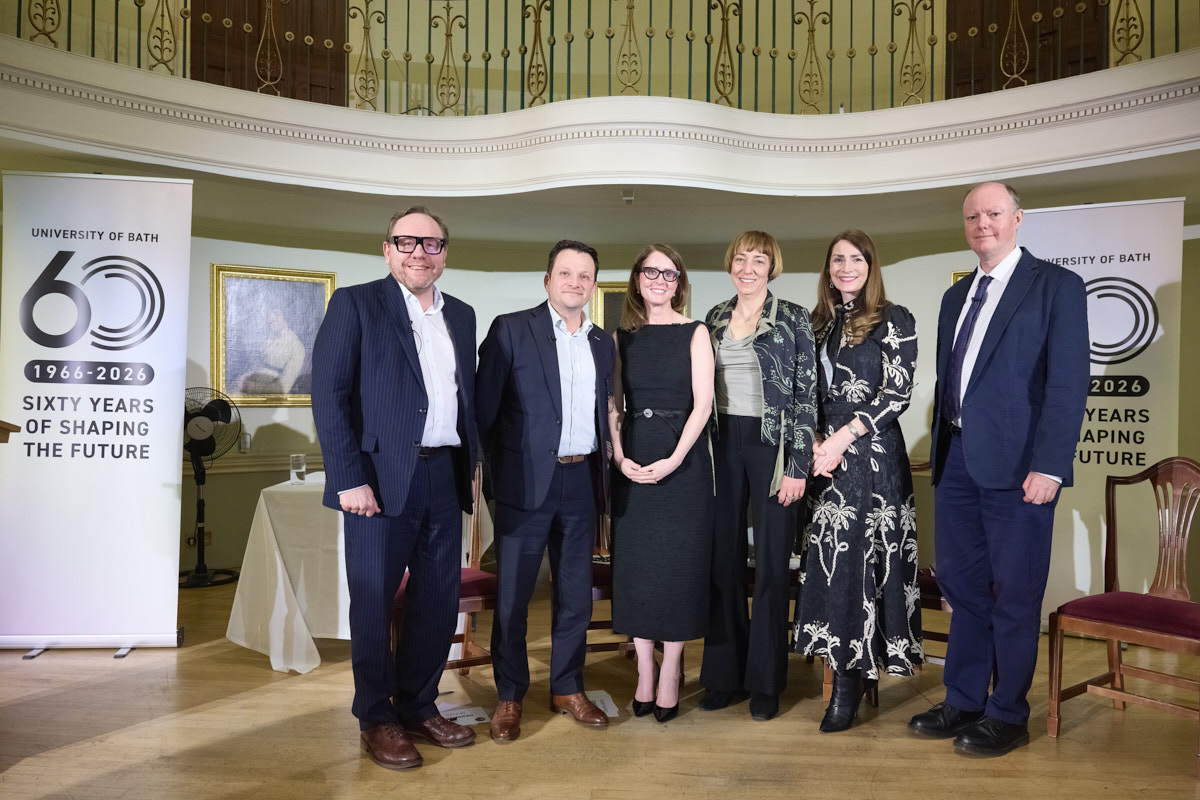
The simplest fix would have been to bring the pop-up banner (at left) forward. This would have hidden the fan and the table with the water glass, balanced the group and made the branding more prominent. One small action would have tidied the entire picture!

Thinking back I was rather preoccupied with organising six people into a tidy group under time pressure, simultaneously fretting about whether the poor stage lighting was going to give me a clean image, but it’s easy to make excuses after the event.

You might argue that since the photo was staged and therefore not ‘reality’, I could have used an AI service to move the banner and fix all the problems I’ve listed, but the thing is even a staged photo at a real event contains its own kind of reality.

What Is Reality Anyway?!

We could argue about the truth of any photograph, but while the viewer here would understand, without needing to be told, that this is a staged group photo, using software to tidy the scene after the fact would be deceptive.

Of course this isn’t a hard news photo, but it is a record of an event which took place and destined to be used to ‘report’ on that event. Therefore, manipulation would not have been a good idea.

Maybe I should start using sloppy background errors as a way of ensuring nobody thinks my work is manipulated, a sort of signature of authenticity if you like. No, I think I’ll just remind myself to always check the background first (one of my earliest lessons as a local news photographer).

When setting up a picture like this group, it would be acceptable to move elements and arrange people for the optimum photo before it’s taken; doing so in post-production harms our trust in what we see in media announcements.

What About Headshots?

It’s a little different when I’m doing corporate headshots or images for corporate websites and brochures where there is no pretence at representing a news story or event. The images on a business website are generally there to promote or sell a service. They effectively become advertising, where manipulation is fair(er) game.

For corporate portraits I have a policy of cleaning up temporary blemishes and removing stray hairs, but the circumstances, context and purpose of such photos is very different. I’m not trying to say, “This is exactly what Sheila Jones looked like on this particular day.” The client (or Sheila) wants to give a representation of themselves as a real person who’s friendly, professional and approachable. As long as the image isn’t altered beyond recognition, some retouching is perfectly acceptable.

On occasions where an image isn’t destined for publication (perhaps it’s just a keepsake for the participants) it’s also acceptable to apply heavier editing. The problem here can be that once an image is “out in the wild,” it’s also harder to control where it might end up.

Which Leaves Me Where?

Back to my own example, of course there are things I could have tidied up, but having made the picture I made I accept it for what it is; a quick group photo, a record of a moment, where no one but me (and now anyone reading this article) will even notice the shortcomings of the result.

I don’t have to be fine with that, but neither will I beat myself up over it. I can be comfortable with the knowledge that I haven’t used AI to hide my mistake.

Just to say, the evening itself was fascinating and I highly recommend watching Sir Chris Whitty’s lecture via this link.

The Rise (and Downsides) of LEDs

On a ‘lighter’ note from my previous post, this week I wanted to bring up one of the daily scourges of the working photographer; that of LED lighting.

Of course I’m a huge fan of energy-saving devices, and I appreciate the part LED lighting plays in this (though I do have some questions around that – perhaps best saved for another day), but they can cause issues for photographers.

What most people don’t realise is that LEDs are not constant lights in the way halogen lamps are/were. LEDs have a frequency, that is to say they pulse on and off. For the most part the human eye cannot detect this, but cameras, because of the way they work, can.

Each frame is 1/800th of a second, but slowed down here so you can see the changes more easily.

The Invisible Flicker

If you look at the video above, it shows a sequence of images taken at high speed over the course of a few seconds. This is not a light being dimmed up and down, it’s the LED effect. The camera settings haven’t changed from one frame to the next, but you can see how the light dims on a cycle. You wouldn’t see this when you look at the light, but the camera’s sensor is recording the variable output of this light source.

What you’ll also notice is that the ‘bulb’ isn’t changing all at once. That’s because these LED bulbs consist of clusters of LEDs, each with their own frequency. If they’re not in sync with each other you get this wave effect of light brightening and dimming.

The issue this can cause to photographers is seen as banding in images (see image below) where horizontal strips of the image are darker than the rest of the picture. It looks horrible and can’t be corrected in post-production, at least not easily. The effect in the example here is exacerbated by my use of the electronic shutter function of the camera.*


Note how the banding affects the background wall, the seats and bench in front of the students. It’s less visible in the subjects, even so I rejected it.

LEDs Everywhere

LEDs are now ubiquitous in our everyday lives. They’re in all our workplaces, shops, homes, cars; basically, they light our lives. Better quality LED lamps will cause fewer problems than cheaper ones. However, even expensive LEDs can cause issues, especially if they’re dim-able.

When an LED light is dimmed, it isn’t actually dimmed, so much as its frequency is extended. In other words, the moments when the LED is off are extended. We’re talking microsecond differences here, which is why the human eye doesn’t see more flicker, just a dimmer light.

As of writing this article, I believe there is still only one photo-centric (not video-centric) camera with a sensor design which eliminates this issue completely, and that costs almost £6,000.00 just for the body. Other slightly cheaper cameras use faster processors to try to mitigate the effect, but it’s still an issue to be aware of.

My cameras don’t show banding when I’m using the default Mechanical Shutter mode. In some situations it would be preferable to have the camera operating completely silently (by using the Electronic Shutter setting), but if banding is ruining the photo then there’s no choice but to allow the shutter to click. It’s not exactly loud, but can be noticeable in certain situations.

LEDs Triggering Issues

The flicker of LEDs can have other detrimental effects too. If I’m setting up portable studio lighting for a photo session, I’ll often use a handheld flash meter to set the output (brightness) of my flash units. To do this, I press a button on my flash meter which is then waiting for my flash to fire so it can measure the intensity of the flash. But the flicker of an LED light is often enough to fool the meter into thinking it’s detected the flash, when all it’s detected is the pulse of an LED light.

This can make it incredibly difficult to get an accurate flash meter reading. I can try shielding the flash meter from the LED light source, or I can plug the flash meter into the flash unit and not use the non-cabled setting (apologies if this is getting technical!) Unfortunately, not all modern flash units have a flash cable socket, so this often rules that option out. It’s also not always possible or desirable to switch off all the LED lights in a space to prevent the interference.

There have been occasions where I’ve just had to set the flash output by taking a series of test shots until I’ve got the correct exposure. It’s not ideal, but it gets job done eventually.

Irritation and Mitigation

I say the human eye can’t detect the flicker of LEDs, but that isn’t always true. I used to work in an office which had LED strip lights, and they irritated my vision and fatigued my eyes. Some people are more sensitive than others and you can even buy special glasses to counteract LED lighting.

The trickiest thing about LEDs is you can’t easily predict when they’ll be a problem. I’ll take test shots or look through the electronic viewfinder of my camera, but neither of these is a 100% reliable predictor of when banding will wreck a photo. A different angle, moving from one location to another or someone making changes to the lighting can all have an impact.

Many audio visual engineers have moved to LED stage lighting and this can be brilliant or a disaster depending on their system.

So next time you’re at an event and the photographer’s camera is clicking away, even if you know they have a silent function on their camera, perhaps now you’ll understand why they might not be using it.

Sorry about the length of this article, but I do hope it’s shed some light (see what I did there?) on a mostly invisible issue.

*Electronic shutter setting means the camera is completely silent, however the imaging chip is more prone to recording banding because it exposes the sensor by scanning in lines from top to bottom. The example photo I’ve used was shot at 1/200th of a second which shows just how fast the frequency of the LED cycles is.

Culture Crush

Since the dawn of mass-market photography, camera manufacturers have held out the promise that if you just buy their latest and greatest camera gear, you will be able to take the same pictures as a professional.

This narrative got ramped up with the birth of digital, which allowed you to see, review and (if necessary) retake a photo without having to wait for your film to be developed.

Camera adverts now routinely proclaim the ability to take your photography to “the next level” or capture incredible detail with greater ease than ever before; it turns out that the previous camera they launched with exactly the same claim was a pile of junk – get rid of it and buy this new one instead! 18 months later, they’ll have superseded the camera you never quite got to grips with, with something they claim takes your photography to the next level. And so it goes on.

Perhaps what is most disappointing is when camera manufacturers try to claim that if only you owned their latest model, you could do the work of a professional. It sends out the message that it’s the gear, not the human behind it, that creates work with purpose or impact. Which is odd, because I have cameras which I only use once every few months, yet all the time they sit on the shelf, they never produce a damn thing. I’ve checked and it hasn’t happened yet.

This sales tactic feeds a nascent belief that professional photographers are not really needed, which in turn makes us look over-priced. Clients then decide that perhaps they’ll have a go themselves (usually with risible results), or they try to hammer their budgets down to almost nothing, because why pay someone if it’s the camera that’s doing all the work?

Until now, these manufacturers have been relatively subtle in this messaging, but hats off to Apple and Adobe for taking this narrative to an entirely new level. In their adverts and promotional posts, they’re basically telling us that creative professionals are an obstacle to creativity.

Apple’s “crush the creative” ad for the iPad was eye-popping on multiple levels, but it’s earned a well-deserved backlash from the creative community. What Apple wants us (you) to believe is that all creative arts and creativity and humanity can be crushed into a 5.1mm thick slab of aluminium. Just think what YOU could do with this – no pesky creative individuals with their annoying invoices necessary.

Adobe, meanwhile, is exhorting people to “skip the photoshoot” as they (Adobe) push their generative AI image making tool to a wider market. So the photographers (designers, illustrators too) who have doggedly supported Adobe for the past 25 years or more are now thrown under the bus of so-called progress.

Perhaps what is even more galling here is that Adobe’s image-generation tool has been trained on the work of photographers who have paid to use Adobe’s products. This isn’t payback for a service we’ve used for free all these years, this is a kick in the nuts.

Ai is obviously not going away, but corporations need to be careful which direction they push it in. There’s a genuine risk that creatives will simply start creating less. The bottom line of the bottom line is that if creatives can find no reward for their work, they’ll stop creating the work. That’s when culture starts to whither at everyones’ expense, though mostly at the expense of those not rich enough to insulate themselves from this onslaught.

It’s easy (actually it’s lazy) to say “that’s progress, get with it or be left behind” except it isn’t progress. It is simply large corporations not having a clue how real creativity works, what it needs to thrive and above all, why real, tangible, physical, sometimes messy culture is so important to the wellbeing of individuals and society and yes, the economy.

By all means embrace the crushing and sidelining of creative endeavour, but don’t complain when life ends up feeling a bit shitter as a result.

Looking Back, Looking Forward

Yes, it’s that time of year when we all take a look in the rearview mirror to see what we’re leaving behind, simultaneously stepping on the gas, and accelerating into the year ahead. Or maybe we’re just trying to get away from zombies!

Assuming we’re not being chased out of town by the undead, I am of course building up (in a rather clumsy way) to my annual look at what has been and what is to come.

Except I’m not going to do that this time around, or at least not in quite as much depth as I normally would. I’m just going to say that 2023 had its highs and lows, and I have plans for 2024 which will evolve as I go.

At this point, I could sign off, wish you a merry Christmas and a happy New Year, and be done, but that wouldn’t be particularly satisfactory, would it? Maybe it would, but tough; you’re here now.

No, for this post I’m going to use broad brush strokes which I hope will also stimulate some thoughts within you, my current or potential clients.

Looking Back – 2023

While my stills work held up remarkably well, video demand seemed to drop off sharply. Instinct tells me clients are struggling to decide whether video is worth the investment. My advice is, talk to me! I’ll be happy to discuss your ideas and will be honest about your best options.

All too often I have clients come to me with only the vaguest idea that they want ‘some video of a thing’. But rather than allow me to guide them further, they either kill the project or go to someone who will happily turn their half-baked plans into a massive invoice. Don’t fall into that trap.

Even the stills work was a bit up and down this year. I’ve done pretty well, but I can tell businesses are struggling to see through the fog of wars, climate crisis, cost of living, and so on. Some are taking positive steps to keep their marketing on track, while others see marketing as a cost (bizarrely).

If you can’t stretch to video, keep using stills to keep your brand fresh and alive. They’re far more cost-effective than video and more adaptable, but they also need a clear direction (purpose and brief). Again, talk to me if you want to develop the germ of an idea.

Overall, 2023 has been ok. Its school report would read, “Could do better”.

A highlight of 2023 was a trip by rail and bike to Côte Sauvage, Brittany.

Looking Forward – 2024

So let’s gaze into the crystal ball.

I predict it’s going to be more of the same because the uncertainties that have troubled businesses since (to put it frankly) the Brexit vote of 2016 are not going to be resolved in the next few weeks or even months. Domestically we’re going to have a general election, so there will be plenty of people waiting to see how that shakes out. Which is frustrating because it could be yet another year of bumpiness. And who’s to say something else won’t come along in the meantime to create more market jitters?

My advice is, if you want to do something, do it. If you don’t, someone else will and they’ll steal all the credit (and potentially your clients).

Moving on from the pure business aspects of the year ahead, I’ve decided to have another look at something rather more ephemeral; the ethics of my business.

That isn’t to say that for the past 25 years as a freelance photographer, I’ve operated unethically but I feel we’re at a juncture where it’s not a bad idea to have a fresh think about how we all work and how we treat each other.

Towards the end of this year, I finally managed to update my Terms and Conditions (something I’d planned to do last Christmas!) and in 2024 I plan to add an Ethical Statement that will cover a wide range of aspects, from use of AI in images, to how I approach my personal project work.

This isn’t going to be easy as I don’t want to just put up a bunch of warm, fuzzy words and say job done. This will, in effect, put into text the moral rules by which I already work, but will also tie in some new issues which have emerged more recently.

There’s no harm in any business or organisation, however ethical they already say they are, spending a little time having a deep think about whether their ethical practices are up-to-date and whether they genuinely implement them. Perhaps every business should have an Ethical Statement against which their actions can be measured.

So look, I’m not going to make great proclamations about how I see the year ahead. It’s all too up in the air for that, but I have set out a couple of road signs.

At the risk of labouring my metaphors, I’m going to pull up at the side of the road to stretch my legs, before getting back in the car, stepping on the non-greenhouse-gas-emitting accelerator peddle and zooming off into the bright new dawn of 2024.

Thank you to every one of my clients, suppliers, friends, and colleagues who’ve made 2023 bearable. Let’s do the same, but more and better, in 2024.

Happy Christmas!

Tim

Who’s Afraid of False Reports?

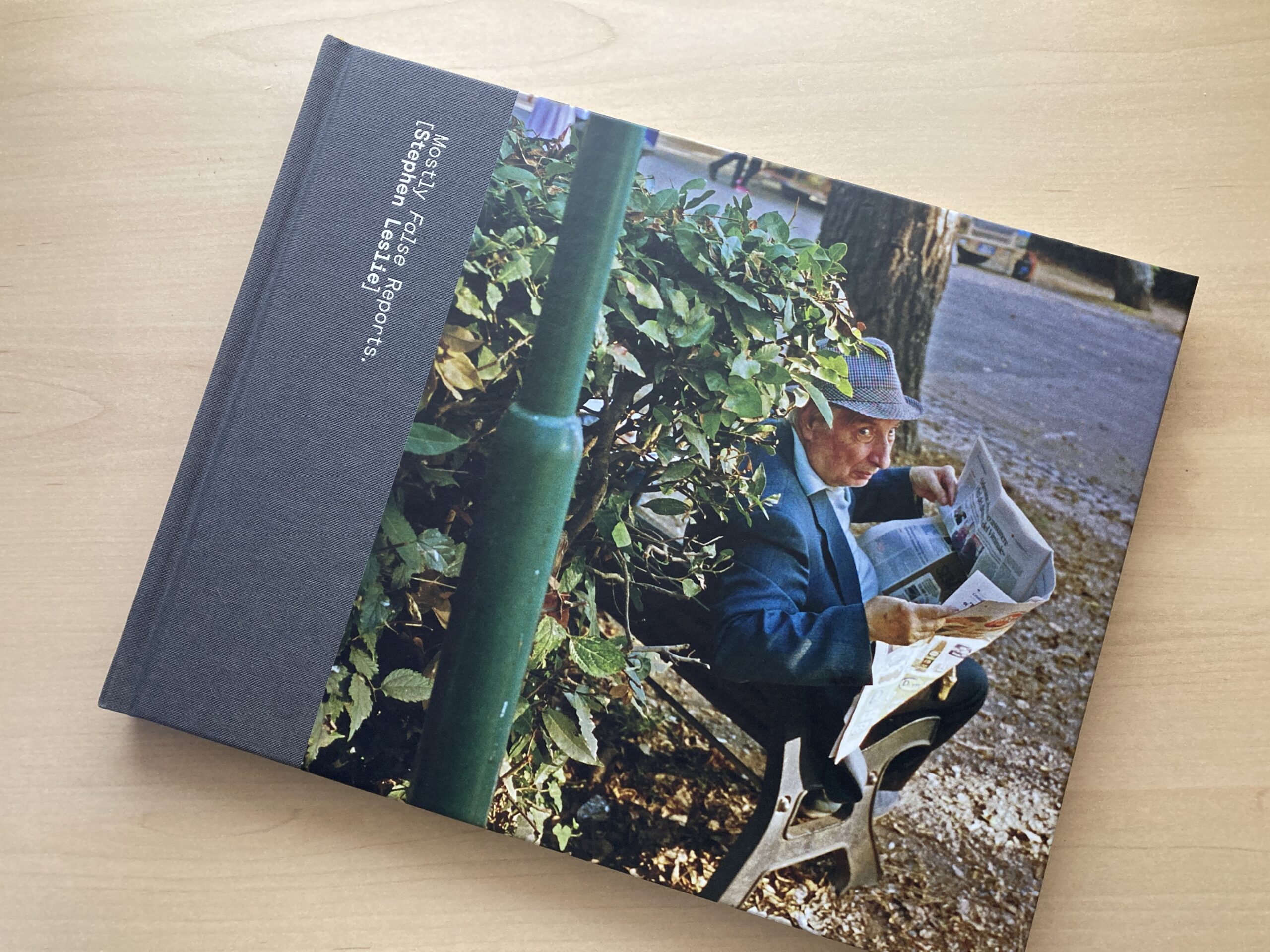
What will you be doing this weekend? Don’t tell me, I don’t care because I’m going to be buried in Stephen Leslie’s book, just released, called Mostly False Reports.

If you don’t know Leslie’s work, I’m not talking about Virginia Woolf’s father (also a Stephen Leslie) who died, oh I dunno, quite a long time ago. No, this is London-based film director, screenwriter, and street photographer Stephen Leslie. He’s still very much alive.

I’m not a huge fan of street photography, so I’m very picky about who within that genre I follow or take note of. Leslie is one of them. Dougie Wallace and Matt Stuart also spring to mind (I realise there are no female photographers in there so if someone can point me their way I’d love to see that perspective too).

For the life of me, I can’t remember exactly how Leslie’s work showed up on my radar, probably through Instagram, but however it was, my interest in his work was cemented through his YouTube channel where he posts excellent if occasional videos focusing on photographic themes or specific photographers. His knowledge of photography, its practitioners, and history is impressive, but he rarely speaks of his own work.

What Leslie does with his images, exemplified in his latest book, is to compose made-up narratives around the photos he’s taken. The images already benefit from Leslie’s often witty, observational style, but the additional twist of his text, usually in the style of a very short story, delivers yet another layer. Not all the narratives are entirely false, so the reader is left to consider what is true and what is false.

Others will be better equipped to critique this book with more skill than I possess, but without wishing to appear arse-licky I think it’s brilliant. The photography is quirky and entertaining, even thought-provoking (as only the best street photography is). It has a high-quality feel, the design is simple and elegant and the effort and attention to detail are clear.

So you do your thing this weekend, I’m going to be curled up with this book until I’ve been through it cover-to-cover (and possibly back again).

If you’d like your own copy, you’ll have to hope it goes on general sale at some point because so far it’s only been available through the Kickstarter campaign which brought it to fruition. There’s no point asking to buy my copy, it’s not for sale! EDIT: Contact Stephen directly to order your copy. Scroll to the bottom of the page on this link for his contact form.

Have a great weekend

End of an Era?

“Perhaps I’m joining dots which aren’t there, but with the passing of Elliott Erwitt, I’ve found myself pondering the state of the photographic industry and whether it’s truly entering a new era.

We talk about eras as if there’s some sudden cut-off point between a time when everything is one way and then suddenly it’s all changed. That new era then chugs along solidly until there’s another great upheaval.

Era Today, Gone Tomorrow

Of course, this is nonsense. It doesn’t matter how sudden a change is, there is always a transition period. And that speed of transition will happen more quickly for some, while others will barely notice it happening in their lifetimes. It also comes down to the nature of the era under scrutiny; in the transition from the Bronze Age to the Iron Age, the use of bronze didn’t vanish. Likewise, though obviously on a smaller scale, the same goes for the transition of film photography to digital, or black and white to colour.

Back to why Erwitt’s passing got me thinking about this then. Well, it wasn’t just that. Nor was it the passing of Larry Fink, but it’s fair to say we’re well into an era when great photographers of the 21st Century succumb to the inevitability of chronology, and that in itself is enough to signal a shifting paradigm.

That AI Thing

The passing of ‘the old guard’ comes as AI-generated images have started to make an impact on the world of photography. That’s why this feels to me like a moment of deeper change.

Recently, World Press Photo tried to allow AI image generation in one of its categories. How anyone in their right mind thought AI should have any place whatsoever in a World press photography prize is beyond comprehension. They have now withdrawn the permission to use AI or Generative Fill, but that was after some stiff criticism from photographers.

My concerns around the widespread use of AI in image creation are currently threefold:

1 The data training required for machine learning is a mass copyright infringement almost impossible for creators to track and prosecute. They’ll certainly be last in line to benefit from it financially.

2 Trust in genuine imagery will collapse, leaving us even more exposed to false narratives by toxic groups and regimes.

3 The public will become increasingly ‘anti-photographer’ if they become fearful that, whether with the photographer’s permission or not, the images can be scraped and used to generate images of a damaging or downright nasty nature. We’re already seeing a massive rise in AI-generated child abuse imagery and unless it’s addressed head-on, it’ll only get worse. In return, photographers will find it increasingly difficult or even impossible to document news or simply everyday life if they can’t include people.

A Visual Desert

One way or another, left un-addressed, each of those three concerns will eventually lead to a collapse in our visual culture. All that will be left will be kittens, sunsets and pretty landscapes, and none of those will be real either. The visual white noise of the internet will finally blot out anything of worth.

We can’t live in the past, yet all too many photographers, myself included, yearn for some kind of good old days. A time when photographers, like Elliott Erwitt, Diane Arbus and many besides, could document even the simplest human activities without feeling as though we were committing some kind of crime. A time when pictures mattered more and had greater value, both culturally and in hard currency terms.

Here is my meagre hope; that while AI won’t go away, it will at least settle down into its own genre, an art form in its own right and a play thing for people with too much time on their hands. I hope also that, like the resurgence of vinyl and analogue photography, non-AI-tainted photography might see an increased appreciation. It might even lead to improved values for professional photographers’ work. Miracles may happen.

AI to Restrain AI

Manufacturers are starting to integrate Content Credentials technology into cameras so images can be verified as having been altered (or not), meaning media outlets (and thereby the public) will know that what they’re seeing is authentic. With luck this will make it far easier to separate true from false, but it’s just the start. We need to reach a point where AI imagery can exist without it casting doubt on the veracity of news images.

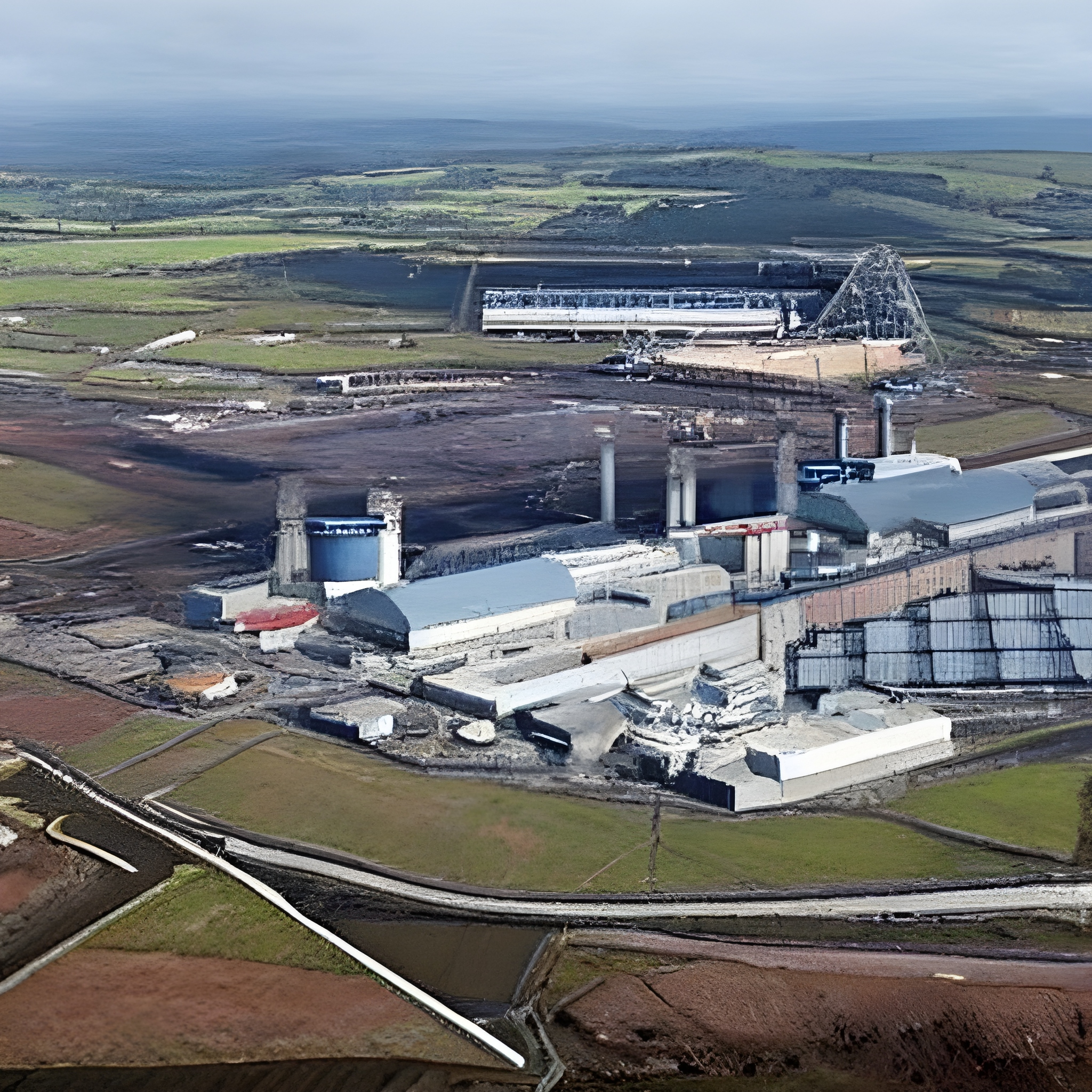
The Image above was generated through deepai.org using this headline from The Guardian, “Sellafield nuclear site has leak that could pose risk to public”. It would be tempting (but on the whole, wrong) for media outlets to use AI-generated images to illustrate their stories. To be clear, The Guardian did not use this image to illustrate its story.

The Next 40+ Years

Whatever era we’re leaving behind, whatever we’re moving into, change will be both fast and slow depending on your perspective. Whatever happens, we’ll look back on this decade, at the photographers who have passed (and who will yet do so) and we’ll be tempted to draw an arbitrary line and say this was the end of an era.

The truth is, the current era started almost 20 years ago, and it will easily take another 20 years to stop starting by which time it’ll be about ready to start stopping. By which time I’ll be 107 years old (or more likely dead). Either way, it’s highly likely I’ll have stopped caring.


See The Portfolio, Understand The Process

With the exception of David Bailey, every photographer has to keep their portfolio fresh and updated regularly. While for some that still means a printed volume, for most photographers it’s their website, which is what I’ve been working on lately.

The question photographers have to ask themselves as they work through this process is, “What makes a picture worth adding to my portfolio?” The question you might ask yourself is, “Why should I care?”

Well if a client understands the thinking behind what makes a good portfolio, they can also understand what a portfolio says about the photographer behind it.

There’s plenty to think about, but it’ll start with context (ie. what kind of photographer they are and what kind of work they want to attract), but setting that aside for now, the best way for me to illustrate the subject is by setting down my thoughts. Through this process, I hope you’ll gain some useful insights too.

1. Why Update My Portfolio?

This one’s simple – a regularly updated online portfolio keeps Google (and other search engines) happy. Each time a search engine indexes a website it’s looking for fresh content. Fresh content boosts the value of the site and elevates it in search rankings. I get a fair bit of work this way, so I need to keep my portfolio updated.

2. What to update it with?

Every few months I go through my Portfolio pages to see what’s especially old, or what might no longer be relevant to the types of work I’m doing or want to do.

Showing certain kinds of work will attract enquiries from certain kinds of clients, which is why my site is fairly heavily skewed towards showing corporate portraits – that’s both the work I do and the work I want.

Age isn’t everything – I’ll keep older pictures in if they’re strong and still serve a purpose, but on the whole, I’m looking at recent jobs to see what might be suitable to add to or replace existing work.

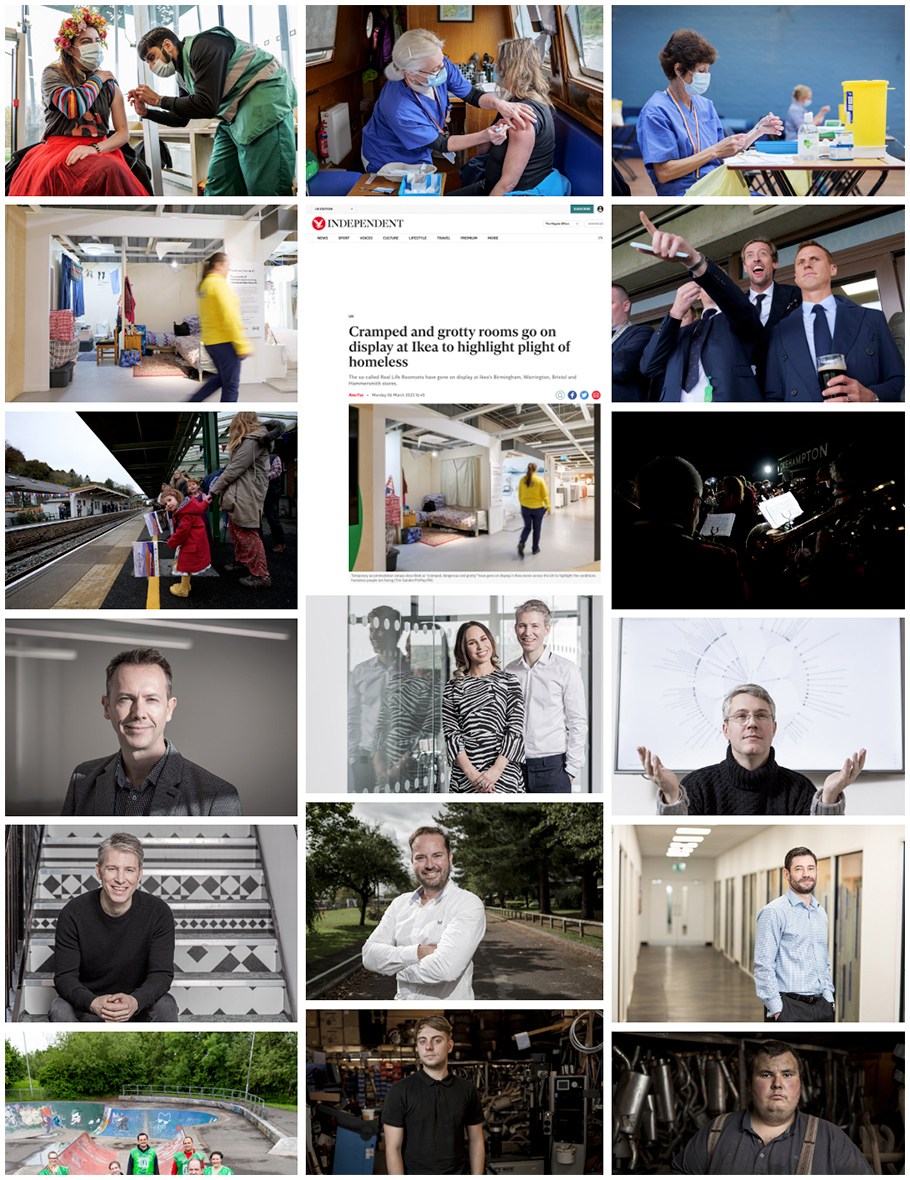
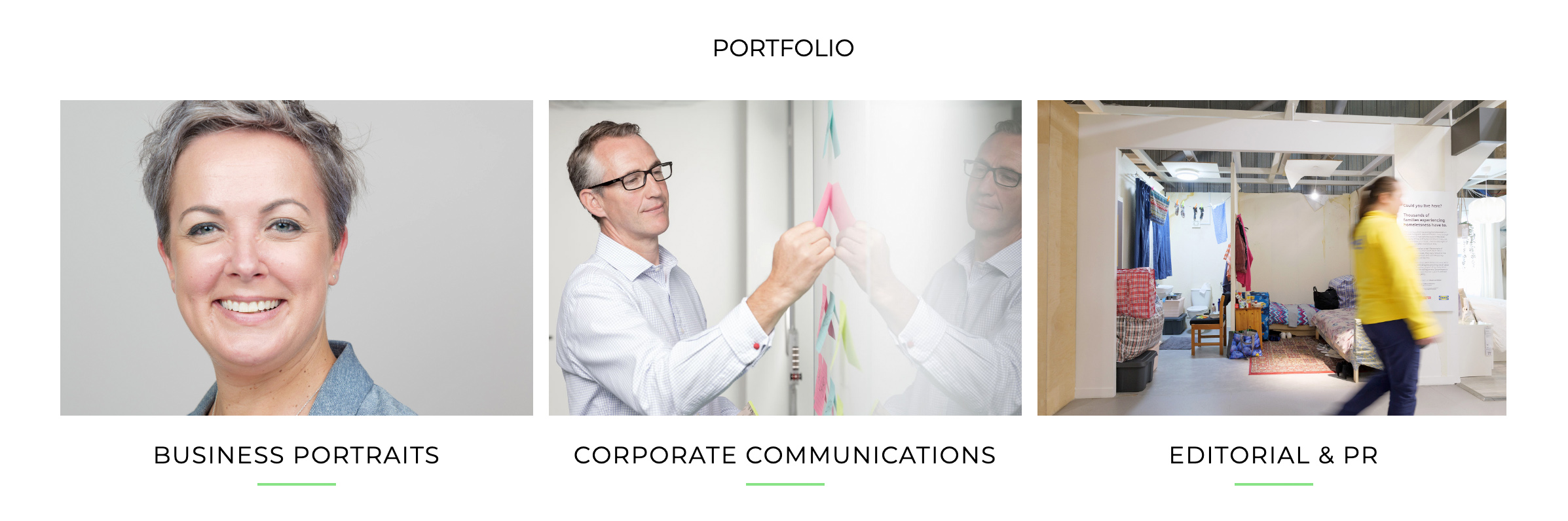
When I’m trawling through my recent archive I’ll be searching for images that fall into one of the three portfolio categories: Business Portraits, Corporate Communications, Editorial & PR.

3. What Makes A Portfolio Picture?

That’s where it gets trickier, and while I don’t think I nail this one every time, I see photographers who haven’t mastered the challenge at all. They include their favourite pictures, but this is the wrong place to start.

The challenge is to disassociate yourself from the making of the picture. A portfolio picture isn’t good just because you like it. It isn’t good because it was hard to make, or because you made a silk purse from a sow’s ear.

A portfolio picture has to be good in its own right. While Google won’t even care if a picture is interesting, in focus or correctly exposed, a potential client has to be convinced by the quality of what they see. What they won’t see is the effort or the circumstances surrounding the making of that image, so its entire strength will come from its quality and content.

4. What Is The Context?

I mentioned the context in my introduction, and there I was referring to the type or field of photography being promoted. A wedding photographer will have different considerations than an industrial, architectural or food photographer.

Similarly, I need to apply different considerations when choosing images for any of my three categories. Let’s briefly go through those:

Business Portraits

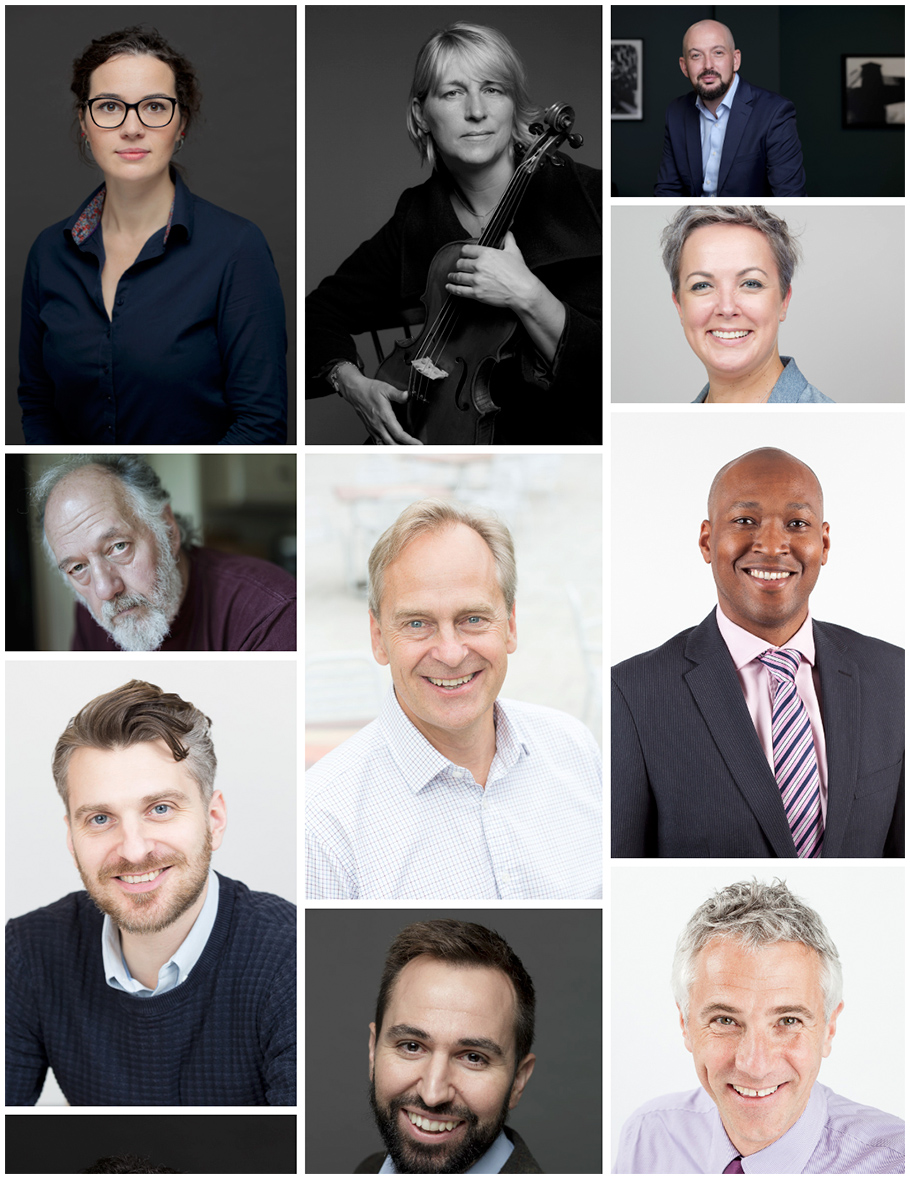
Here I want to show the quality and style of my portraiture, but I’m also looking for some variety. Beyond the basic headshot against white, I also want to show I can create different styles, moods and even orientations (upright or landscape). I also include a few images to suggest that a portrait can mean more than a simple headshot and can include some context, which stylistically starts to overlap with Corporate Communications.

Corporate Communications

This is broader than just headshots, so it’s an opportunity to show greater creativity. These images might include props or location elements; they might be staged or fly-on-the-wall action images. People presenting, interacting with others or with their environment are fairly typical examples of the Corporate Communications image.

I should add that the term Corporate Communications refers to everything I do for my clients, but I sub-categorise these images to differentiate them from pure Business Portraits or Editorial & PR images.

Editorial & PR

This gallery is unusual in that I’ll often include screen grabs of the images ‘out in the wild’ in news media sites, allowing clients to make the connection between my work and the possible exposure it will bring them.

The nature of the category means I might be showing work which has more of a story to tell, but the image should still be as self-explanatory as possible (though my captions will also help explain the context and reason for the image).

For this category, I’m looking for images of a news or feature style. They were shot for a newspaper, press release or corporate news web page and therefore have a different look to those shot for general Corporate Communications.

Site-Wide Refresh

While the focus of this article has been on the portfolios, I also regularly update my homepage image as this is the first impression potential clients get. It also makes the site more attractive to search engines as they favour new content over old.

As if all that wasn’t enough, this time around I’ve also updated some of the featured pictures for the top-level Portfolio menu, again keeping the site a bit fresh for returning visitors and search engines alike.

Summing Up

In essence, if you’re a client casting around for a photographer for your next project, it’s worth having a bit of insight into what you’re being presented and why.

If a portfolio doesn’t even present examples of the genre you need, move on to the next site. For example, photographers who showcase family portraits are probably not going to grasp the particular challenges and requirements of corporate or business portraiture.

It’s important to match genre as well as style and quality to your requirements to avoid costly mistakes, and I hope this article goes some way towards avoiding that scenario.

Now you’ve read this, why not take a look back at my website? I’d love to hear if it’s changed your perception of what you see.

Carry On Lurking

Social media is a funny old place. I can post images to my Instagram account, Facebook, Threads, X… (to be honest, the list is starting to become overwhelming) and see very little activity. Likes elude me.

For the most part I ascribe this tumbleweed reaction to a couple of issues. Firstly, many people are a bit tired and bored of social media. It’s been around a while and the novelty has long worn off.

The next aspect I would describe as Like Fatigue. I’ve experienced Like Fatigue myself, and it’s when you scroll through a feed, see something you like, but don’t feel compelled to ‘Like’ it with a press of the thumbs-up, heart or whatever. It just seems like too much effort!

People are busier than ever. We all have lives to live, jobs to hold down and commitments beyond the digital sphere. Even if we have time for social media, it’s more limited than ever before. This not only follows on to my next point, but also circles back to what I alluded to in my opening line – there’s just too much choice!

Due to lack of time, not only can I not always hit every channel with every picture I take, but audiences drift between SM platforms and might not see what I’ve posted (boohoo me, I know).

Then there’s the dead hand of the algorithm. I’ve lost count of the people I’ve lost track of because the algorithm no longer serves up their posts in my feed. Sometimes I’ll suddenly remember someone whose work I used to like and I have to go and search them out to see if they’ve posted anything I’ve missed. I’m sure I have followers who’ve had a similar experience of losing track of me due to algorithm constipation.

But there is one group who have always existed; the Lurkers. Right from the very start of my Social Media dealings I’ve known there were people who saw my posts, enjoyed them, but never Liked or commented on them. I would be oblivious that they’d seen them at all. Then one day I’ll be on a corporate job, or shooting some PR event, and someone will come to me to tell me in person how much they enjoy my personal project work. Indeed I’ve even had bookings as a result of what someone has seen!

I also suspect some clients book me because my Social Media postings of my personal work have helped to keep me in their minds when it came to booking a photographer.

Bear in mind, the work I post on social media has little in common with my client work, but it clearly has the effect of engaging clients and reminding them that I exist. I’m also convinced it shows people a different side to my work, and they enjoy that.

This last point is a small, subtle, but significant one to me. Shooting personal work can often feel isolating and even pointless. It can also feel self-indulgent to go off and spend time on what might be called non-business work, but because it acts as a soft marketing tool, it’s a mistake to assume it has little value.

While it’s lovely to see a post get Likes and attention from followers, it’s too easy to dismiss my lurkers. So I want to thank them and let them know I appreciate them. I understand there may be many reasons they don’t tap the heart icon, or give my work the thumbs-up, but that’s ok.

My lurkers probably outnumber my active followers, but in my (non-scientific) reckoning they’re also more likely to be clients, or they’re more likely to recommend me to new clients. So I’m absolutely not going to complain about their apparent passivity.

Lurkers, I thank you and you are welcome to lurk all you like. I know you’re there and that’s all that really matters. So as Kenneth Williams never said, “Carry On Lurking!”

Can Freelancers Strike?

With all the strikes we’ve experienced lately (and on-going), have you ever considered whether freelancers can go on strike?

Well, as a freelance photographer I can tell you I have. I don’t mean I’m on strike right now; I mean I have withdrawn my labour on occasions.

How does that work?

Obviously freelancers are less unionised than those in the public or essential sectors, so we don’t down tools (cameras) en masse, or march down Whitehall waving placards made of cardboard. That said, there are ways a freelancer can withdraw their labour if they’re not being treated or paid fairly.

The most obvious is to simply not take on badly-paid work. Any fool can fill their diary three times over with that. Making a profit is the tricky part, and working below cost never equates to making a living. Particularly true in photography and videography where the tools we use are so eye-wateringly expensive. This means making a living also has to balance with keeping kit up-to-date, in shape and insured.

If I’m approached with an assignment for which the client hasn’t properly budgeted, I’ll try to work with them to either improve the budget, or trim the brief to fit. If neither is possible, I let them know I can’t help further.

Occasionally clients will impose fees they’ve set, but that doesn’t always make them unreasonable. It depends on the work, the level of use the images will get (the licence) and the logistics of the kind of work they’re proposing. If a fee is low, but everything else fits, I’ll often take on the work. There are many factors besides the fee which can make or break a job. However if there are too many warning signs, I’ll gently let the client know I’m not the photographer for them.

Is that striking?

Perhaps not in the strict legal sense of a strike, but many professional photographers liaise through online forums of various kinds and these offer some of the same support and solidarity you can get through a union. These forums also support photographers in decisions not to take on a particular kind of work, or to reject low fees.

That last point has been particularly important in an industry where isolation is the norm. It can be very disheartening to have to reject potential work, especially if jobs have been scarce, but knowing that the client will struggle to book someone cheaper can help the individual to realise their decision was the right one.

Do clients notice?

Sometimes, but not always. Clients will experience similar inconveniences to ‘victims’ of strike action. Whether they notice is another matter.

I know national newspaper picture desks are finding it harder to commission freelancers. The problem is, the fees have been so low for the past two decades that fewer photographers can afford to work for them. The result for the desks is they’re spending more time phoning round trying to find photographers. When they do find one, they might not be getting the quality they need. You have to ask how much money they save by having a highly-paid picture editor tied up with making endless phone calls.

Newspapers are different, right?

Nope. The same goes for corporates too. If a business needs photography for a website, brochure, PR, social media and so on, they need a decent budget to get decent results. But if budget expectations are mis-aligned with reality, they’ll waste time and end up with poor results. The real skill is in spending good money wisely and getting results which punch above their cost.

I’ve already touched on the inefficiency of trying to book someone on an unrealistic budget. Can corporates afford to waste that time? Why strive for brilliance and efficiency within a business, then waste time trying to save money on mediocre results?

Photographers and other creatives (the good ones at least) quickly detect when a client isn’t serious about the work they’re commissioning and will find ways to avoid un-profitable projects.

Again, is it really striking?

Perhaps it’s more accurate to say that freelancers worth their salt will boycott clients who aren’t worth the effort. Freelancers are running businesses just like, well, businesses and they need to see profit from their time and skills. It’s the clients who respect freelancers as fellow businesses who get the best out of the partnership.

What can businesses do?

So if you’re finding it increasingly difficult to engage photographers (or any creative) to undertake the work you need to commission, maybe take a step back and ask if you’re being boycotted.

Consider engaging with a freelance photographer, writer, graphic designer (whoever you use) and see if there are points of friction you can ease. Maybe improving payment times, or simplifying the briefing process will be enough and cost you nothing. Both these actions will also save you time!

Also, if you know the work you’re commissioning is helping to drive up enquiries, sales and profits, consider rewarding that! More than once I’ve had clients ask me to increase my fees because the work I was doing was helping them to succeed.

I know, crazy talk! But consider this; if you offer your regular freelancer a rise on their rates without them having to impose it, they’ll feel exponentially valued and will reflect this in the service they deliver.

So be pro-active, don’t wait until your freelancer goes strangely quiet.


AI AI, What’s All This Then?

Unless you’re living under a rock, you’ll be aware of a great deal of chatter about AI (Artificial Intelligence) and its increasing influence on all our lives. I suspect some of that chatter is AI-generated, but how would we know?

Of course in this article I’ll be contemplating AI’s impact on the future of photography. I think it’s going to be interesting.

The AI Roadmap

I say interesting because you can see that AI is at the foothills of its potential (good or bad). Give it a few years and you’ll see it progress beyond what we can imagine right now.

Also bear in mind that different areas of photography will be affected in different ways and at a different pace.

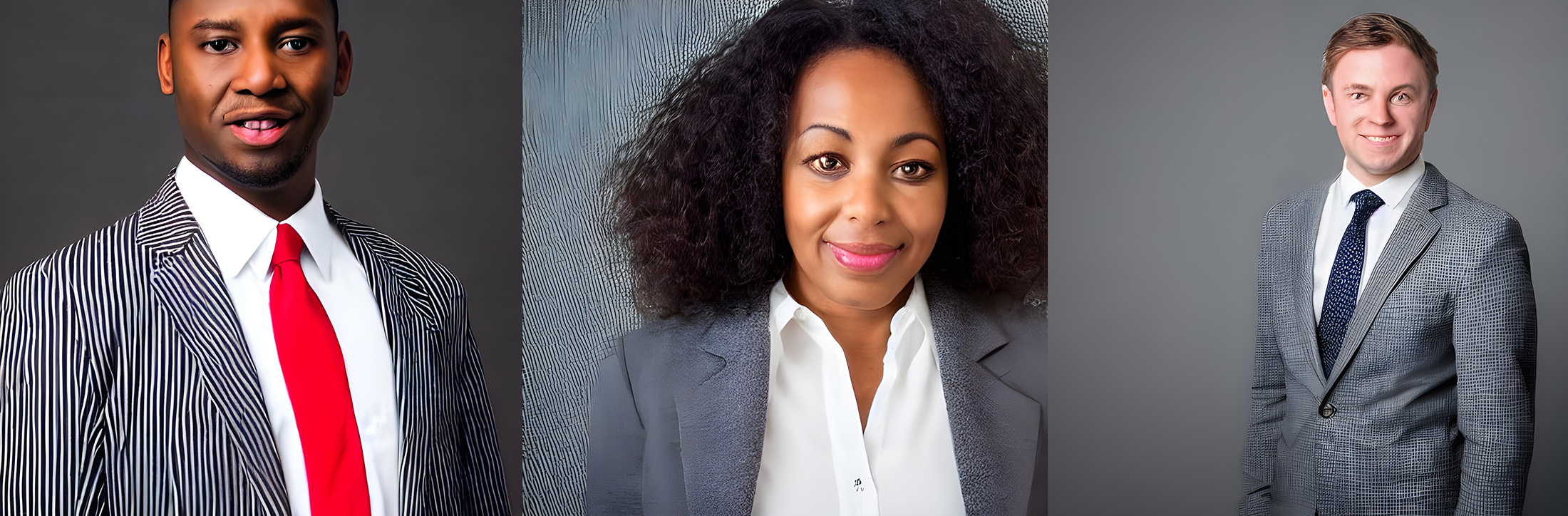
Right now, AI images of people are creepy, weird and downright unnerving (see examples below generated using DeepAI.org).

Inanimate objects are generally better, but are they convincing? I’d say this is where progress will advance most rapidly. For now, many product shots are rendered using computer graphics anyway, so AI will probably simply change how those renders are generated. Product photographers will still find themselves in demand for the more bespoke shoots.

Some areas could see no impact at all. Do you want AI-generated family photos? How about a wedding? What would be the point?

We’ve Been Here Before

Thinking about images for business, I see AI as having parallels with micro-payment stock photography of a decade or so ago; businesses embraced it as an easy way to fill the gaps between words on their websites, but many have reverted to commissioned work as it’s more convincing.

There is currently a cost barrier to AI. It’s more expensive and time-consuming to get usable visual AI content for marketing purposes than it is to commission original work. However, even if the cost and quality of AI become non-issues, there’s the question of the human factor.

Microstock flourished while it was novel and before businesses realised they needed to connect with clients and consumers on a human level. They discovered their audiences weren’t engaging with the over-polished models and unrealistic scenarios of the stock world. Where we are now is that stock images supplement pictures of ‘real’ people, but they can’t replace them. The same will stand for AI.

In fact commissioned work (in my personal experience) has grown over the past decade. It will continue to grow as businesses use more video, which stock (and AI) imagery won’t be able to compete with for a very long time (if ever).

What stock could never replace, AI won’t be able to either. If anything, AI will replace stock imagery and we’re starting to see that happen.

Stocks and ShAIrs (ouch)

Shutterstock, the bete noir of photography and the murderer of the viable stock image industry, have seen the future. And the future is bleak.

They now have their own AI image-generating portal, which I suspect not only undercuts their contributing photographers, but might also be using the existing library of 400 million+ images (supplied by those same contributors) to feed the neural engine which generates the AI images. It’ll be interesting to see how Shutterstock plans on ‘rewarding’ contributing photographers when their images are reduced to AI fodder. An AI-generated image will contain data from hundreds (maybe thousands) of images from the library, so who gets paid for that data. Will photographers know which pixel was theirs?

Am AI Safe From All This?

Notwithstanding my tortured AI-themed puns, I can see how AI might impact certain areas of my work, but since I mostly concentrate on photographing real people, and since this is what businesses need, it’s hard to see how AI can impact that.

And AI currently works best when used to generate static content. Video would require an unimaginably high level of computing power (read ‘cost’) which doesn’t yet exist. I say yet, but processors based on quantum physics are emerging in laboratories and could be in our devices soon enough.

Ultimately I don’t think it matters what AI does, because one thing it can never replicate is reality. It will have its uses, but for my typical client there is nothing that can beat the human touch. I am going to confidently say, there never will be.

One More Thought

This is perhaps the most troubling thought too. AI has already been used to generate ‘deepfake’ news images and video. We can’t stop this, but news outlets will need new tools and rules to spot and stop this. That is where the real danger of AI lies. The last two words of that sentence are the perfect note to end on.