When Not To Use AI

The other day LinkedIn served me up a post from a photo retoucher who made the perfectly valid point that while AI can’t fix an inherently bad photo, it can be used to rescue one from disaster. I’m kicking myself for not saving the post, because while it made some interesting points, it also reminded me that context and purpose matter as much as the content of the image.

Let me explain that a bit (ok, a lot) more.

Macaroongate

Their example was a photo sent to them by a client. It was a food photo of a macaroon on a bright pink background. There was a spatula sticking out from under the macaroon which needed to be removed, the depth of field was wrong (more of the product needed to be in focus) and the background needed to be plain white.

The retoucher said they’d used AI extensively to correct the flaws and created a commercially usable image. All good then, except the casual reader might have been left with the impression that it’s ok to do this kind of twiddling on any photo, regardless of the content or the purpose of the mage. However, here is where I would advise caution.

Content and Context

When considering where, how and why a photo is to be published, context becomes a critical consideration.

Photos which are intended to represent reality mustn’t be altered. It doesn’t matter if it’s for a newspaper or just a tweet, if the context is to illustrate a PR event or news story, alteration of the image beyond what the camera saw at the moment of capture is wrong. In the case of newspapers (and their associated websites and social media channels), image manipulation beyond certain specified basics are considered a breach of the Editors’ Code of Practice.

Even in the Wild West Frontier of social media, brand credibility can be trashed if images are manipulated. Adding logos to clothing or signage, moving or removing irritating background items or changing colours (amongst many other dodgy options) should all be considered no-nos when the purpose of the photography is to illustrate an event.

All of which brings me to a recent failing of my own.

Kicking Myself (for the second time in this article)

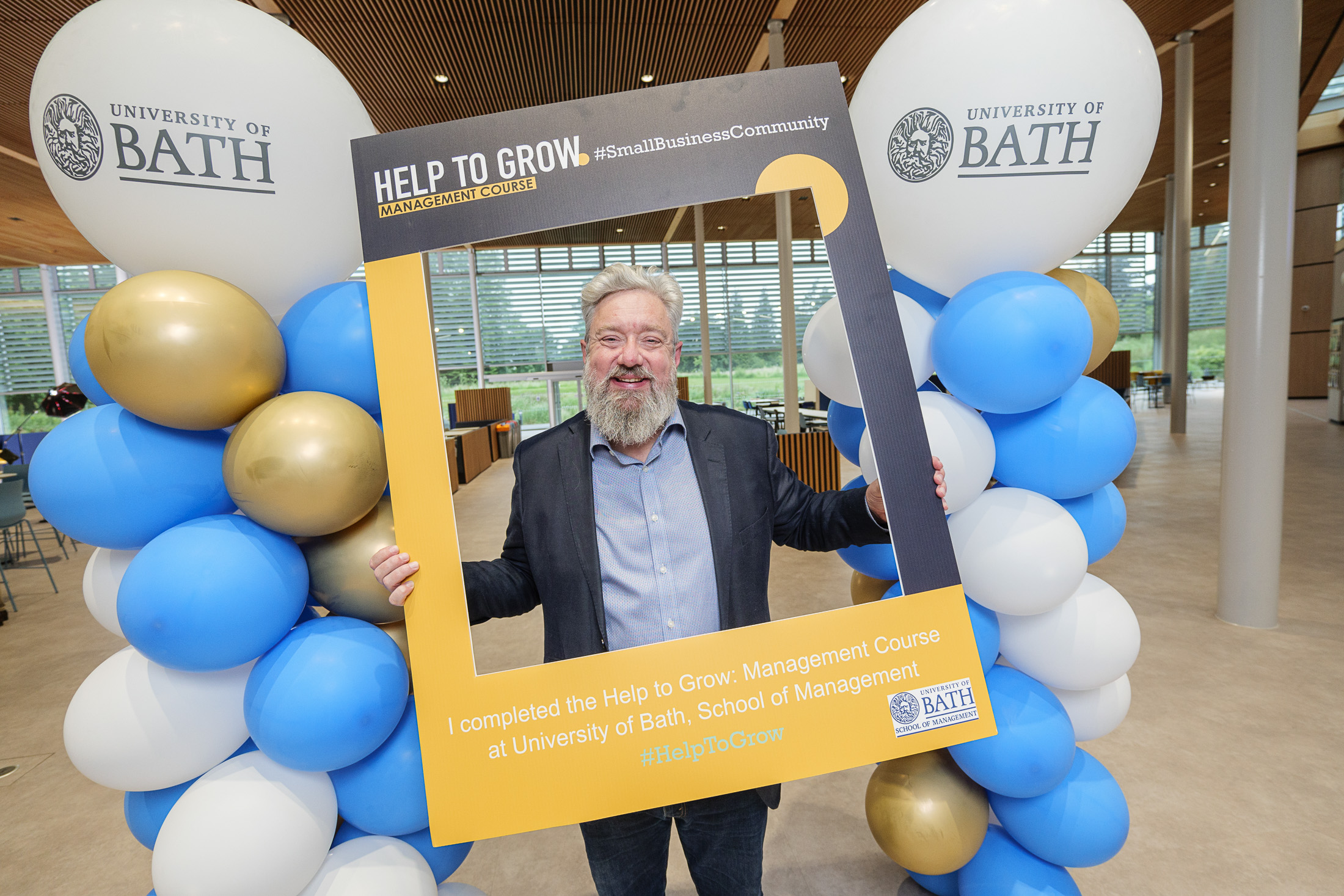
In the group photo below taken for University of Bath, what irritates me the most is the fan lurking at the back of the stage. I’d already shifted it as much as I could before the event kicked off so it didn’t show up behind speakers at the lectern. However when I had only a few seconds to get the group shot at the end (I needed to be quick, or risk making Sir Christ Whitty miss his train), I failed to notice it was now visible again.
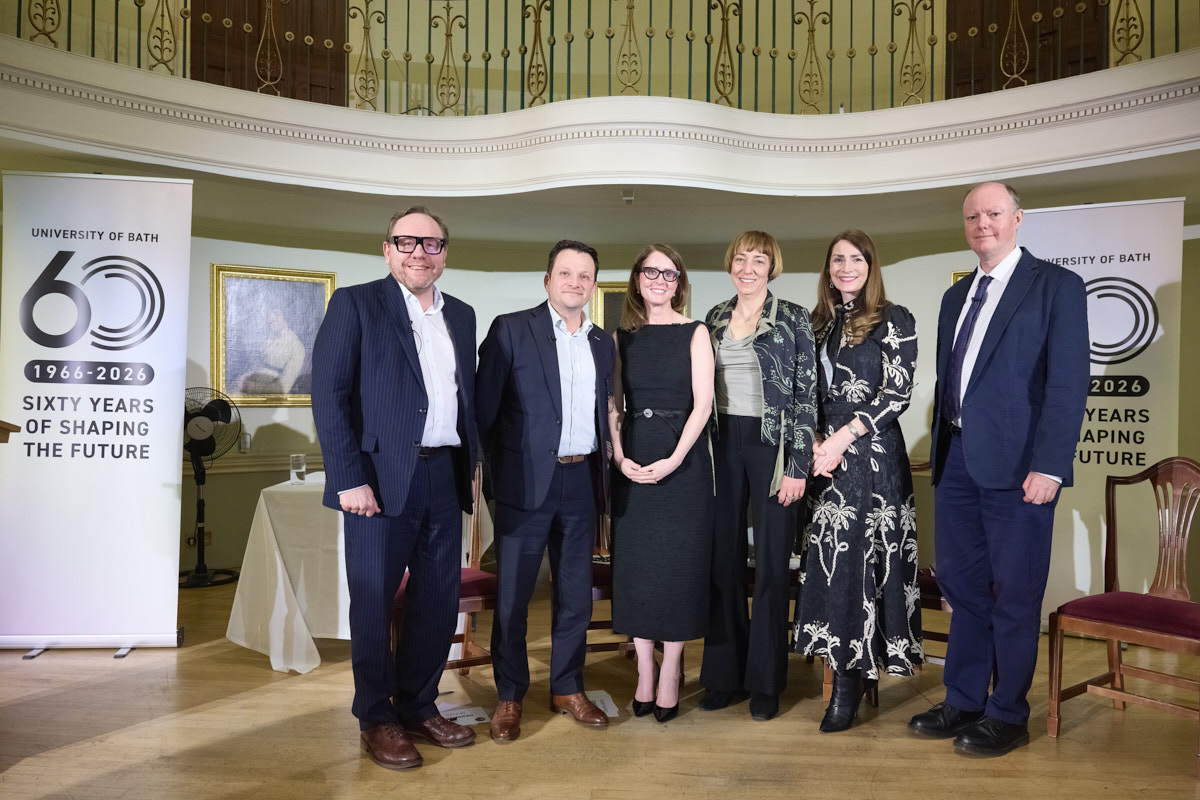
The simplest fix would have been to bring the pop-up banner (at left) forward. This would have hidden the fan and the table with the water glass, balanced the group and made the branding more prominent. One small action would have tidied the entire picture!

Thinking back I was rather preoccupied with organising six people into a tidy group under time pressure, simultaneously fretting about whether the poor stage lighting was going to give me a clean image, but it’s easy to make excuses after the event.

You might argue that since the photo was staged and therefore not ‘reality’, I could have used an AI service to move the banner and fix all the problems I’ve listed, but the thing is even a staged photo at a real event contains its own kind of reality.

What Is Reality Anyway?!

We could argue about the truth of any photograph, but while the viewer here would understand, without needing to be told, that this is a staged group photo, using software to tidy the scene after the fact would be deceptive.

Of course this isn’t a hard news photo, but it is a record of an event which took place and destined to be used to ‘report’ on that event. Therefore, manipulation would not have been a good idea.

Maybe I should start using sloppy background errors as a way of ensuring nobody thinks my work is manipulated, a sort of signature of authenticity if you like. No, I think I’ll just remind myself to always check the background first (one of my earliest lessons as a local news photographer).

When setting up a picture like this group, it would be acceptable to move elements and arrange people for the optimum photo before it’s taken; doing so in post-production harms our trust in what we see in media announcements.

What About Headshots?

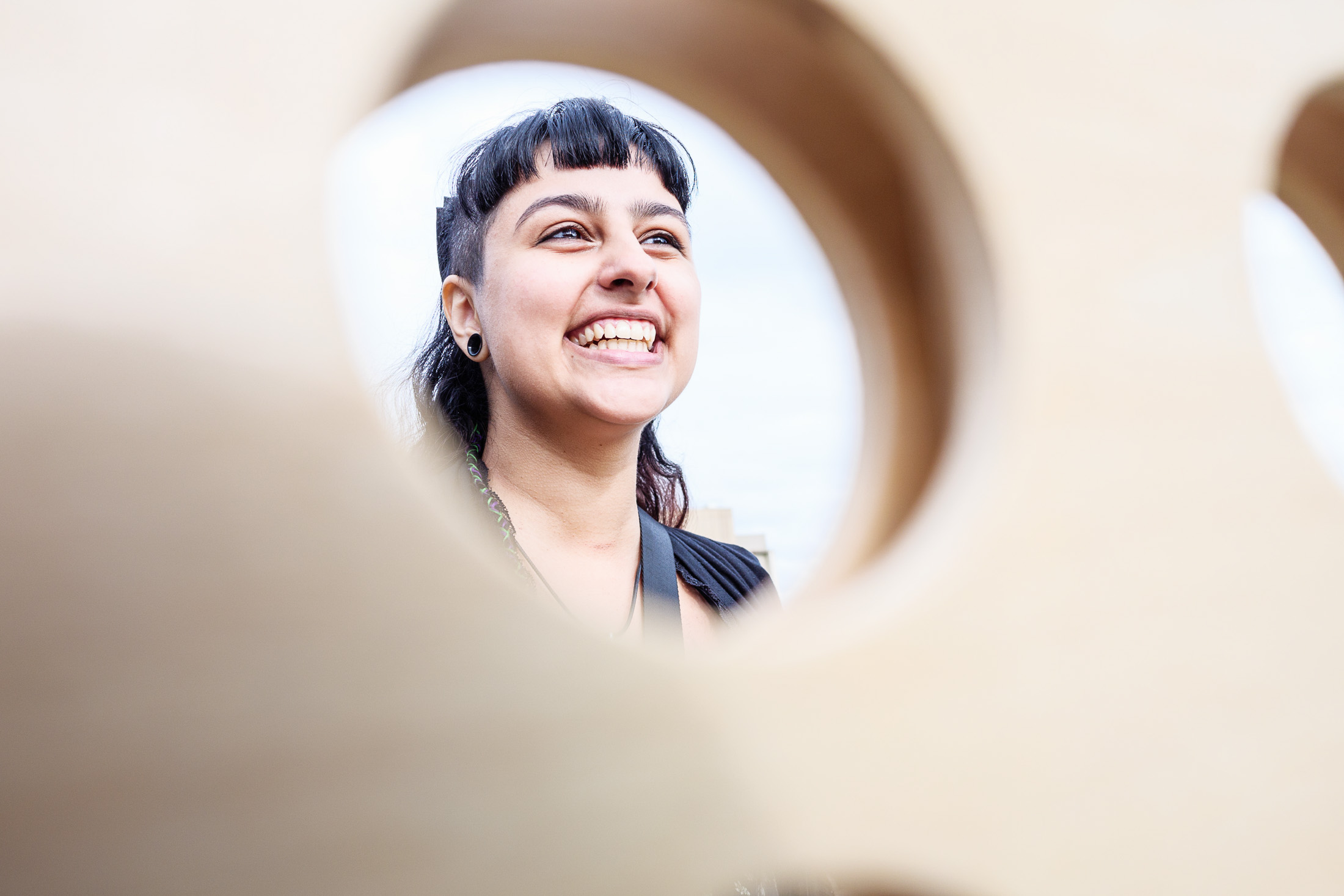
It’s a little different when I’m doing corporate headshots or images for corporate websites and brochures where there is no pretence at representing a news story or event. The images on a business website are generally there to promote or sell a service. They effectively become advertising, where manipulation is fair(er) game.

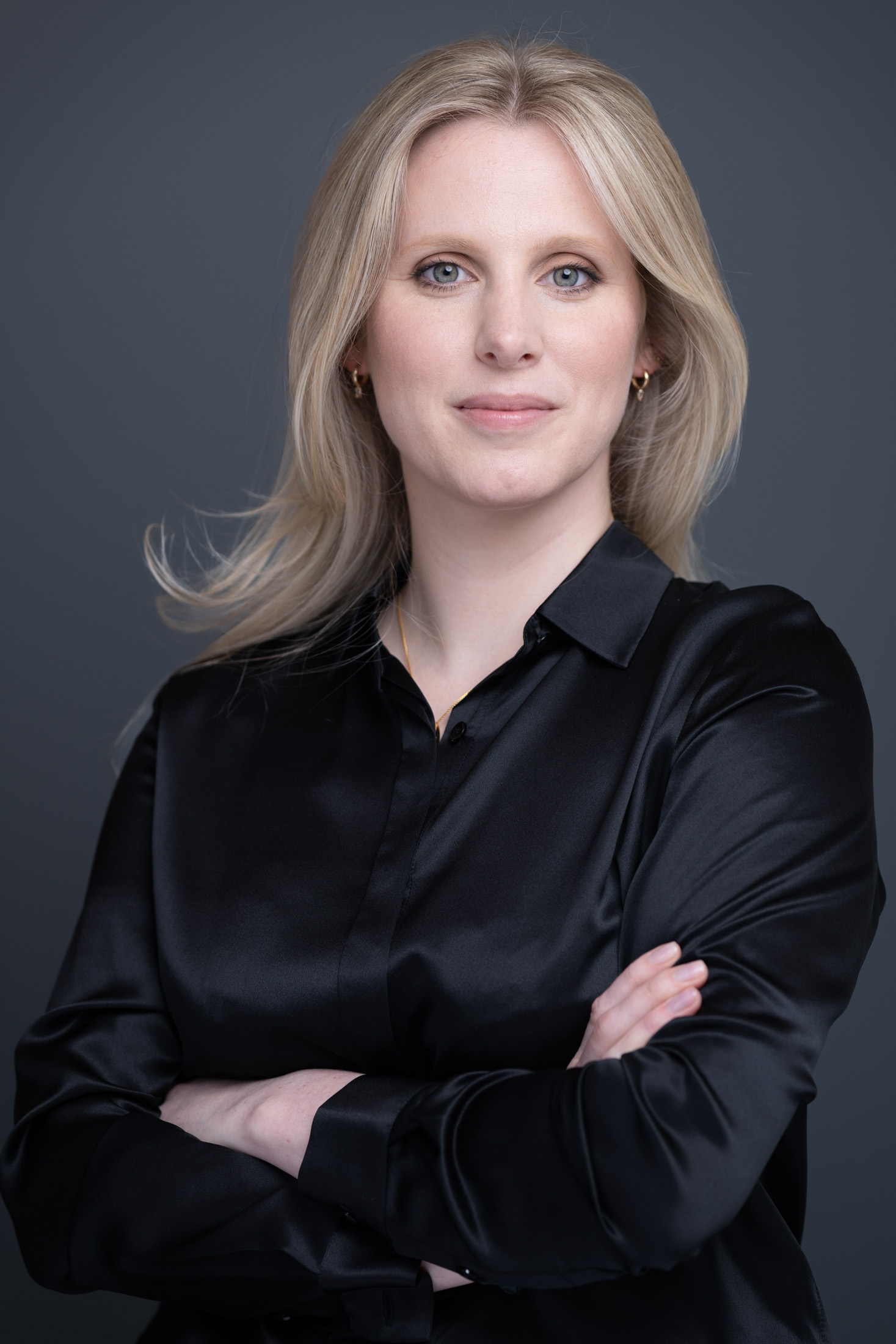
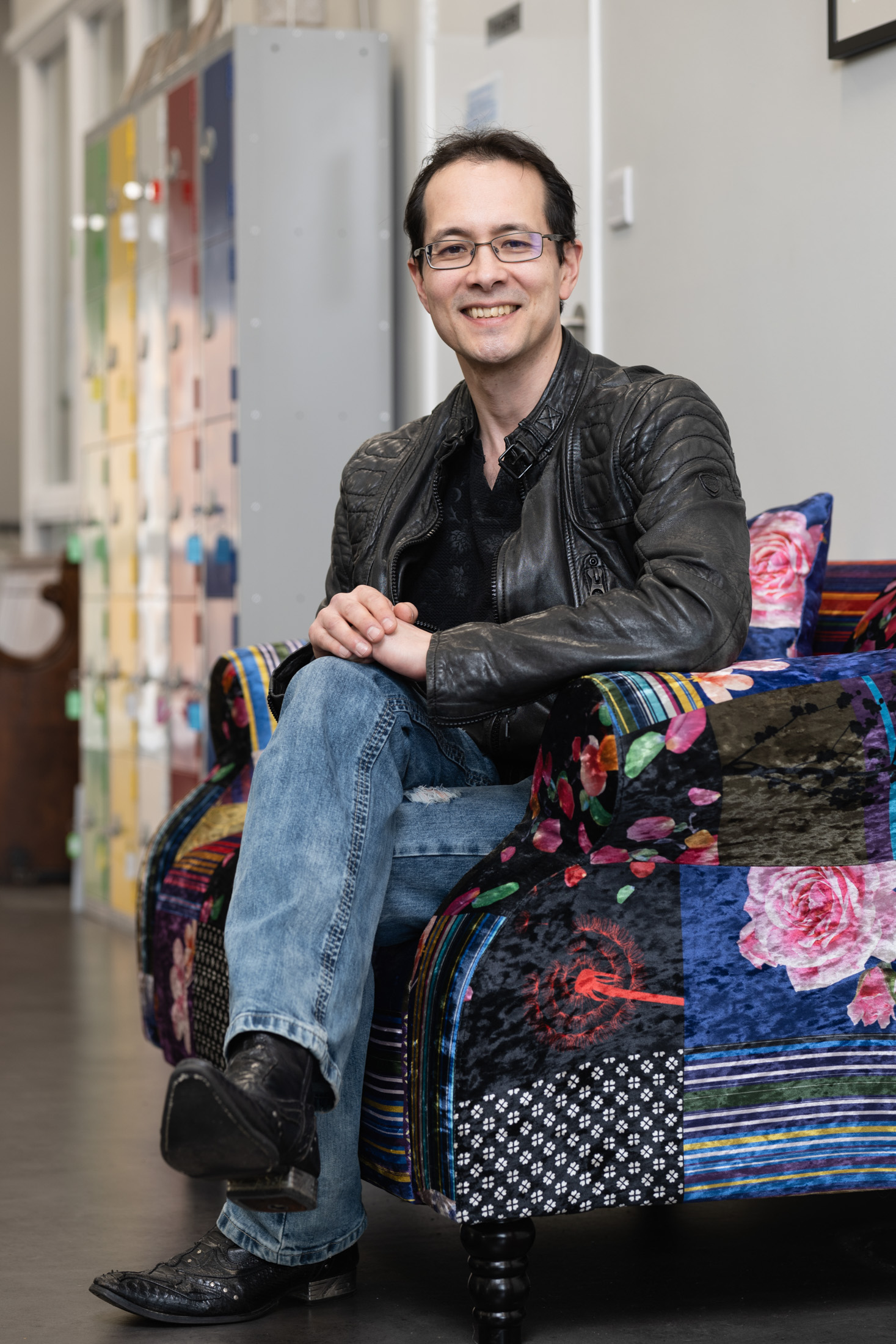
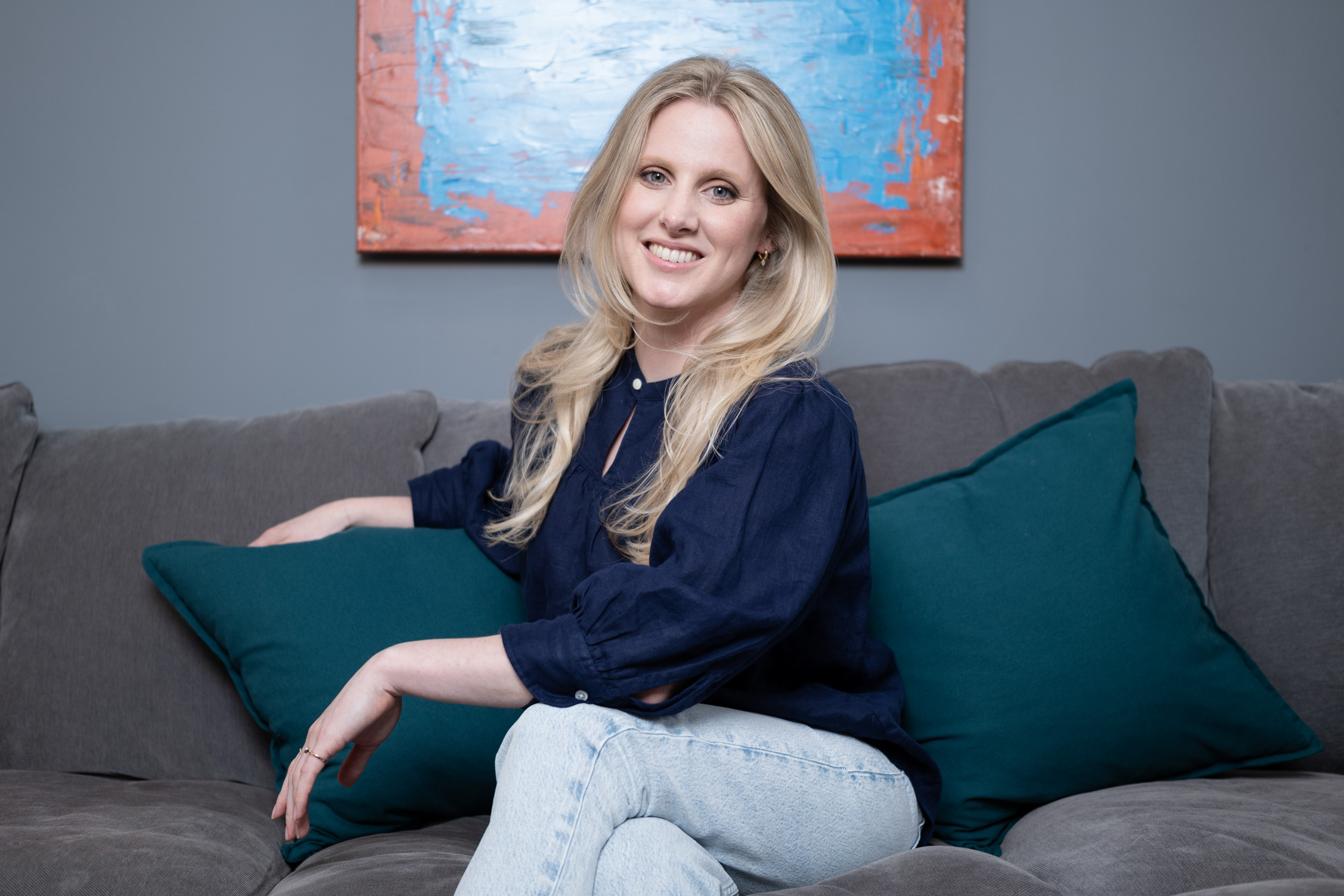
For corporate portraits I have a policy of cleaning up temporary blemishes and removing stray hairs, but the circumstances, context and purpose of such photos is very different. I’m not trying to say, “This is exactly what Sheila Jones looked like on this particular day.” The client (or Sheila) wants to give a representation of themselves as a real person who’s friendly, professional and approachable. As long as the image isn’t altered beyond recognition, some retouching is perfectly acceptable.

On occasions where an image isn’t destined for publication (perhaps it’s just a keepsake for the participants) it’s also acceptable to apply heavier editing. The problem here can be that once an image is “out in the wild,” it’s also harder to control where it might end up.

Which Leaves Me Where?

Back to my own example, of course there are things I could have tidied up, but having made the picture I made I accept it for what it is; a quick group photo, a record of a moment, where no one but me (and now anyone reading this article) will even notice the shortcomings of the result.

I don’t have to be fine with that, but neither will I beat myself up over it. I can be comfortable with the knowledge that I haven’t used AI to hide my mistake.

Just to say, the evening itself was fascinating and I highly recommend watching Sir Chris Whitty’s lecture via this link.

Back to the Future

While Marty McFly’s time-traveling DeLorean might still be a thing of science fiction, there’s still plenty of scope for Doc Brown-style WOWs! at IAAPS, including a gull-winged test car. This time though, it’s a BMW. Probably somewhat more reliable than a DeLorean, albeit lacking a flux capacitor.

Instead of Doc or Marty though, it was the turn of Helen Godwin, West of England Mayor, to be wowed by the work going on at the propulsion systems research centre near Bristol.

No Need for Roads

The purpose of Helen’s trip was to discover more about how IAAPS and University of Bath work to connect research with industry, creating real-world benefit from what could otherwise be siloed into pure academic study. Also to then explore how this work can be used to help promote the region to the wider country and indeed the world.

My humble task, as I have done on previous occasions, was to document the visit and generate media-ready images to help get IAAPS’ and the Mayor’s message out there.

With this kind of event it isn’t always easy to encapsulate the entire message into a single image, or even a handful of them, but it’s also not good enough to just hang around with a camera and hope something presents itself.

So my strategy on this kind of job is to be the fly on the wall, but with an eye for an opportunity to step in and arrange (with the lightest possible touch) a picture which looks natural, includes key people while also helping to tell the story.

Of course moments such as when Helen was in the driving simulator always make for a good photo, but it’s in the test cells that the story becomes somewhat clearer, visually at least.

Back to the Future, or Back of the Heads?

The only problem with taking photos of people looking at things is that you either end up with photos showing the the they’re looking at (but you just get the backs of heads of the on-lookers), or you see the people doing the looking, but now you can’t see what it is they’re looking at.

On this occasion I stepped in and asked that for a few moments at least, they discuss the car and the test cell, while pretending there was something more interesting than an observation window behind me. With the cell and test vehicle behind them, I could get a photo that made it look as though they were engaged in lively discussion, I could see their faces and gesticulations, but also that sense of what it was they were talking about because the background is part of the illustration.

Beware the Brand Hammer™

There was also a handy bit of branding in there too (note the number plate), but the branding is there without being ‘in your face’. Too often PRs will insist on plastering their client’s branding all over a photo, but this often dilutes the impact, and a picture without impact will be ignored. So beware the Brand Hammer™!

All of this is to say that with an event such as a VIP visit, it’s worth thinking ahead about how key images might be engineered to happen. Of course you can’t always plan things to the smallest detail, and sometimes I’ll need to step in and gently guide people to make a more complete picture, but having a key moment or two when the proceedings can be paused and adjusted to make more compelling images is never a bad thing.

It’s always a balance between micro-managing and under-planning, but if in either case the pictures don’t happen, you can’t get into your DeLorean to zoom back and do the job again. Even IAAPS aren’t working on that!


A Couple of Pointers

Many of my photographic jobs involve covering conferences, seminars and general get-togethers of science and industry leaders. The brief will usually involve fly-on-the-wall photography of delegates networking and exchanging ideas during the registration and coffee reception, followed by shots of the key speakers presenting their thoughts.

The spaces I’m working in can range from big lecture theatres with a capacity of 300+ to rooms barely large enough to hold 20 people, which can be a challenge when I’m trying to be discrete.

Lighting will also be mixed – it’s almost always terrible! I rarely get sufficient soft daylight to make the shots easy to edit, so I work with whatever is there. Then I go into battle at the edit stage to ensure skin tones don’t, at the very least, leave people looking ill. Sometimes I’ll use flash, but this can open a whole new can of worms and is often best avoided.

Regardless of the nature of the event, the size of the room or the lighting I’m working with, this work always boils down to ensuring I capture the speakers in a flattering and/or engaging way. One of the keys to this is the gestures people use as they speak.

My preference is to spend a minute observing the speaker to work out which area of the room they tend to address (there’s no point me taking a position to the speaker’s right when they only ever look left). I’ll try to work out if there is a pattern to when they look up and with their eyes open. And I’ll be watching to see if they make interesting hand gestures; again, I’ll look to position myself to capture this the best way possible.

Some people aren’t so easy to capture: They might only read from notes with their head down, or they might only look up with their eyes shut. If they move around a lot in a space that is dimly lit, keeping focus on them can be a challenge.

When it all comes together though, the speaker shots can work really well. They might never qualify as art, but since they’ve been taken to support on-going amplification of the event, they really should be as interesting and engaging as possible. Reaching and grabbing audience attention after the event is one of the hardest tasks for the communications manager, but it’s made all the more dispiriting if the photos are poor.

One other thing I try to ensure is that across the set there will be a variety of shots with emphasis to left and right of the frame, as well as some with design space should the client wish to drop text or a graphic into the image. It’s also important to have a mixture of upright and landscape formats for different publications and platforms.

So while this isn’t the most glamorous genre of photography, it’s interesting for me precisely because good results rely on some quick thinking and problem-solving. Sometimes an image will have an additional spark, which is usually down to the speaker’s gesticulation in the split second that I captured the image. That’s when I know all my calculations have paid off.


A New Perspective and a Sad Farewell

Way back in September 2024 I talked about a camera I’d bought which straddled the Tool and Toy categories of photographic kit.

To recap what I said then, the Lumix GX9 is a compact camera with interchangeable lenses. It acts as a useful third body in my kit bag for work as well as being a fun carry-everywhere camera when I’m not working.

The Excuse for a New Lens

With University of Bath Summer Graduations looming, I decided to invest in an ultra-wide angle lens for the GX9. I could have just got an ultra-wide lens for one of my work bodies, but the cost and weight meant this was the less attractive option. Besides which, ultra-wide isn’t a focal length I use for work very often so I didn’t fancy forking out a fortune.

My thinking was that such a lens could offer some alternative options for shots inside Bath Abbey where the graduation ceremonies take place. In the event it also gave me one or two corkers outside the abbey too.

The lens I bought is a Laowa 6mm f/2, the focal length being equivalent to 12mm on a 35mm camera. I wasn’t sure what to expect from a budget-friendly (£520.00) lens, but I have to say I was impressed!

It’s designed to give a very wide view, while keeping horizontals and verticals as straight as possible – not the fish-eye distortion you might normally expect from this focal length.

I’m posting a handful of examples here. Whether the university ever uses these for corporate communications remains to be seen, but I see no technical or qualitative reason not to. And they certainly offer a different perspective on an event which, given it was 17 ceremonies over 5 days, can risk becoming a bit repetitive in photographic terms.

Photo of the Week

This next photo was shot using one of my ‘professional’ bodies and is, I think, my favourite photo from the week. Taken in relatively low light on a drizzly afternoon, I was pleased to have spotted this student as he bolted from Bath Abbey door to embrace his girlfriend waiting outside. It sums up the release and joy of having graduated.

I barely planned the shot, just kept my wits about me as the graduates started to exit the abbey, and locked onto him as I saw him dash forward. I’m glad it worked out.

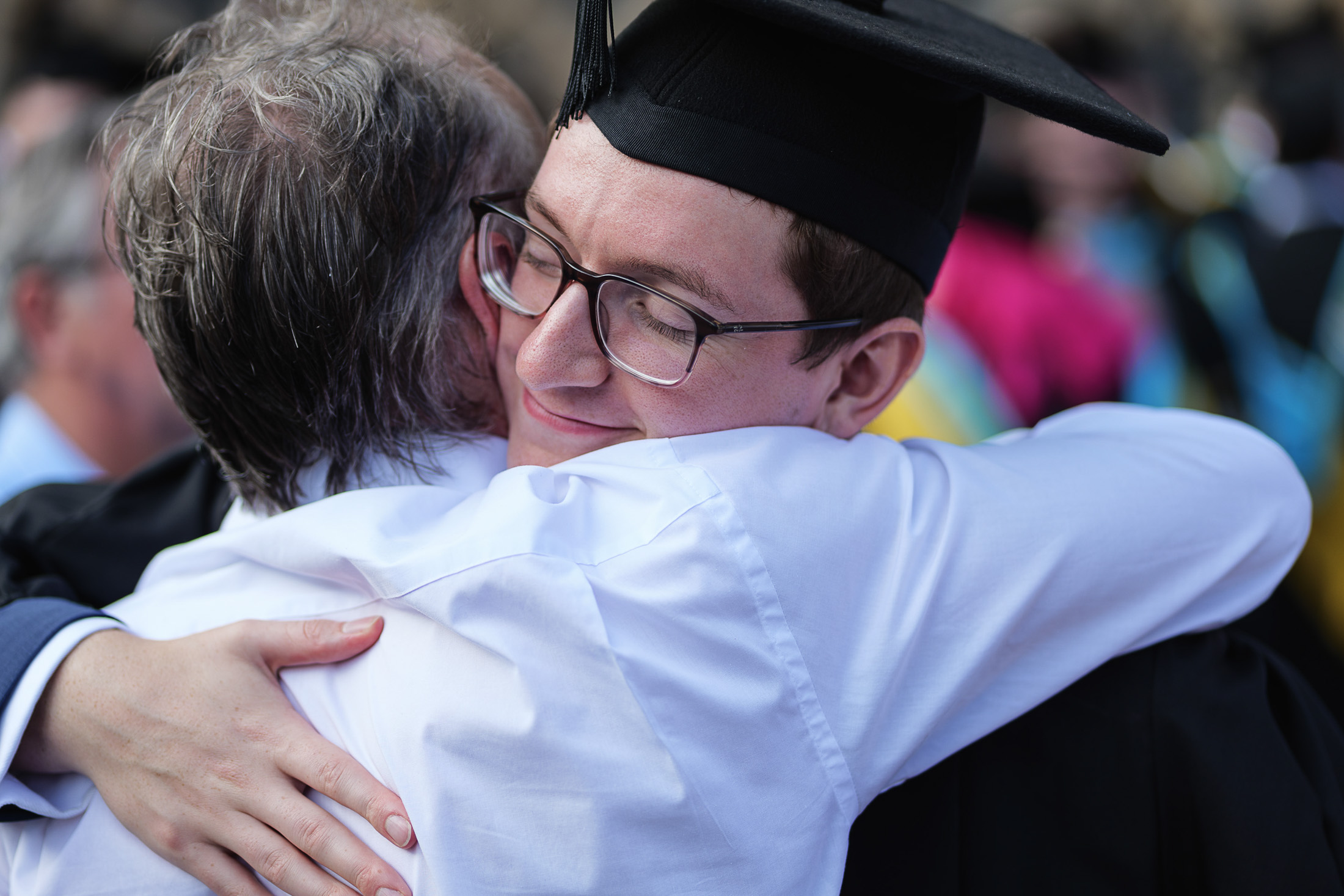
The week was incredibly hot and humid, and pretty tiring, but I managed to get interesting angles and moments from every ceremony I covered (11 in all as I was alternating with the university’s staff photographer). Often the emotional moments as graduates hugged friends and family in Abby Churchyard would make my eyes prickle, the relief and joy being palpable, but I managed to concentrate on getting the shots needed.

Farewell

I can’t write this post without saying farewell to one of my favourite subscribers, my mum, who passed away on July 25th. This is the last decent photo I took of her as she peels the potatoes for Christmas Dinner, December 2024. I won’t say too much more here, but amongst many other things, I’ll miss her saying, “I read your blog post this week. I’m not sure I understood what it was about.”

Another (Almost) Anniversary

Apart from a break for the Covid-19 pandemic, this is an event I’ve photographed for 10 consecutive years!

It’s a bit of an outlier in terms of the work I do, but it’s always interesting and rewarding.

The Event

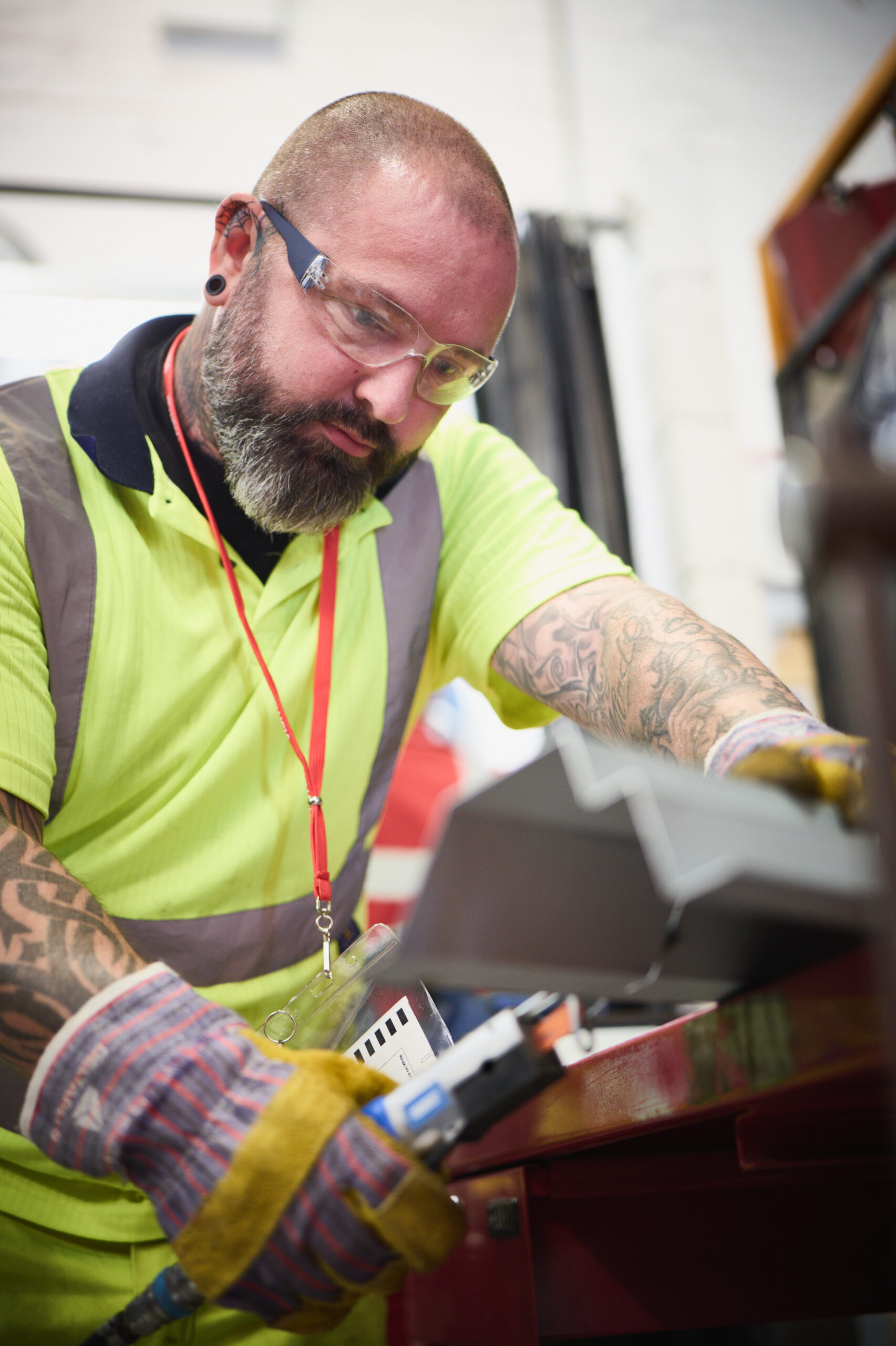
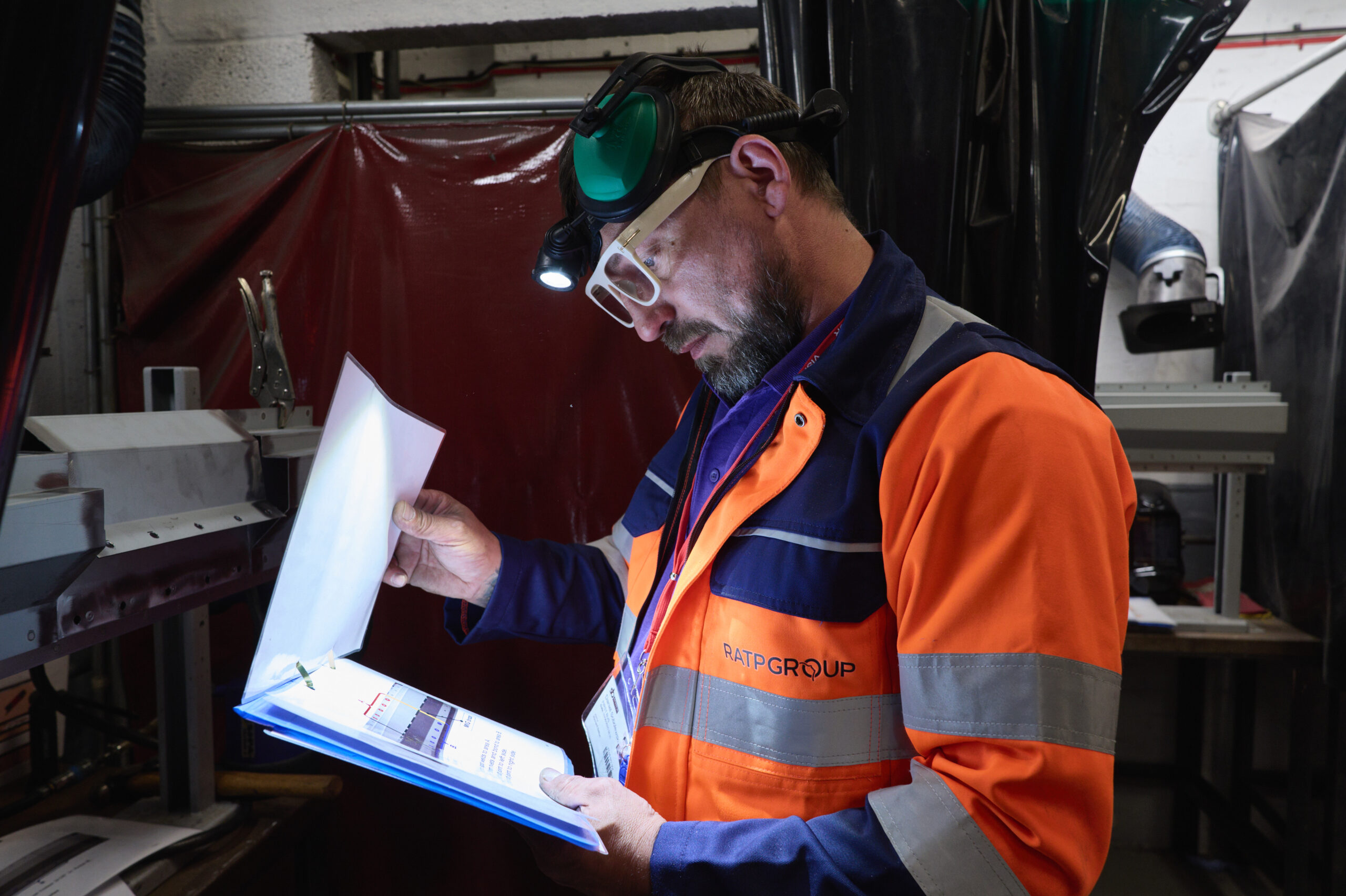
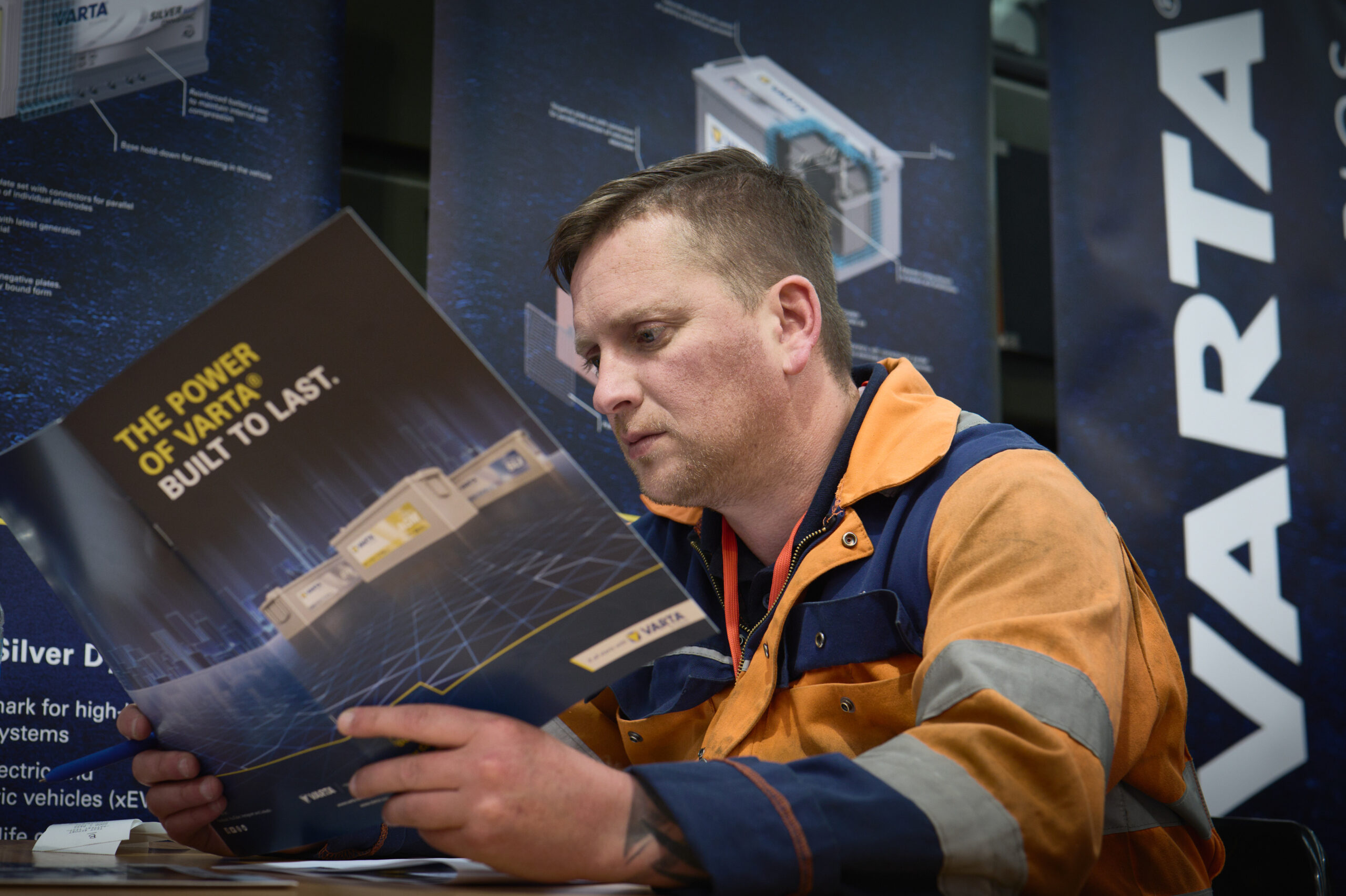
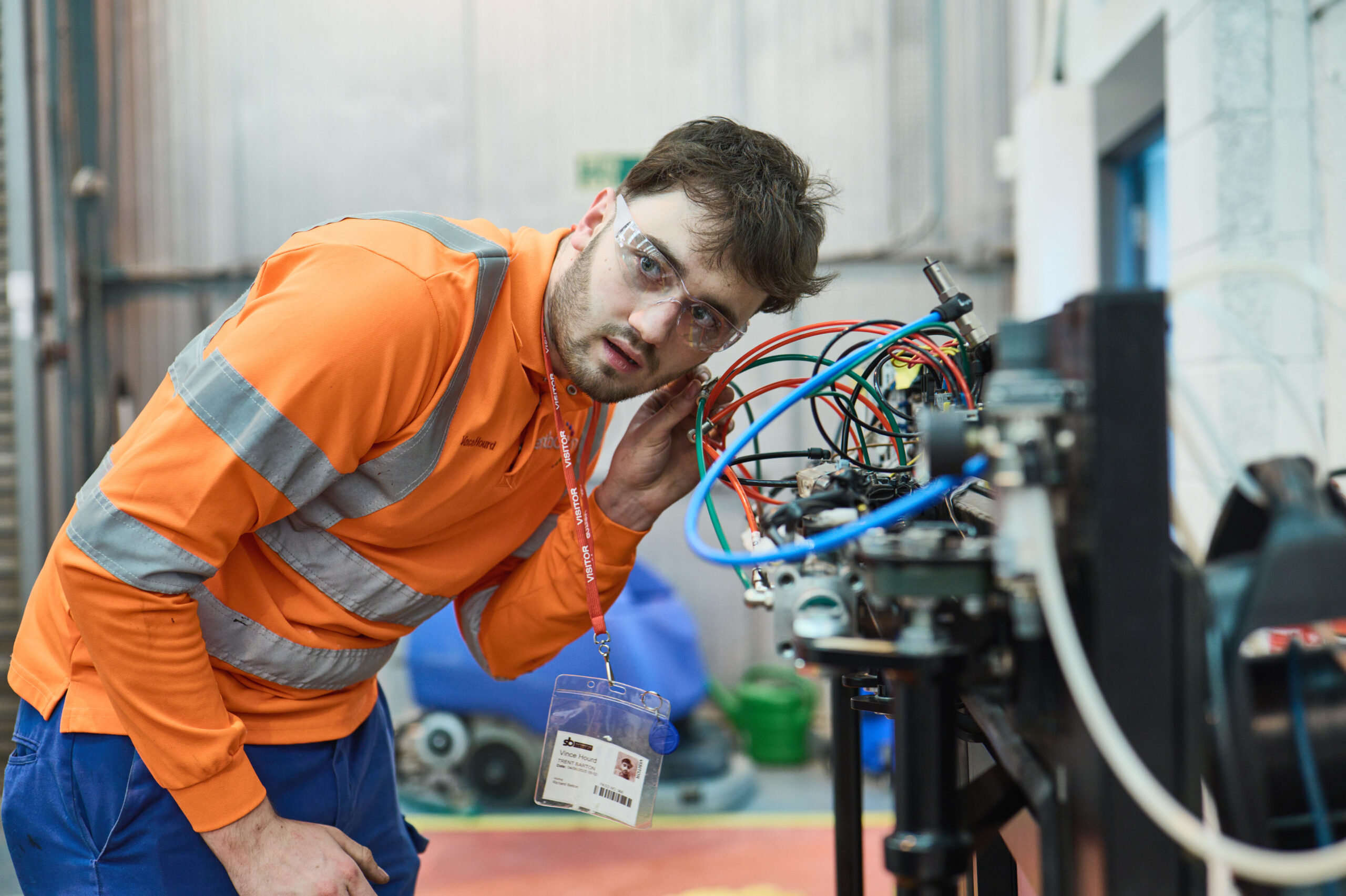
And what is it I hear you ask? Well of course it’s the annual IRTE Bus & Coach Skills Challenge, operated through the Society of Operations Engineers and hosted at S&B Automotive Academy in Bristol.

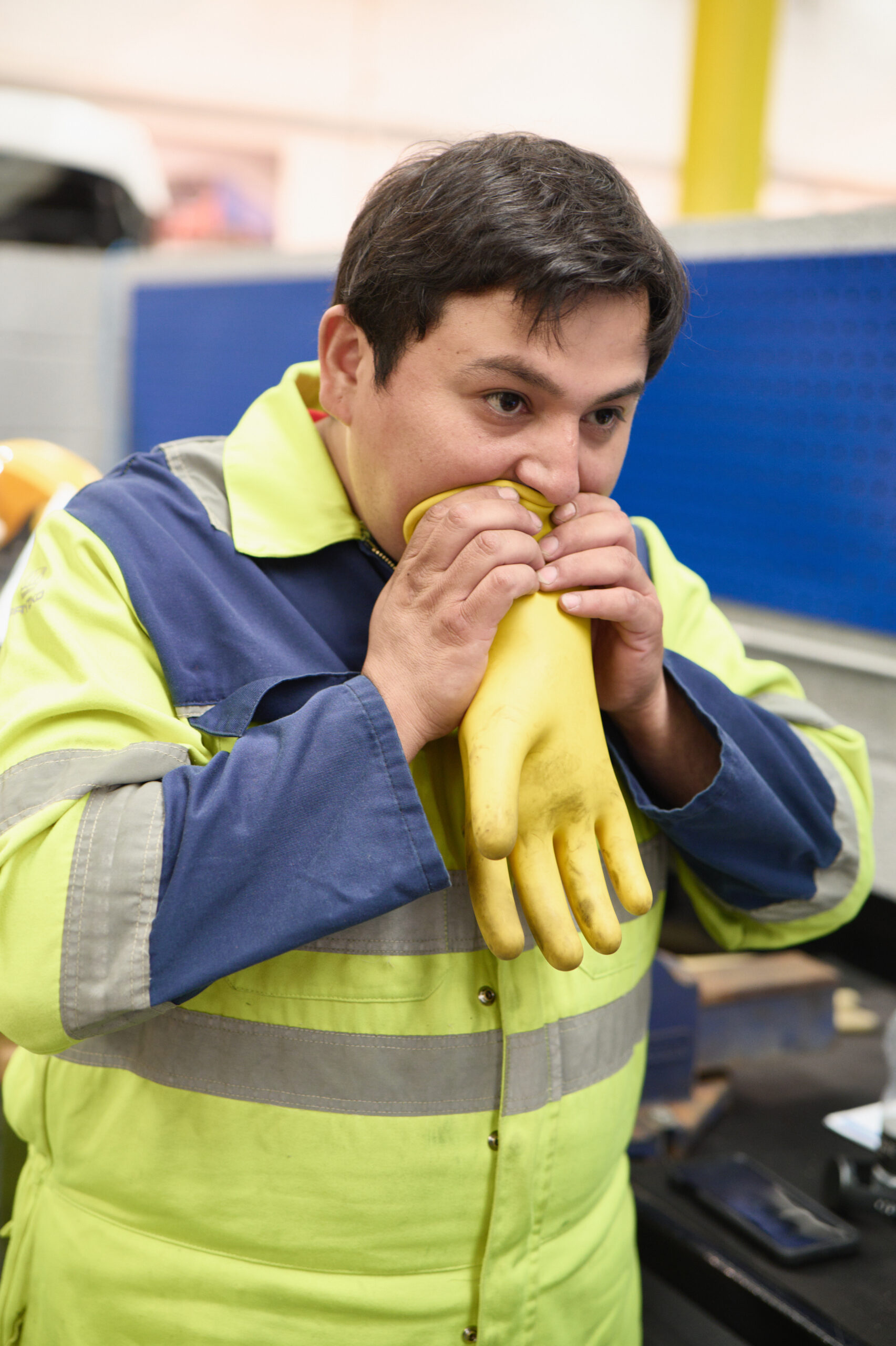
Yes, that’s all a bit of an eyeful of info, so I’ll attempt explain it more simply. Basically, it’s a chance for bus and coach mechanics (the people who keep our public service vehicles running safely) to test their knowledge and skills and to learn new processes and approaches in a competitive environment.

This year’s skills challenge spanned four days, each with fresh teams arriving at S&B from all over the country, with mechanics and engineers registered to compete in mechanical, electrical and bodywork challenges.

Each day was a hive of activity with welding, cutting and panel beating in the body workshop, and electrical fault diagnostics, tappet measuring, vehicle safety and roadworthiness inspection and for the second year running, a test of an engineer’s approach to testing a high voltage circuit; increasingly important as road vehicles switch to battery power. There are too many sections to list, but suffice to say it’s a long and busy day for all involved.

The Job

My job every year is to capture each competitor in action so that should they win, there’s a good clear photo of them for the awards ceremony and souvenir brochure. The images also get used across the SOE website, printed materials and promotional assets (posters, banners etc). Because of this, I work to ensure there’s a good spread of library images from each day.

I also aim to ensure sponsors get coverage too, with at the very least a photo showing their presence and ideally working their branding into an action shot or two.

By the end of the four days, I aim to have achieved a mixture of team shots, fly-on-the-wall documentary-style action images and a few posed shots too. At lunchtime I’ll send a few rush pics to the client for immediate social media posts, delivering the full edit before I go to bed.

The First Year

I remember the first day I ever shot this event; I hadn’t been particularly well briefed, and it wasn’t until part way through the day that I was told I’d need to get a shot of every competitor. That spiced things up a bit, but I got it all done.

Another regular challenge for me is that many of the activities involve engineers working with their heads down, often measuring or looking at something. I need faces, not tops of heads, so if I can’t find an angle that works, I will often pose a competitor once they’ve completed the challenge they’re working on. This year, on the whole, I was able to get what I needed mid-action.

The Next Ten?

I somehow doubt I’ll be doing this job for another ten years – it’s a lot of running around, bending and holding awkward positions for periods of time, but I’ll do it for as long as I can and for as long as SOE wants me to do it.

In the meantime, for this year, the past 10 years and however many years to come, I’d like to thank SOE for engaging me on this one and to express my gratitude to all the patient mechanics who have to put up with me in a stressful situation. Special thanks also to Richard Belton at S&B Automotive Academy for his seemingly never-ending willingness to help and for listening to my terrible jokes for four days solid.


A Long but Fascinating Day of Acronyms

If it seems like I’ve gone a bit quiet lately, it’ll be because I’ve been anything but quiet lately.

A prime example is last Wednesday, when the UK Government’s Chief Scientific Adviser (CSA) Professor Dame Angela McLean visited University of Bath to see how their research is achieving real-world impact across a range of sectors.

Beyond a handful of set-up group photos, my role was largely as a fly-on-the-wall (FOTW) photographer recording Professor McLean’s visit through the day – and boy, was it a long day!

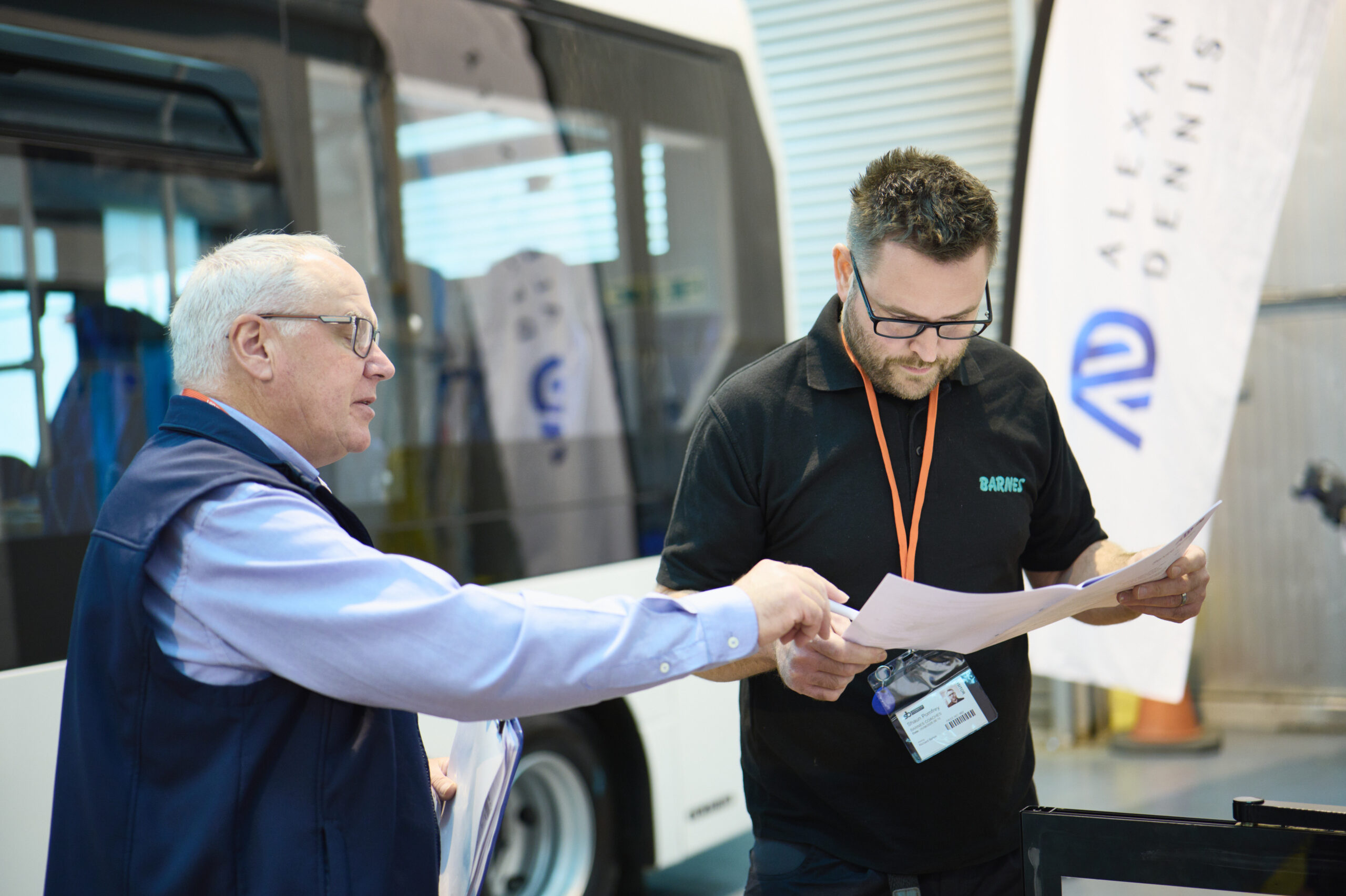
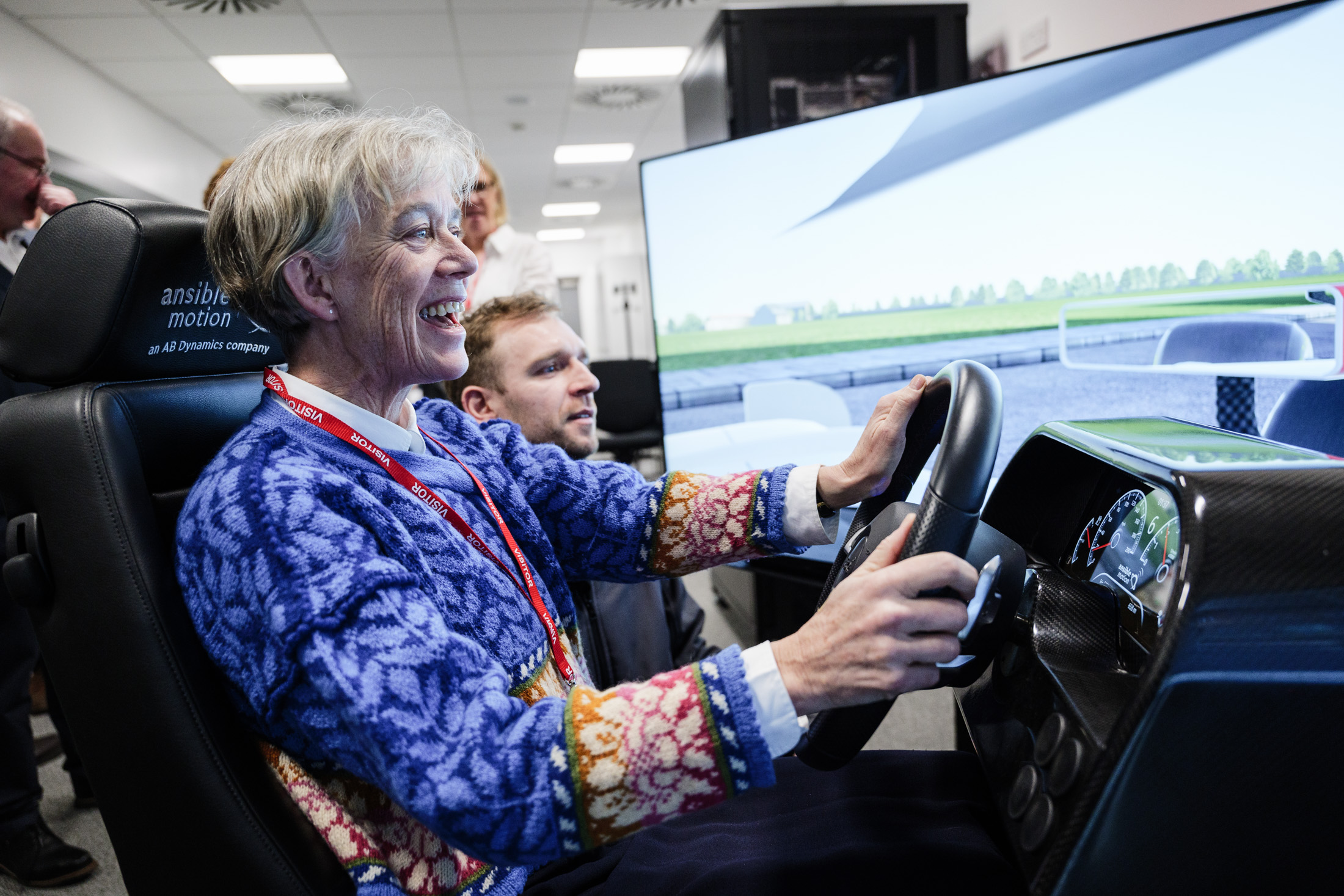
It started at the Institute for Advanced Automotive Propulsion Systems (IAAPS) at Emersons Green, Bristol. In short, IAAPS is where engineers and designers can examine new forms of propulsion, or improve traditional ones (for example, improving fuel efficiency in internal combustion engines). There’s a lot of exciting work into hydrogen propulsion going on there, and Professor McLean got a good look behind the scenes at the state-of-the-art facility.

In fact, it resulted in one of my favourite images from the day, with Dame Angela clearly having a hoot on the driving simulator.

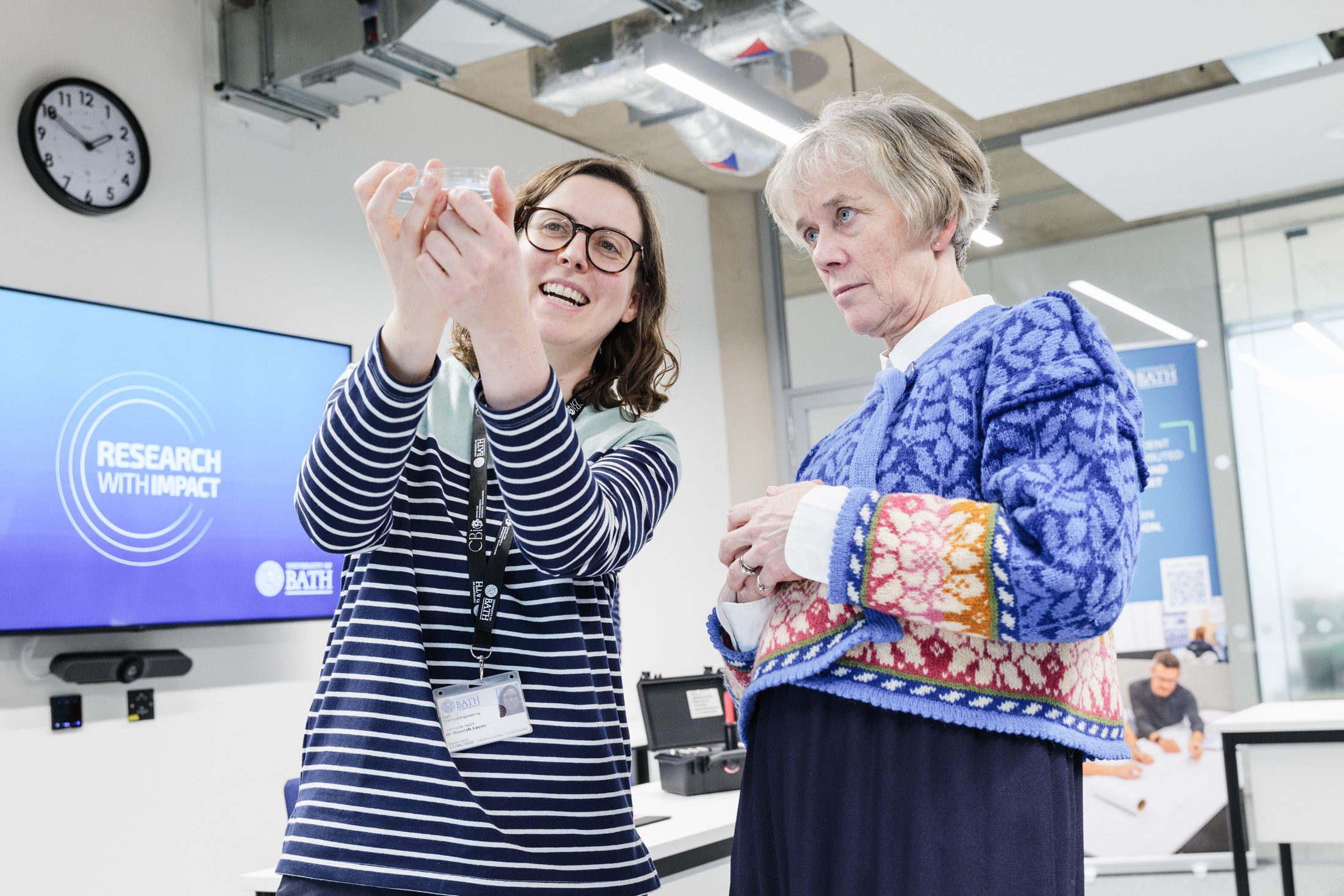
After a couple of hours at IAAPS, the visiting party moved to the University of Bath’s Claverton Down campus for a whistle-stop tour of a variety of laboratories and research demonstrations. Again, one of these resulted in another favourite image of the day, that of Dr Hannah Leese, a Reader in the Department of Chemical Engineering whose research covers nanostructured membranes and nanofluidic transport (you asked!).

As she shows Professor McLean a dish of microneedles, you can see the excitement and pride in her work.

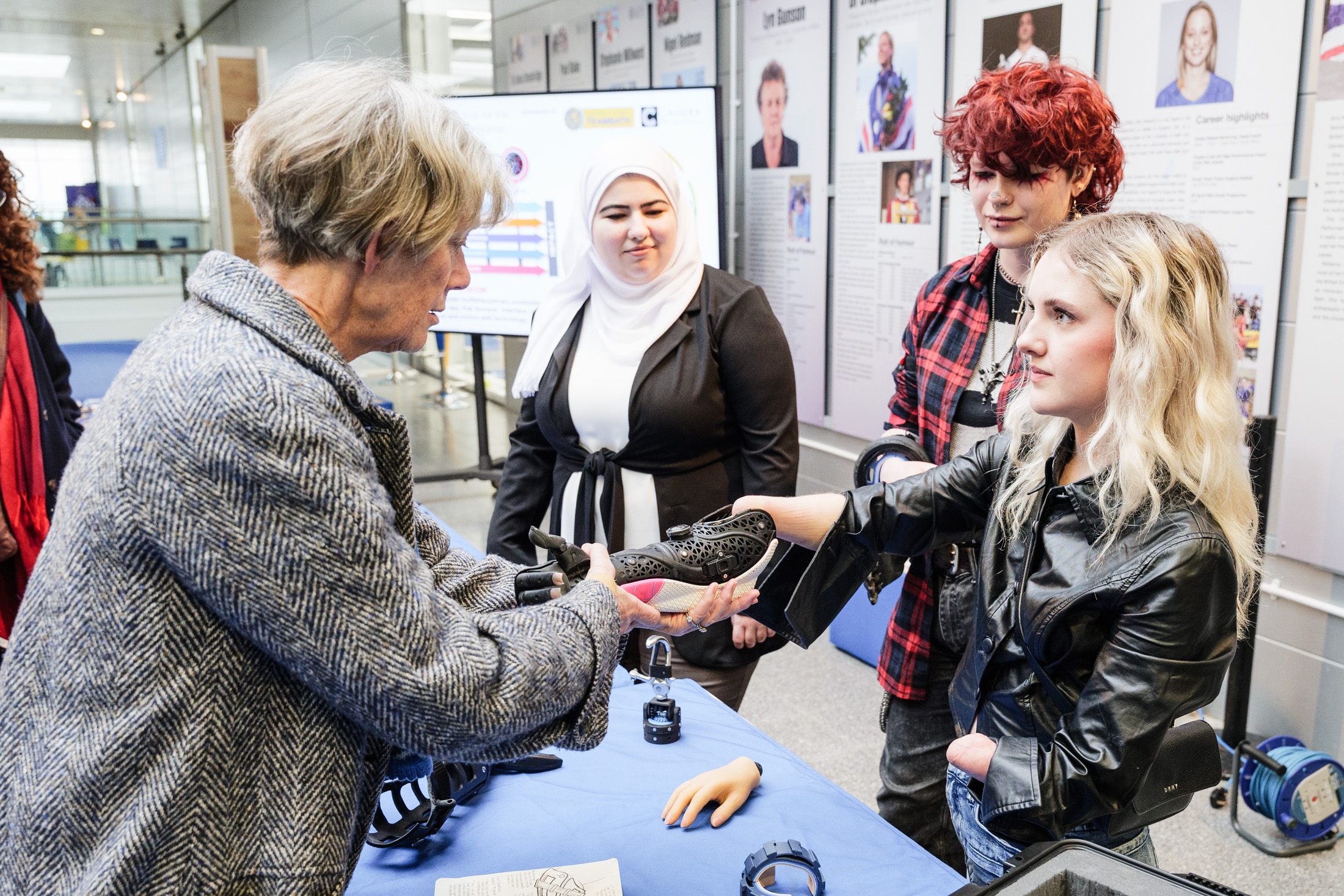
There were further tours of incredibly impactful research, including that into the augmented human where Professor McLean was shown (amongst other things) the huge advancements in prosthetic limbs, such as hands which respond to users’ commands.

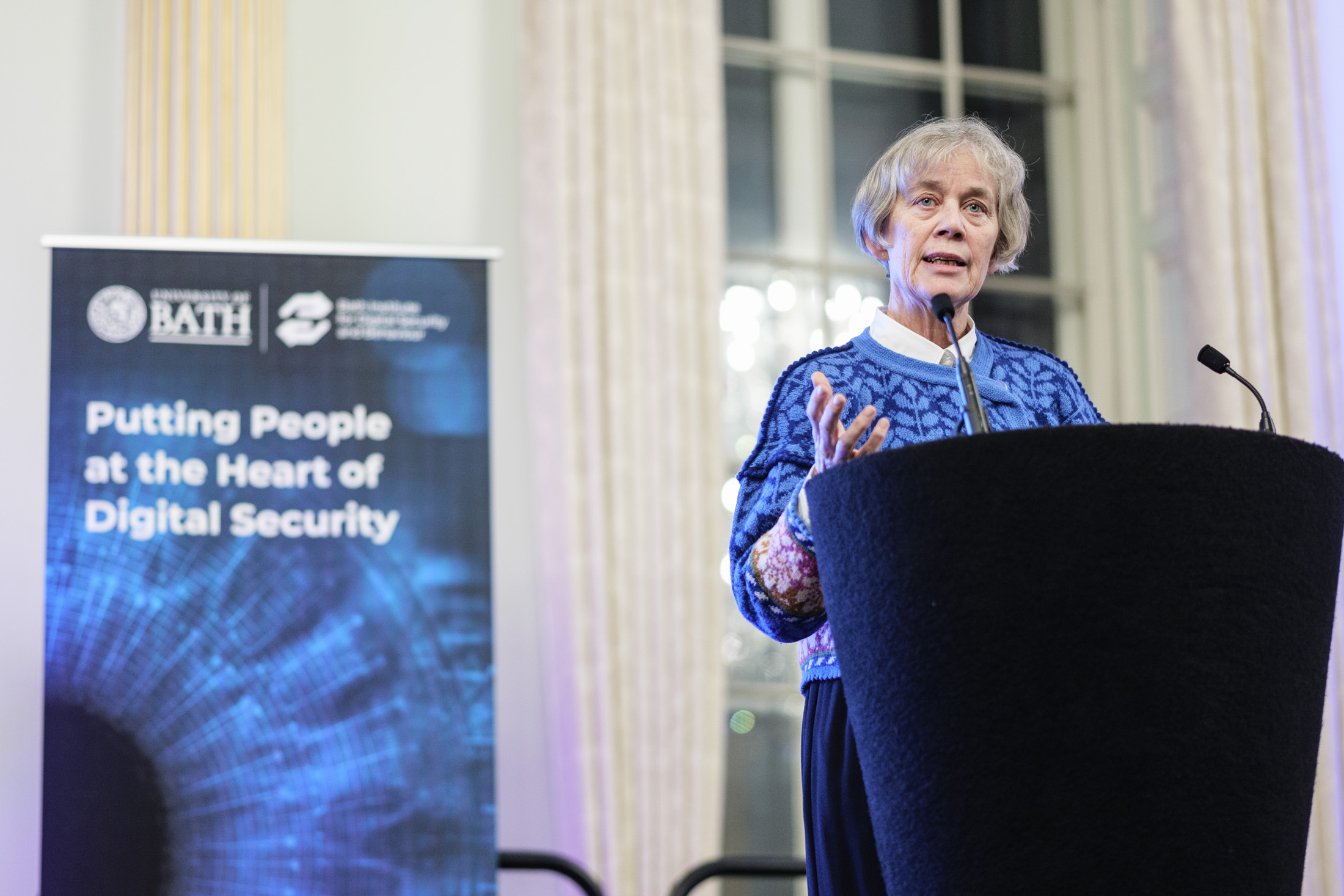
Also part of Dame Angela’s itinerary was a tour of the labs at the Institute for Digital Security and Behaviour (IDSB) and a round-table discussion on Climate Resilience and Adaptation. But as if that wasn’t enough, she went on to officially launch IDSB that evening at Bath’s Guildhall.

In IDSB’s own words, “The primary objective of the Institute for Digital Security and Behaviour at the University of Bath is to respond to the evolving security risks to – and from – digital technologies from a socio-technical perspective.”

For this segment I needed to get usable pictures of the various speakers, some group photos, plus the general flavour of the evening.

On reflection it was a pretty long day, but fascinating, and I could see that in spite of having travelled from London that morning (and the prospect of having to travel back that evening), Professor McLean had thoroughly enjoyed the experience.

My work didn’t quite end at The Guildhall as I needed to turn images around for various communications teams at IAAPS and the university so they could get their social media feeds updated first thing the following day. So the evening stretched on a bit, but it was good to get the image files securely backed-up anyway. The following day I completed the full edit and delivered the rest of the images for on-going corporate communications purposes.

So a long day for all involved, but while I could have passed the evening segment to another photographer, I wanted to see the job through from start to finish and bring continuity to the coverage. It also meant one less complication for the organisers!

From BTS to ECG, MRI to ICB – it’s all happening here!

First of all, apologies for the extended radio silence, I’ve been having an unusually busy time. There are reasons behind this which I will save for another time, another blog post.

Suffice to say, Google might have been disappointed by my lack of posting; my handful of loyal readers on the other hand might have enjoyed the quiet.

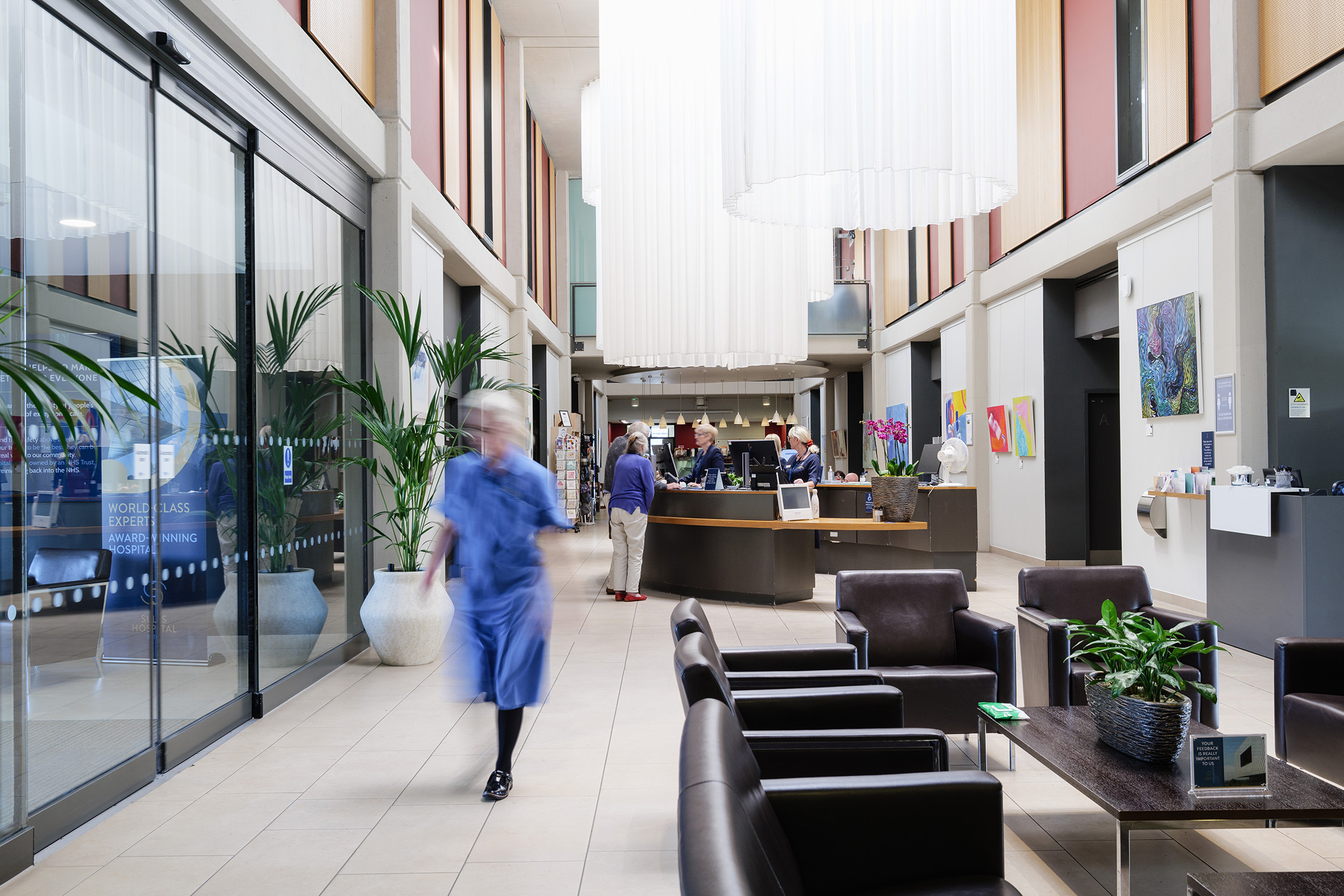
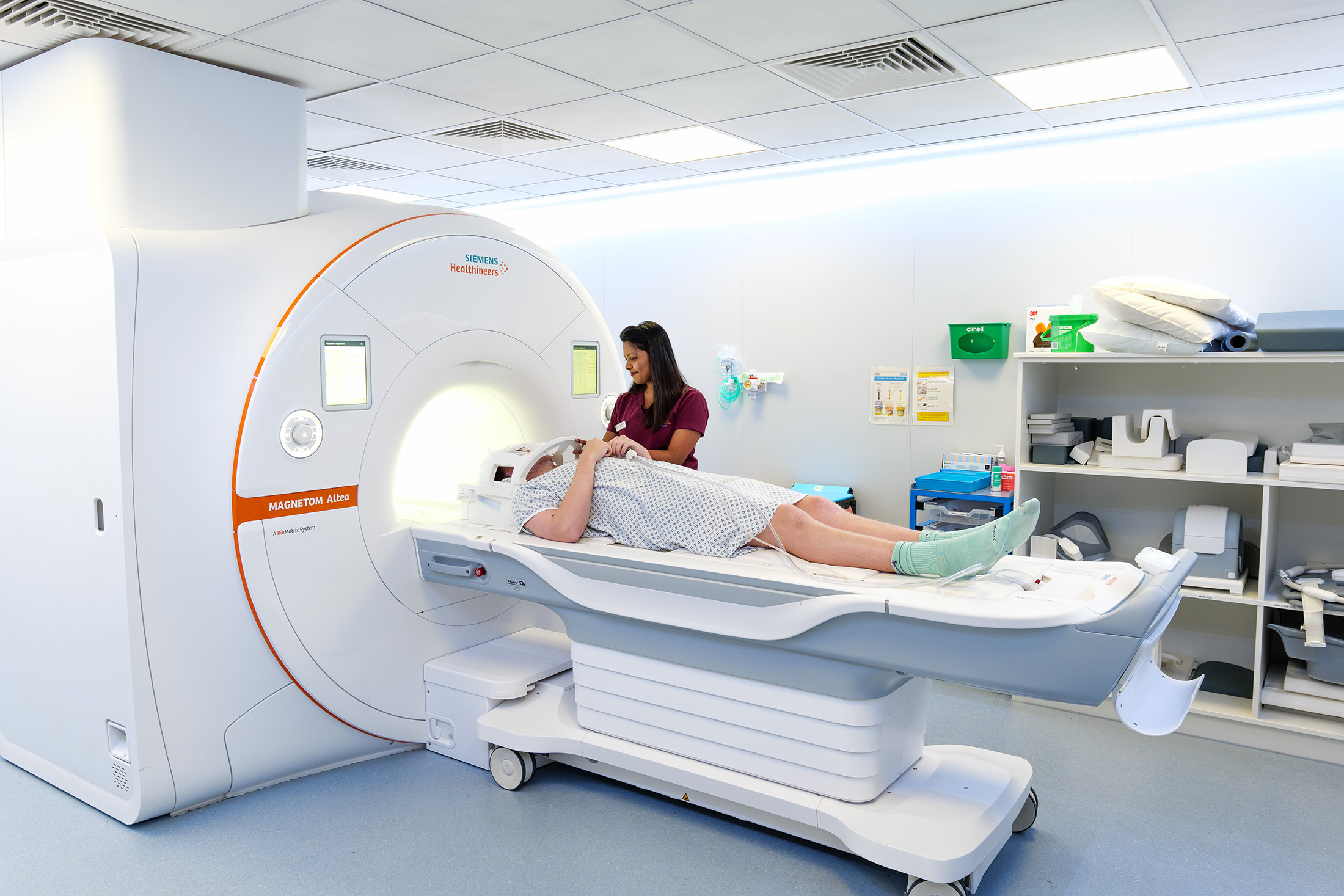
While much of my recent photography work hasn’t lent itself to sharing, there is one completed project worth a mention: a series of images taken around the local(ish) area of newly-installed Community Diagnostics Centres. This is work I’ve undertaken for NHS Bath and North East Somerset, Swindon and Wiltshire Integrated Care Board.

The brief was to visit the various hospitals and health centres in Bath, Salisbury and Swindon where new diagnostics facilities have been set up so patients don’t have to travel so far for MRI scans, respiratory tests, CT scans and the like. It’s a multimillion pound investment making testing facilities more accessible to a greater number of people.

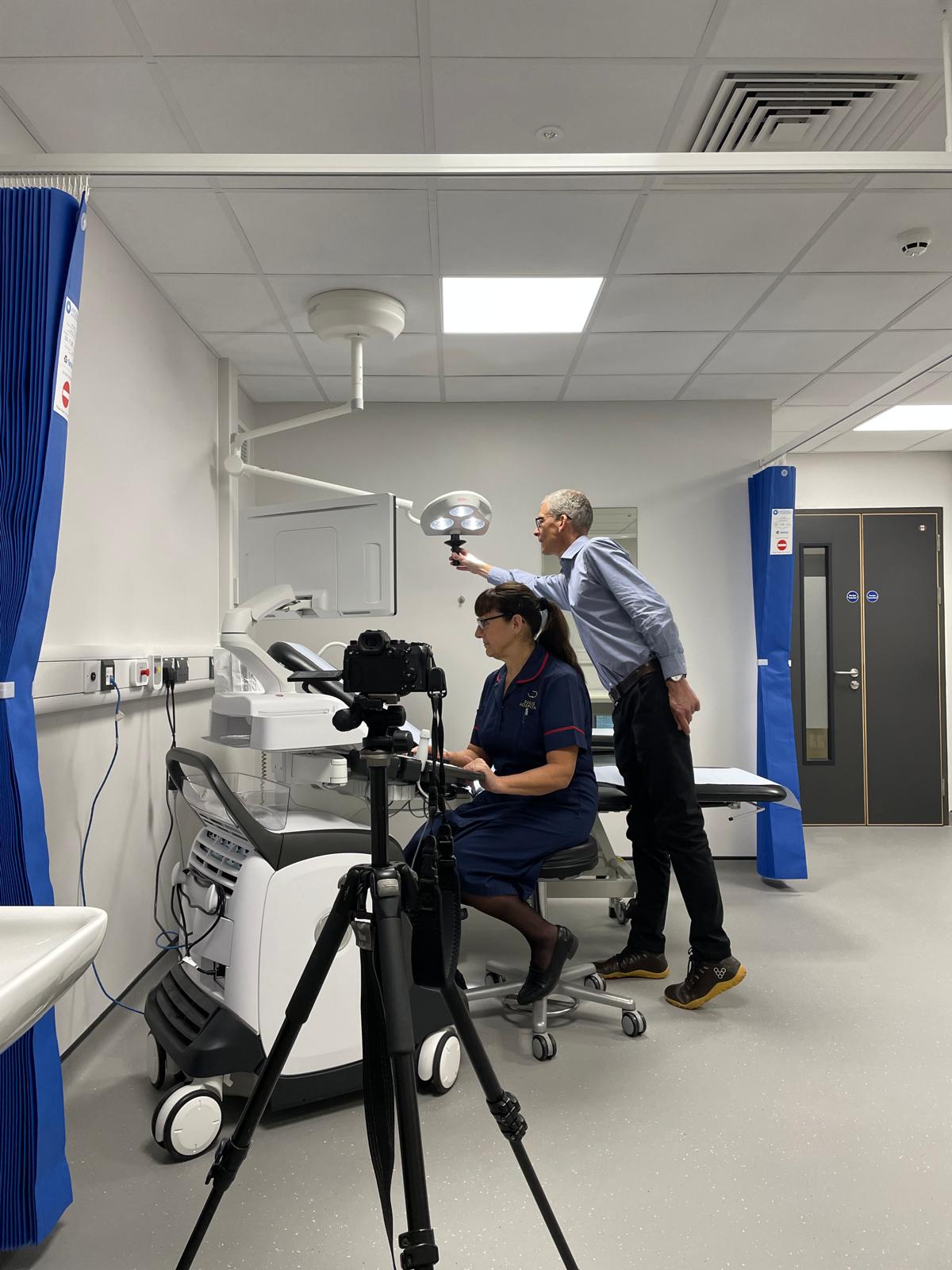
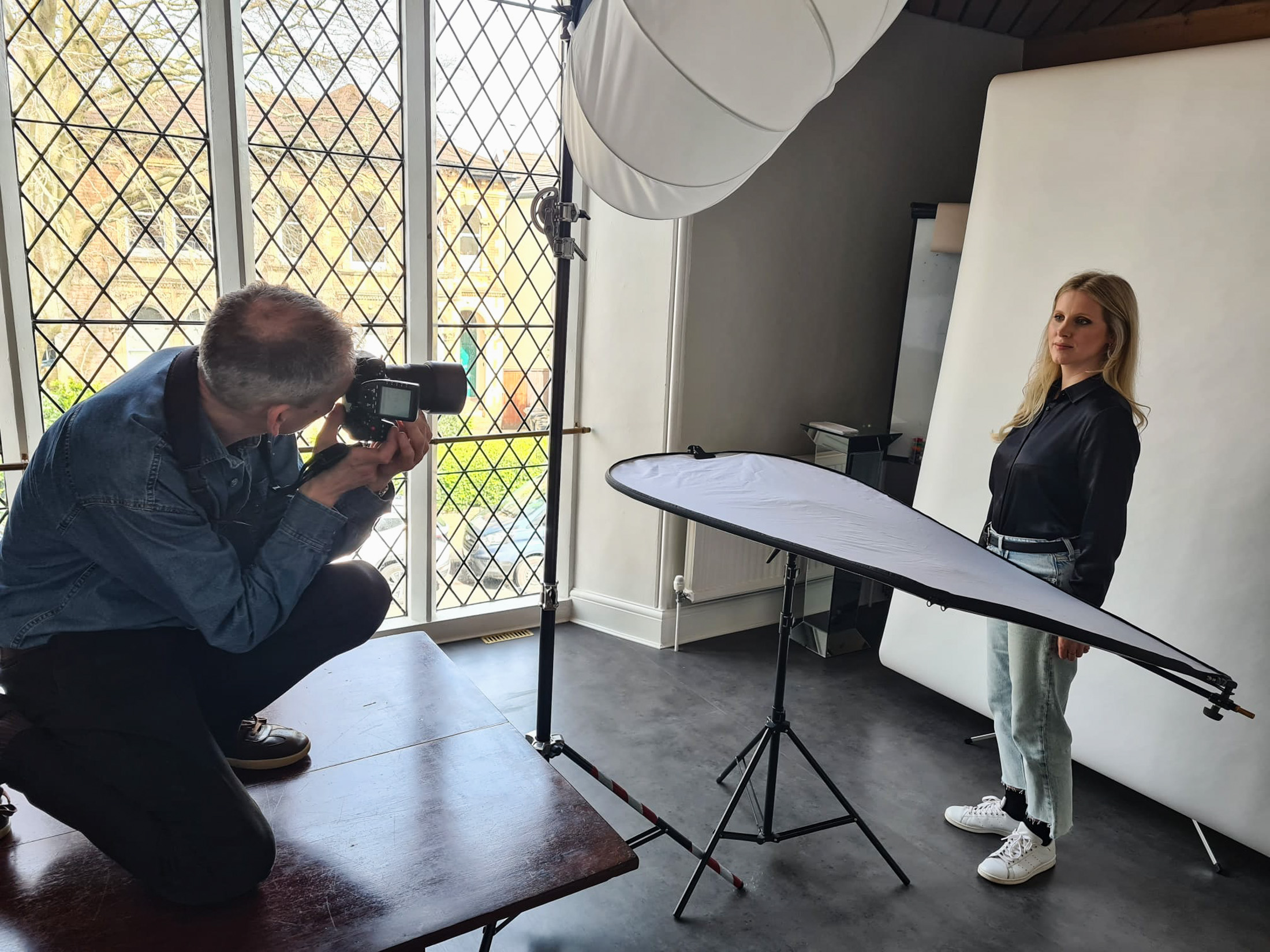
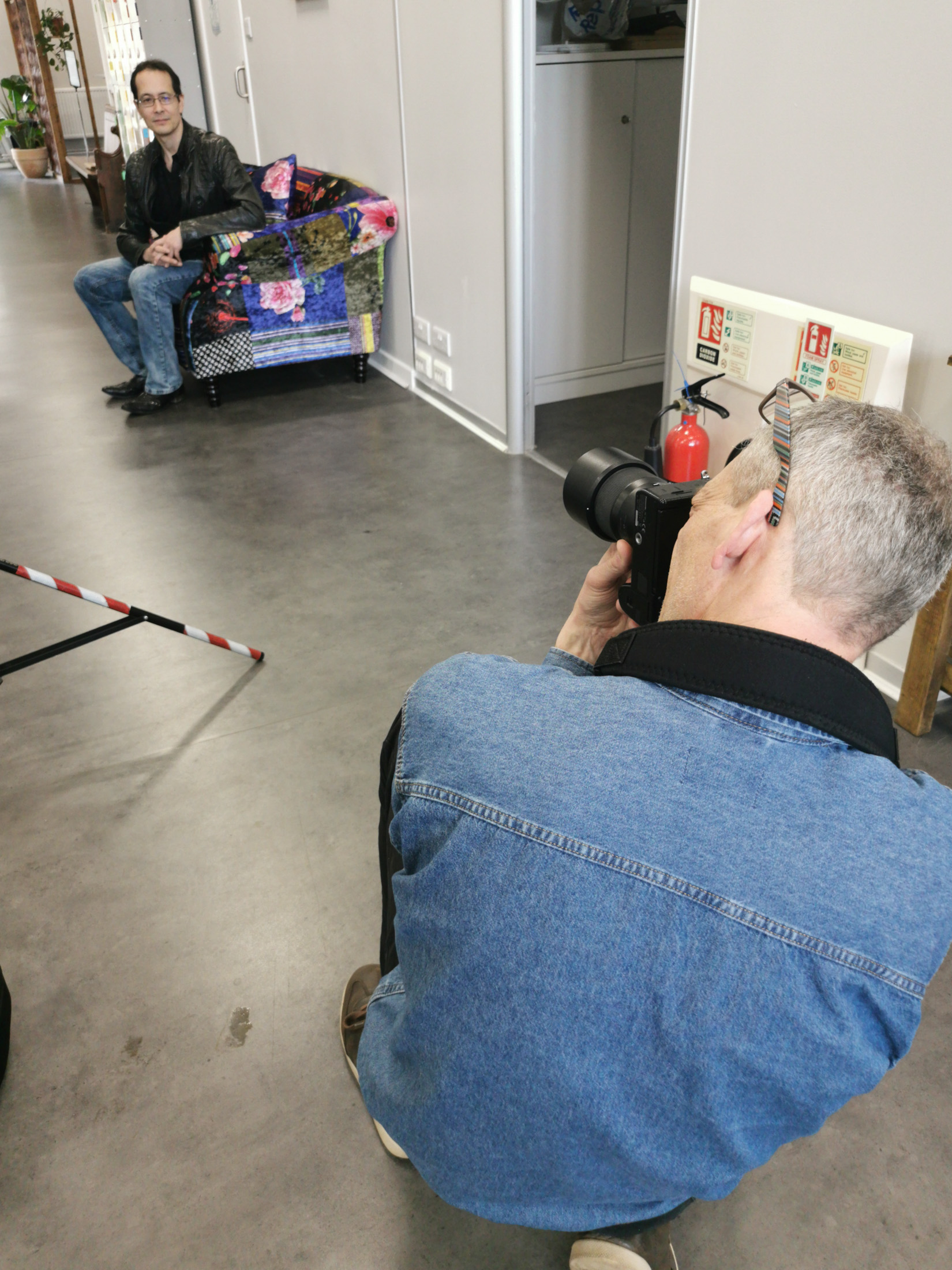
What is always rather fun these days is when I’m asked if a few Behind The Scenes (BTS) photos are ok. This usually involves me being photographed while I’m setting up and taking pictures.

I’m fine with this as it helps the client with their social media, and most are happy to give me a mention too.

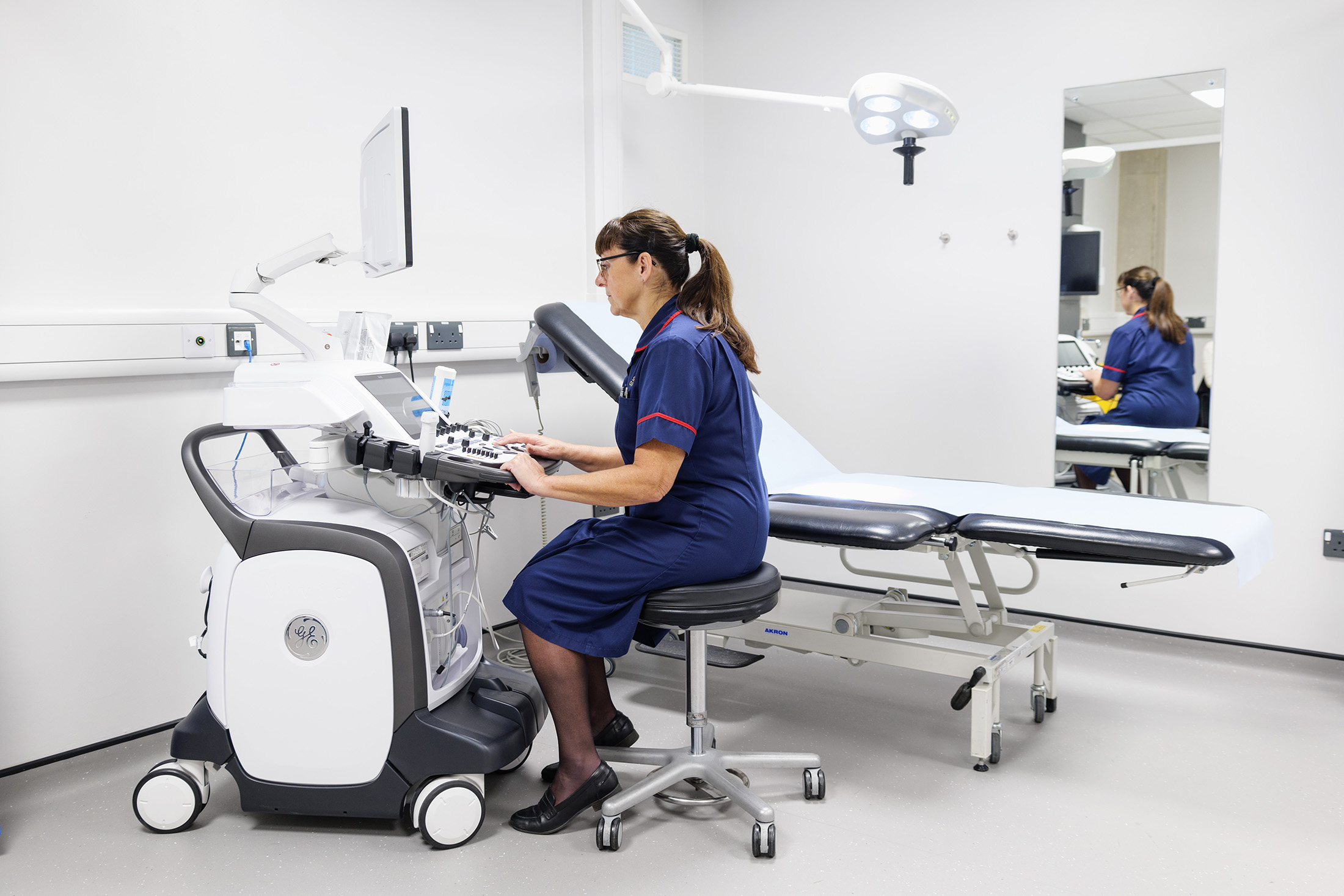
This set includes the BTS photo followed by the shot I was setting up, and a couple of further images taken during my visit to the rather swanky Sulis Hospital in Peasedown St John near Bath.


Three In One

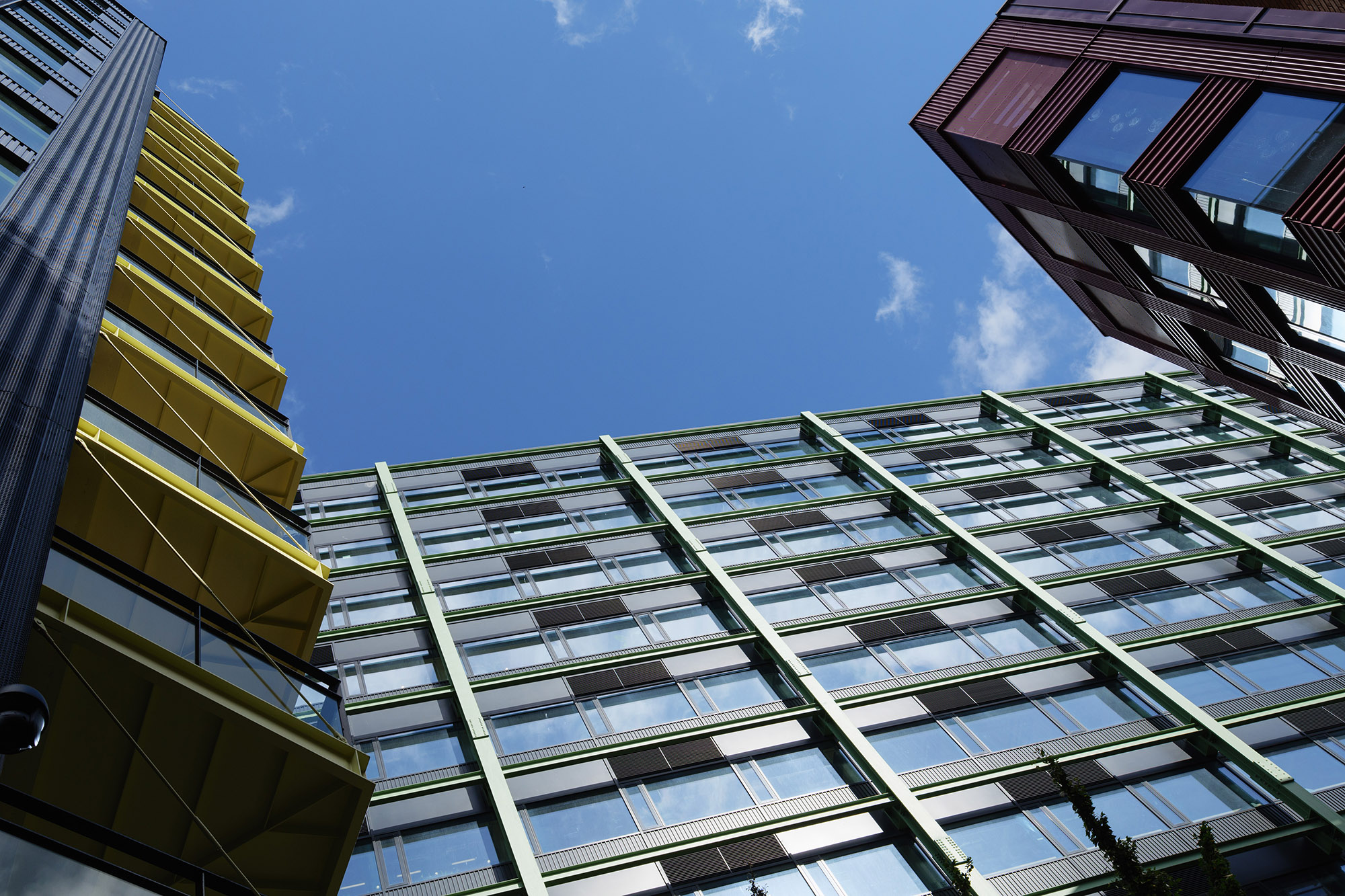
The majority of my work is based around photographing people; professional headshots, people in business, in their office environment or at corporate events. However, every so often I’ll be called upon to make purely architectural images too.

It’s a side to my practice which I enjoy, so it’s a particular pleasure to get to work with property development company Bellhammer through their design agency Blast Design Limited.

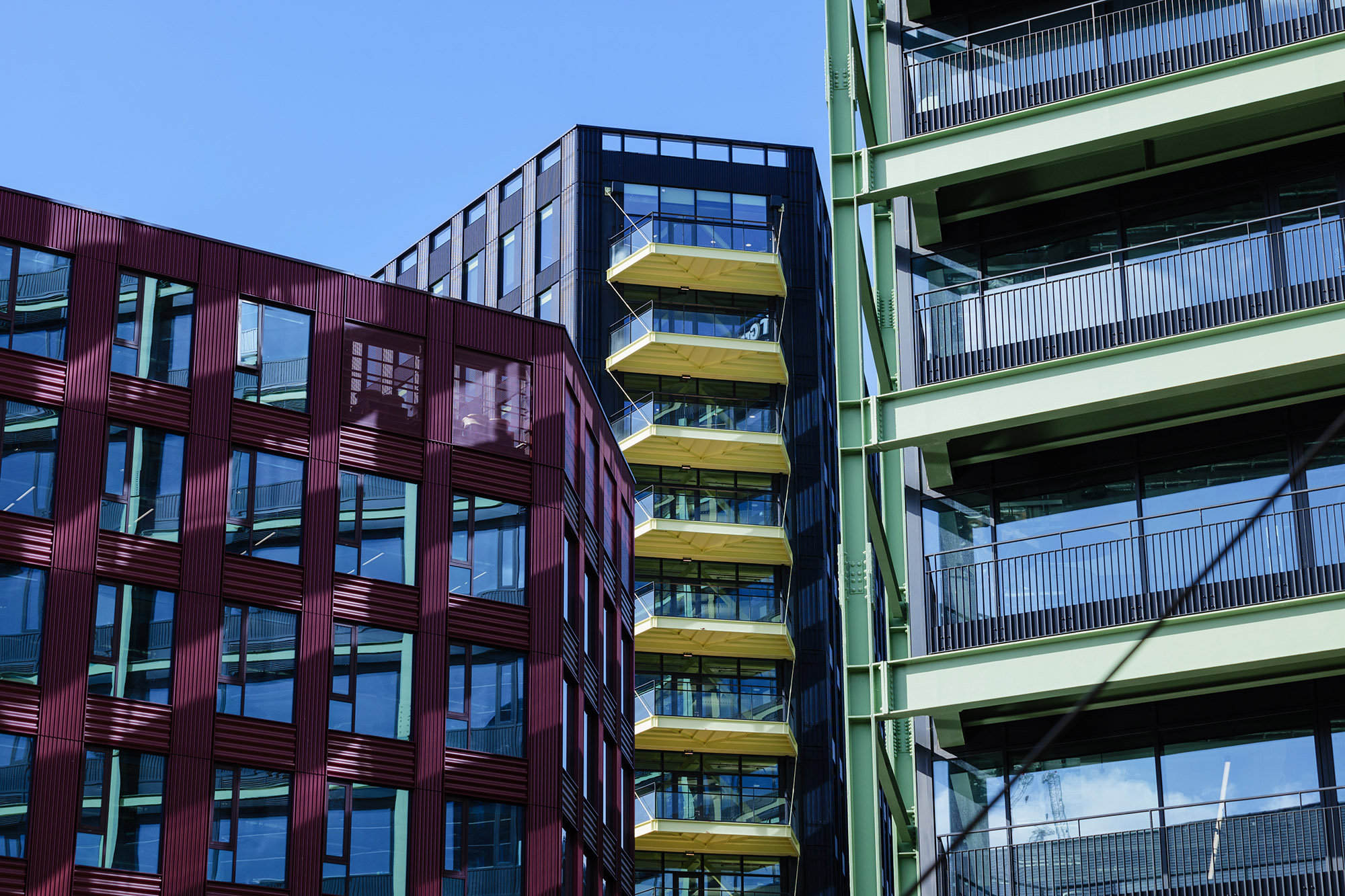
Those with a good memory will recall that my relationship with Bellhammer’s Bristol city centre project (Assembly Buildings A, B and C) started during a headshot session for another client, when I took an opportunistic photo of Building C under construction. Since then I’ve returned to the site a few times to capture various stages of the project.

I was there again in June, with a brief to capture various aspects of Buildings B and C, but also to get an angle which included all three buildings in a single shot. That’s not as easy as it might sound, requiring some consideration of how the light falls on the buildings at various times of day, as well as trying to exclude other buildings or scrappy bits of cityscape.

However, give me a challenge and I’ll rise to it (within the bounds of feasibility of course).

What I came up with was two options. One based on a reference photo supplied by the client, the other an angle I found by walking the site until I located a spot which would work.

The more ‘standard’ angle is the stronger of the two images, but the one looking up at the buildings also has its strengths and uses. Giving a client a choice allows them to adapt images to whatever design and format they need, even if they don’t yet know what they need it for.

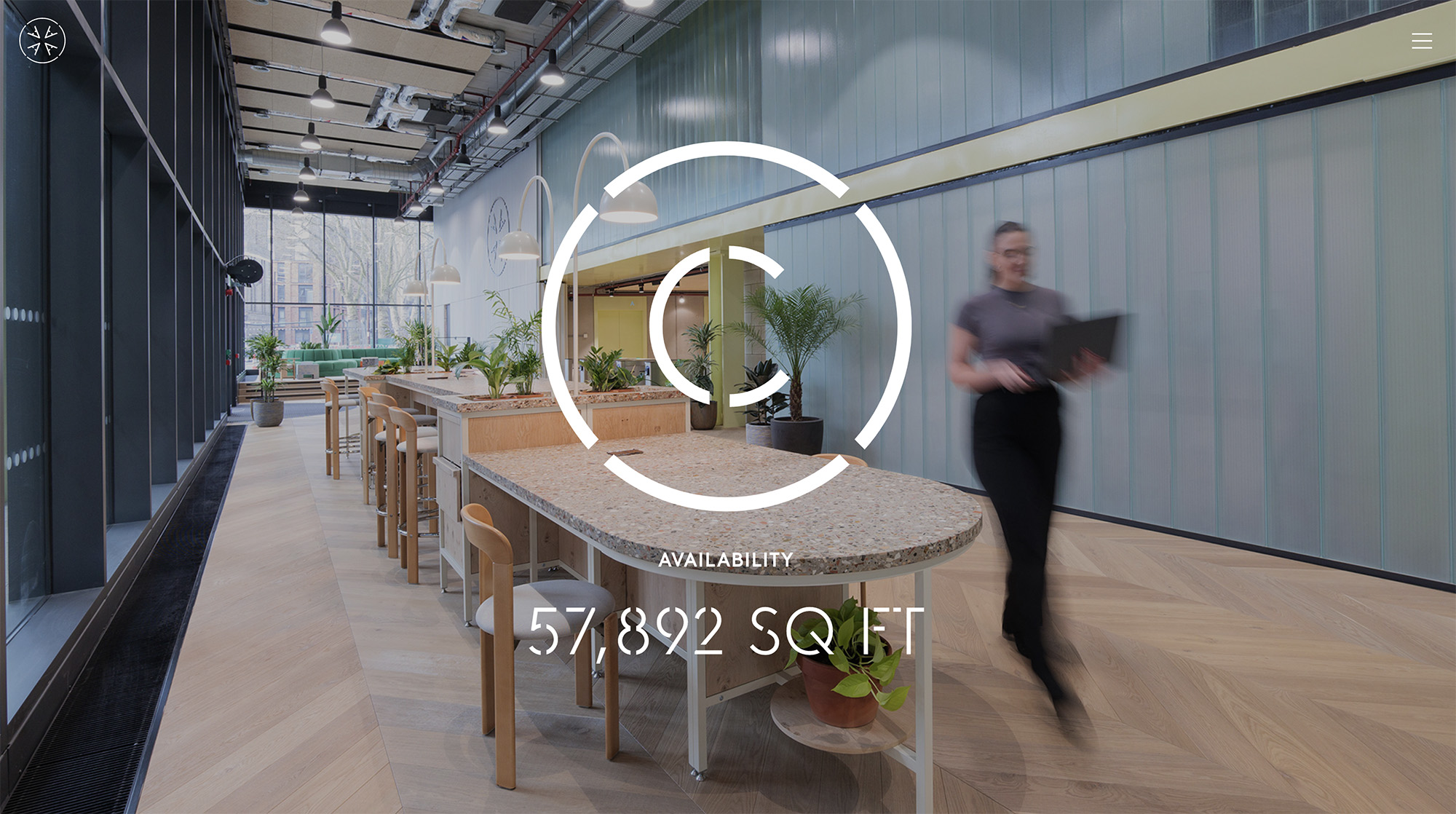
Some of the images are included in the micro-sites for the buildings, including this (see below) from Building C taken during a previous trip.

Architectural photography, done properly, won’t generate anything like the quantity of images that something like a headshot session or event coverage might. More time and consideration is required; finding the best angles, setting up a tripod, making sure verticals and horizontals are correct (unless you’re after that leaning look, of course) and often having to wait until a person or lorry or whatever has cleared the scene.

The challenges of architecture are very different to pretty much any other genre of photography, but if you have a project which needs photography, I’d be delighted to hear from you!

Email me, or call 07703 124412 for that initial creative chat.

Awards, Ceremonies and Celebrations

Under normal circumstances, I wouldn’t leave my blog unattended for almost two months, but things haven’t been quite normal lately.

A busy work schedule and personal circumstances (he said, cryptically) have conspired to keep me from posting, so this is a round-up of recent work.

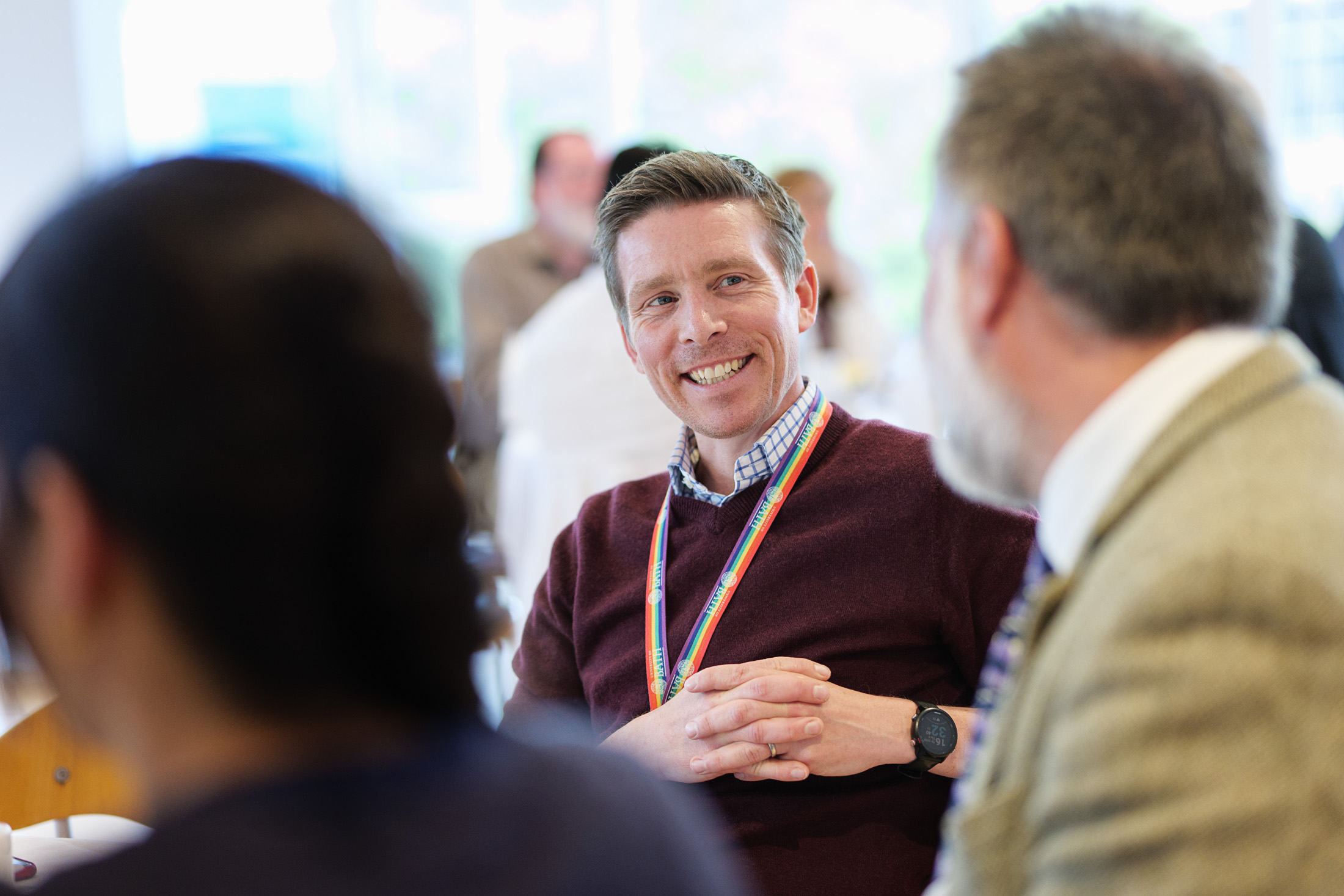
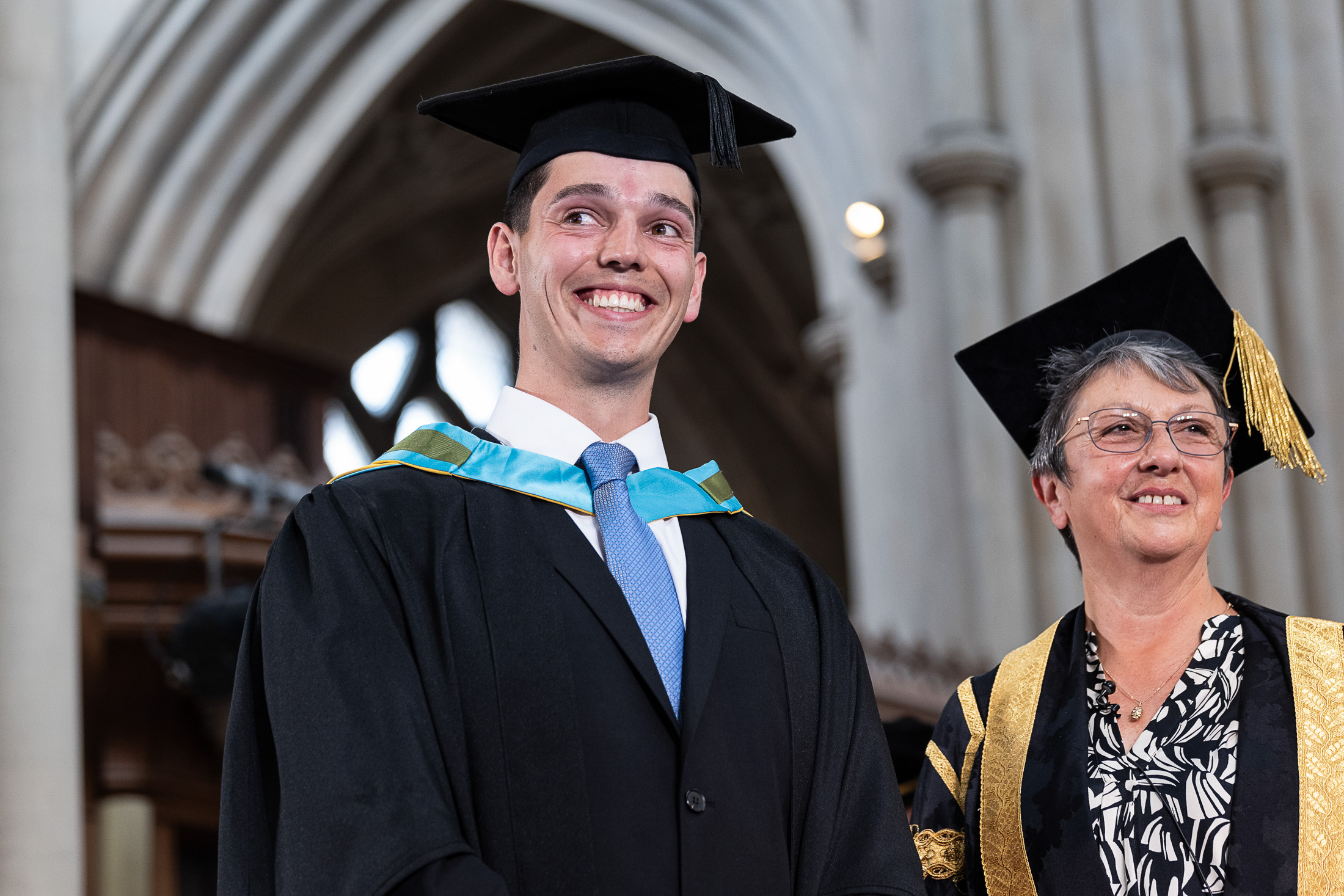
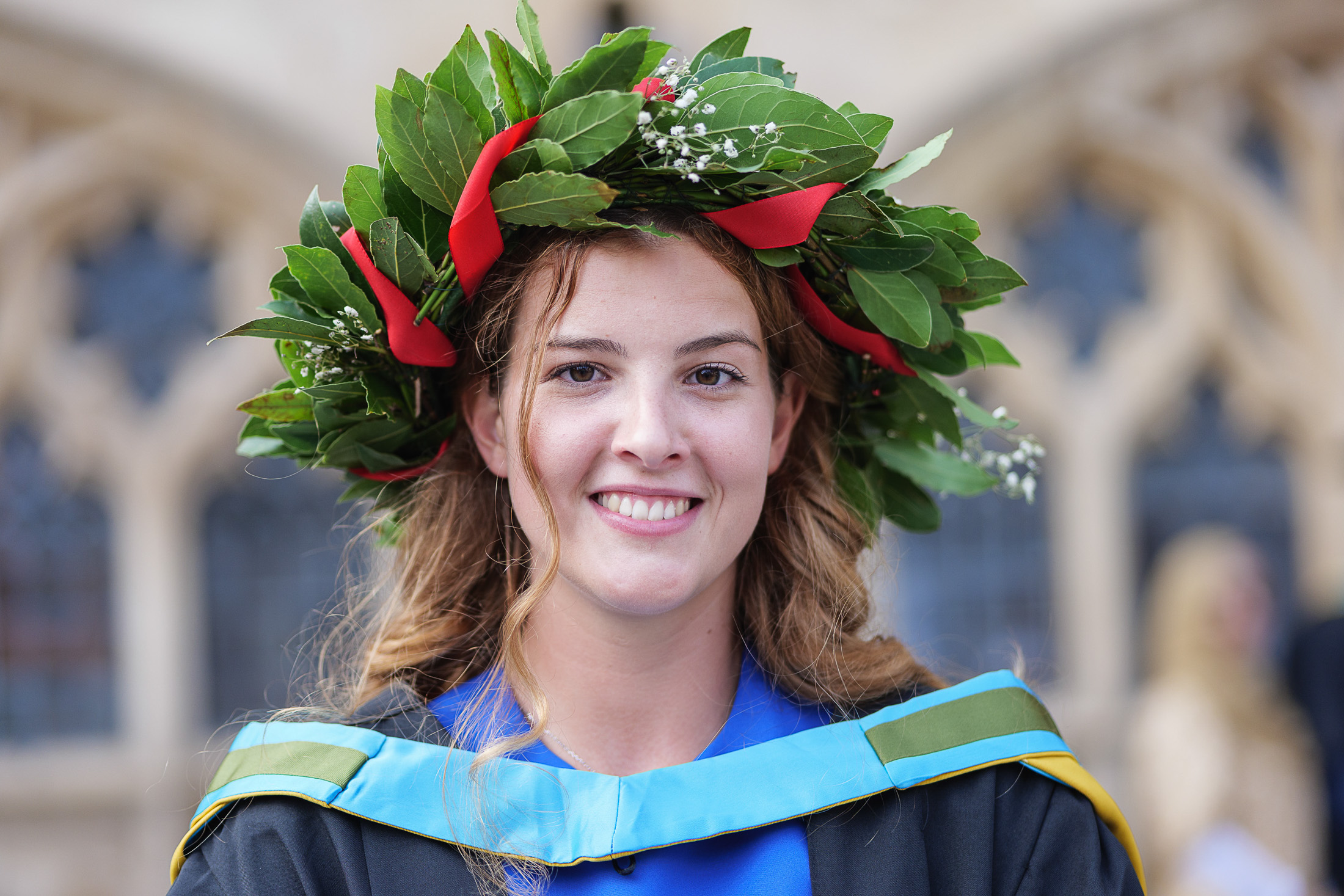
Looking back, that work has involved a fair number of award ceremonies, certificate presentations and celebrations of all sorts. From fairly low-key and intimate events to grand occasions, I’ve applied my photographic approach to them all. That is to say, I work to capture the general tone of an event alongside the smaller moments, as well as the presentations themselves.

Photographing events for my clients is always a huge amount of fun. People tend to be relaxed and generally accepting of a photographer there to capture the occasion. It’s their moment, and they’re happy to have it recorded.

For clients, they need my pictures to tell the story and to give them a range of pictures for use across social media channels, press releases, websites and brochures. So this work engages multiple of areas of the brain; I’m thinking about telling the story of the event, making pictures the attendees will enjoy, ensuring the client has images for immediate PR communication, and for the longer term, images which can stand the test of time. Some of the photos will need to be used to promote a recurring event for years to come, so they need to be of a quality that endures.

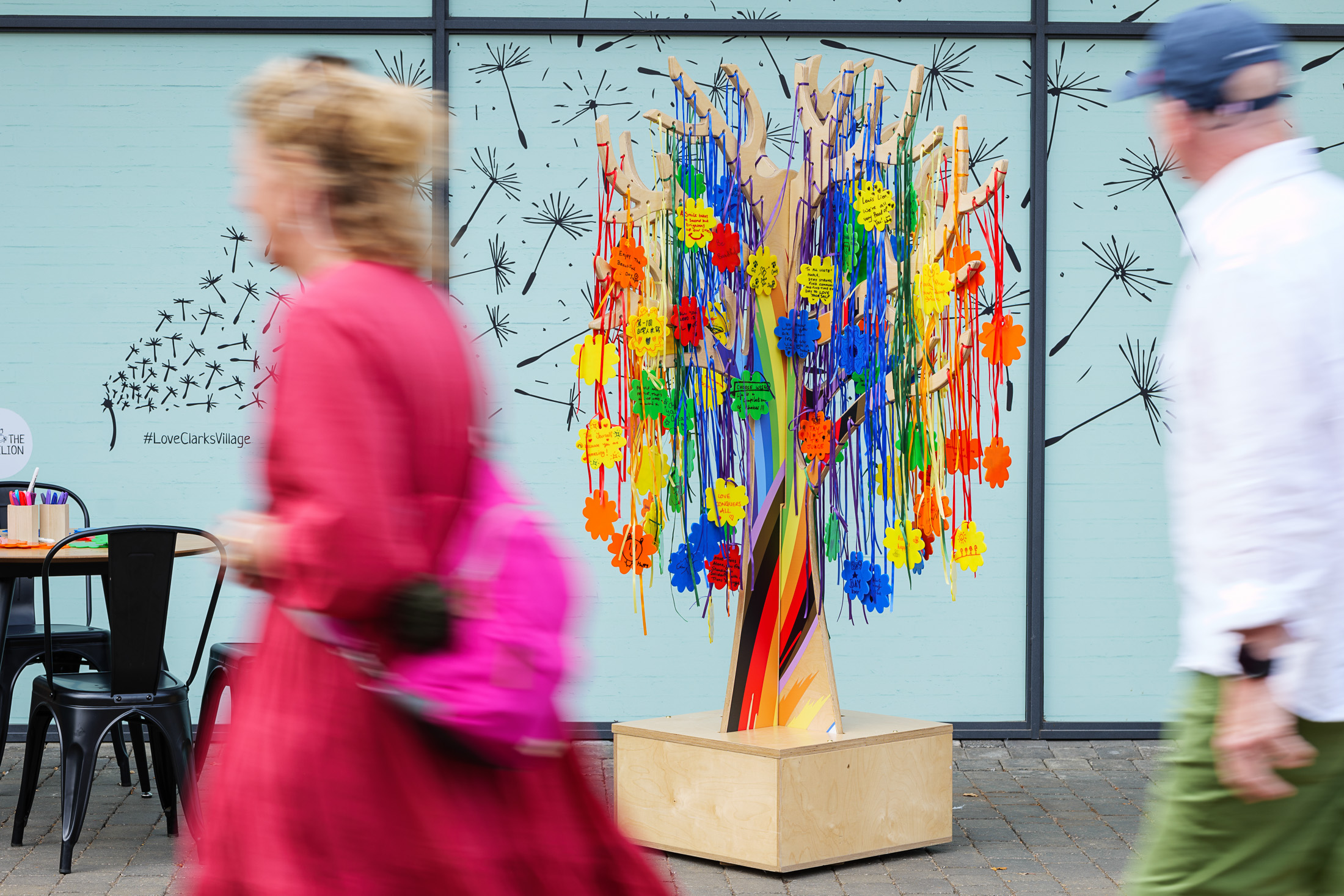
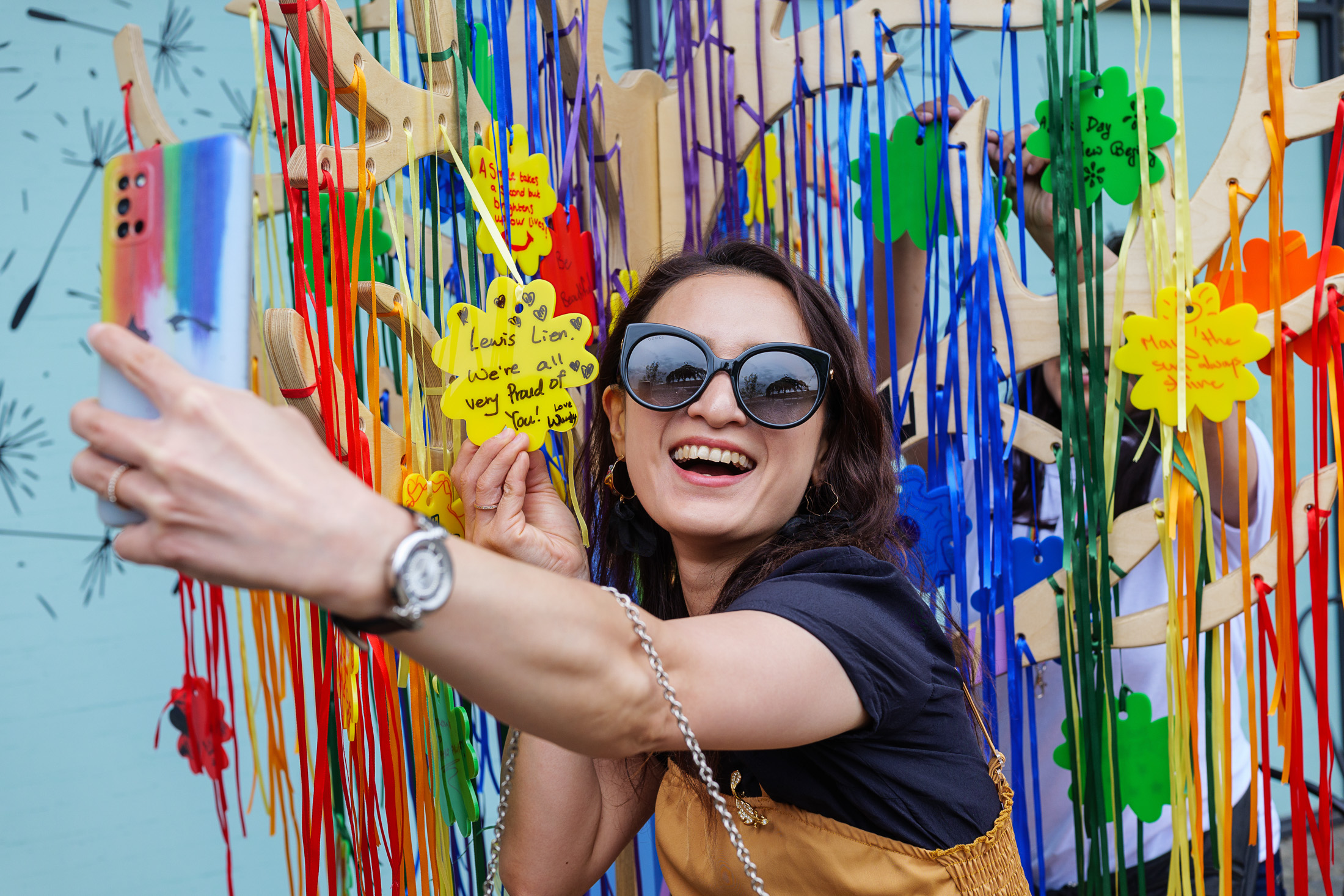
The gallery is just a handful of recent events I’ve covered, mostly for University of Bath (their events just seem to offer the best photographic opportunities!), but also for Clarks Village in Street who hosted a PRIDE tree where people could post positive sentiments on LGBTQIA+ rights, or just say or draw something up-lifting. That was a riot of colour!

I’ve got more events coming up later this year, so if your organisation is planning a celebratory event in the coming months, drop me a line or call 07703 124412 and I’ll be delighted to help.

Co-working Spaces For Corporate Photography

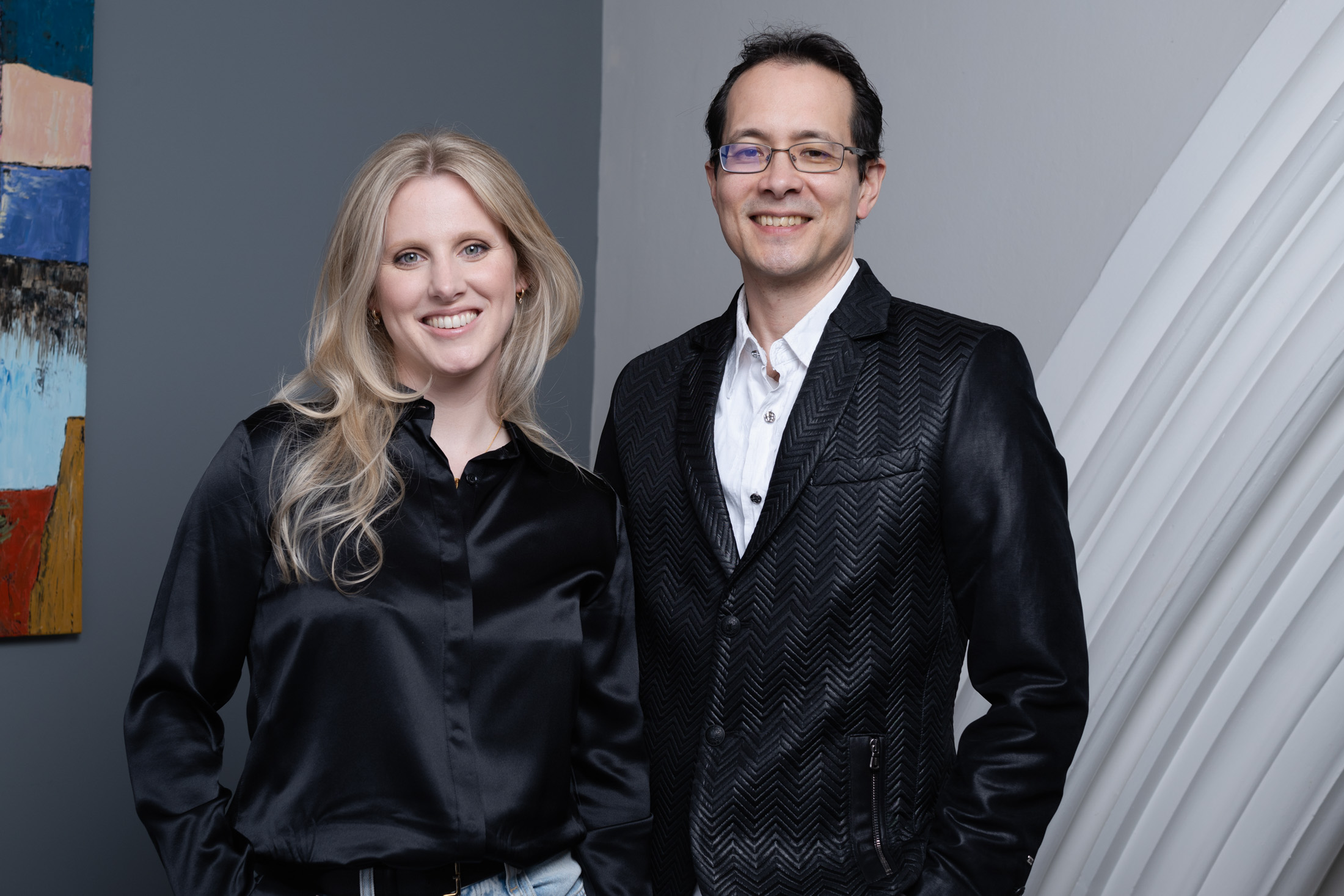
Tips for hiring a co-working hub when you have no office, or your office isn’t suitable.

While co-working spaces have been a growing trend for more than a decade, the Covid 19 pandemic definitely accelerated the move away from fixed, permanent offices for many businesses.

More generally, the co-working or shared office trend also reflects the post-pandemic rise in entrepreneurial ventures as people move away from wanting to work within large organisations, and more towards fulfilling their own dreams and ambitions.

Even large organisations have migrated teams out of big central hubs in favour of smaller, regional centres. It’s a trend which is currently growing, with little sign of abating.

Whatever the size of your business, there could be many reasons you don’t want a shoot in whatever space you have – perhaps it’s too small, or maybe it’s an uninspiring red brick cube with cramped desk-filled cubbies and a boardroom that serves its function, but isn’t aesthetically pleasing.

The Hiring Option

So if hiring a suitable space in a co-working environment is an option for your next corporate photography session, what are the advantages and disadvantages? And how can you get the most out of it?

This article will guide you through some of the challenges of finding the right spot for your office-less office shots and corporate portraits.

The Advantages

There are genuine advantages to having a photo session in a co-working hub:

• The look to suit you – from ultra-modern to supercool, you can find a space which reflects your attitude, personality and business values. Even better, all that interior design work has been done for you; it’s a photo set ready and waiting for you.

• Flexibility – depending on the requirements of the photo session, you can negotiate anything from a couple of hours to an entire day. Likewise you can scale the size of space you need depending on whether it’s a few simple headshots, images to reflect a meeting, a huddle or colleague collaboration across desks.

• All the kitchen and toilet facilities are there, and in the best hubs the staff will be only too willing and helpful when it comes to accommodating you and your team.

• Accessibility – if people are coming from various locations, co-working hubs are normally easily accessible by public transport or have parking nearby. Most co-working buildings, though sadly not all, are easily accessible by wheelchair too. That’s certainly worth checking in advance.

• A chance to get away from the desk – taking the time away from your usual surroundings to concentrate on your business image is no bad thing. It’s often a good time to have those “blue sky” thoughts while your brain is distracted by having to pose for the camera.

What To Look Out For

Of course you need to be aware of some of the pitfalls of this way of working.

• You’re away from the office! Although, I’d still argue the benefits outweigh the disadvantages of this.

• Finding the right space – with so much choice, it can be hard to find the space that fits your ethos precisely. I’m happy to help with this by offering ideas for locations I’ve used, or ones I’ve spotted and thought would be good. Here’s a search based on Bristol, my main city for work. Likewise for Bath, Chippenham and Swindon.

• Cost – It is an additional cost on top of the actual photography, but by leaving you (the client) to liaise directly with your chosen space, I don’t end up charging VAT on top of VAT, so it might not cost as much as you think.
• Finding enough space – Getting the right look can require a surprising amount of empty floor space, but I can usually advise on the best room to hire based on its size and flexibility.
• Fixtures and fittings – It’s surprising how many great looking spaces become difficult to work in because whichever way you turn, there’s a black monitor screen on a wall, an exposed conduit, light switches, thermostats, fire extinguishers, radiators, shelving, white boards… I could go on. The (often essential, sometimes arbitrary) wall clutter and objet d’art can ruin an otherwise promising space because it all gets into the background of a photo. It’s worth asking the host to send additional current photos of the space to include what’s on the walls from floor to ceiling height. Some things might be easily moved, others will be fixed, but hopefully some will be useful features in the photos.

• Lighting – I bring my mobile studio lighting kit to shape the light how I want it, but it’s still helpful to know in advance what windows or skylights are there and also what the light fittings look like. A chandelier might be groovy in real life, but it can look very odd in a business meeting shot. Again, a handful of current photos from the host can be useful here.

• It’s a shared space – While it might be easy to shut off a meeting room for a photo session, often the shared open spaces are full of photographic possibilities. This requires some diplomacy then if people are already set up and working in these areas, but I usually find a quick conversation about what we’re doing and how long we need is enough to minimise potential irritation.

• Things might change – From one photo session to the next, a co-working space might be refurbished, or they might close down. Ok, it’s a risk, but then few offices stay the same forever and there’s often a time at which it’s good to get everyone’s headshots re-done from scratch. That’s when a fresh space might be worth considering anyway.

Planning Planning Planning

The key to a successful photo session in a shared co-working facility is in planning the timing, location and access. Everything else is just the same as in working in your own space, such as choice of clothing and how you wish to present yourself to the camera.

With a little forward planning, your out-of-office photo session will not only be more successful, it’ll also be a more enjoyable experience.

If you would like more help on this, or any other aspect of planning your next corporate photo or video session, do drop me a line.

With thanks to Paul Albone and Stefanie Blundell of Pohco Consulting and their new venture Pasamelo for posing so brilliantly, and for their BTS shots of me, and to Futureleap Clifton for hosting us so brilliantly. I also recently used Origin in Berkeley Square, Bristol, who have some fantastic spaces and an incredibly friendly and helpful team.