The Rise (and Downsides) of LEDs

On a ‘lighter’ note from my previous post, this week I wanted to bring up one of the daily scourges of the working photographer; that of LED lighting.

Of course I’m a huge fan of energy-saving devices, and I appreciate the part LED lighting plays in this (though I do have some questions around that – perhaps best saved for another day), but they can cause issues for photographers.

What most people don’t realise is that LEDs are not constant lights in the way halogen lamps are/were. LEDs have a frequency, that is to say they pulse on and off. For the most part the human eye cannot detect this, but cameras, because of the way they work, can.

Each frame is 1/800th of a second, but slowed down here so you can see the changes more easily.

The Invisible Flicker

If you look at the video above, it shows a sequence of images taken at high speed over the course of a few seconds. This is not a light being dimmed up and down, it’s the LED effect. The camera settings haven’t changed from one frame to the next, but you can see how the light dims on a cycle. You wouldn’t see this when you look at the light, but the camera’s sensor is recording the variable output of this light source.

What you’ll also notice is that the ‘bulb’ isn’t changing all at once. That’s because these LED bulbs consist of clusters of LEDs, each with their own frequency. If they’re not in sync with each other you get this wave effect of light brightening and dimming.

The issue this can cause to photographers is seen as banding in images (see image below) where horizontal strips of the image are darker than the rest of the picture. It looks horrible and can’t be corrected in post-production, at least not easily. The effect in the example here is exacerbated by my use of the electronic shutter function of the camera.*


Note how the banding affects the background wall, the seats and bench in front of the students. It’s less visible in the subjects, even so I rejected it.

LEDs Everywhere

LEDs are now ubiquitous in our everyday lives. They’re in all our workplaces, shops, homes, cars; basically, they light our lives. Better quality LED lamps will cause fewer problems than cheaper ones. However, even expensive LEDs can cause issues, especially if they’re dim-able.

When an LED light is dimmed, it isn’t actually dimmed, so much as its frequency is extended. In other words, the moments when the LED is off are extended. We’re talking microsecond differences here, which is why the human eye doesn’t see more flicker, just a dimmer light.

As of writing this article, I believe there is still only one photo-centric (not video-centric) camera with a sensor design which eliminates this issue completely, and that costs almost £6,000.00 just for the body. Other slightly cheaper cameras use faster processors to try to mitigate the effect, but it’s still an issue to be aware of.

My cameras don’t show banding when I’m using the default Mechanical Shutter mode. In some situations it would be preferable to have the camera operating completely silently (by using the Electronic Shutter setting), but if banding is ruining the photo then there’s no choice but to allow the shutter to click. It’s not exactly loud, but can be noticeable in certain situations.

LEDs Triggering Issues

The flicker of LEDs can have other detrimental effects too. If I’m setting up portable studio lighting for a photo session, I’ll often use a handheld flash meter to set the output (brightness) of my flash units. To do this, I press a button on my flash meter which is then waiting for my flash to fire so it can measure the intensity of the flash. But the flicker of an LED light is often enough to fool the meter into thinking it’s detected the flash, when all it’s detected is the pulse of an LED light.

This can make it incredibly difficult to get an accurate flash meter reading. I can try shielding the flash meter from the LED light source, or I can plug the flash meter into the flash unit and not use the non-cabled setting (apologies if this is getting technical!) Unfortunately, not all modern flash units have a flash cable socket, so this often rules that option out. It’s also not always possible or desirable to switch off all the LED lights in a space to prevent the interference.

There have been occasions where I’ve just had to set the flash output by taking a series of test shots until I’ve got the correct exposure. It’s not ideal, but it gets job done eventually.

Irritation and Mitigation

I say the human eye can’t detect the flicker of LEDs, but that isn’t always true. I used to work in an office which had LED strip lights, and they irritated my vision and fatigued my eyes. Some people are more sensitive than others and you can even buy special glasses to counteract LED lighting.

The trickiest thing about LEDs is you can’t easily predict when they’ll be a problem. I’ll take test shots or look through the electronic viewfinder of my camera, but neither of these is a 100% reliable predictor of when banding will wreck a photo. A different angle, moving from one location to another or someone making changes to the lighting can all have an impact.

Many audio visual engineers have moved to LED stage lighting and this can be brilliant or a disaster depending on their system.

So next time you’re at an event and the photographer’s camera is clicking away, even if you know they have a silent function on their camera, perhaps now you’ll understand why they might not be using it.

Sorry about the length of this article, but I do hope it’s shed some light (see what I did there?) on a mostly invisible issue.

*Electronic shutter setting means the camera is completely silent, however the imaging chip is more prone to recording banding because it exposes the sensor by scanning in lines from top to bottom. The example photo I’ve used was shot at 1/200th of a second which shows just how fast the frequency of the LED cycles is.

The AI Threatscape

A new report Brave New World? – Justice for creators in the age of Gen AI sheds light on the alarming and rapid damage being wrought upon the creative industries and asks how we can protect ourselves and our national culture against this onslaught. It lays out clear evidence detailing the negative impact of Gen AI on individual creators and the UK economy and offers solutions to redress the balance of power. It is thorough and detailed, but is mainly concerned with the immediate threat to creative sector jobs.

This is not a criticism of the report, which is excellent and essential reading. However in this blog post I want to expand the view little wider to look at some of the less-obvious issues which need to be mapped as this new technology advances.

Please don’t assume that in highlighting these issues I am not concerned about the impact on artists’ incomes or the degradation of copyright. I’m also not belittling the environmental impact of Gen AI* services (through their development and their use), or indeed the huge risk of the AI bubble bursting and crashing what’s left of the economy. All of these issues are massively important and they are all deeply troubling, but I also think it’s vital that we take a look at some of the less-mentioned problems which will (already are) the result of a shift into an AI-driven world.

Naturally this article will focus on the plight of photographers, but I’ll be looking a bit beyond the immediate financial concerns faced by those making a living from photography. Some of the points I raise will also have similar effects in other professional creative areas; I’ll leave others to comment specifically on industries in which I am not an expert. Some of my concerns go far beyond the economic and creative culture harms threatened by Gen AI.

There’s No Business Like No Business

The corporate or business photographer relies on a regular stream of client commissions. Taking photos for the company website, LinkedIn and other social media and printed material is this photographer’s bread and butter, but AI is already allowing the plagiarising of specific photographers’ styles in a way which is damaging their ability to make a living. More widely, it’s already possible for anyone to ‘spruce up’ an un-flattering ‘selfie’ using an AI service, again in preference to hiring a professional.

However, let’s not forget that the people who are using these AI services today could well be in the firing line as AI replaces traditional service sector roles. The very people who might want a decent photo for their LinkedIn profile or the About Us section of a business website could well be a disappearing market for the professional photographer.

To my mind, this is one of the greatest uncertainties and un-knowables of the advance of AI services. It’s certainly going to leave many photographers scrabbling to chase a dwindling number of viable clients. It’ll be a pincer movement of decline.

Who’s Afraid of AI?

Even before that day arrives, there could be a cultural shift which makes the online posting of portraits a less comfortable proposition for many people.

GenAI services are already being used by fraudsters and people with ill intentions. A profile photo you post online can be scraped by an AI service and used elsewhere, possibly innocuously, or it could be used to try to defraud or blackmail you. Elon Musk’s Grok service was quickly employed in the rendering of innocent images of women into sexualised content. Sexual abuse images and deep fakes are a genuinely terrifying aspect of the generative AI industry. The GenAI corporates are either unwilling or unable to prevent abusive and criminal use of their services and people are already becoming more wary of having their photo taken and used online where it will be vulnerable to being repurposed.

One of the key problems with how Gen AI models are trained is that they scrape content regardless of copyright (on the creator’s side) or usage restrictions (on both the creator’s and the subject’s side). Images which were destined only to be used in a single or restricted context can easily be scraped and repurposed for uses as-yet unimagined.

Will the About Us sections of corporate websites disappear in favour of anonymity?

Vanishing Culture

The natural wariness this generates in the minds of the general public extends beyond the question of allowing (or not) the use of one’s image in a professional setting. It’s already quite challenging to document news events or even everyday culture as people have become more inclined to say no to anything which might be used in ways they cannot imagine. If AI can be used to repurpose images for uses which have yet to be invented, I believe people will become increasingly hostile to having their likeness recorded in almost any setting.

It has felt for some time as though there was a golden age when photographers could document a street scene and, if not always welcomed, were at least mostly tolerated or ignored. We have a rich archive of historical photos showing people in everyday situations. From beach holidays to Sunday fairs, or simply out shopping, eating, drinking, entertaining or being entertained.

Photographing children in public spaces is an especially dangerous occupation now. The late Martin Parr and other documentarians covering everyday life simply couldn’t do today what they did until 20, 30 or 40 years ago.

The internet has already made people more sensitive to anyone taking pictures in these situations, but add the potential threat of AI abuse and I can see a time when not only will it not be possible to record public life at any level, but public life itself could start to withdraw into purely private spaces.

Where could all of this lead?

I could be wrong and I hope I am, but where social media has already caused harm to the traditional organs of democracy (I’m thinking specifically here of the demise of newspapers and professional journalism), the very hint of a threat of AI being at the service of criminals or government controls could very easily freeze the future expressions of our society and culture; both the ‘performative’ culture, such as public activities, protests and the like, and the documenting of these activities by photographers.

It’s not as if the warning signs aren’t already there, with journalists, and photo-journalists in particular, being targeted by states, the military, police and even citizens wishing not to be documented for any reason.

Conclusion

It’s tempting to only consider the immediate threats posed by Gen AI on one’s ability to earn a living. The Brave New World report also touches on the threat to UK culture and the future viability of the creative industries, and I won’t say anything to diminish the importance of the message contained in the report. The UK government would be unforgivably foolish to believe Gen AI can create sufficient jobs to replace those displaced by AI, but I wanted to set out a handful of other areas we must also be deeply concerned about. It’s not even an exhaustive list, but I’d exhaust myself if I tried to list and examine them all. Perhaps I’ll come back to this subject to take a further look at those issues.

If you think this article went awful dark awful fast, it’s probably not a bad metaphor for how AI could turn society and culture awful dark, awful fast.

*Gen AI refers to Generative Artificial Intelligence which requires continuous training on fresh data (words, photos, illustrations, music and so on) in order to be able to ‘create’ new ‘works’. I dislike the term ‘data’ in this context and the output of Gen AI services cannot be described as ‘creative works’.

Back to the Future

While Marty McFly’s time-traveling DeLorean might still be a thing of science fiction, there’s still plenty of scope for Doc Brown-style WOWs! at IAAPS, including a gull-winged test car. This time though, it’s a BMW. Probably somewhat more reliable than a DeLorean, albeit lacking a flux capacitor.

Instead of Doc or Marty though, it was the turn of Helen Godwin, West of England Mayor, to be wowed by the work going on at the propulsion systems research centre near Bristol.

No Need for Roads

The purpose of Helen’s trip was to discover more about how IAAPS and University of Bath work to connect research with industry, creating real-world benefit from what could otherwise be siloed into pure academic study. Also to then explore how this work can be used to help promote the region to the wider country and indeed the world.

My humble task, as I have done on previous occasions, was to document the visit and generate media-ready images to help get IAAPS’ and the Mayor’s message out there.

With this kind of event it isn’t always easy to encapsulate the entire message into a single image, or even a handful of them, but it’s also not good enough to just hang around with a camera and hope something presents itself.

So my strategy on this kind of job is to be the fly on the wall, but with an eye for an opportunity to step in and arrange (with the lightest possible touch) a picture which looks natural, includes key people while also helping to tell the story.

Of course moments such as when Helen was in the driving simulator always make for a good photo, but it’s in the test cells that the story becomes somewhat clearer, visually at least.

Back to the Future, or Back of the Heads?

The only problem with taking photos of people looking at things is that you either end up with photos showing the the they’re looking at (but you just get the backs of heads of the on-lookers), or you see the people doing the looking, but now you can’t see what it is they’re looking at.

On this occasion I stepped in and asked that for a few moments at least, they discuss the car and the test cell, while pretending there was something more interesting than an observation window behind me. With the cell and test vehicle behind them, I could get a photo that made it look as though they were engaged in lively discussion, I could see their faces and gesticulations, but also that sense of what it was they were talking about because the background is part of the illustration.

Beware the Brand Hammer™

There was also a handy bit of branding in there too (note the number plate), but the branding is there without being ‘in your face’. Too often PRs will insist on plastering their client’s branding all over a photo, but this often dilutes the impact, and a picture without impact will be ignored. So beware the Brand Hammer™!

All of this is to say that with an event such as a VIP visit, it’s worth thinking ahead about how key images might be engineered to happen. Of course you can’t always plan things to the smallest detail, and sometimes I’ll need to step in and gently guide people to make a more complete picture, but having a key moment or two when the proceedings can be paused and adjusted to make more compelling images is never a bad thing.

It’s always a balance between micro-managing and under-planning, but if in either case the pictures don’t happen, you can’t get into your DeLorean to zoom back and do the job again. Even IAAPS aren’t working on that!


Happy New Year!

How was your Christmas and New Year? Are you all re-invigorated, set and ready to take 2026 by the chestnuts and give it a good twist?

Well if not, don’t worry; there is no law which says you have to be a new you just because it’s a new year. Don’t put that pressure on yourself. Maybe spend a little time putting together your short term, medium term and long term to-do list, then stick it in a drawer and wing it like you always do! It works for me!

Being a little more serious for a moment, I know I have some challenges to face and some tricky decisions to wrestle with this year, and I will be working through them in my usual, slightly random way. However, I did at least end 2025 and start 2026 with some relaxing family time followed by a fun adventure in wildest West Wales.

And as always, my camera was with me.

So to kick off the year nice and gently, here’s a handful of random images from the Wales trip.

It was a fun start to the year and it gave me a little time to reflect and consider what goals I might actually have. Here’s the thing though; I didn’t have any revelatory moments during the couple of weeks I was away, but I know thoughts were churning in the back of my mind.

Now that I’m back, some of those thoughts have turned into outline plans which have floated to the surface like messages in a Magic 8 Ball. I’m determined to get some of them out of my brain and into reality.

So here goes 2026! I hope your plans emerge too and that you manage to make them tangible.

Happy New Year!


2025 in Pictures

I’m rounding up this year with a selection of images, one for each month, which help illustrate what I’ve taken to calling a “textured” year.

Packed with work, swimming, cycling, professional and personal ups and downs, challenges and triumphs 2025 has been pretty interesting in both good and less good ways.

This gallery represents a very small selection of the assignments I’ve undertaken, and while they might not all be “bangers” they do represent a flavour of the work I’ve done and the personal images which interest me.

The majority of my professional photographic work has been with University of Bath, but other clients have also kept me out of mischief.

In the middle of it all my mum passed away in July which, while not entirely unexpected, did add another emotional dimension to the year.


It just remains for me to wish you all the best Christmas possible and every success in 2026. I want to say a personal thank you to all my clients and indeed to the friends who have supported me though this “textured” year. Thank you; I may not always manage to acknowledge your contribution directly, but it is very much appreciated.

A Goodall Moment

A few weeks ago we learned of the passing of pioneering primatologist Dame Jane Goodall.

It was additionally sad because Jane was to be the keynote speaker at this year’s IUCN World Conservation Congress in Abu Dhabi, which as I said in my previous post, I covered alongside a team of photographers from the UK. Jane would have been addressing hundreds of climate leaders from around the world, but passed away just a few days before the event.

It would have been a huge honour to have been there to photograph her, but at the grand age of 91, we can be thankful she had such a long and impactful life.

On a more personal note, I shall now always share my birthday with the anniversary of her death.

But on the subject of tenuous connections between myself and Dame Jane, here’s another for you; I once had what I call a “Jane Goodall moment”.

In 2004 (April 21st to be precise) I was engaged to take photos at Howletts Wild Animal Park for their marketing. At one point during the day I was asked to go to the medical unit where a female gorilla was undergoing a hysterectomy. She’d had a baby, but she had a condition which meant that another pregnancy could kill her. I was asked to do a few photos to document her aftercare, but I was probably in there for no more than five or ten minutes.

After I came back outside I saw that the father of the baby, a large silverback, was in a nearby enclosure so he could be close to where the mother was having her operation. We looked at each other and he came over to the wire fence, turned side-on to me and with a definite look of pride, indicated for me to see what was clinging to his back; his young son.

Between us were two layers of fence and one language barrier, but I could tell he wanted me to look. I spoke softly in appreciation and at the same time, had to think quickly.

One of my tasks that day was to find a cover image for the Howletts souvenir booklet, and here was the perfect moment. I managed to find an angle to make a portrait of his baby. You can just see a strip of green haze down the right-hand side of the frame where I couldn’t quite avoid the wire.

It was a magical moment and one not many people will have experienced except primatologists such as Dame Jane Goodall, and she wouldn’t have been fenced off from the experience. To be fair, I hadn’t spent years building up the trust of this gorilla, proud dad or not, so that fence was a welcome safety feature.

The photo did indeed make the book cover and of course I was pleased with that, but the longer-lasting memory for me was that moment of connection between myself, a proud dad and his baby.

A fleeting moment of course, and incomparable to the deep connections and impact Jane Goodall had throughout her career, but I like to think of it as my Jane Goodall Moment.

I very much hope her work will continue to influence our approach to, and understanding of, the impact of humans on the natural world. We still have a long way to go just implement what we already know.

Teamwork

While most of my photographic work involves working solo, when I do get to work with a team it is always rewarding and enlightening.

So it was a real thrill to be part of a team of photographers covering a huge conference in Abu Dhabi in October.

The IUCN World Conservation Congress 2025 was hosted at the Abu Dhabi National Exhibition Centre (ADNEC) where representatives of national governments (more than 140 of them!) and Non-Governmental Organisations (NGOs) from around the world gathered to network, share ideas, cultures, technologies and knowledge, and to discuss and thrash out international policy on climate and the environment. I understand there were more than 10,000 delegates there!

As a team of five, we faced a big challenge with many moving parts, but we quickly slipped into a method of working which felt almost psychic. With our leader Steve (second-left in the photo) handling the daily schedule, between us we were able to coordinate to ensure an even load across the team. Also that when one photographer’s pictures were urgent they had time to edit and deliver their work, and that when late nights were required of a photographer, they started later the following day.

We worked together to support each other, helping out with technical snags, exchanging tips and ideas – occasionally fetching coffee and food to help keep us fuelled.

The images we produced were used across the IUCN’s various social media channels and in their Daily Highlights page of the website, with the communications team keeping us updated on what they needed urgently.

Flexibility was key to the success of the week, and we were constantly having to review and adapt plans to keep on top of what was required.

What was most valuable for me was having other photographers I respect peering over my shoulder as I edited and to have that exchange of ideas. I was able to learn from their approaches and styles and I like to think they learned from mine too. That can be a big boost to confidence and motivation when faced with a task as large as this was.

Working alongside other photographers also had a motivational effect in terms of seeking new angles or punchier compositions; an almost subliminal urge to get work noticed within the hundreds of pictures being submitted to the client every day. It’s not a question of being a sharp-elbow competition as it often was in press days, but definitely an underlying driver to keep looking with fresh eyes, even when those eyes have had little sleep for the best part of a week!

So I want to thank Steve, Marcus, Andy and Abhi for being there and for being the supportive, professional colleagues that they were. Photographers can be a prickly, defensive breed, but there were no egos on show here, just fellow photographers all pushing for the same outcome – successful coverage of a large conference under pressured circumstances.

This was a team I’d happily work with again.

Finally, I’d like to say thank you to Kathryn and Giulia from IUCN who, alongside their media and communications teams, worked closely with us in the media centre. Their calm humour kept us grounded at the most manic moments.

The Naked Truth About Safety

The idea for this post was sparked by a post by fellow photographer and blogger Neil Turner, which you can check out here.

In it Neil discusses the requirement for professional photographers to fill in Risk Assessment and Method Statement (RAMS) forms when working for clients. As a professional, Neil is keen to emphasise that while RAMS and Health and Safety regulations do contribute to the freelancer’s work load, they are there to minimise risk and keep everyone safe.

But aside from how societal and commercial attitudes to risk have evolved in the past couple of decades, Neil’s post got me thinking about the riskiest job I’ve ever done. There are a number of contenders – scaling a 150ft hospital incineration chimney, or taking photos from the open door of a Royal Navy helicopter over The Solent having forgotten to attach my seatbelt (oops!), but these were back in the days when H&S didn’t seem so important.

My Riskiest Job

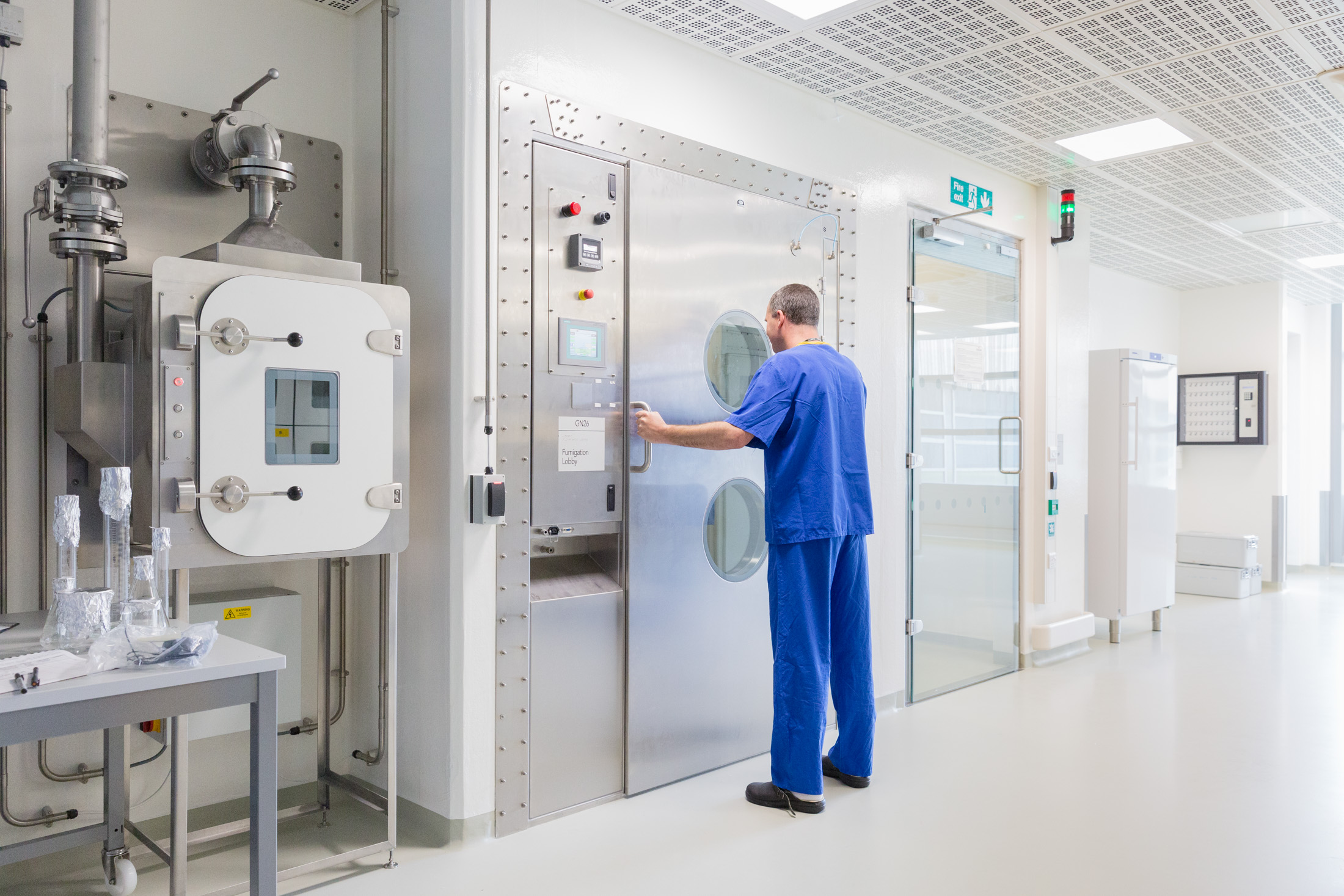
The job that I think entailed the most extraordinary risk mitigations was when I was commissioned to shoot some stock images for The Pirbright Institute and BBSRC. But the measures I had to undertake were less about my personal safety, more about bio-security. In this case, not accidentally transmitting a highly contagious pathogen to livestock.

Because I was going to be working in laboratories which investigate animal pathogens such as BSE, Bluetongue and, from memory, even Anthrax, the rule was that anything which went into the lab could only come back out either through a shower, sterilisation cupboard, or through a peroxide bath. This had certain implications on my approach to the task.

Kitting Up and Kitting Off

For a start, the kit I could take in would be very limited. I opted for my Canon 5D MKIII with 24-70mm f/2.8 L lens which would give me the best range of flexibility under the circumstances. There was no point taking a second lens in since the camera was going to be sealed into an underwater housing for the duration of the session, which was going to exit the lab through the peroxide bath. This also meant no flash because the underwater housing prevented this being an option.

All well and good for the kit, but what it meant for me and the client contact going in with me, was that not a single stitch of clothing could be taken in because it couldn’t then be taken out again.

This was the first and only time I’ve been naked in front of a client, but y’know we were pro’s. And so we stripped off, passed through a shower section, and dressed in scrubs on the lab-side of the biosecurity barrier. In this way, this laboratory is as sealed as it is possible to be from the outside world.

The Tricky Bit

Once in and dressed in lab scrubs, it was then a case of working out which parts of the lab would get the images the client needed, while also doing our best not to hamper the work of a very busy team of scientists. It’s also fair to say, as a working lab this was never going to look like a Getty Images photo session with clear benches, shelves of identical flasks and vials and clear white walls, all perfectly lit like Heaven’s waiting room.

I had to pick angles with the least distracting backgrounds and contend with a mix of off-white ceiling lights and a bit of window light here and there. Most of the colour correction was going to have to happen in post-production.

Add to this, working a camera inside an underwater housing is like trying to knit while wearing boxing gloves (not that I’ve tried that, but you get the picture). However, by the end of our time in the lab we had a good selection of images of all the key activities the client needed covering. So time to leave.

U-Bend If You Want To

This is where things got a little tricky. You see my camera needed to exit through the peroxide tank; imagine a sort of large u-bend filled with a powerful bleaching agent. We could have used the fumigation cupboard, but that would have taken around an hour and none of us saw an issue with passing the camera, in its underwater housing, through the peroxide.

That is until it got stuck in the u-bend. With a lab-side technician trying to prod the unit down with a rod while another technician outside the lab tried to hook it out (we’re talking a strong peroxide solution, so full gloves, masks and all the health and safety being observed), there was a 20-minute tussle to retrieve the camera.

In the meantime, my client and I got showered in the fanciest shower I’ve ever been in. A single-person cubicle with doors which locked automatically and didn’t release you until you’d showered for a set amount of time (six minutes, if memory serves).

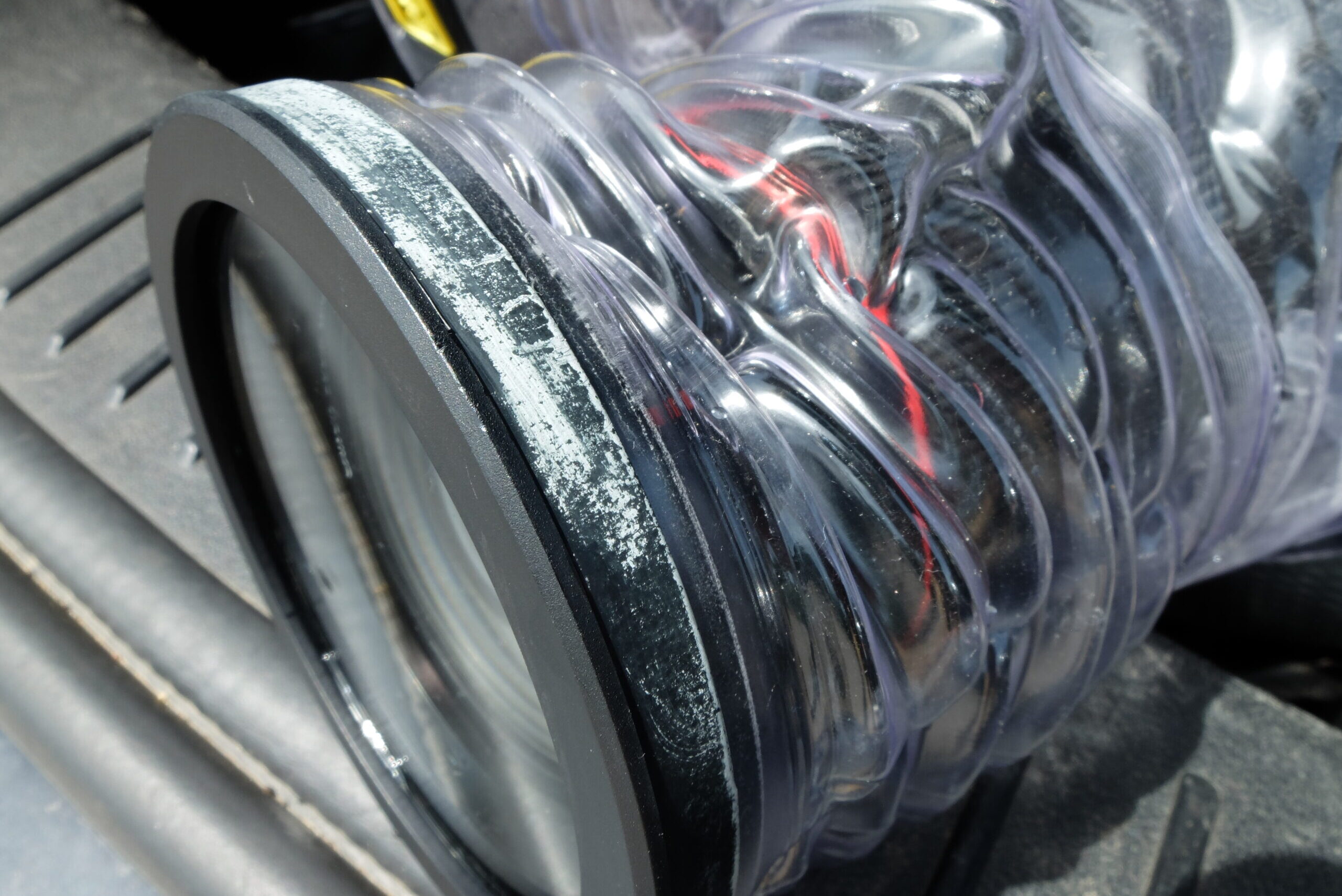
By the time the camera equipment was retrieved and thoroughly rinsed off I was back in my usual clothes, but the underwater housing looked a little sad after its ordeal. Even one of the locking screws had sheared off in the process, but the bag was still watertight and everything inside was fine.

What’s Not In The Picture

I suppose what all this illustrates is how we can see a routine-looking image and not realise what’s gone into making it happen, a lot of which might be completely un-related to the photography itself. Sometimes this can be the extensive planning of logistics, other times health and safety considerations (often both), or even whether or not the photographer had to take their clothes off to do the job.

Needless to say, that last bit isn’t routine for me, and thankfully so for everyone’s sake.


Tool or Toy?

As September draws to its conclusion, I’ve been surprised to realise it’s only been a couple of weeks since I got back from an all-too-brief holiday in Brittany.

Now I could bore you with my holiday snaps, but I’m only going to bore you with two. And they’re not even typical holiday snaps.

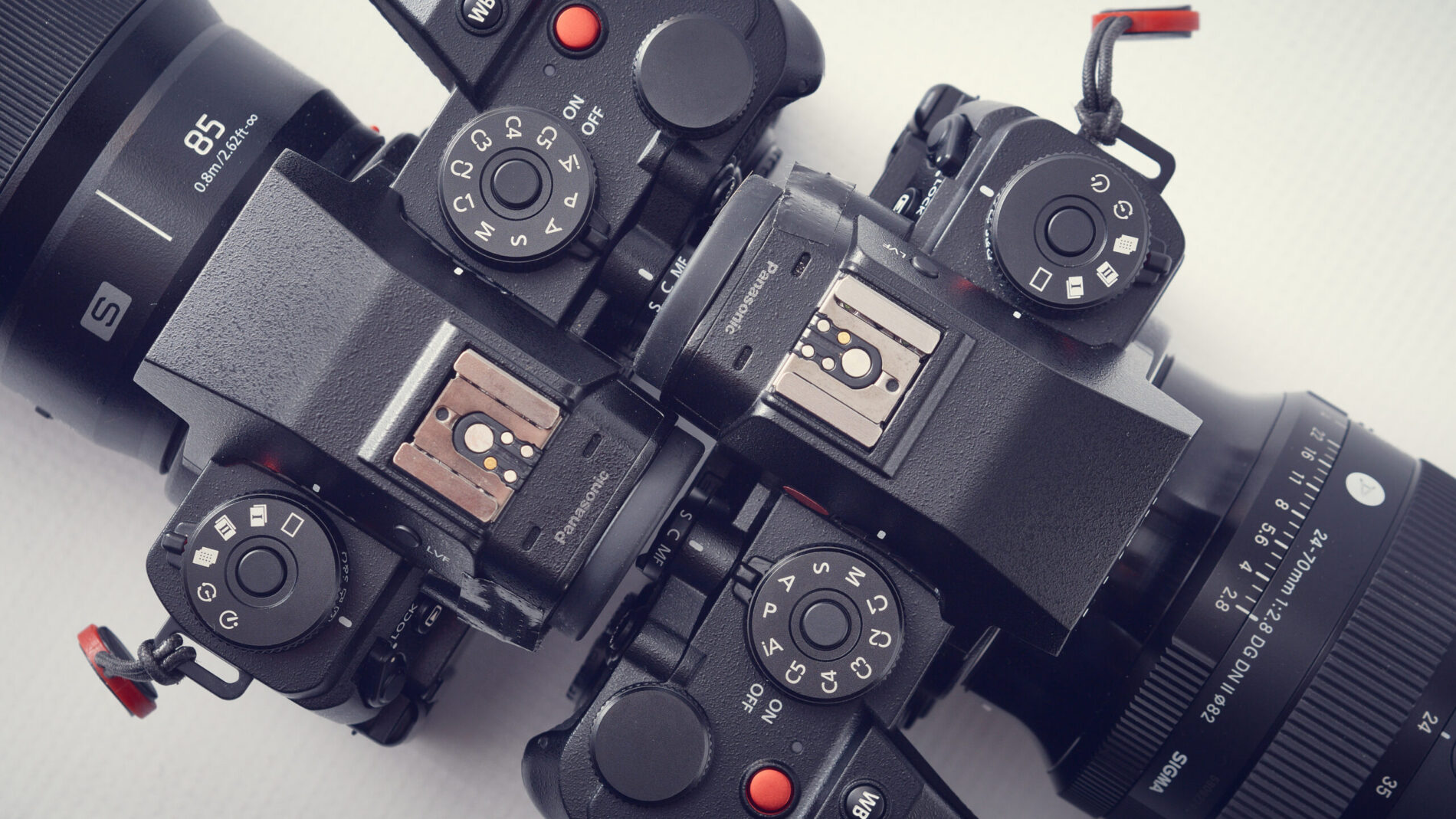
The real purpose of this post is to share some thoughts on a new addition to my kit bag, a Lumix GX9 camera (and two lenses). This isn’t so much a camera review, more a ‘why did I do that?’ sort of musing thing.

For My Pocket

For a long time (I’m talking years!) I’ve been in the market for a properly pocketable digital camera. Something I could chuck in my coat pocket, but with more versatility and better image quality than my iPhone – a Holy Grail for many photographers.

I looked at all kinds of options, from the eye-wateringly expensive Leica Q2/Q3, to the Ricoh GRIII, but nothing quite hit the spot. Then I started to notice the Panasonic Lumix GX-series of cameras. Again, not perfect, but as close to the right balance of versatility, quality and price as I was ever going to get.

Since I wanted a camera that could potentially find a use in client work as well as be a personal carry-around snapshot option (my Brittany holiday was starting to focus my decision-making too), Panasonic’s Lumix GX9 has the added benefit that it takes interchangeable lenses. I didn’t want the built-in zoom that many cameras in the pocket-friendly category have because I wanted the best quality I could get.

The only potential downside is that the GX9 is discontinued, and the GX-line seems to have reached the end of the… um… line. So a used camera was my only option. Even some of the lenses seem to be discontinued, such as the Panasonic 20mm f/1.7*, which is mounted on my camera in the photo.

That 20mm is, on this camera, equivalent to a 40mm lens on a regular SLR (I won’t explain the technicals here, just believe me). That’s my favourite focal length, so I was pleased to be able to pick up a genuine Ebay bargain.

For a second lens option, I bought a Lumix/Leica 15mm (30mm equivalent, see above) for wide angle shots. For this I bought new as the used prices weren’t all that attractive, and it is still available through retailers.

For Work

So how does this slot in with my work gear?

As a rule, I favour fixed lenses for my work – I just prefer the quality. However, even with two main camera bodies, this can leave me changing lenses rather more often than I’d like. So the GX9 with the wide lens on it gives me the option to do the general views at events without having to switch out the standard or long lenses mounted on my other two camera bodies.

There is compromise here though. The GX9 isn’t exactly a wizard of low-light photography, so I don’t use it where I need to crank up the ISO (sensor sensitivity) beyond 800. Things get awful noisy from 800 onwards, though the end-use of the pictures can mean low-light noise isn’t always a problem. The camera can also take an external flash, which can get me out of a fix in certain low-light situations.

The viewfinder is pretty dire too, but I knew that going in and actually I’ve got used to it. In most other respects, it’s a highly usable, capable camera – you just need to know how and when to use it.

For Fun

Beside the personal/holiday/family snap use, and to make the camera even more versatile, I also bought a lens adaptor which allows me to use some of my lovely Nikon lenses on this camera. Ok, so I lose a lot of the automation of the purpose-built lenses, but it’s another chance to play and experiment with other looks and styles. For example, I haven’t (yet) bought a longer lens for portraits for the GX9, but I have a Nikon-fit Voigtländer 40mm lens which becomes an 80mm lens on the GX9 – perfect for portraits! The adaptor adds value to the camera, as well as allowing me to use those lovely older lenses more often too.

For the Future?

I suppose my biggest fear is that one day this camera will die and I won’t be able to replace it easily. Modern digital cameras don’t always have the robustness of some film cameras. For last year’s trip to Brittany I took a very pocketable 35mm film camera. It was manufactured some time in the 1990s and yet it still functions. However, I can’t use that for work since no client wants to wait for film to be processed and scanned.

In an ideal world, Panasonic would bring out an updated version of this camera. Sensor technology keeps improving and this camera’s format (known as M43 or MFT, and pronounced ‘micro four thirds’) has a lot of advantages in terms of portability. If they’re thinking of doing this, they’re taking their sweet time about it.

For the time being this toy/tool will get use while it lives. If/when it dies, I’ll see if there’s a decent used replacement available, and keep going until I finally have to ditch the lenses. Maybe by then some perfect alternative will have emerged.

So keep an eye out for future posts featuring this dinky camera, in the meantime, here it is in all its cuteness alongside two of my favourite ‘holiday’ photos.

*Wherever the lens is listed new, it’s shown as Awaiting Stock. I suspect Panasonic ceased production some time ago.

A Qualified Opinion

Final grades certificate in photo-journalism for Tim Gander. Issued by the National Council for the Training of Journalists.

Not bad grades, and I did pretty well on a local evening paper.

This is a blast from the past – my certificate in photo-journalism, awarded by the National Council for the Training of Journalists in 1992. It was amongst a stash of old school reports hoarded by my mum.

I don’t want to sound like an old man reminiscing, but this dates from an era when photographers were trained to take pictures for news. This no longer happens, and sadly reporters with iPhones are a poor substitute.

The course at Stradbroke College in Sheffield was, for a few decades, the only formal route into news photography in this country. You either took the one-year pre-entry course (as I did), or you could get a traineeship on a paper who would then send you on block release to cover the course over a period of a couple of years (I’m a bit sketchy on this as it was a long time ago!)

Having completed my full year, this certificate graded me on my progress at that stage. I then had to find a job with a paper (in my case, The Portsmouth News) and be indentured for two years before taking final exams, submitting a final project and qualifying as a senior photographer. Of course I passed with a Distinction, as you would expect.

But why is it a problem that this structure no longer exists? People consume news very differently today, so this training malarkey is old-hat and obsolete. Plus taking photos is so much easier; who needs training?

The issue arises because since newspapers have devalued their product to the point where most local papers consist of nothing more than a mixture of phone snaps, Google Streetview screen grabs or images lifted from Twitter, photographers no longer play the role they once did, that of first witnesses and documenters of breaking stories. We simply don’t have that anymore, at least not in the traditional titles.

We were also trained to cover events, even incidents, with professionalism and with a good grasp of press ethics and the law. In fact understanding the law as it related to our work was often useful in situations where those in authority (*ahem* the police) would try to obstruct our work. Today, many reporters and certainly members of the public don’t have the knowledge required to be effective image gatherers.

The cutting back of photo departments, which really got going in the early 2000s, also disposed of an incredibly valuable asset. While reporters were already being increasingly tied to their desks, writing stories almost entirely over the phone and without leaving the office, photographers were the main point of contact between the readers and their paper.

This wasn’t always an entirely comfortable role for photographers, but it had a value which is now lost for good.

It’s good to see the emergence of community newspapers now, such as The Bristol Cable, which work on a different business model to traditional newspapers, however they still haven’t fully embraced the power of photography, largely relying instead on their staff journalists or, at a stretch, casual freelancers. This is a shame because a publication will struggle to find its look and voice if there is no consistent style to its visuals. It also means there’s still no consistent contact between readers and editorial staff.

Of course I understand the issue of cost vs benefit, and most of these new news initiatives just don’t have the budget for properly-trained photographers, so they’re stuck with this new paradigm. They can’t cover stories consistently and in depth, so they fall short of the engagement they need to grow. For as long as they can’t grow readerships, they can’t invest in photography.

So while this certificate might be a flimsy document harking back to a time when the news industry was very different, it’s also a reminder that an entire industry, underpinned by structured training, has suffered a pretty mortal blow. I would love to see a new ‘traditional media’ emerge where photographers have regular patches and disciplines to cover (eg news, sports and features), and as platforms such a Twitter seem to be losing ground, maybe the time will come when people return to trusted, curated, edited and regulated sources for news.

There is hope yet! And then perhaps I can present my certificate and get a job on an evening newspaper.