Photo Case Study: Industrial Photography

If I think of industrial photography what often comes to mind is the pictures of spectacular engineering projects like the Channel Tunnel, the particle accelerator at Cern, Oil platforms and large-span bridges. Vast-scale projects photographed beautifully by people with immense experience and the knowledge to make huge, impersonal industrial scenes look impressive, beautiful and moving.

But industrial photography can also be on a much smaller scale. Because of the nature of the work I do, my industrial images tend to fall more into the editorial style of photography. I’m helping smaller-scale industrialists communicate the human scale of what they do. Single human beings working hard to produce smaller pieces which, when finished, will have their own kind of beauty.

When a welder makes a beautiful weld by hand, their work is visible in the finished article, as unique as an artist’s brush stroke, though much less noticeable to the casual viewer and often hidden completely from view as the component is incorporated into a much bigger civil or industrial project.

I enjoy finding the right angle, lighting and composition to make an interesting, engaging image from what to anyone else might seem like a pedestrian, chaotic or grimy industrial scene.
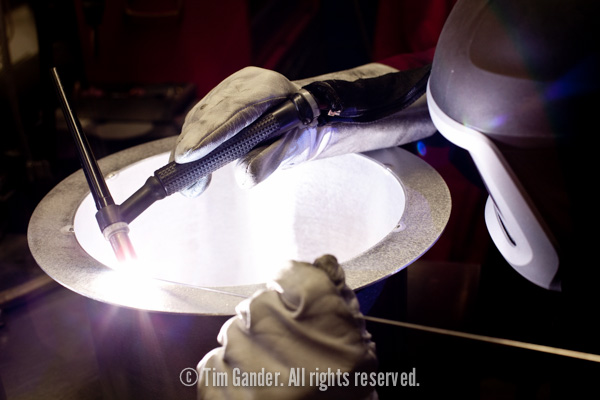
Man spot-welding a steel pipe.

Industrial details showcase your company’s skills

This shot of a welder at work at City Engineering in Bristol is a case in point. The bench was busy and workman-like, and wasn’t going to do the photo any favours, but by exposing only for the light reflected off the gloved hands and mask, and using depth of field to guide the viewer’s attention, I was able to make a simple but engaging shot showing the care and craftsmanship which, had I stepped back and shot wider, would have been lost in the scene.

While I’m not a fan of photographers saying “this shot is really great because it was so hard to get,” it’s worth pointing out that taking pictures of welding can be tricky. You have to wear a mask to protect your eyes from the intense light, but the mask is so dark you can’t see what you’re shooting  – even when the welder sparks up, your view is necessarily dim.

I used a few tricks to get the shot that was needed and none of them involved Photoshop but, obstacles aside, this is the kind of industrial photography I really enjoy. Simple, editorial, illustrative. A small tale in the much larger story of a great industrial project that I might be invited to shoot once it’s finished.
Case Study: Conference Photography

Conference venues have had a rough time in recent years. Events can be expensive to run, and sometimes they’re expensive to attend, so where businesses have dared spend the money at all, they’ve often seen photography as a luxury bolt-on.

In my role as conference photographer I noticed a decline in appetite for this particular service in 2008/2009, but looking back over 2010 I’d say demand has increased again.

Getting quality photography at a conference has often been pretty low on organisers’ lists of priorities – that is until the conference is over and someone wants to “PR” the event. At which point they discover that all they have are some iPhone snaps which aren’t much use for anything at all except maybe viewing on an iPhone.

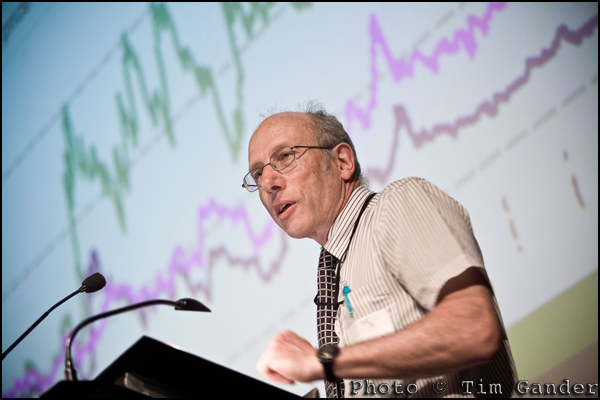
scientist delivering conference presentation

Balancing lighting on the speaker and their presentation takes some effort.

I can tell a client hasn’t given too much thought to photography prior to the event when I get the call the week before it’s due to happen to ask if I’m available and what the cost would be. They booked the venue about a year in advance. They booked the speakers, sound, lighting, video, staging, caterers, cleaners door staff etc etc. And (relatively speaking) at 5 minutes to midnight, somebody thought: “Oh! I think we might want some pictures from this event!”

Now I applaud these people for thinking so far in advance because as I said, some don’t think of it until the event is over, by which time it’s a bit too late to go back in time to shoot what should have been shot in the first place.

So if your organisation is considering a conference, which after all can reap great benefits in public relations, client relations and exchange of ideas with partners and clients, I would urge you to consider the benefits of getting coverage, and of getting that coverage done professionally.

Conferences can be very useful in that unlike most other events or times of the working year, they tend to be the one time when a significant number of staff and executives are in one place at the same time. So think about getting fresh headshots done – a small setup in a side-room or quiet corner is ideal for this.

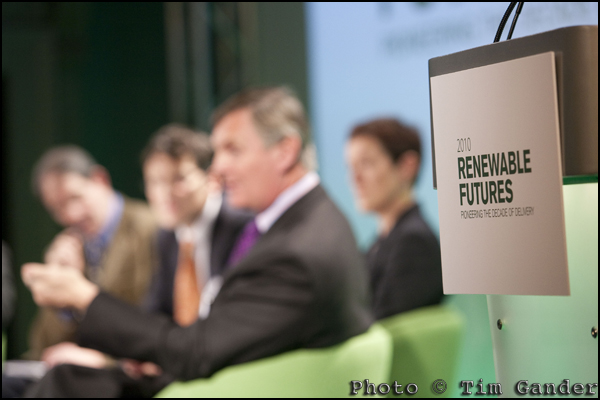
Regen SW conference debate in Bath

More obscure shots can be useful later on.

A conference with industry-wide or even public interest, has scope for extensive PR. Pictures of key speakers talking passionately at the lectern, or as a panel of experts can add spontaneity to what might otherwise be a dull PR shot. For other PR uses it’s handy to get a relaxed portrait of key speakers at the venue, perhaps with relevant props visible in the shot.

Employing a professional (like wot I is) means not only will you get the vital shots you need, but you’ll get quick turnaround and you’ll also get the shots you never even realised you needed. Those little details that others would walk past, but which come in handy for future uses such as brochures, annual reports etc.

Of course you might find you have a keen photographer amongst your staff, but do they know how to handle the difficult lighting at these events? Balancing light on the speaker with the slide behind them isn’t always easy. They’ll also tend to miss the details I mentioned, and they often can’t turn the work around quickly. Finally, using a member of staff is all very well, but shouldn’t they be paying attention to the conference rather than the settings on their camera?

I cover conferences of all sizes, taking pictures which clients can then use for internal and external communications, press releases, websites, brochures, future presentations; the list is limited only by one’s imagination. In terms of cost, the photography has to be one of the better value ingredients of a good conference. The food can only be eaten once, while the photography can be used again and again, long after the taste of plastic ham sandwiches and greasy tea has passed.

What price a portrait?

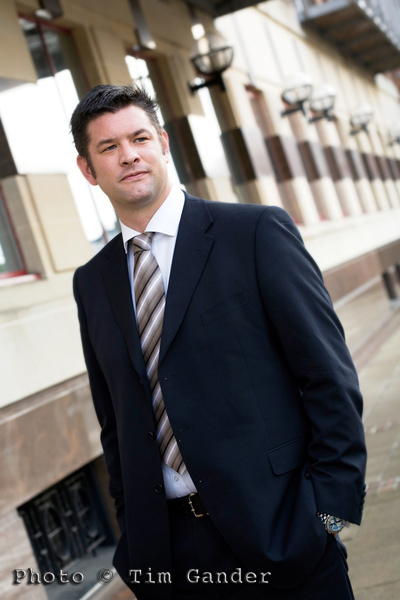
corporate portrait of businessman in Bristol

A corporate portrait can be more than a mugshot.

I should start by explaining that this article isn’t talking about family portraits or photos for the mantelpiece. What I’m talking about here is the business portrait. The corporate headshot for the profile page of a commercial website, newsletter or chairman’s statement in the annual report.

Why is this distinction important? Mainly for licensing reasons. If you go to a high street photographic studio and have photos taken you will probably pay about £30 for a sitting, and £100 for a print to hang on the wall. And personal use is all you’ll be allowed of that photo. Commercial use would require payment of an extra fee, and I suspect most studios wouldn’t be happy handing over an original digital file for that use as you could then get your own reprints done, which would of course breach the photographer’s copyright.

When you have a photographer visit your offices to take portraits for the company website/brochure etc, you’re not paying for prints for personal use (though you can probably buy those if you want), instead you’re paying a licence fee to use the images for corporate use. This is a different kind of agreement with the photographer and the pricing structure is different.

Of course if you book a photographer and then just have a single headhsot done, it can work out relatively expensive. Perhaps £250 to get a small selection of images for use across various media. But if you line up a few headshots to be taken at the same time, the cost will rise but the individual price for each headshot will drop quite dramatically.

It’s often quite difficult to explain this concept to clients who will say “well it’s only some portraits, they shouldn’t take long.” The thing is, in commercial and corporate photography, it isn’t just the time taken to get the shots that you’re being charged for, but also the commercial (as opposed to domestic) value of the photos. Remember, these photos are part of your marketing, and hopefully will help your business make more money. They may not be used as prominently as your product shots, or general photos of your business operation, but they’re all part of the mix and to have any value to your business, they have to be good. Which requires skill, time and equipment to achieve.

In short, you need to give the humble head and shoulders photo some respect and also understand that what you’re paying for is a combination of the photographer’s skill, experience and time on the commission, as well as a fee for the commercial exploitation of the results.

And what is that worth? As I said earlier, if you hire a photographer to take just one headshot you could easily pay £250 for that, maybe more. Get a batch of portraits done in half a day and the rate might rise to around £500, but if 10 portraits are done, that works out at £50 per head. That’s less than you’d pay for a 10-inch print to hang on your wall at home, and your clients can’t even see that photo. Unless they’ve broken into your house.

Shouting from the Gallery

I’ve recently introduced a new system for presenting and delivering images to clients. I haven’t shouted about it to everyone yet because I felt it needed to be tested with some trusted clients first, but it’s proving so popular that I’m offering it to anyone I think can benefit from it.

Here’s how it works, but a little history first:

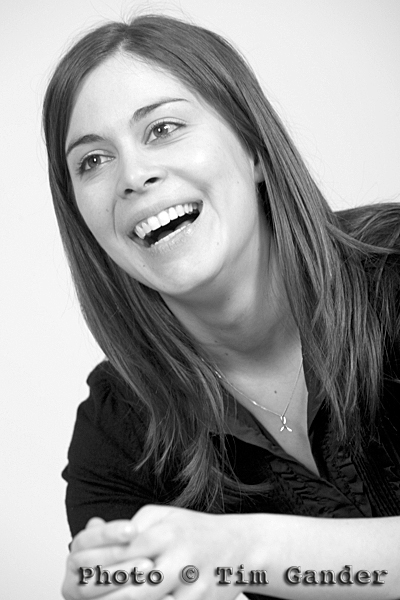
female corporate portrait

The system is great for keeping any commercial images organised.

It used to be I’d shoot an assignment, then make a web gallery from the images before any post production was carried out on them. The client would choose images from the gallery, send me the image reference numbers, and I would carry out post production and send the photos via CD, email or FTP.

The client would either have an agreed number of images included in the price, or would pay an hourly post production fee according to how many images they needed.

This was all well and good, except that most clients would end up choosing 30 images from a 30-image deal (for example) when they only needed maybe 12 images to start with. The rest they were picking just to make up the package, when they didn’t necessarily know how they might use those photos.

Now with the client-specific, interactive gallery, I do the shoot, edit the pictures, do post production on all remaining shots and upload them to the client gallery, from where the client can download the files they need, when they need them. The files are all ready to be published when the client sees them, and they don’t need to download the entire package of photos in one go. The gallery remains for as long as the client requires it, and indeed the client can have me add to the gallery with subsequent shoots.

This development has also allowed me to put together a more formal pricing structure for all those assignments which don’t have special, extra requirements in either equipment, travel or licence to use the images. In other words, standard corporate shoots.

You can download the rates card here Tim Gander Fees to see how it works. I put together three packages to suit different business sizes, types and picture needs, from an all-in option for the busy client with a need for quick access to lots of images over a period of time, to the startup that might just want to have a bank of images sitting safely there for them to buy as and when they need them, thus managing their cashflow better.

Of course there will be times when clients need more extensive rights to the images than my standard terms allow for, and there will be clients with a much lesser requirement, or shoots will be more or less complicated or expensive to run, in which case rates will be negotiated according to the assignment and the client’s needs, but this system will suit the majority of standard, corporate assignments.

I welcome feedback on this, so have a look and tell me what you think.

Tim Gander is a commercial photographer shooting corporate photos for businesses in the Bath, Bristol, Swindon and Salisbury areas of the South West of England, and has a habit of talking about himself in the third person.

Contact Tim on  07703 124412 or tim@timgander.co.uk