The AI Threatscape

A new report Brave New World? – Justice for creators in the age of Gen AI sheds light on the alarming and rapid damage being wrought upon the creative industries and asks how we can protect ourselves and our national culture against this onslaught. It lays out clear evidence detailing the negative impact of Gen AI on individual creators and the UK economy and offers solutions to redress the balance of power. It is thorough and detailed, but is mainly concerned with the immediate threat to creative sector jobs.

This is not a criticism of the report, which is excellent and essential reading. However in this blog post I want to expand the view little wider to look at some of the less-obvious issues which need to be mapped as this new technology advances.

Please don’t assume that in highlighting these issues I am not concerned about the impact on artists’ incomes or the degradation of copyright. I’m also not belittling the environmental impact of Gen AI* services (through their development and their use), or indeed the huge risk of the AI bubble bursting and crashing what’s left of the economy. All of these issues are massively important and they are all deeply troubling, but I also think it’s vital that we take a look at some of the less-mentioned problems which will (already are) the result of a shift into an AI-driven world.

Naturally this article will focus on the plight of photographers, but I’ll be looking a bit beyond the immediate financial concerns faced by those making a living from photography. Some of the points I raise will also have similar effects in other professional creative areas; I’ll leave others to comment specifically on industries in which I am not an expert. Some of my concerns go far beyond the economic and creative culture harms threatened by Gen AI.

There’s No Business Like No Business

The corporate or business photographer relies on a regular stream of client commissions. Taking photos for the company website, LinkedIn and other social media and printed material is this photographer’s bread and butter, but AI is already allowing the plagiarising of specific photographers’ styles in a way which is damaging their ability to make a living. More widely, it’s already possible for anyone to ‘spruce up’ an un-flattering ‘selfie’ using an AI service, again in preference to hiring a professional.

However, let’s not forget that the people who are using these AI services today could well be in the firing line as AI replaces traditional service sector roles. The very people who might want a decent photo for their LinkedIn profile or the About Us section of a business website could well be a disappearing market for the professional photographer.

To my mind, this is one of the greatest uncertainties and un-knowables of the advance of AI services. It’s certainly going to leave many photographers scrabbling to chase a dwindling number of viable clients. It’ll be a pincer movement of decline.

Who’s Afraid of AI?

Even before that day arrives, there could be a cultural shift which makes the online posting of portraits a less comfortable proposition for many people.

GenAI services are already being used by fraudsters and people with ill intentions. A profile photo you post online can be scraped by an AI service and used elsewhere, possibly innocuously, or it could be used to try to defraud or blackmail you. Elon Musk’s Grok service was quickly employed in the rendering of innocent images of women into sexualised content. Sexual abuse images and deep fakes are a genuinely terrifying aspect of the generative AI industry. The GenAI corporates are either unwilling or unable to prevent abusive and criminal use of their services and people are already becoming more wary of having their photo taken and used online where it will be vulnerable to being repurposed.

One of the key problems with how Gen AI models are trained is that they scrape content regardless of copyright (on the creator’s side) or usage restrictions (on both the creator’s and the subject’s side). Images which were destined only to be used in a single or restricted context can easily be scraped and repurposed for uses as-yet unimagined.

Will the About Us sections of corporate websites disappear in favour of anonymity?

Vanishing Culture

The natural wariness this generates in the minds of the general public extends beyond the question of allowing (or not) the use of one’s image in a professional setting. It’s already quite challenging to document news events or even everyday culture as people have become more inclined to say no to anything which might be used in ways they cannot imagine. If AI can be used to repurpose images for uses which have yet to be invented, I believe people will become increasingly hostile to having their likeness recorded in almost any setting.

It has felt for some time as though there was a golden age when photographers could document a street scene and, if not always welcomed, were at least mostly tolerated or ignored. We have a rich archive of historical photos showing people in everyday situations. From beach holidays to Sunday fairs, or simply out shopping, eating, drinking, entertaining or being entertained.

Photographing children in public spaces is an especially dangerous occupation now. The late Martin Parr and other documentarians covering everyday life simply couldn’t do today what they did until 20, 30 or 40 years ago.

The internet has already made people more sensitive to anyone taking pictures in these situations, but add the potential threat of AI abuse and I can see a time when not only will it not be possible to record public life at any level, but public life itself could start to withdraw into purely private spaces.

Where could all of this lead?

I could be wrong and I hope I am, but where social media has already caused harm to the traditional organs of democracy (I’m thinking specifically here of the demise of newspapers and professional journalism), the very hint of a threat of AI being at the service of criminals or government controls could very easily freeze the future expressions of our society and culture; both the ‘performative’ culture, such as public activities, protests and the like, and the documenting of these activities by photographers.

It’s not as if the warning signs aren’t already there, with journalists, and photo-journalists in particular, being targeted by states, the military, police and even citizens wishing not to be documented for any reason.

Conclusion

It’s tempting to only consider the immediate threats posed by Gen AI on one’s ability to earn a living. The Brave New World report also touches on the threat to UK culture and the future viability of the creative industries, and I won’t say anything to diminish the importance of the message contained in the report. The UK government would be unforgivably foolish to believe Gen AI can create sufficient jobs to replace those displaced by AI, but I wanted to set out a handful of other areas we must also be deeply concerned about. It’s not even an exhaustive list, but I’d exhaust myself if I tried to list and examine them all. Perhaps I’ll come back to this subject to take a further look at those issues.

If you think this article went awful dark awful fast, it’s probably not a bad metaphor for how AI could turn society and culture awful dark, awful fast.

*Gen AI refers to Generative Artificial Intelligence which requires continuous training on fresh data (words, photos, illustrations, music and so on) in order to be able to ‘create’ new ‘works’. I dislike the term ‘data’ in this context and the output of Gen AI services cannot be described as ‘creative works’.
Smart Power to the People

When communicating an abstract or technical idea, creative photography is vital for engaging your readers.

In this case study I’ll share some insights of a shoot I undertook for University of Bath late last year.

Background.

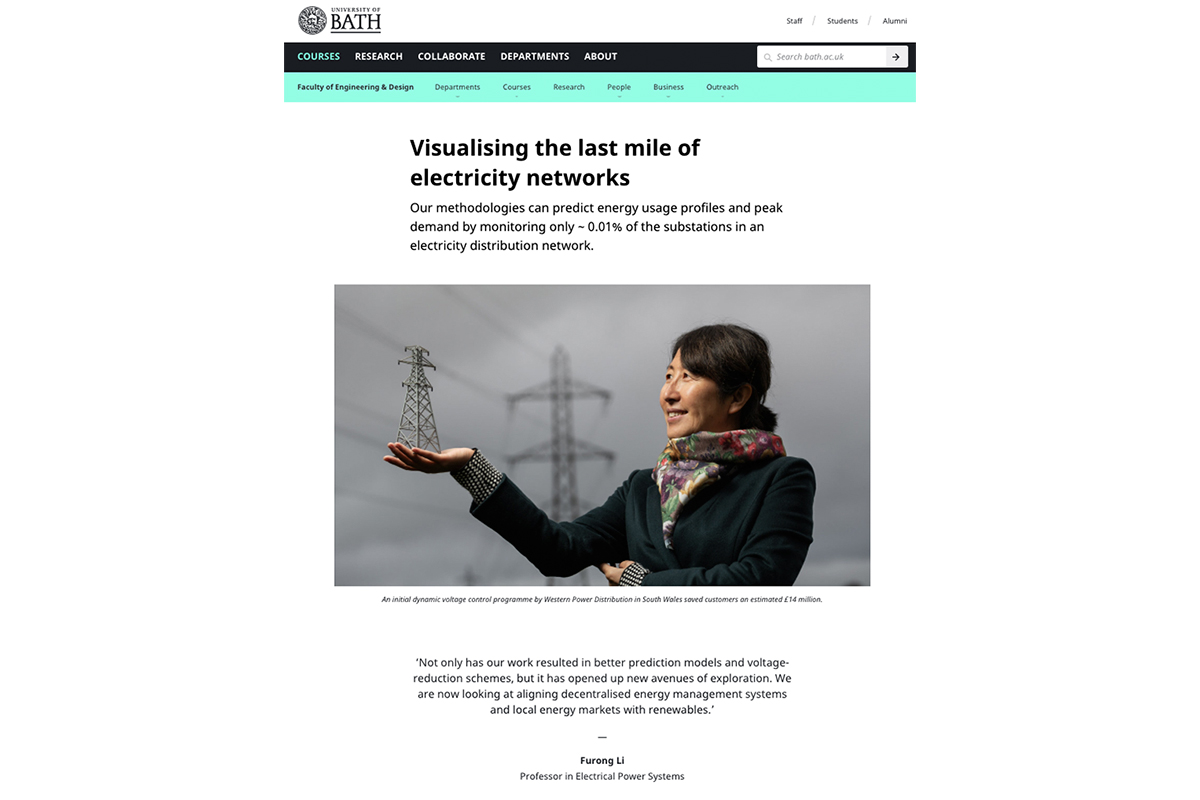
We needed to illustrate the university’s research into managed power distribution and supply, in particular the regulation of the “last mile” from the national grid into your home. You might not think the subject electrifying, but actually it’s interesting research and vital to anyone who uses electricity!

The research by Furong Li, Professor in Electrical Power Systems, is looking at how mass data can be used to adjust supply to the home according to real-time demand. Currently the supply is regulated using relatively old data and inflexible systems.

You can see the article here, but in this post I’ll go into the background to the photography.

Concept.

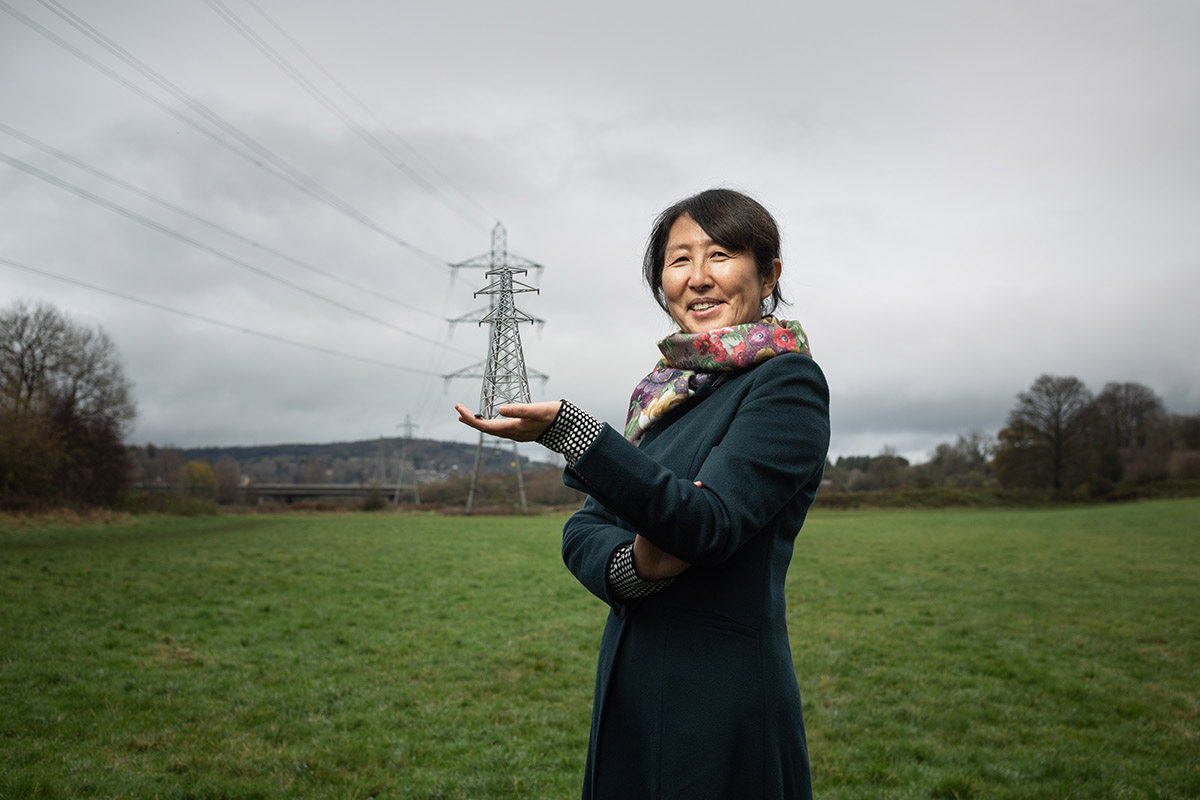
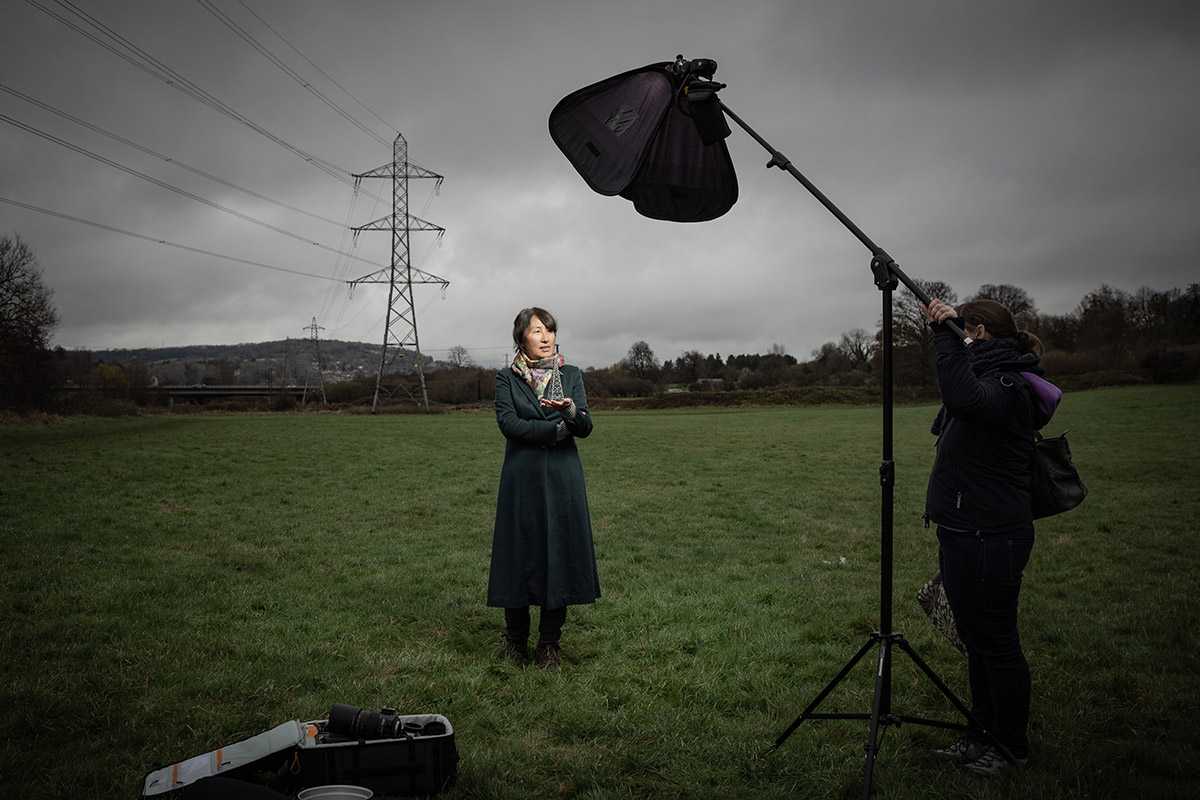
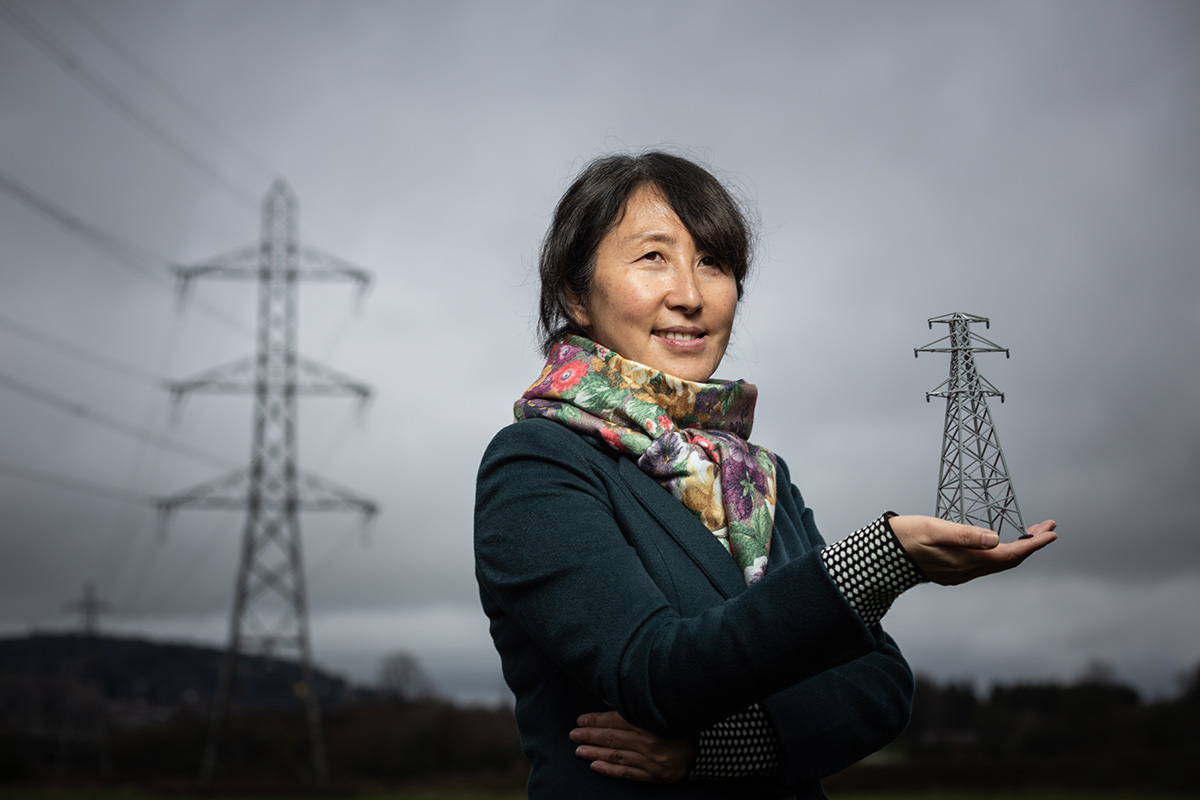
When I was approached by the university’s web content editor, she already had the idea to use a model of a pylon, while I suggested we match that up with a location where a real pylon could reinforce the initial idea.

Furong came up with the location and so we met on a slightly dreary November morning to make the pictures.

Actually the dreariness helped because I wanted to use portable lighting to make the shots more three-dimensional, and the clouds added drama.

Execution.

Having got some basic headshots in the bag “just in case”, we then played with various ideas and positions to ensure there was a good variety of images to choose from; not only for the initial article, but also for other uses down the line.

Photographers often forget to shoot “around” the subject or the idea, leaving the client little to choose from should an initial layout change, or when the shots are needed in different media. I’ve just shown you a couple of the other shots here, with the final choice being visible in the article itself.

This was no huge production; the ideas were simple and effective and the final results are eye-catching. Perfect for an article you want people to notice in a sea of online content.

Beyond the Brief

Next time you’re planning to update the photography for your corporate communications, why not consider allowing some additional creative time within the session? Allowing some creative space beyond the brief could result in some interesting results.

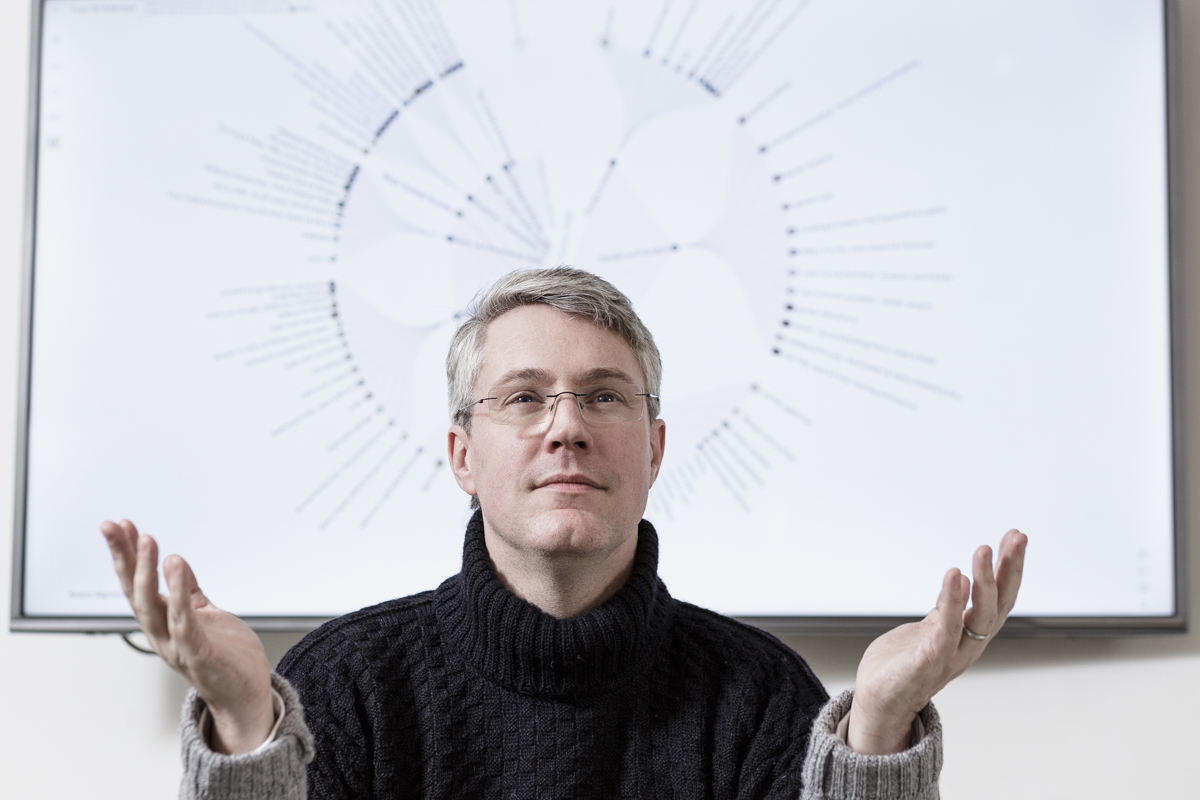
An excellent example of this is from November last year when I was commissioned to create new team head shots for business data analysts Kaiasm – I’m massively paraphrasing what they do for the sake of brevity.

There was one shot which I pretty much took as a bit of a joke; I’d noticed how the data graph behind the founder Liam McGee’s head made him look like he had a halo. When I mentioned this to him, he obliged with a suitable pose and expression and I took the shot.

The photo was included in the final edit because I know clients often enjoy the odd outtake in their set, but I didn’t expect to see it used.

A couple of weeks later, the local paper ran the photo with an article about Kaiasm and their pending expansion plans.

So allowing some creative freedom and a dollop of humour can lead to unexpectedly useful results. That photo will have drawn far more attention to the article than any plain headshot or stock image of the office would have done, and will have conveyed Kaiasm as a business run by human beings, not robots.

Bear in mind the creative possibilities, even the occasional happy accident afforded by engaging a professional photographer, and you may find the results are a revelation.

Creative Field

Assuming for a moment that Mark Twain actually said “golf is a good walk spoiled,” I wonder if he would have been happier taking a good walk with a camera?

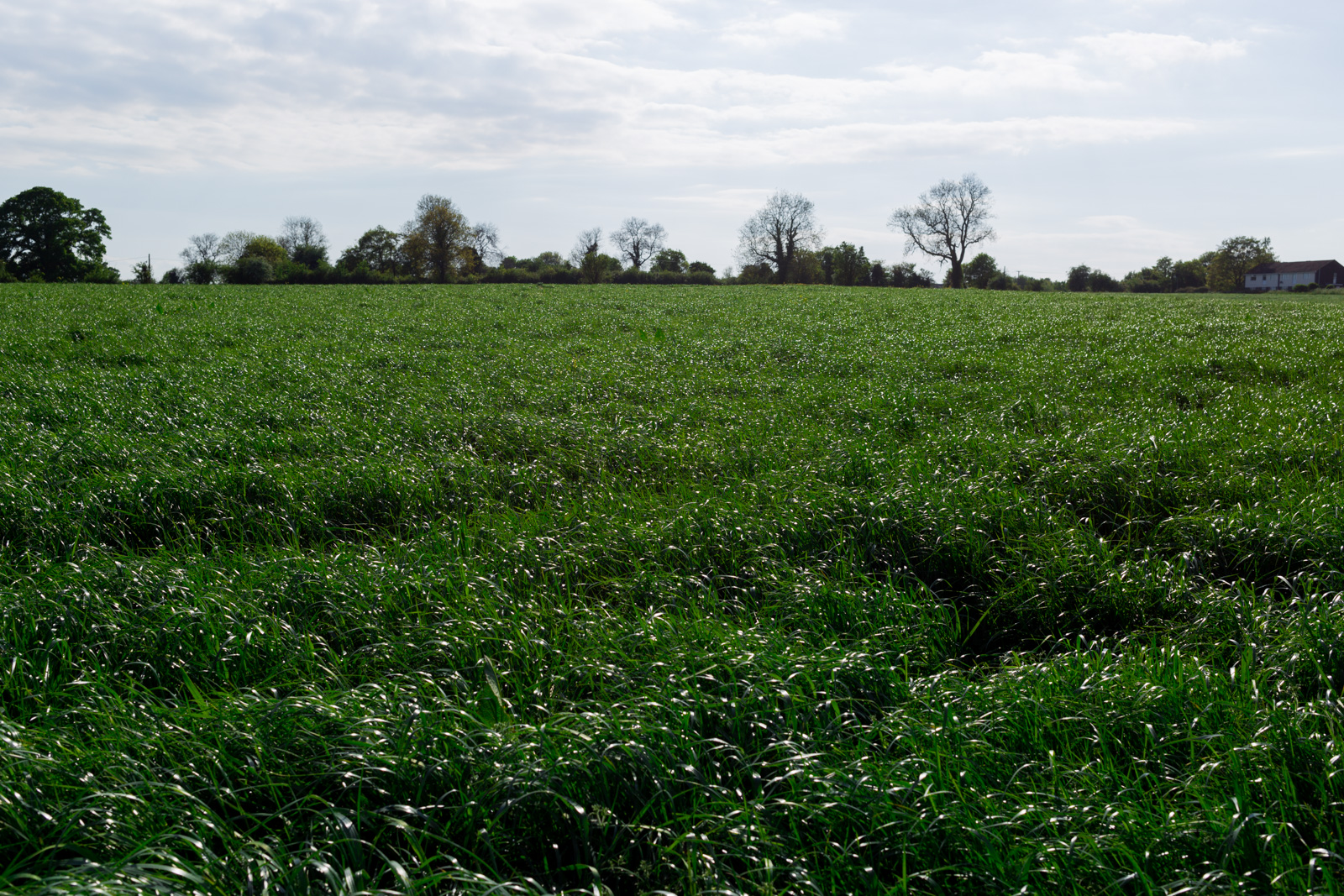
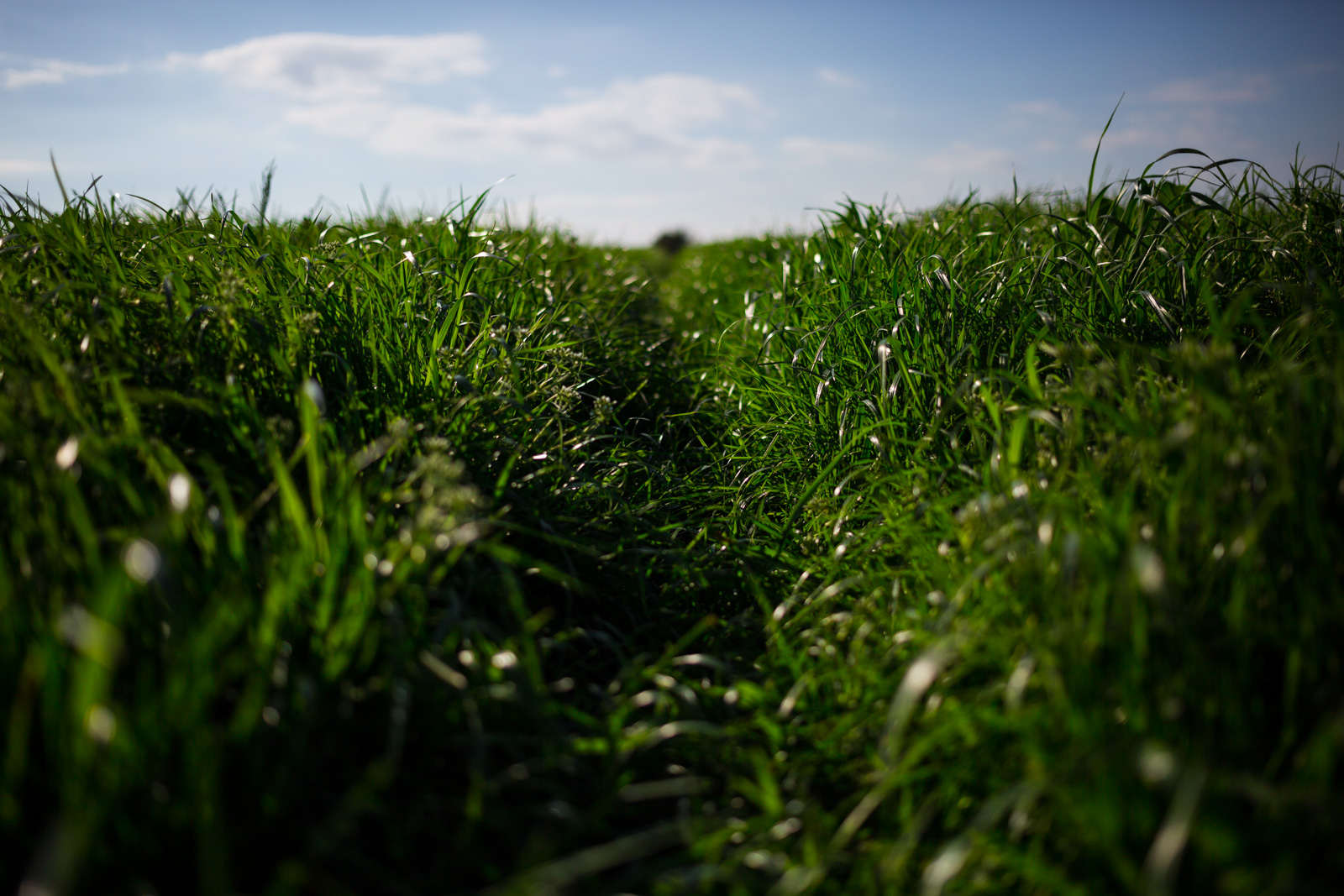
Last weekend I went for a walk in the countryside just outside Frome and as I returned across a familiar field, the way the evening sunlight glinted off the grass struck me as especially interesting. So I took a photo. Nothing special there of course, but having taken that photo I decided it wasn’t enough just to show the field as I saw it from my (approx 6’1″) stance. I wanted to explore other ways to convey what I was seeing and feeling as I stood there. I was getting dangerously artsy.

And so I used the same technique I employ when working for a client; I stood quietly for a few moments, considering options, looking at the light, the field, the grass and thinking about what other possibilities might present themselves.

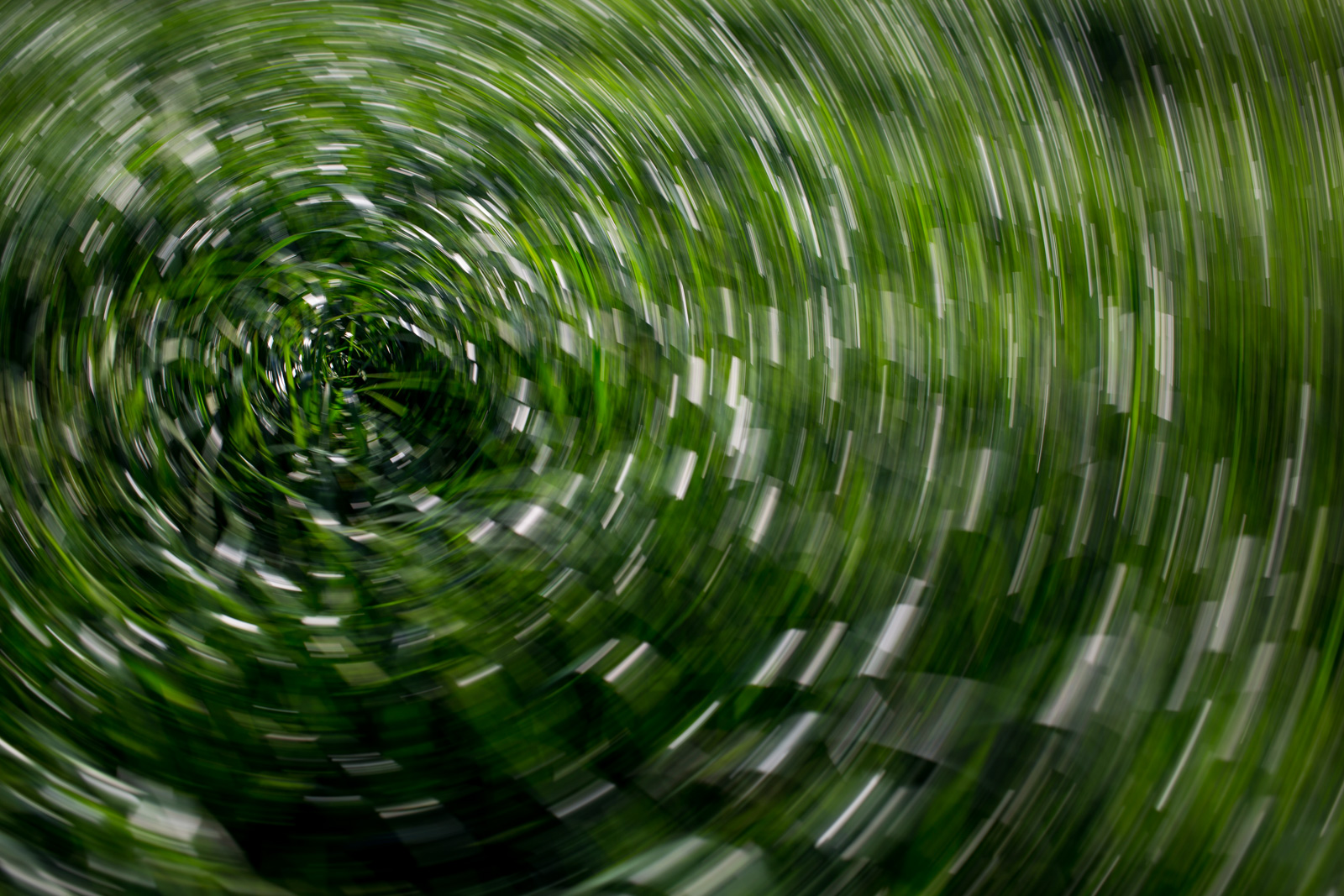
I tried a very low angle which emphasised the narrow footpath through the grass as well as the sunlight glinting off the blades and then I tried for one more shot. Far more abstract this time, but still making use of the sunlit highlights, I lowered the shutter speed and rotated the camera as I took the shot. I might have looked a little daft, but no one was around and I wouldn’t have cared if they were. I was having fun! To be honest, I could have spent hours there interpreting that field in different ways, but for this post I just wanted to illustrate what’s possible with something seemingly lacking in options.

It’s all too easy to see what’s in front of you and assume there is either no photo to be had, or that there is only one way to photograph it. Taking time, engaging the brain and having a think about what, if anything, you’re trying to capture or say in a photo is not only an excellent way to explore ideas, it also saves you taking up golf.

Another Chapter

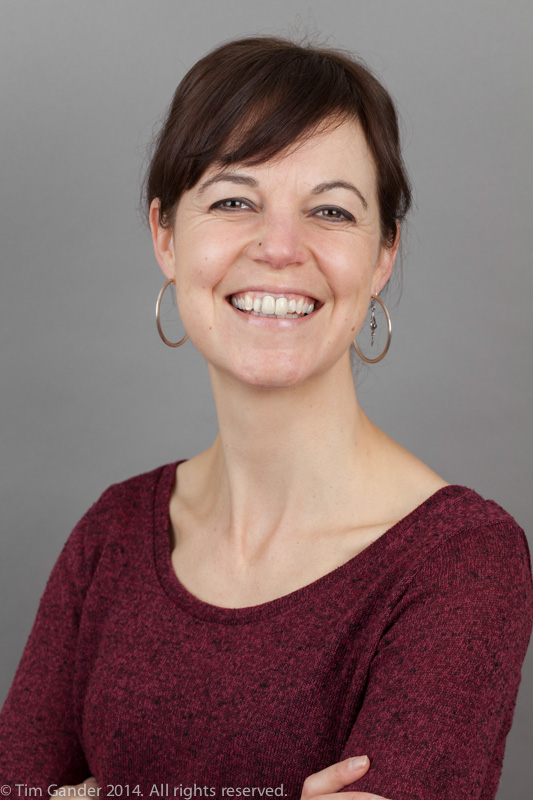
Smiling portrait against a grey background of author Sally M Gander

Standard head shot for small usage

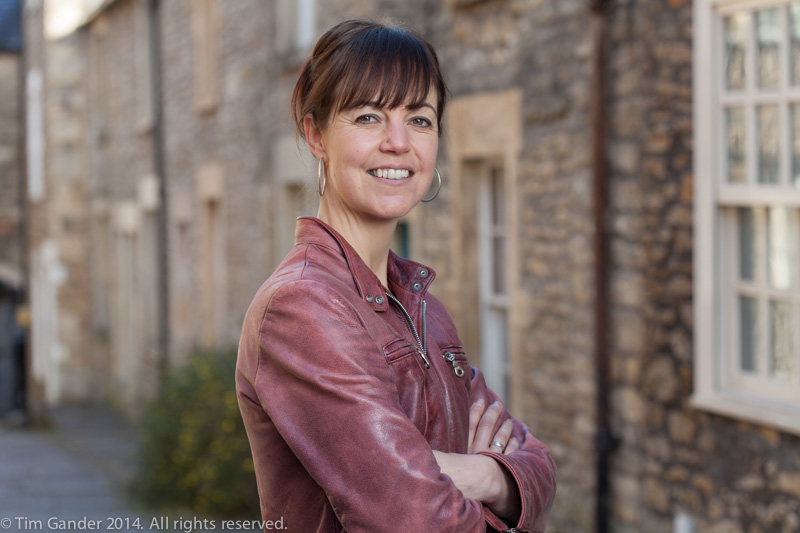
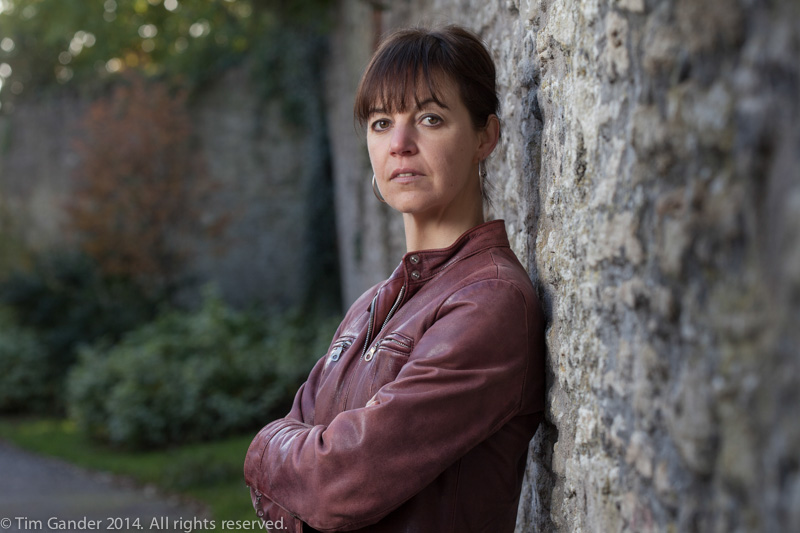
Author portrait sessions are fun, I just don’t get to do them very often. That’s a slight understatement because in fact I believe in the last 15 years as a freelance I’ve done the grand sum of two. The first was in May 2003 for sci-fi writer Karen Traviss for her book City of Pearl, the second was in November last year for young adult fiction writer Sally M Gander* as part of the launch of her debut ebook, The Big Deep. A gap of just over a decade. Hardly London buses then.

What’s fun about them is that they are an opportunity for more creative input than I tend to get with, for example, corporate portraits. Using Sally as an example, we were able to discuss style and mood which feeds into considerations of location and, for me at least, what kit to use. Also, since the writing world has changed so dramatically since the halcyon days of 2003, we needed to consider context a lot more.

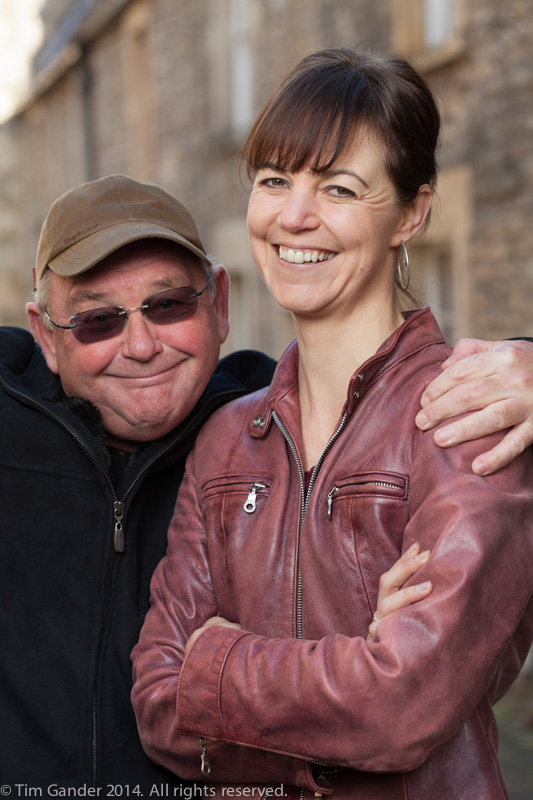
Author Sally M Gander's photo session in the street is interrupted by a passerby hugging her

A hazard of taking portraits in the street

Not only will these photos be needed for a possible inside jacket, but also for all kinds of social media, blog use, press use, print and digital. In fact I suspect the shoot covered Sally for pretty much everything barring projection onto the London gherkin (not sure what my obsession with all things London is this week).

We started the session with some fairly straight head shots, indoors against a white backdrop, then switched to grey. Some smiling, some straight-faced as these are useful for when a portrait is to be used very small somewhere.

After the warm indoor part we ventured onto the chilly streets of Frome and worked on getting more mood into the shots and making sure there was a variety of landscape and portrait orientations and shots with left/right emphasis. In order to work fast I stuck to just two lenses, a 35mm and a 105mm, and a single flash to augment the rather nice daylight.

Even keeping it simple takes some time. Add in the odd interruption (a hazard of taking photos on the street) and a couple of changes of location, and by the time I’d finished Sally’s eyes were watering so much it looked as if she might be crying. It’s possible she was, it was bitterly cold.

Landscape portrait of Sally M Gander, author, taken in Shepherds Barton, Frome

A landscape-oriented shot is also useful

The session finished, later that day I did the editing and processing on the files and delivered them to Sally, who said they were absolutely the best photos ever taken of her (I paraphrase, but she was definitely pleased).

So now all I have to do is wait another decade for my next writerly client. I’ll let you know when it happens.

Frome-based author Sally M Gander poses by a stone wall in Frome

An alternative backdrop and different expression change the mood completely

To buy Sally M Gander’s debut novel The Big Deep, click here.

*Yes, there is a relationship between myself and Sally M Gander. We are married. We are separated. We are friends.