Shouting from the Gallery

I’ve recently introduced a new system for presenting and delivering images to clients. I haven’t shouted about it to everyone yet because I felt it needed to be tested with some trusted clients first, but it’s proving so popular that I’m offering it to anyone I think can benefit from it.

Here’s how it works, but a little history first:
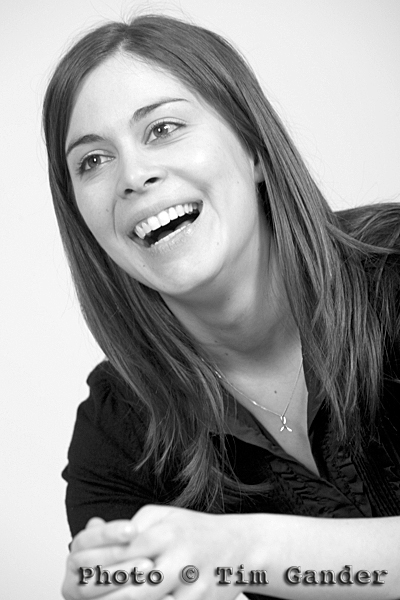
female corporate portrait

The system is great for keeping any commercial images organised.

It used to be I’d shoot an assignment, then make a web gallery from the images before any post production was carried out on them. The client would choose images from the gallery, send me the image reference numbers, and I would carry out post production and send the photos via CD, email or FTP.

The client would either have an agreed number of images included in the price, or would pay an hourly post production fee according to how many images they needed.

This was all well and good, except that most clients would end up choosing 30 images from a 30-image deal (for example) when they only needed maybe 12 images to start with. The rest they were picking just to make up the package, when they didn’t necessarily know how they might use those photos.

Now with the client-specific, interactive gallery, I do the shoot, edit the pictures, do post production on all remaining shots and upload them to the client gallery, from where the client can download the files they need, when they need them. The files are all ready to be published when the client sees them, and they don’t need to download the entire package of photos in one go. The gallery remains for as long as the client requires it, and indeed the client can have me add to the gallery with subsequent shoots.

This development has also allowed me to put together a more formal pricing structure for all those assignments which don’t have special, extra requirements in either equipment, travel or licence to use the images. In other words, standard corporate shoots.

You can download the rates card here Tim Gander Fees to see how it works. I put together three packages to suit different business sizes, types and picture needs, from an all-in option for the busy client with a need for quick access to lots of images over a period of time, to the startup that might just want to have a bank of images sitting safely there for them to buy as and when they need them, thus managing their cashflow better.

Of course there will be times when clients need more extensive rights to the images than my standard terms allow for, and there will be clients with a much lesser requirement, or shoots will be more or less complicated or expensive to run, in which case rates will be negotiated according to the assignment and the client’s needs, but this system will suit the majority of standard, corporate assignments.

I welcome feedback on this, so have a look and tell me what you think.

Tim Gander is a commercial photographer shooting corporate photos for businesses in the Bath, Bristol, Swindon and Salisbury areas of the South West of England, and has a habit of talking about himself in the third person.

Contact Tim on  07703 124412 or tim@timgander.co.uk
Going a bit Google

Question: When is a wedding photographer not a wedding photographer?

Answer: Apparently when they say they’re a commercial photographer, a press photographer, an architectural photographer, a spoon, a pomegranate. Whatever their keywords and web blurbs say they are that week.

You may sense from this post that I’m a little fed up. Maybe I am. Maybe I’m frustrated at the number of new clients telling me they were looking for a commercial, press or PR photographer (in other words, a photographer with the requisite experience for the work they’re looking to get done) but had to wade through pages and pages of Google search results of wedding photographer sites to get to mine. I’m not half as frustrated as those clients are, but I feel their pain.

Google is a great tool, but it becomes pointless if businesses pretend to do what they don’t, and try to attract visitors who will rarely convert into clients, and who will probably regret it if they do.

I know some wedding photographers can take good corporate, commercial and maybe even decent press photos, and they’ll have galleries on their sites to prove it, but most only ever do weddings. On the rare occasion they get near a corporate shoot, it often ends up looking like a wedding in an office.

So why do photographers pretend to do something they don’t and mostly can’t do? Perhaps they think clients are stupid and won’t know the difference, or they think that since they mainly work weekends it might be nice to pick up the extra work in the week. They clearly also believe that once you have a camera, you can tackle absolutely any photographic assignment. Regardless of the actual kit, experience and skills required.

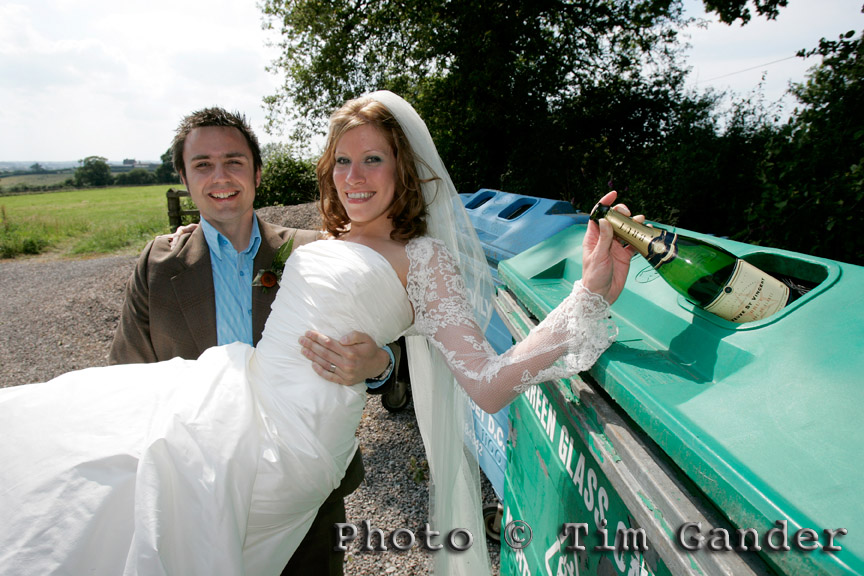
wedding photo for press article

In my defence, this was shot for a feature on eco-friendly weddings.

So off they go with their keyword blunderbuss, kerblamming their site with keywords that have only a tenuous connection to what they actually do.

I don’t list weddings as one of my skills. I don’t put “wedding” in my keywords. Neither do I put “puppies”, “Bat (or Bar) Mizvahs” or “christenings” in there. Why? Because I don’t do them. Just like I don’t do plumbing, antique restoration or brain surgery. Why compete with people who already know what they’re doing and have the workflow, supply chain, mental skills and experience to do those jobs?

Recently I added my details, with keyword tags, to a local creative forum website. Within a week, a wedding photographer had done a copy and paste of my keywords, then added “wedding” to the end. A look at his website showed no sign of all the disciplines he’d listed, except weddings. He’s clearly on a fishing trip for extra work, but his entry, like a blunt pencil, is now largely pointless.

If anyone needs to do a web search for a photographer to take pictures for commercial publication, they will have to be sure to type “-wedding” (thus removing any site ranked using that word) into the search box in order to get more relevant results, which seems a bore. But if these jack-of-all-photography types are going to insist on using keywords like a drunk uses expletives, it may be the only solution.

I could strike back by adding all the weddingy keywords to my site, but there’s no point in that. Did I mention I don’t do weddings?

DIY or Die Trying

If you’ve read my previous two posts (using stock and using commissioned photography for your website) you’ll have a fair idea where I stand when it comes to shooting your own photos or getting a friend or relative to do it for you.

To sum up the main pitfalls, perhaps the biggest risk with getting a friend/relative/pet to take a few snaps for you as a favour is that having put them to the trouble, if the shots turn out so terrible they make you want to tear out your eyes, you’ll still feel beholden to use them – to promote your business. Oh dear.

The problem with taking them yourself is you might feel they’re excellent shots, but you’re too close to the action to be your best critic. You know what was involved in taking the pictures and what hard work it was, and you’ll be terribly proud of the results, but no one else will see that. They’ll just see the photos for what they are, however good or bad.

Having said all that, some business owners will always opt for DIY to save the expense of using a professional, so I’ll set out some basic pointers to help you make the best of your efforts.

  • Plan ahead:

Work out what pictures are required, maybe talk to your web designer if you have one, rather than taking thousands of random shots and hoping for the best. Which people, services and processes are key? Don’t forget though that a photo of your office building/machinery/entire staff contingency isn’t necessarily going to make more business for you. This isn’t about what pleases you about your business, it’s about what attracts clients and customers.

  • Choose locations with care:
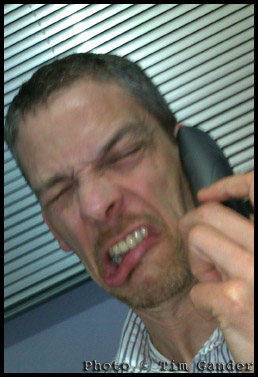
tim gander on telephone

The phone-cam look; not good.

So often you’ll see business portraits of people who have been lined up against a wall and shot Mafia-style. You can see the fear in their eyes! Or they’ve been surprised at their desk, mid-phone conversation, mouth gurning in an embarrassing contortion, or more likely miming a swear word. The flash has obliterated their features, and the red-eye is excruciating. Try taking them to a more relaxed location. Keep them distant from ugly or distracting backgrounds, use shaded daylight to avoid squinting and ugly shadows, and use the telephoto function to crop in close so their face fills the majority of the frame.

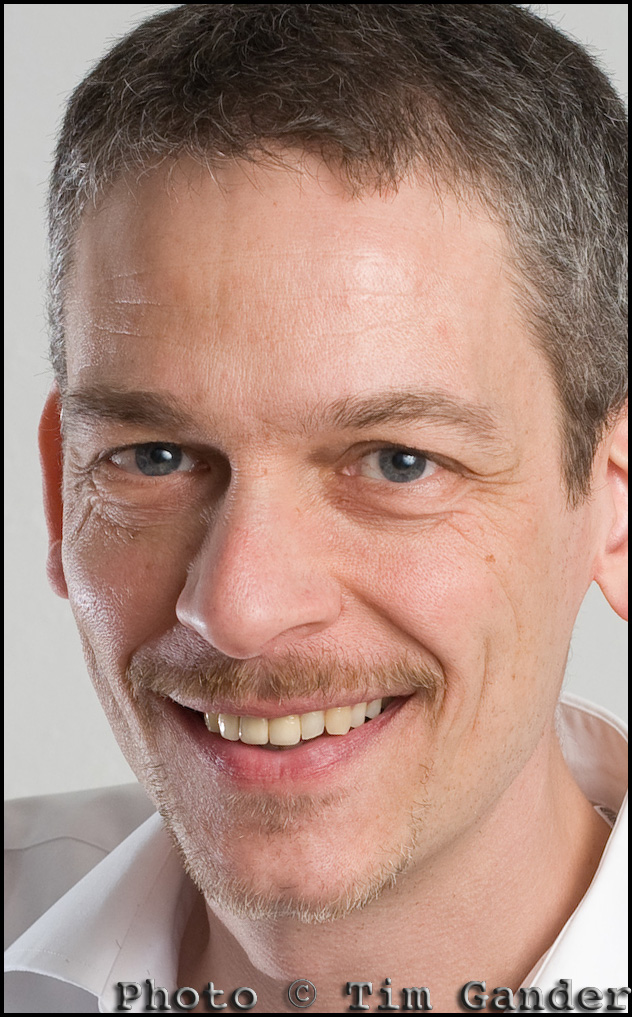
bath commercial photographer tim gander portrait.

Still not pretty, but a better photo.

  • Stay legal:

If you want to photograph people or locations not directly connected to your business, make sure you have either model releases or property releases where necessary.

  • Think quality:

As tempting as it might be to set your camera up so you can get 10,000 images on a single memory card, the quality will drop dramatically and this will show in the end result. You might also need the pictures for print publications too, and this will require even better quality than web use. Also, for the love of Sweet Jesus, don’t (DON’T!) take photos on your mobile phone with the hope of getting anything that resembles professional quality. It’s just not going to happen.

This short article can only cover the most basic of basics, but if you’re using non-professional photography in your business, perhaps another option would be to get a corporate photography trainer in (such as my good self) to at least train someone up to improve the results you’re getting. It could be a one-off session gets you on the right track, and at least when I leave the building, the skills stay with you. Drop me a line today to find out more.

Free Resources!

As some of you may know, I have put together some free resources in a gallery on my web site.

Unfortunately, setting up the gallery on my website such that it doesn’t require a lot of complicated administration for those wishing to download the resources has proved impossible, so to make your lives easier, I’m moving the resources to here.

This page will change as I add more resources, so do please check back from time to time.

Tim Gander Fees Guide

Booklet of Ideas.

Booking Guidelines

T&Cs

Captions1

Captions2

Post Production

If you have any problems using this page, or would just like to get in touch, please contact me at tim@timgander.co.uk, or call me on 07703 124412.

Top 11 Tips for booking a photographer.

A couple of blogs ago I promised a quick guide to choosing a photographer for your project. Then I forgot and instead wrote something terribly witty about Leonardo da Vinci and infinite monkeys. I know it was witty because somebody said so. “That’s witty”, they said.

Getting back on track, here is the blog I originally promised. As a bonus I’m doing it in a top ten list sort of a form. As a double bonus, and in the style of Spinal Tap, my top ten list goes to number 11, so it’s one better than all the other top ten lists.

So here, in roughly the right order are your top 11 tips to finding, briefing and booking the right photographer for your project. This is only a rough guide of course, but it should help you with the basics.

1. You need to start by defining what the project is, and what style and quality you’re looking to achieve. From this you should be able to construct a rough brief, even if it needs adjusting later.

2. Start by looking for the photographers who can help you; specialists in the kind of photography you’re after. With each field of photography well catered for, there’s little point looking for a wedding photographer for a corporate shoot,  or an interiors photographer for press shots. It just happens I don’t shoot underwater pet weddings, so please don’t ask.

3. Talk to a few photographers and get an idea of the different rates and approaches they have.

4. It’s only fair to get firm quotes based on a clear brief, so whittle down your choice and start to talk about fees, either with a couple of photographers or with the one who shoots to the style and quality you need. I went into more detail about how rates work in the last-but-one blog. The photographer can often help develop the brief at this stage.

5. A brief consists of the date, time, location, what the pictures are to be of, how many pictures are required (approximately if necessary), your contact name, email and mobile number.

6. The brief also includes what the pictures are to be used for. This also helps define the likely fees, as well as informing the photographer on certain technical and artistic considerations.

7. You will need to know the photographer’s terms and conditions. These should be pretty standard, but check them all the same. Mine stipulate a bowl of M&M’s* on arrival.

8. Allow the photographer to liaise with your designer (if you’ve hired one). It can save a lot of time if the photographer knows how the images are to fit within the design.

9. Agree how the pictures are to be delivered, what file sizes are required (the photographer will advise you on this) and how soon after the shoot they are required.

10. Make sure you liaise on any special instructions that will help the photographer – props, access to the building, parking. It’s easy to forget that photographers need equipment, some of it heavy, so a nearby parking space makes us feel valued. We have such simple pleasures. Oh and don’t forget the M&M’s.

11. Finally, you should enjoy the day. It’s a break from the office routine, and I promise I’ll share the M&M’s. Mmm M&M’s…**

*Apostrophe police, please note the apostrophe in M&M’s is there because the manufacturer put it there, though it begs the question “M&M’s what?”

**I am not paid by Mars confectionary (manufacturer of M&M’s) to promote M&M’s, however if Mars would like to make a donation of M&M’s to me, they should contact me first for my address.

Article and photos © Tim Gander. All rights reserved 2009

“How much?!” A guide to photography rates.

Welcome to my blog-type thing, I’m glad you could make it.

Having convinced you in my previous blog of the terrors and pitfalls of using micro-payment stock photography for your corporate website and brochure (in short, every time you use istockphoto, a fairy dies), this time around I was going to lay out what level of investment is required to hire a real photographer to take genuine photos that will make your business stand out from the generic stock crowd.

Unfortunately it’s nigh on impossible to condense all possible fee structures into a single blog article, so I’ve come up with a much better answer.

Basically, what you need to pay for photography falls somewhere between you being embarrassed at expecting so much for so little money, and the photographer being embarrassed at charging so much for something they’re professional enough to make look easy.

There, I think that covers all the bases.

Well ok, there’s a bit more to it than that, so I will try to guide you and leave you better equipped to work out what your budget should be.

The first considerations are the quality, style, creativity and experience of the photographer you’re looking to hire. Also, what the photos are to be used for and for how long. These elements will almost certainly be the most influential in setting costs.

Many photographers will quote a time rate, but others like myself will work out a project rate based on the brief and what the pictures are to be used for. This tends to reflect the true value of the work produced, while also avoiding sneakybeaky add-on charges that can crop up when a project is priced on a menu basis.

One element which is often overlooked by clients is the post production time. Post production is what gets a digital camera file into shape ready for either electronic or print use. The file straight from the camera is no use for either, so the photographer has to spend time after the shoot preparing the files for publication, including adjusting colour, exposure, resolution and many other time-consuming and rather dull tasks.

As a guide, a day’s shoot can easily equate to a half day’s post production, though this also varies from project to project. Again, in my case I’ll generally include a certain amount of post production so there are no nasty surprises later.

Ok, so you really want some hard figures? Speaking for myself a project can be as little as £190 for a locally shot PR event with a limited shelf life. At the other end of the spectrum, I have charged £1,500 per picture for complicated national projects with multiple, ongoing uses, vast coverage and a lot of planning involved.

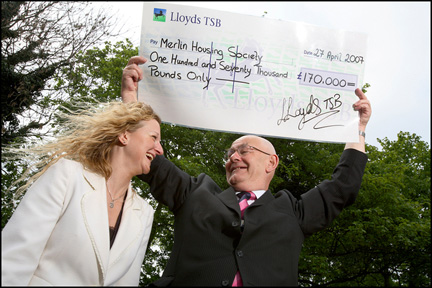
lloyds tsb cheque presentation to housing association © Tim Gander

Good PR shots get good publicity. © Tim Gander

In that first example, the client might be slightly abashed to know that I’ve brought 20 years’ experience, £20,000 worth of equipment and free exposure in local newspapers for less than it would cost to hire a plasterer for half a day. In the latter case, I felt suitably scared of screwing up the client’s expensive campaign that I made damn sure the results exceeded their wildest expectations.

When considering the budget, try to take into account the financial return you hope to get from the exercise. If you want a good return, you’ll need top-notch pictures. Rather than trying to find the lowest talent that will do the job for your budget, it might be better to spend extra so that your project punches above its weight. Better to spend a little more and find you’ve got pictures that really project your message than find you’ve spent too little and the project fails. Ha’peth of tar anyone?

For further guidance on typical prevailing fees, see:

“NUJ Freelance Fees Guide”

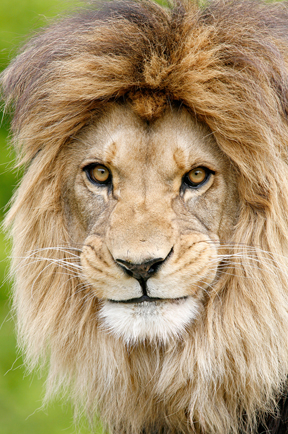
barbary lion

Barbary Lion © Tim Gander

Finally, if you like this lion photo I have a free A4 digital print I will send to the first UK-based reader of my blog to email me their name and address.

Until my next blog, when I’ll help you through the process of choosing a photographer, take care, and I wish you all the best with your business.

“Tim Gander is a press, PR and commercial photographer based in Somerset, who likes to talk about himself in the third person”

Article and photos © Tim Gander. All rights reserved 2009

Still images, still powerful.

Photography is everywhere, but nowhere is it more prolific than on the internet, where it is sprayed over web sites like candy from a smashed piñata, often with no thought to quality, relevance or placement. It’s just a way to break up text, and the general approach is that the cheaper this can be done, the better.

Of course the internet is a visual medium; nobody relishes reading acres of dense text, and the interspersion of text with pictures is more pleasing to the eye, but the over-use of low-cost stock imagery means that the images have become almost invisible, and their impact is lost.

Dark Light

Even a stock-style photo can be exclusive to one client.

The easy availability of this low-cost imagery on the web has caused another problem. Businesses, usually unknowingly, are using the same imagery as their competitors. This often happens because web designers will resort to using micro-stock sites such as istockphoto to source images, using the same search terms for similar clients. The result is a kind of Stepford Wives look to sites across the web and businesses look indistinguishable from their competitors.

If the imagery a business uses doesn’t set it apart from its competitors, what is the value of that imagery? What power will the images have to entice the prospective client to spend money with one business over another?

This ubiquity of imagery has diluted the power of photography on the web, but this isn’t photography’s fault, nor the fault of photographers. It’s just a stage internet design is going through. A bit like stages children go through on their way to becoming adults. Internet design is at the spotty teenager stage. It’s not pretty, not always useful around the house, and doesn’t know what it wants to be. However, this apparently ugly scenario can be made to work in favour of businesses who want to retake the initiative.

What businesses can do, and from my recent experiences are starting to do, is commission more bespoke photography and use less non-exclusive stock imagery. They’re presenting themselves as real businesses with real people, not the West Coast American-looking androids favoured by stock libraries for their blandness and interchangeability. Putting a genuine face to the public instead of hiding behind a sterilized façade means photography can be powerful again.

Designers I speak to are also starting to realise that their wonderful designs tend to lose impact once the generic stock images are plonked in, or they’re having to build the design message around whichever cheap pictures they have to hand. Designers are having to learn how to sell real photography to their clients again or face their designs simply costing their clients money, instead of bringing in sales.

So as the internet emerges from its teenage years, will business once again discover the power of genuine, bespoke photography? In the days of the printed brochure, you rarely had to suffer seeing photos taken by the boss’s nephew, and businesses paid good money to keep their identity unique from their competitors. As the internet goes from teenage to adulthood, so business web sites must mature into truly professional platforms for marketing, not just concentrating on site structure, graphics and text but the imagery too. Those that embrace exclusive imagery will find the extra investment creates a greater return.

It isn’t easy to shoehorn all these concepts into a blog, but if you would like to know more about how genuinely unique photography could help your business, drop me a line. Maybe I can help get your business through puberty relatively unscarred by acne.

Article and photos © Tim Gander. All rights reserved 2009