I’ll take my own photos, thanks.

Apart from those posts where I apologise for not posting that week, this may be one of the shortest posts I have ever written.

I will simply say that every photo you see on my website was taken by me, while it would appear other photographic outfits buy in royalty free stock imagery to illustrate the kind of work they’d like to do, but can’t back up with their own examples.

That is all. Have a lovely week.

Tim

Can we please get on with our jobs?

Shame on me, the deadline is looming and I’ve still not submitted to the call for evidence into the feasibility of the Digital Copyright Exchange (DCE).

To address this I started work on my submission yesterday with the thought of airing my fascinating views on the subject both to the DCE call for evidence by Richard Hooper and here in my blog, but then an email came in from the Design Artists Copyright Society (DACS – see more about them here).

The email is a link to an online survey asking my views on Extended Collective Licensing (my views aren’t positive). Included in that email is a link to the Intellectual Property Office review of copyright which calls for evidence from copyright owners, creators and users, and which was set up in light of the Hargreaves review of copyright which also called for evidence from, among others, creators, creators’ agents, designers and end users of copyright materials.

Are you starting to see where I’m going with this? There appears to be an almost constant flow of reviews, calls for evidence, surveys and reviews of the results of reviews, calls for evidence and surveys around the issue of copyright. And this has been going on for years! It’s like an American freight train that’s become so long, the engine driver can see the back end of his own guards van as he goes round in a never-ending loop.

I’m beginning to suspect that the purpose of all these reviews is to keep some civil servants in endless employment, and to wear photographers and other creatives down until they just give up submitting evidence and the freeconomists win the argument by forfeit.

The basis of all this gravytrainery is that it’s been decided (by someone who might have a vested interest *coff* GOOGLE!) that copyright is unfit for purpose in the digital age, and so the reviews began.

What seems to be ignored is that copyright is perfectly fit for the digital age, but that systems for preventing its abuse haven’t been kept in line with the ease of the abuse. Neither has education kept pace with the sudden access that everyone now has to easily findable and replicable online content.

Copyright review

Defending my job is becoming a full-time job

The cause of creators hasn’t been helped by the big conglomerates that control a lot of copyright works, such as the music labels, film studios and mass photo libraries, all of whom have made great strides in aggravating the people who wish to access and enjoy the products they licence. So the argument about copyright is often seen as the ‘little’ people against the goliath organisations, where in fact it’s the ‘little’ creators who create the content which is then sold on by the Goliaths. When copyright is infringed, very often it’s the creator who loses out while the big organisations continue to make healthy profits from the work of others. They also have the financial clout to defend infringements more forcefully than individual creators.

Perhaps the most worrying thing of all for creators is that every time there is a review, the evidence which is seen most prominently will be that of the many people who don’t understand why they have to pay for what they can so easily copy, and the aggregators whose protection of the works doesn’t always translate into protection for those who created the works in the first place.

All of which is to say, I’ll have to get this submission done, and complete the DACS survey, AND submit to the IPO review. After which, could I please be allowed to get on with my job instead of endlessly having to defend my livelihood? Probably need to review that.

Copyright’s Last Stand?

The Hargreaves Review of Intellectual Property and Growth having published its conclusions, creators of copyright material can now submit views to the Digital Copyright Exchange feasibility study being run by former chairman of Ofcom Richard Hooper which will look into what form a DCE would take.

One vision of DCE was described by Hooper during an interview on Radio 4s Today programme as an Amazon-style market place where creators could set prices for their work and buyers could browse, buy and take possession of licenses of high-resolution versions of digital works in a very streamlined process.

It’s not clear to me how this would work. How would the DCE be populated with works? Who would be adding them? Would it become a facility that can bypass the Getty-like stranglehold on licensing? Perhaps photographers would be able to upload images and sell direct, negotiating their own fees and keeping a much higher percentage of the revenue from sales. Clearly this would benefit photographers and end-users as there would be a renewed incentive for quality images to be made available.

I do fear however that fees will be set independently as it’s envisioned that the process should be as much like online retail as possible, but that this will ignore all the factors that a photographer would need to take into account such as end use or commercial/non-commercial requirements of an image.

Meanwhile, would Getty stand for this? They might find their traditional suppliers drifting away if the scheme offered better returns on their images. Alternatively, an organisation like Getty or Corbis (owned by Bill Gates) might offer to host and administer such a scheme, but that risks bringing us straight back to where we are now.

Is there not a risk that a DCE would create a two-tier copyright protection where your images are better protected if they’re in the scheme? And how is use of the scheme and images sold through it to be policed? This isn’t going to be an easy thing to set up and administer, and the internet has a habit of suddenly shifting and going off in its own direction once you try to coral the content.

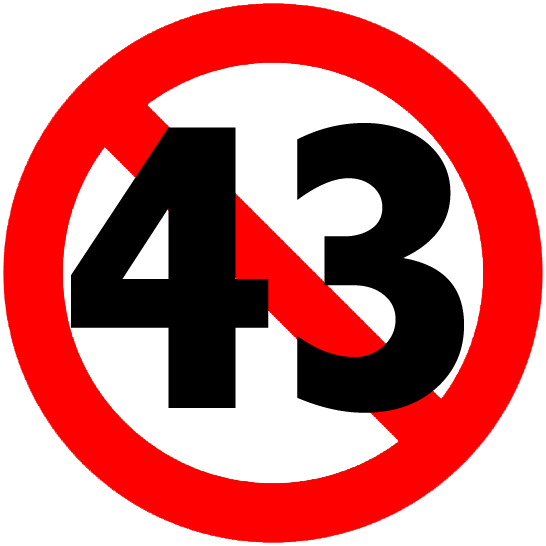
Stop 43 is campaigning for better protection of photographers' copyright.

I don’t feel I’m best placed to investigate all the issues as I’ve not had the time to fully absorb the conclusions of the Hargreaves review, but take a look at the Stop 43 site which has some really useful info and ideas, and visit the Intellectual Property Office website where you can submit your views on the Digital Copyright Exchange. I urge both professional and amateur photographers to do so as this affects our ability to say where and how our own images are used. You may not like what’s coming, but this might be your only chance to shape it.

Community Care folds in favour of online.

It might please the accountants, but is it smart in the long-term to close print publications in favour of online?

For some years now I’ve worked on commissions for Community Care magazine, but this will be no more since the print magazine has been taken out the back and shot by its owners, Reed Business Information.

This is a real shame because Community Care was a magazine which although aimed at a fairly un-glamorous niche (social care and social work issues), it was a well-considered publication, and one of the seemingly few non-glossy mags that used photography in a sensitive, appreciative, engaging way.

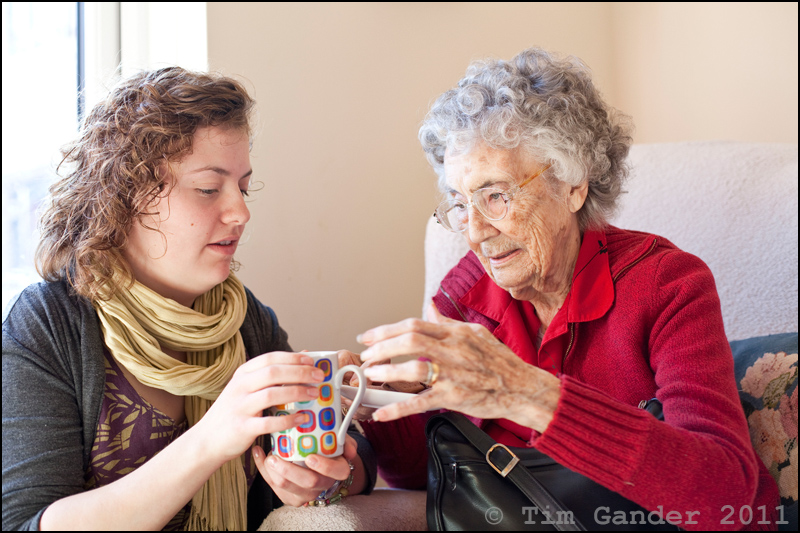
Carer and elderly lady

I enjoyed working with carers and their clients. Maybe that can continue with the online editions.

However, RBI have taken the decision to close the print title in favour of its online offering, which isn’t half as rich with engaging images. This may of course change, and it may be that they decide to spend something on original photography for the e-version.

As things stand now, the web edition images are often rather clunky stock images or low-quality snaps used very small. There seems to be a view that if an image is used at all, it should be a very distant second cousin to the text, but it’s no secret that a good image used properly will draw more eyes to an article, and isn’t that what publishers want? It all adds to the hit stats and that seems to interest publishers, even though the Community Care site appears to carry no advertising other than for industry jobs and their own conferences and events.

I’m not a publishing expert or industry analyst, but it would seem that by ditching the print version, RBI are happy to ditch all advertising revenues bar the jobs ads, unless they plan to introduce wider advertising to the website. Or put content up behind a paywall, which presumably care agencies would pay for based on the amount of access required. With some 3,000 online jobs ads per week, maybe this won’t be necessary, but leaves the publication vulnerable to one revenue stream.

Perhaps advertisers were simply becoming uneconomical to service in a printed version, but I wonder how many of the page hits on the website were generated by the print edition reminding people that the site is there? Perhaps it’s only a fraction, but it’s one thing to read articles because a magazine drops onto your desk, quite another to stay loyal when you’re fed a magazine edition via weblink. A printed magazine is a welcome distraction for many care professionals whose working lives I suspect are increasingly dominated by time at a computer monitor.

Of course I would like to hope that Community Care will still commission original imagery on occasion, but even so I have lost some great colleagues who I now know have been given redundancy notices. I won’t name them here, but they know who they are. They stayed loyal to me over the years and were always ready to show appreciation for my work. I wish them all the best for the future.

Community Care may be a small-circulation magazine, but it was a good magazine with a very valuable function. I’m not sure the website will replace the role the print edition had. We’ll just have to wait and see.

The final edition of Community Care magazine will be published on 24 November 2011.

What the flickr should I do?

The Law of Flickr dictates that for every opinion applied to the subject, there will be an opinion of equal and opposite force. Despite this, I’m going to ask the question, “Should I be on flickr?” and hope for some kind of definitive response.

In truth, I already have an account there, but like many internet things I’ve signed up to over the years, I’ve never got around to doing anything with it.

This is due to a number of reasons. Perhaps the primary reason is I can’t see the point. The secondary reason is it probably doesn’t suit the work I do. Flickr strikes me as the kind of site where you upload a picture of a flower, kitten, sunset and wait for the heaps of praise to come in from your fellow flickrati.

jew's ear fungi

Probably fine for flickr, but will it help my Google ranking?

Occasionally I’ll shoot something just because it’s fun to take pictures. My weirdly-lit, low-angle fungi shots are just that. It gets me out into the woods, gets me in the fresh air, experimenting with light, but I don’t shoot them in the expectation some large corporate organisation will licence the pictures for fantastic sums of money (if you’re a large corporate organisation, do please get in touch). They would be perfect flickr fodder though.

Before you ask, no I’m not posing this question because I’d like to sell my snaps through the flickr/Getty deal. I’d rather sell my soul to someone likely to pay a fair fee than licence any images I take for 6p a download.

If I use flickr at all, it would be with a view to attracting the corporate commissions I rely on as the mainstay of my business. I want to know if flickr adds Googlejuice to my website, if people looking to commission new work (as opposed to buying stock images) use flickr to find someone who shoots the kind of work I shoot, or if it would just be another account to maintain and feed with no real benefit beyond the fun?

Is flickr only (or best suited) to the keen snapper or professional selling prints or stock?

This week, I’m asking you, my loyal and beautiful readers, for your opinions based on the parameters I’ve set out here.

I fear I’ll end up on flickr posting endless corporate headshots and wondering why no one is telling me I’ve got nice bokeh, it’s a “cool capture” or a great use of light. It might be a lonely time there, but if it gets me more enquires for paid commissions, you won’t find me complaining.

Opinions please!

Let’s play look-a-likey!

For some time now photographers have been waiting in hope for the application that would help them track use of their images. Something that, without prohibitive amounts of effort and financial investment would allow them to find illicit uses so they could chase infringers for payment and to have the work removed from websites where it’s not licensed to be used.

Of course photographers are keen to ensure they get paid for infringements, and this is the side of the copyright argument that is so often flagged up by those who would like to be allowed to infringe more freely (sometimes known as freetards). Having photographers portrayed as money-grabbing monopolists is a handy way of demonizing those who merely want to protect the work they create.

What gets mentioned less is the harm it does to a photographer when work they have shot and charged to a commissioning client gets hijacked by someone who is just not in the mood for paying for the stuff they use. If an image is licensed to a paying client, and they see someone else using it for free, it can harm the photographer/client relationship and also cause problems with exclusivity, model releases and further legal issues where a stolen image is being used in a libelous context.

All these are issues faced by the photographer today, and it can take a lot of valuable time just to ensure images are not being appropriated by inappropriate people and used in inappropriate ways (that’s easy for me to say).

So while the tineye service has been around a while, and it can be very good at “reverse image searches” it’s also clear it can’t possibly keep up with indexing every image that gets uploaded to a website every minute of the day. Better perhaps if a service like Google, which seems to have web crawling and indexing off to a fine art, could come up with something more powerful.

Cue Google image search, where you chuck an image from your hard drive into the search box on Google which then returns matches of that image, plus any similar images it finds.

However, if photographers thought Google had the answer, they may be disappointed to discover that Google’s image search function was starting out with a different question.

I’ve been playing with Google’s image search function, and to me it’s more suited to finding images which represent the feel or look of an image you already have, but which might not quite match what you’re after, rather than a tool for photographers to use to find infringing copies of their images.

Having run a few of my images through the system, I found some bizarre and vaguely humourous results, which I’ve set out below. Try it with some of your own images, and see what happens. I’m sure there’s a great game waiting to be invented.

Tim Gander, Photographer, Frome

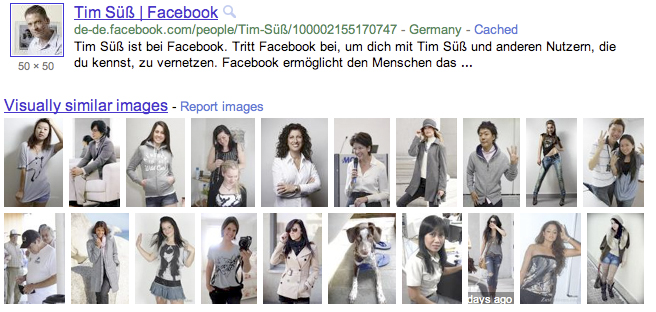
Starting with Yours Truly: None of these women looks like me, but one appears to be holding a camera.


Tony Benn

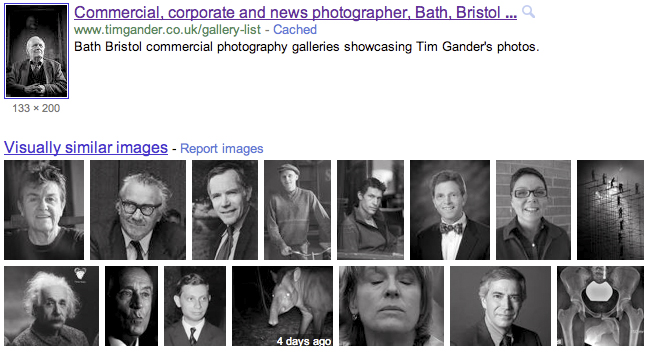
Seriously?!: Tony Benn is, among other things, matched with Einstein, a tapir and an X-ray of a pelvis. Squint and some of them do look similar.

The Screws terminally screwed up.

Sunday Times Collumn

Kuttner has questions to answer

In my article The Screws Becomes the News I speculated that phone-hacking was more widely known about than News International were letting on, and that compensation payments to hacked victims were a way of trying to insulate executives above editor level from the burgeoning wave of controversy and official investigation.

Last week, I needn’t tell you, the fan was set to overdrive and the proverbial brown stuff made contact with such force that we could all smell the resulting mess, and The Screws is now no more.

Hacking the phones of victims (and their relatives) of murder, terrorism, military action and illicit payments to police officers, a Royal Protection Officer; the allegations have come so thick and fast that Murdoch has been caught uncharacteristically and spectacularly off-guard. It’s looking like his son can’t cope, his BSkyB ambitions have been put on hold and the share value of News Corp is under attack.

If Rupe thought he could rescue the main body of News International by amputating the sceptic arm that was the News of the World, it seems he’s going to have to lose more, or get a better surgeon involved.

The gangrene may yet spread wider as further allegations come to light, and we haven’t even seen the start of official investigations, reviews and legal proceedings.

What can we expect in the coming days, weeks and months? Well, a mixture the expected, unexpected and probably downright bizarre. Rebecca Brooks is seriously damaged. If Murdoch cuts her free, she’ll not find work easily. Her CV will do her no favours.

More seriously for her, for the former editor Andy Coulson and the managing editor at the height of the hacking years, Stuart Kuttner, there must be a very high risk of criminal implication.

I’ve asked before, and I’ll ask again: How is it possible that executives who were hell bent on keeping the expenses of their freelancers trimmed to the minimum didn’t know they were signing off huge payments for phone hacking and police bribes? It simply isn’t feasible and it wouldn’t be acceptable if investigations didn’t get right to the heart of who knew what and when, and didn’t bring the culprits to justice.

I for one will be watching with great interest as events unfold, but in the meantime and again as I said in my previous NotW article, I do have sympathy for the talented staff who have finally lost their jobs over this.

Leaving the scandals, enquiries and investigations to one side, it’s interesting to consider what this almighty mess actually means for the Political future.

Politicians (with the bruising inflicted by the MPs’ expenses scandal) will be keen to end the influence newspapers have on their views, actions, policies and likely political success. They will be happy to declare themselves free of and uninterested by the influence of the print media.

In parallel, newspaper publishers have witnessed the loosening of their influence from well before this scandal as the internet started to accelerate the decline in circulations and advertising revenues, and it is the internet which is starting to flex its political influence. We see this in David Cameron’s increasing coziness with the likes of Google. He tried to keep print press close by employing Andy Coulson, but that backfired spectacularly.

Will the internet be a better friend to the politician? I’m doubtful, but one thing is clear. Politicians thought the print media were powerful long after it was obvious to everyone else that readerships had declined to a point that only a tiny minority of people actually read newspapers. But at least politicians had a chance of “herding” information and controlling the message to some degree. They could see who was writing about them and they could cozy up to a limited number of political corespondents.

From here on, it’s all going to get a lot more complicated and harder to control. Tighter regulation might reign in Fleet Street, but the digital world is a completely different proposition.

UPDATE: No point updating. By the time I’ve written the update, someone else will have resigned, been arrested, extradited, a business deal will have collapsed, another scandal will have been unearthed and I simply can’t type fast enough to keep this current.

Second update: 02.08.2011 Stuart Kuttner has now been arrested. Finally.

Thistle hurt!

Isn’t Facebook wonderful? One minute you’re merrily promoting your fashion/corporate hospitality/events/recruitment/Nigerian food business, building up follows and likes, the next it looks like Jack Nicholson a-la “Here’s Johnny!” has been at your page with an axe.

Exactly this scenario befell Eagle & Thistle, who apparently run a fashion/corporate hospitality/events/recruitment/Nigerian food business (clearly wishing not to be pigeonholed into one sector).

All was going well until they sent a letter out to some (a?) photographer asking if they would be interested in working for free. What an opportunity! Of course the opportunity was too good to miss. The opportunity, that is, to expose Eagle & Thistle as gouging scroungers who thought photographers would love to work for a commercial business for nothing.

Here’s the letter they apparently sent:

“I am contacting you regarding two small shoots that we have coming up at Eagle and Thistle for images we require for our up and coming website. (Please see our facebook page for more info on the company http://www.facebook.com/pages/Eagle-Thistle-Group/201311073242812).

We need four images to represent each area of the company; Fashion, Food, The Eye and Recruitment.

We are hoping to do one of the shoots on Monday the 4th July in a studio for three images; one for fashion, one for food and one for the eye.

The second is for the recruitment section which will be held in an office/meeting room. If you are happy with moving location on the same day we can do that or if not Tuesday or Wednesday would be great. 

We would also like retouching done within two-three days if that would be suitable for you. 

Unfortunately this job would be unpaid but it would provide great experience and images for your portfolio to work with a huge up and coming company. 

More details of the shoot such as moodboards and briefs will be available should be you interested in working with us. 

Thanks so much for your time and if you are available please get back to me” 

Before you could say “let’s do some really bad PR today” photographers had exchanged the tempting offer across a number of social networking sites, and the Likes and comments on E&T’s Facebook page went into overdrive.

Unsurprisingly, it wasn’t as a result of photographers stumbling over each other to get the unpaid commission. The red mist had descended and E&T’s PR went a bit spoggley. Not only were they getting vitriolic comments from angry photographers (yours truly included), but they didn’t realise what was going wrong for several hours. According to a E&T statement, they were made aware of the situation on their FB page via a phone call. Since Facebook is currently their only real marketing tool at the moment, you’d think they would have been monitoring it a little more closely.

Once they spotted the mess they were in they were quick to apologise, closely followed by disengaging from all their Likers and deleting comments that didn’t quite fit the E&T image. Then removing the apology, because with all the comments gone it no longer made sense. Nice way to do PR.

As for the shoot which should have happened today, presumably the results will soon appear on this holding page, replacing the photos which E&T are already using, for which you might hope they’ve paid or got permission.

In the meantime, enjoy the embedded video, which I think really sets the quality benchmark for this “huge up and coming company” who apparently are helping fashion label Bunmi Koko (no sniggering) with forthcoming events. Good luck, BK, but keep an eye on your Facebook page…

As a bonus treat for you all, I’m including some of the choicest comments from the Facebook page as well as the apology, because I know E&T would be mortified to think they’d permanently deleted them all. Just click to view:

IMPORTANT UDATE:

Following the publication of the above blog article, I was contacted by Anthony, general manager for Eagle & Thistle to discuss the background of the original request for free images, and the resulting backlash through Facebook and other forums.

Having spoken to Anthony it seems clear that the original request was made more as a result of inexperience than out of malice, and I’ve explained to Anthony why so many photographers (myself included) were so angered by yet another request for free imagery.

According to Anthony, some comments made directly to him were extremely aggressive and included racist comments and death threats. I would like to assure Anthony that such comments would not be condoned by myself nor by the vast majority of professional photographers, in fact I hope not by anyone, photographer or not. Race isn’t what this blog article is about and racism has no place in our industry.

I have advised Anthony that if such threats have been made that these should be notified to the police. If anyone attempts to make threats via the comments section of this blog they will be blocked.

Furthermore, Anthony would like to make the following statement on behalf of Eagle & Thistle:

“Eagle & Thistle is a startup business finding its feet and learning as we go.

Last week we sent an email to a photographer asking if he would be able to undertake a photo shoot for our website, but with no resources at our disposal we couldn’t offer payment. And though the content of the email wasn’t meant for wider consumption, it never-the-less became public and resulted in a backlash against us.

We realise now that this request was naive and ill-considered, that photographers also have to make a living, and that quality photography is what helps businesses to establish and grow their reputations.

In light of this we wish to make it clear that from now on we will endeavor to work ethically with all our suppliers, in the same way we hope our clients would work with us.

We apologise for having thought that photographers should offer services for free, and hope that in future we can build good working relationships with all our suppliers, including creative professionals.”

Q: Is every photo I take covered by copyright?

A: Possibly not.

That’s some seriously dangerous thinking by a photographer who staunchly believes that copyright is the lifeblood of this industry, but I think it might be true. So let’s lift the lid on this spectacularly large can o’ worms and see what spills out.

Copyright in the UK is under serious threat. The rather tainted conclusions of the Hargreaves report aim to persuade the UK Government to introduce orphan works legislation, which in tandem with something called extended collective licensing, will allow large corporate organisations to profit from the millions of un-attributed photos currently found on line or stored in ready-made databases (the BBC likes to collect peoples’ photos and then orphan them).

This concept is full of gaping holes ready to be filled by law suits, but I’m almost hoping the legislation comes to pass just so the Government can finally be forced to understand quite how incompetent Hargreave’s review has been with regard the protection of photographers’ copyright and moral rights. I fear nothing less than legal chaos will get them to see sense.

But back to the idea that not every photo I (or you) take is necessarily covered by copyright…

The starting point for copyright in the UK is that it is automatic in any new work. You take a picture; it’s copyright. You don’t have to register it or even declare it’s status as copyright. It just is. But take a look at this clause from the UK copyright law fact sheet:

“Copyright is an automatic right and arises whenever an individual or company creates a work. To qualify, a work should be regarded as original, and exhibit a degree of labour, skill or judgement.”

That’s interesting, because what it means is that if you can’t show that a photo you have taken exhibits a degree of labour, skill or judgement, it may be it isn’t covered by copyright.

Note the “or” in that clause though. A photo could be the product of only one of labour, skill or judgement and it would benefit from copyright protection. It would have to be lacking in all three in order not to qualify.

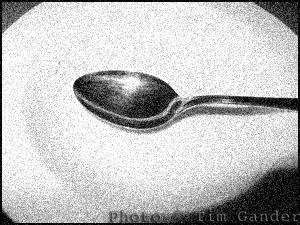
Spoon in empty bowl

Is any old rubbish protected?

Presumably this is so that people can’t copyright everyday objects in order to prevent their wider use. I can’t copyright a blank piece of A4 paper, then sue anyone who writes a letter on blank A4 paper by citing their work as derivative of my copyright work. Equally I can’t take a photo of a famous landmark, then try to prevent anyone else from doing the same by citing my copyright. Each person who photographs that landmark will own the copyright in their photo of it, not in the scene itself. This point is stretching a little far now, since the photo of a landmark is the “realisation” of the scene, and it’s the realisation of a scene or idea which has copyright vested within it, not the scene or idea itself.

Steel spoon in white bowl

Ah, now it's art! Better watermark this one.

So getting back on track to my point (yet again), when would a photograph not exhibit a degree of labour, skill or judgement? Well presumably when the photographer hasn’t chosen the angle, chosen the camera settings, which lens or focal length to use and hasn’t judged the scene with any degree of care. You could almost argue that someone holding an iPhone up to snap a view has done none of these things and might therefore not have the protection of copyright for their picture.

Dammit; worms everywhere. Discuss amongst yourselves while I fetch the dustpan and brush.

It’s a free world, but don’t give it away.

The internet is a marvelous thing, but it does seem to make some people take leave of their senses.

A report by an Amsterdam-based organisation called Ultrascan Advanced Global Investigations published statistics in January 2010 which claim to show that victims of the “419 Advanced Fee Fraud” paid out something over 9 billion US Dollars (globally, I assume) in 2009 alone. 419 AFF is the name given to those frauds using emails to trick people into handing over their bank details. As an example, I grabbed this one at random from my email trash (edited because she does bang on a bit):

“Dear,

My name is Miss Adilah Elya Adira, I am an only child of my parents, 26 years old, I am a citizen of Malaysia; a computer analyst with Bank Negara Malaysia. (Central Bank of Malaysia) I just started working with this Bank. I came across your payment file and took my time to study it and discovered that15, 5000,000.00 was forwarded to this bank with immediate payment Signal and authentic approval many months ago from an affiliate/mother Bank in Africa as part payment of your inheritance fund….

The only thing I will need to release this fund is a special Hard Disk, we call it HD120 GIG. I will buy two of it, recopy your information, and destroy the previous one, and punch the computer to reflect into your Bank account within 24 banking hours. I will clean up the tracer and destroy your file. As soon as this deal is completed, I will run away from here to meet with you in your country if you are interested. But you must assure me the absolute confidentiality of this deal before I can do anything further.”

Oops! I broke confidentiality. Oh well, sorry Adilah, best try someone else.

Now of course if people fall for this kind of fraud, that’s pretty serious, but are people really so gullible that they give their valuable information away? I fear so.

Now although it’s clearly less serious, and it’s not fraudulent, I believe there is a subtler exchange going on regularly which prizes valuable assets away from the unsuspecting internet user.

Just last week I was reading a discussion on Linked In, posted on a photographers’ forum, which started when the publisher of an on-line photography magazine requested images from photographers who might be interested in submitting their work to be showcased around the world (that’ll be The Internet then).

The pretense is that photographers submitting their work will gain a global audience, wider recognition and perhaps some business through having their pictures published online by the magazine. For free.

Now I know no one is having their arm twisted to give away their work, just as no one is having their arm twisted by the charming Adilah to give away their bank details. And I’m willing to accept that the magazine is a great deal more genuine than the flimflam story of funds being transferred via hard drive to my bank account, but I think if people are going to give their photography away for nothing, they need to think long and hard before doing so.

The internet is a MAHOOSIVE! entity, and like the universe it is constantly expanding. By giving your images away to an on-line publication (which in this case, from my investigations, takes both advertising and subscription revenue), you are devaluing your work, and highly unlikely ever to get the recognition you would like or the leads to future business you might hope for.

I’m not going to name and shame the magazine; we’ll call this a self-imposed injunction, but as an example of how far letting your work go cheap or free gets you, let’s use the case of Robert Lam, who sold his Time magazine cover shot for (reputedly) $30.

This was back in 2009 so I assumed that by now, having got “exposure” in Time magazine, he’d have a swanky website and maybe a Beverly Hills studio. Googling his name though only seems to bring up sites reporting his naivety. Getting the Time cover doesn’t seem to have progressed his career one inch. Even his Model Mayem profile, where he first announced his great Time cover achievement, appears to have closed.

Perhaps Robert became unbelievably wealthy, but then lost it all when he responded to an email from a Malaysian banker called Adilah.

I stand to be corrected, so Robert, if you see this, let us know how getting the cover of Time and $30 changed your life.

black man smoking

Never published (from a personal project): It isn't just about the money, it's about self respect.