F/8 and be chic*

“PRIX is a photography lifestyle magazine for men. If you love to snap photos, chances are you’re into cars, naked women and guns.”

Ok, that’s not a real magazine, but here’s an introduction to a magazine which does exist. Or should that be ‘does sexist’? you decide. At the very least it strikes me as deeply patronizing, but here goes the intro from editor Jeanine Moutenot:

“PIX is a photography lifestyle magazine for women. If you love to snap photos, chances are you’re pretty creative and artsy about the rest of your world too. It’s important to you that your business is modern and cool, you’ve always got an eye out for hip clothing and accessories, and looking professional and shooting well are top priorities. If this sounds like you, PIX is here to help! In each issue you’ll find tips, ideas, products and trend reports for women in photography.” Shooting well? Whatever that means.
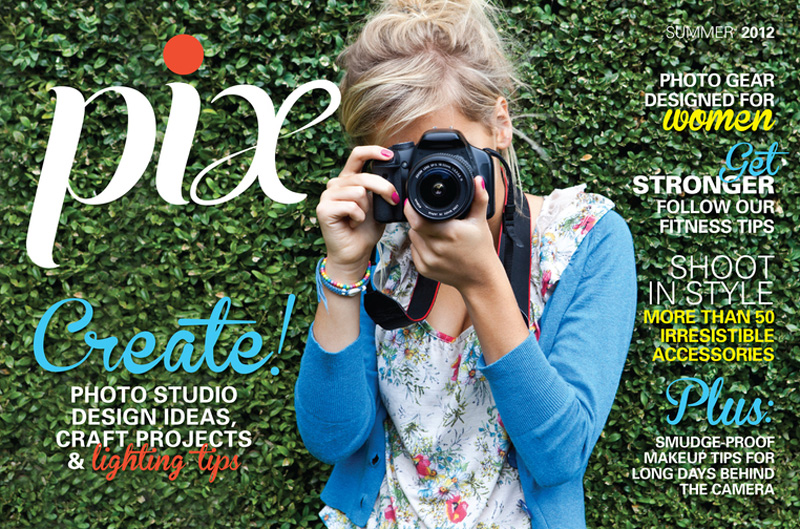
Fluffy and patronising? Am I the best judge?

The cover to the first edition features a photo of a young woman holding a camera awkwardly, Canon logo ham-fistedly edited out, cheap kit lens on, but at least her hair, nails and dress are pretty. That’s the main thing, right?

Never mind the intro and cover shot, we know there are some incredible photographers out there and many of them happen to be women who would give highly insightful interviews. So what does pix offer? “Photo gear designed for women,” “irresistible accessories,” and “smudge-proof makeup tips for long days behind the camera.”

Indeed, in the pages of PIX you’ll get advice on where to buy a striped skirt to go with your funky striped Lomo camera. Or perhaps you need some Summer pumps so your feet can stay “covered, comfortable and cute while you’re on photo shoots.” Cute?! The general tone of the magazine seems to be aimed at women more interested in cameras as accessories than tools of a trade.

There are maybe 12 pages of articles featuring working photographers buried within the 63 pages of puff, but references to their motivations, challenges, styles or paths to success are fleeting. Before you know it, you’re back to editorial featuring pretty things to buy.

Notably, an article on studio lighting isn’t about studio lighting at all, but about how to make lampshades from paper cupcake cases.

Maybe my being a man precludes me from passing judgement on a photography magazine aimed at women. Perhaps I’m missing the point and female photographers will relish the chance to read about flowery camera straps or an eyeliner that doesn’t smudge onto the viewfinder.

My gut feeling though is that PIX is incredibly patronizing, is aimed at aspiring photographers who are more interested in pretty things than the hard-nosed facts of photography and would have worked better if it had been aimed more at women simply by virtue of not featuring ads for glamour shoot workshops and men talking about the size of their kit.

PIX is really saying that if you’re a photographer and a woman, how you dress and the colour of your camera bag is at least as important as your ability and vision. In an industry with something of a male-dominated culture, is PIX redressing the balance or reinforcing stereotypes? I’d love to hear the views of photographers with fallopian tubes.

*The original quote “F/8 and be there” is attributed to New York photojournalist Arthur “Weegee” Fellig whenever he was asked how he got such striking images of news events during his career in the 1930s and 40s. Look him up, interesting guy. I don’t know if he ever worried about whether his camera matched his handbag.
Clamour over Klamar Pics

Casting around for ideas for today’s article I turned to twitter and asked what people might be interested in reading about.

Twitterer @drinckx alerted me to this little internet storm surrounding AFP photographer Joe Klamar’s photos of the US Olympic team.

From what I can gather, and for reasons not entirely clear to me, it was decided there should be a three-day photo session during which all the US athletes would be photographed on a tight rota by a selection of photographers representing different agencies, all working in mini studio booths at a location in Dallas, each photographer photographing every athlete in turn. Take a look at Vernon Bryant’s blog on the Dallas News and you’ll get the picture.

Now I’m no expert on the reasons behind the set-up. I would have thought it more sensible to have one or two top-end photographers shoot a set of well-crafted images suitable for pool use (one agency required to share images with all the others). Perhaps it was a way to save money, but the set-up sounds like a nightmare to me, with each photographer having approximately 4 minutes with each Olympian. With over 100 athletes to photograph, a Herculean task you might say.

The general consensus is that for Klamer at least, something went a bit pear-shaped. The results look rushed and un-professional, and yet if you find other examples of Klamar’s work he’s a good news and sports photographer. Maybe nothing spectacular, but what is known in the industry as a ‘good operator’. The problem is, now you’ll have to search hard for anything other than criticism of him such has been the rush by those who know nothing of these things to jump in and take pot-shots at him. Armchair photographers thinking they could have done better with their iPhone have comprehensively clogged the search results.

Looking at other examples of Klamar’s work it seems AFP may be at fault here in putting him forward for a task for which he was ill-equipped. News and sport appear to be his areas of expertise, and yet he was put in a studio that even studio photographers might have struggled with – very little room for lights or expansive and expressive poses. Other photographers did manage, but that would suggest they were more suited to the task.

I’ve seen comments suggesting Klamar’s images are meant to be ironic, stripped of slickness and cliché. Well I’m not convinced. If there is a message at all, the images could represent Klamar’s anger at the ridiculous set-up of the summit photo sessions. The tiny booths, the speed with which shots had to be rattled off. His background becoming torn, his lighting rarely being right, background edges in plain view. If he was being brave (rather than just out of his depth) he may have been saying “this set-up is rubbish and I will not pander to the idiots that organised it.”

One thing I am convinced of, this photo-me booth, conveyor belt arrangement cannot have been conceived by a photographer. This is the work of someone with a clipboard and lots of pens thinking they understand what a photographer needs. Yes, other photographers did a better job, but I bet they weren’t delighted by the reduction of the task to a series of snatch images. But if you take a good photo in rubbish circumstances you cant complain because the client will always say “but the photos look great, what are you complaining about?” Which rather misses the point.

For now Klamar’s reputation is somewhat tarnished, but I think he’ll recover once the interest moves onto something else. Maybe a cat playing the piano will distract people back to what the internet was made for.

Reputation Gone in an Instagram

This week’s massive news is that I finally succumbed and upgraded to an iPhone 4s. I know the iPhone 5 is on the horizon and it’ll probably have interchangeable lenses, hover mode and a function for printing money, but I don’t need those things.

However, anyone who thinks I’m behind the times in mobile phonery should consider I got my first mobile in 1990, a barely-pocketable Phillips for which I paid about £500 up-front just so I could make calls at a cost per minute that would make a lawyer envious. I made very few outgoing calls.

You wouldn’t believe the similarities between the iPhone and the Phillips of yore. Both mess up the shape of your smoking jacket when carried in the pocket, and both have a battery life shorter than Jimmie Krankie’s inside leg measurement, but among the thrilling features not found on the Phillips is the camera.

People rave about the iPhone 4s camera and the various apps you can use with it, the most popular being Instagram. With a few friends already using Instagram I had to give it a go and early indications are I will have to watch my step or become hopelessly addicted to photographing flakey old doors, kittens, funny signs and the sun as it shines through translucent leaves, cobwebs and dandelion heads.

I think it’s fair to say though that Instagram is more about the filters and effects than about the content of the images. You can take a photo that previously would have been fit for the bin and make it quirky and interesting by fiddling around with it, adding a vignette and a sepia cast or whatever you fancy.

Is it still photography? Well, yes I suppose it is. It might not be photojournalism. Much of the time it might not even result in an interesting photo, but if photography is about looking at the world in a different way, Instagram seems to be about looking at photography in a different way. I’m not a huge fan of the billions of images uploaded to the web every second of every day, but it’s not a tsunami that will stop any time soon, and I’m now responsible for a small share of that.

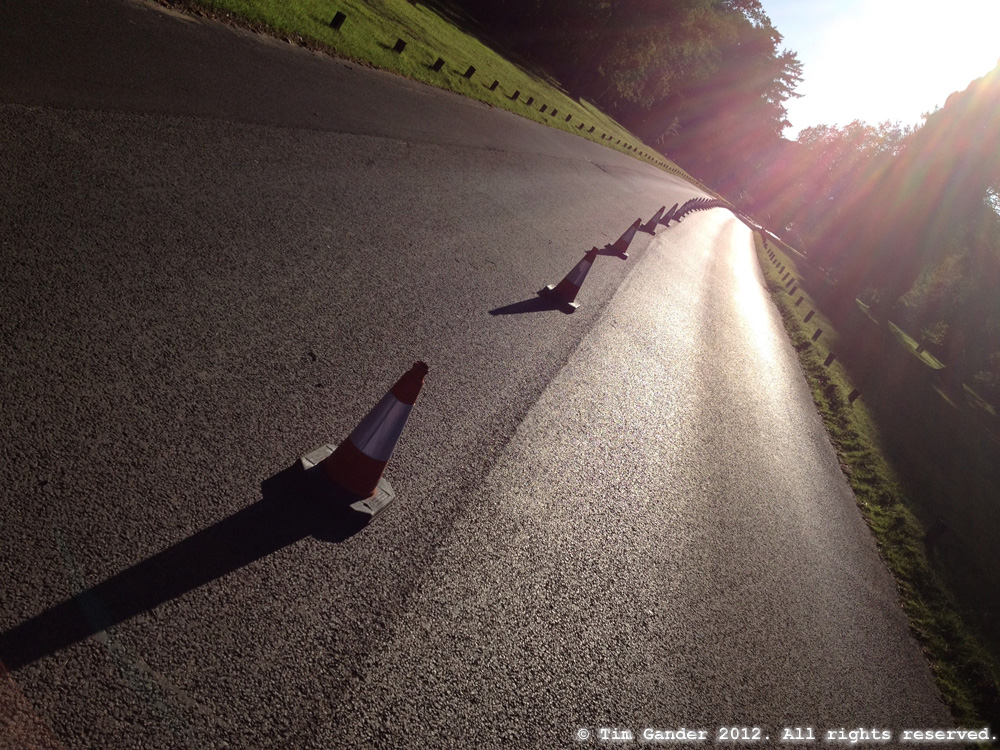
Exit road from Longleat with road cones down the centre

Is it art? Who cares?

What iPhonography (yuckword) and apps like Instagram allow me to do though is step outside of being a professional photographer and explore a less serious side. If I wield an SLR people expect me to take great pictures of whatever I’m looking at. With an iPhone I can join the party and use photography as a bit of fun and no one will expect me to produce stunning art. Either that, or they’ll see my Instagram efforts and think it represents my professional work.

Now that I think about it some more, I wonder if that Phillips still works? It might just save my reputation.

Leica good essay? You might Leica this one…

There’s been a lot of on-line chatter this past week about Leica, from the surprise announcement of a black-and-white only digital camera to the record-breaking sale price of another, much older Leica which in its day would only have been capable of shooting black and white, there not being any colour film in 1923 when the camera was made. It’s like the circle of life.

What is it about Leica cameras that seems to get photographers wriggling in their seats like school boys with full bladders and frogs in their pockets? And why are they so excruciatingly expensive (the cameras, not the frogs, bladders or pockets)?

In case you’re not aware, Leica, a German brand, are famous for their compact 35mm cameras of the kind used, perhaps most famously, by Henri Cartier-Bresson. They pioneered the 35mm film format and make cameras and lenses to an extremely high standard of manufacture. Many older Leicas (like the one sold at auction last week) have become highly collectible and even fairly common models will fetch eye-watering sums on the secondhand market.

It wasn’t so many years ago Leica appeared to be on the verge of extinction. I don’t know what the state of their finances was, but ‘people who know about these things’ were starting to write Leica off as a brand because they seemed to be slow to respond to the digital era, but by striking deals with the likes of Panasonic, developing their first digital M-series camera and a bit of clever marketing, they look like they’ve pulled back from the brink.

The problem for Leica (if it can be said to be a real problem) is that among many professional photographers, the brand is being harmed by the perception that only rich boys with little or no real photographic talent can afford to buy them.

The Amazon price of the current M9 camera is as close to £5,000 as makes no difference, and that doesn’t even include a lens, for which you’ll need to scrape together another £3,500 for a new one. The newly-released M9 Monochrome, which only takes black and white digital images, is priced at over £6,000 without a lens.

A camera make which used to be aimed mainly at the professional appears to be shifting its (pun alert!) focus towards the wealthy amateur, which may not matter much to Leica but may dent its professional reputation in the longer term.

Don’t get me wrong, I’ve seen pictures of and from the M9 Monochrome and it is a very desirable camera indeed, and I think I understand the point of a black-and-white-only digital camera. But scanning the various professional photographers forums and you get a sense of rising indignation that those who might be able to make best use of such cameras can ill afford them. On the flip-side, if Leica priced the new camera at a level pro’s might be able to afford, everyone would rush out and buy one and Leica would lose an important ingredient of their reputation – their exclusivity.

By now you’re probably wondering what my actual point is, and my point is… I’m not sure. I’m conflicted. It would be a sadder world without at least one camera manufacturer making products that set the heart racing. Maybe it’s good to have such things to aspire to, but cameras are just things after all.

I’m not a huge fan of the current trend towards retro-styled cameras, some of which are better to look at than to take pictures with, but to be fair to Leica they have, like Porche, stuck to a design principle since the year dot. Manufacturers like Fuji with their X100 are starting to prove a camera doesn’t have to cost the price of a small continent to function well, but you won’t find too many Fuji cameras becoming collectible in years to come which brings us back to the brand-conscious collectors.

Call it my working class chip if you like, but I do have a problem with the idea of someone spending £9,000 on a camera they’ll use to take pictures of parties, kittens and tourist attractions, or perhaps even worse they’ll keep it in the presentation case never to be used at all in the hope of selling for a profit later. On the other hand, give the camera to a professional and you have to ask if it’s in poor taste take pictures of starving Africans with a camera that costs enough to buy them an irrigation system and a lifetime supply of seed and livestock.

If a camera which cries out to be used to take pictures of the human condition is so expensive that its self-selecting market is largely the untalented rich, is that a problem?

You could link this argument to one about people who buy Ferraris and Lamborghinis, but people who buy for the purpose of ostentation might be lousy drivers and photographers, or they may be brilliant photographers who like to arrive in style. Perhaps it’s the ostentation that professional photographers dislike, maybe it’s jealousy.

Perhaps in my case there is an underlying, uneasy insecurity that while I point and snipe at rich kids with all the gear and no idea, would a £9,000 camera in my hands result in some great, Pulitzer Prize-winning photo essays on the Mexican drugs war or child sex trafficking in the UK? I’m starting to think my point today is this; could someone please buy me a Leica M9 Monochrome with a 35mm f2 Summicron so I can at least find out?

SO LONG, SEO-UCKERS!

In April 2010 I wrote a blog article about the frustration caused by photographers who don’t do what I do getting their websites SEOd as if they did. Not only frustrating for me, but also for clients genuinely looking for a corporate, commercial or press photographer in the Bath, Bristol and Somerset areas (see what I did there?).

The majority of perps in the search-engine fraud were wedding photographers fishing for the extra calls, but if a client clicked to their site looking for examples of that type of work, they were often disappointed; galleries entitled Corporate Photography or Press Photography often containing nothing but… wedding images. Something of a waste of time, and I was frustrated by a lack of intelligence on Google’s part to seek out and demote these sites, making search results more relevant.

I’m happy to report that Google do appear to have been reading my blog, and now a search using the terms you would expect a potential client to use to find me sees my website listed top or at least on the first page. Especially pleasing when I’m competing against a glut of photographers in places like Bristol and ranking highly for Somerset.

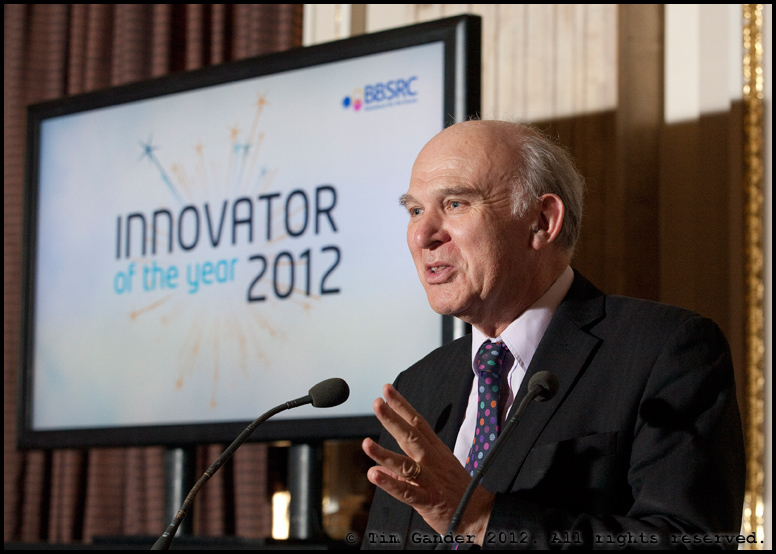
Dr Vince Cable speaking at Innovator of the Year awards, London

A press picture for a corporate client, and definitely not a wedding photo

How have I achieved this? Well I stick to using simple, standard terms, and ensuring the images I upload for my clients are properly tagged, captioned, keyworded etc and plugging away at things like this blog.

In other words, my SEO efforts are honest. I don’t WANT to be found under wedding searches, or family portrait searches or plumbing and electrical searches. I want to be found for what I do, and it’s nice to be able to report that I’m getting new clients as a result. I’m not saying I do a perfect job, but I do my best and try to avoid keyword loading.

Hopefully those wedding photographers didn’t spend too much time or pay too much money to SEO ‘experts’ only to have their sites demoted by Google, and I do indeed hope they’re getting top listings for what they actually do.

Tips for Top Shots

Photography, like ventriloquism, has a slightly uneasy relationship with radio, but when I heard John Wilson was going to be interviewing Terry O’Neill (celebrity photographer), Don McCullin (war/conflict, now landscapes), Harry Benson (politics) and David Bailey (fashion) for Radio 4’s Front Row, I knew it was going to be a treat.

These four were chosen for their roles as a new wave of photographers who shot and helped shape the 1960s, although I found it slightly incongruous that they were being asked for their top tips on how more of us could get perfect “snaps.” And yet, this premise did illicit some interesting answers.

O’Neill, for example, apparently hates cameras, “I only have a little Leica and a Hasselblad,” he says. Is that ALL you have, Terry? I’ll dream on…

What was also interesting about O’Neill though is that he, like Don, never takes pictures at family events, and I have to sympathise there. Terry says it’s because when he takes a photo he wants the lighting and everything to be just right, and he’d hold everything up if he tried to take pictures at parties or on holiday.

Like Terry O’Neill, Don McCullin also rarely takes any kind of family photo. His wife complains that he never takes pictures of her. His reason (excuse?) is that since his cameras have been used to photograph conflict, his gear is somehow contaminated, and he just wants to shut it all away in its cupboard until he needs it again. Of course at 76 years of age Don isn’t shooting conflict any more, but look at his Somerset landscapes and you’ll see the work of a man who is clearly at conflict with himself. Of the four photographers interviewed, it would seem Don is the one most haunted by what he’s witnessed.

Harry Benson made his name, rather like Terry O’Neill, photographing the likes of The Beatles, but where Terry majored in celebrity portraiture, Harry developed his career in politics. Among his most famous photos being the assassination of Robert F. Kennedy in 1968, and he talks about the experience of getting the shots (if that’s not too cruel a juxtaposition) of the presidential candidate as he lay dying, or already dead, in the arms of his wife. Harry says, “I didn’t even bother going to the hospital. I knew it was over. Anyway I felt I’d done my work for the night.” That was an incredibly telling line.

If you were to ask people on the street to name a famous photographer, David Bailey’s name would probably crop up most often. Famous for his style of fashion photography, where he moved the whole genre away from the static studio to the street, his approach has always seemed less reverential, and in interviews where he compares his career to the likes of Don McCullin, you can sense the relief he didn’t go to conflict zones to make his name. Maybe this explains why in this interview he delves back into his school days to find conflict and discomfort. Doesn’t seem to have done him any harm…

In terms of ‘tricks from the professionals’, Bailey does impart useful knowledge. Something I’ve seen photographers fail to do, and I’ve failed to do once or twice myself, is engage with the person you’re photographing. Talk to them, find out what makes them tick. You’ll always get a better portrait that way.

From Terry O’Neill we learn to always fill the frame with what you want to say. That’s a lesson I learned from my first picture editor, who used to scream FILL THE F*****G FRAME! at me (only for my first two assignments, after which I learned).

I like Don’s advice, that if you’re likely to get killed taking a picture, you better make damn sure the exposure is correct. He would leap up, take an exposure reading, then set and frame the pictures before pressing the shutter button. All this under heavy fire.

Harry’s advice, to always stay at the centre of the story for as long as possible, is also good advice. Not to get distracted by peripheral things.

Finally, David Bailey’s advice, apart from remembering to talk to your subject, is to shoot against a plain backdrop and shoot black and white. As he says, “With colour you look at the colour before you look at the message. With black and white you go straight to the message.” Of course shooting black and white isn’t a luxury we have for every assignment, but that quote is a useful one for making the distinction between colour and monochrome photography.

Photographer Don McCullin

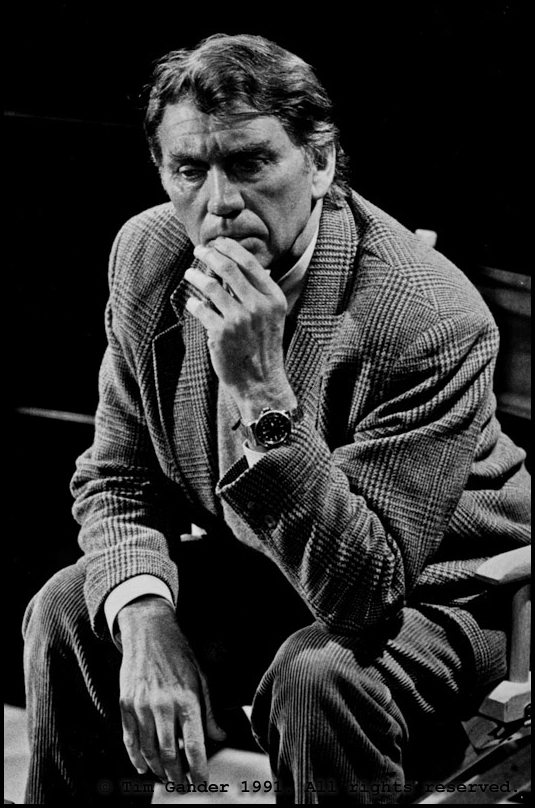
Don McCullin in typically down-beat mood during a presentation at the National Museum of Photography, Film and Television, circa 1991

Hear the full interview here, I highly recommend it.

Clarity within reason

I recently blogged about photographers who profess to use only natural light (ie they hadn’t figured out flash, so why not hide ignorance and pretend flash is for some sub-species of photographer), but another trend that’s been getting under my skin recently is the over-use of something called Clarity.

In case you’re wondering, clarity is an adjustment photographers can make to their photos from within Adobe’s Lightroom application. What it does in (really brief) layman’s terms is increase contrast in the mid-tone areas of a photograph. It doesn’t do much to the brightest and darkest areas of a photo, but it can improve or make a real mess of the in-between tones.

I use Clarity on many of my images just to add a little more ‘punch’ than is in the original RAW camera image, but the rule I apply to the Clarity slider is the same one I apply to many image-processing effects, that is; if I can see the effect, I’ve probably gone too far.

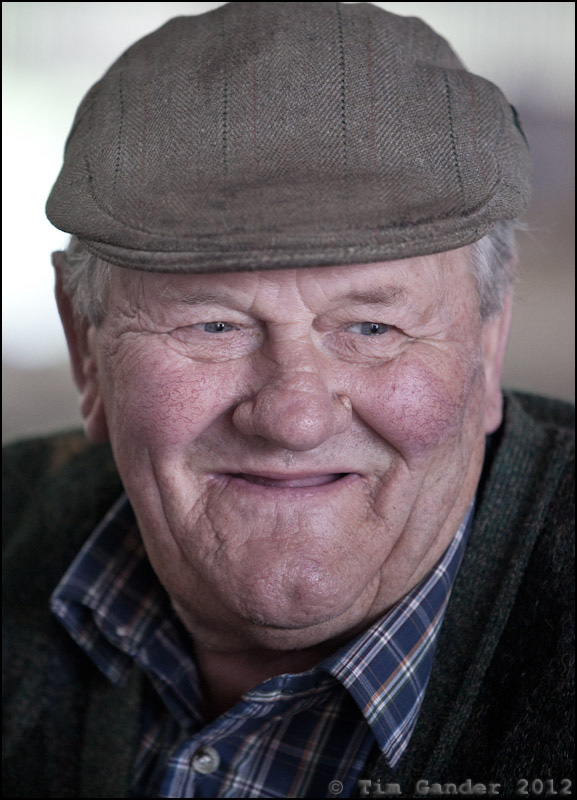
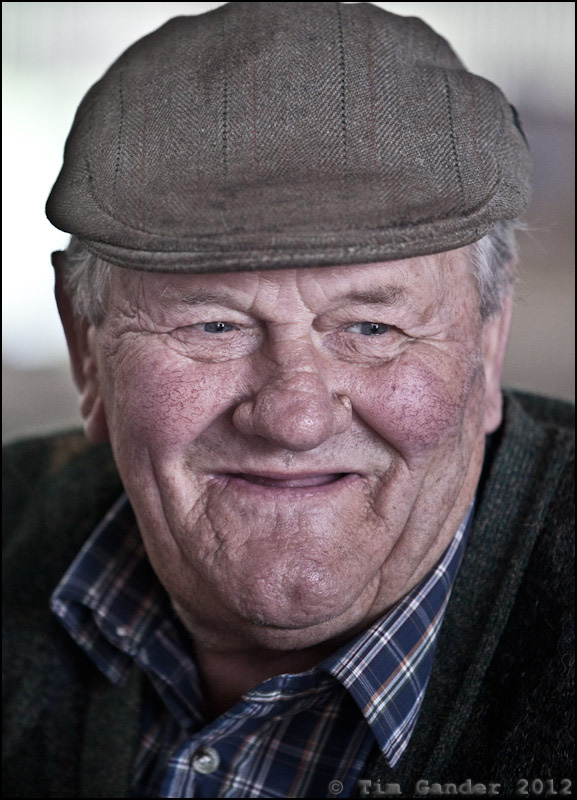
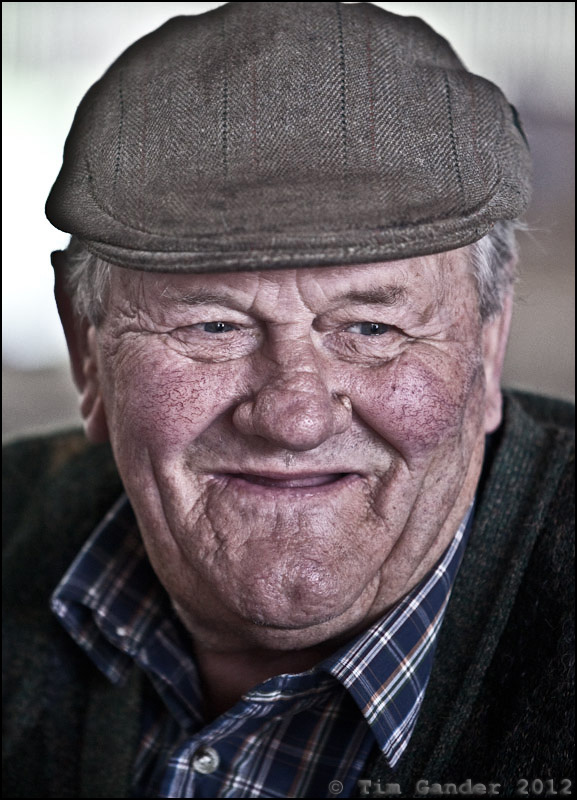
And too far is what I’ve seen a lot of recently. Especially on portraits. I first noticed the sledgehammer application of Clarity in a Sunday Times Culture magazine portrait of Jack Nicholson last year. I wish I could show it here so you’d see what I mean, but I can’t find it now, so instead I’ve demonstrated the over-Clarity effect below with one of my own photos.

You’ll see this effect used on some corporate portraits too, and to be honest I think it looks ghastly. It ages all whose portraits are touched by it. It gives everything a kind of super-digital weirdness and makes skin look bruised and like badly dried-out leather.

I thought it worth writing this article because if you’re looking to commission portraiture for your company and would like to avoid the DFS-face-effect provided by the Clarity-hammer, you might want to recognise the signs of its use in the portfolios of the photographers you’re considering using. Then decide if that’s the look for you.

Portrait of farmer

Just a touch of clarity here. Can you see it?

Farmer portrait

Not so subtle. His hat looks 'bruised' around the edges and the face details are looking over-cooked

Farmer portrait

AAAAAAAAAGH! MY EYES! THEY'RE BURNING!

When ‘specialist’ isn’t special.

“I specialize in natural light photography” is a statement you’ll see on some photographers’ websites, but what does it mean? What is ‘natural light’ and does it make these photographers special?

Let’s get any pretense out of the way first; I’m rarely convinced by such statements. To me the subtext of what they’re saying is, “I don’t know how to use flash, flash scares me so I’ll pretend I don’t need it. I’ll just say I’m a specialist at not using it.”

In essence natural light is any light which isn’t man-made. Sun and moonlight is about it, but looking at some of the ‘natural light’ photographers, they’ll happily pull electric light into their lighting armoury, regardless of the strange colour casts you’ll get on people’s faces under this lighting.

Sometimes the photographer will fix this by turning their pictures to black and white. Which is fine if the client wants black and white. Not so clever if the images are for a colour project.

There are very few photographers around who can genuinely limit themselves to only taking pictures using natural light and nothing else. William Eggleston springs to mind, but I’m not sure you can hire him for your wedding or commercial shoot.

Brian Harris is a working English photojournalist who very rarely uses flash, but can get away with it because of his talent combined with the kinds of commissions he takes on.

Location studio lit portrait of student

Photo taken in a lecture theatre, where light was so low the only option was a portable studio light

As for myself, I often have to work in difficult lighting conditions but make the pictures have a particular style and look. This might mean daylight is sufficient, but often means I have to supplement the daylight (or even replace it entirely) with portable, battery-powered studio flash.

This may not be as simple as pointing and shooting using whatever light there is, but for me the results are worth the extra effort.

If you’re looking at hiring a corporate photographer who “only uses natural light” or “never uses flash”, chances are they just don’t know how to use flash. This isn’t a skill or specialism, it just means they haven’t learned the basic requirements to do the job. It’s always best to check their website first, look out for a dominance of black and white, or strange and inconsistent skin tones. For your projects it’s often important to get a consistent style across all your imagery, and that’s where portable studio flash can help. Oh, and someone who knows how to use it!

Cool new tool

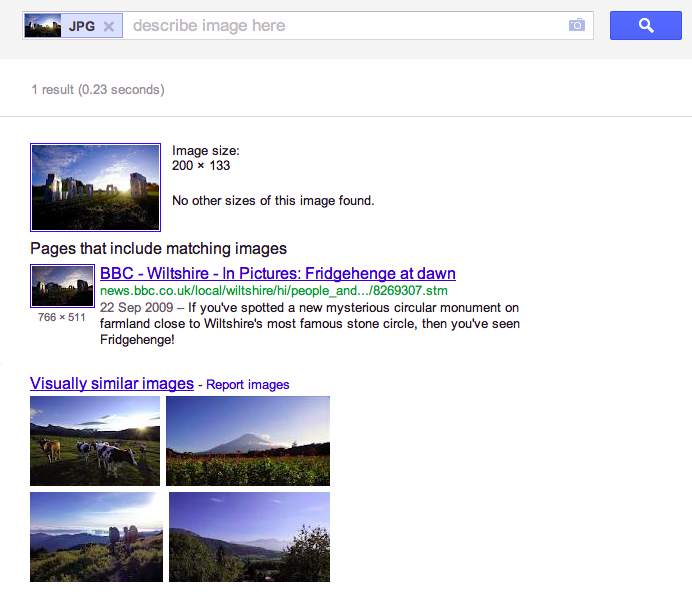
Reverse image searching has been around a little while. This is where you find an image and want to know who took it or you’re a photographer who wants to know who is using your work, you point a service like Tineye or Google Image Search (GIS) at the photo and they search the internet for all instances of that image appearing and return a list of results.

Google Image Search will also return similar images for you to look at, which can be useful for designers looking for inspiration.

Well now a new little tool has just made GIS that little bit slicker and easier to use. It’s a browser ‘bookmarklet’ you add to your bookmarks bar so it’s there when you need it.

You’ll find the bookmarklet here. Follow the simple instructions and you’re away.

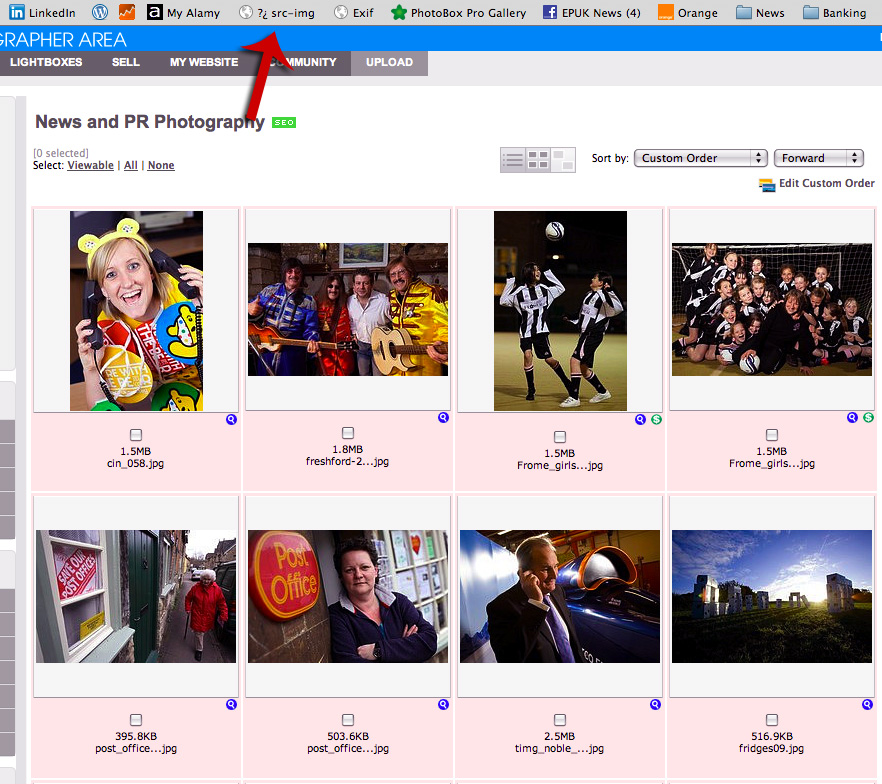
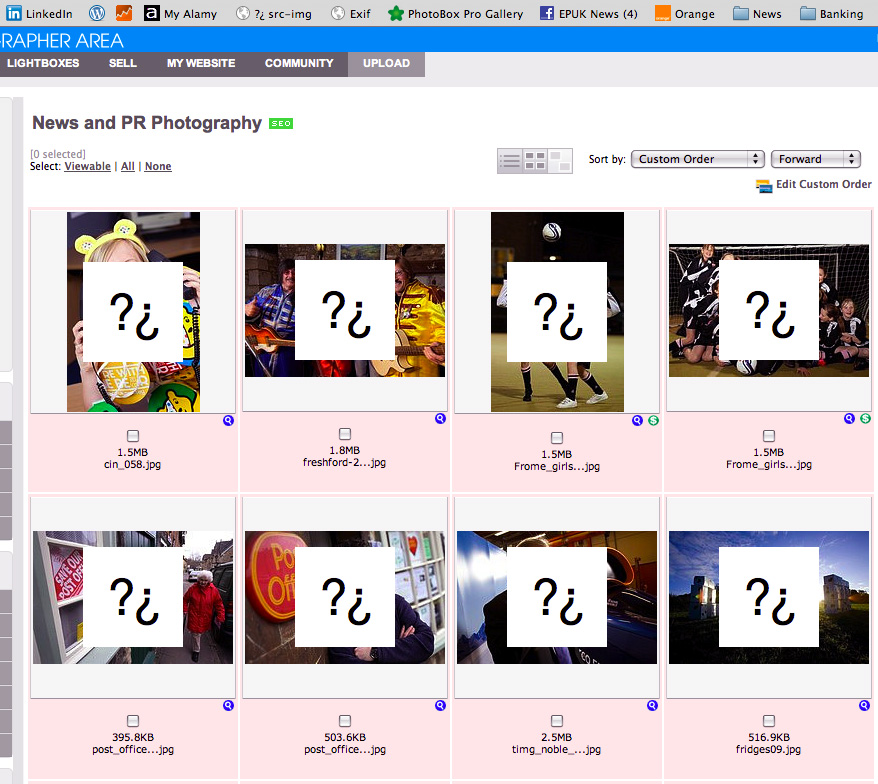
When you’re on a web page with an image or images you want to search on, just click the bookmarklet and you’ll see question mark boxes appear over any images detected on the page. Click the image you want, and the GIS search results are brought back to you very quickly.

No more guesswork about how often a particular stock image is being used, and photographers can track valuable images more easily and follow-up infringements with much less detective work required than was the case in the past.

The following images describe more graphically how it works. Of course it’s not perfect. Photoshelter users will know what I mean, and to get rid of the image search boxes you have to reload the page each time, and you can only search images which are already on a web page, but have a play and you’ll get the measure of its worth for you.

Click the images below to see them in detail.

Demonstrating Google Image Search

With pictures on the page, click the bookmarklet

Demonstrating Google Image Search

Every visible jpeg will then look like this

Demonstrating Google Image Search

Clicking an image will return the GIS results page

What will we have after Leveson?

Anyone who’s been following the Leveson inquiry into press standards, and let’s face it who hasn’t been riveted by every thrilling moment, will have become aware of the bashing that has been meted out to journalists, editors and management.

In many cases this opprobrium has been justified, in others it’s been pure entertainment; who didn’t enjoy watching Piers Morgan twisting in the breeze as he tried to sidestep the questioning? Or relish the vision of Paul Dacre coming to the boil when being challenged to withdraw his “mendacious smeers” comments over Hugh Grant’s accusation that Mail titles had hacked his phone.

In amongst all the noise about phone hacking and the general skullduggery of journalists, some will have heard the rough ride photographers have received. Stories of press photographers banging on car windows, hiding to get the shots of grieving parents… you get the picture.

The problem I have with what I’ve heard is that the newspaper industry has spent the past ten years dismantling the training and career structure for photographers. At the same time we’ve seen the rise of the citizen photo-journalist.

There was a time when to be a press photographer you had to go through formal training which included lecturing in the law and the Press Complaints Commission code of conduct. And as the law and the PCC code changed, so photographers would be kept up to date via their bosses or commissioning editors.

That isn’t to say all photographers were perfect, but training makes a difference. It means when a photographer oversteps the mark, there’s no excuse. There’s a course of action to be taken and discipline can be administered. A staffer might lose their job or a freelance dropped if they break the law or breach the PCC code in a flagrant way.

It may be entertaining to hammer the press in the current climate, and Lord knows they’ve brought much shame upon themselves, but publishers need to start investing in training again and we have to accept that if we rely more on amateur photographers to supply our news images, the price to pay may well be more infringement.

On the flip-side of that is the fact that the citizen journalist may not be aware of their rights to take pictures under certain circumstances, and in fact their rights do not match those of the card-carrying news photographer who can resist seizure of images by Police under special procedure rules set out in the Police and Criminal Evidence Act 1984.

So let’s have a think about what shape we want our news industry to be in a few years from now. The internet has changed much, and will continue to do so, but let’s not get lost in the fun of the journalist-bashing we’re witnessing now or the thought that citizen journalists will democratize news-gathering. They won’t. Trained journalists and photographers provide a valuable service at the centre of our democracy. It would be easy to lose that while we’re applauding the spectacle of Leveson.