The Orphans are Back!

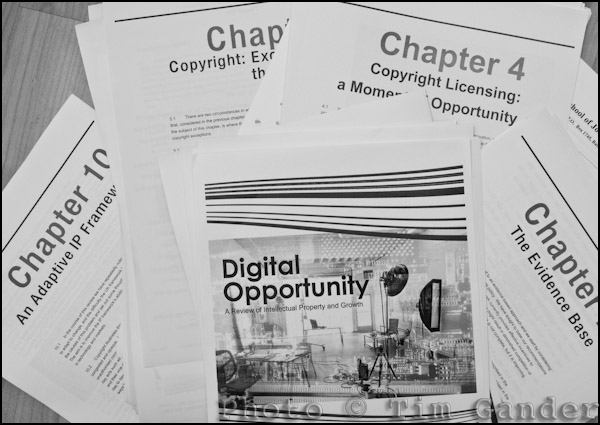
IP review laid out

Interesting plot, but predictable outcome.

I’d hoped to comment much earlier on the government-commissioned independent Review of Intellectual Property and Growth, but the resulting document produced by Professor Hargreaves and his team has taken me far too long to wade through while still trying to get on with the business of being a photographer.

And herein lies a common problem with such reviews. Those who stand to lose the most are the ones with the least time to spare to influence and pour over the review’s conclusions.

Like may photographers, I simply don’t have time to wade through all 123 pages of the report. I submitted my views back in March, and they were duly noted and published on the Review site, but apart from a few passing references to photography, the review seems to have concerned itself more with music, film and TV rights when dealing with copyright in the creative industries.

So you’ll forgive me (probably thank me) if I don’t go into great detail here about what I think of the review, it’s implications for professional and amateur photographers. I think I may be review-weary, especially as many of the arguments raised and defeated in the Digital Economy Bill debate are predictably reappearing.

What is quite ironic though is that one of the main areas for the review to consider was that of Fair Use of copyright works.

In announcing the review in November last year, David Cameron said:

“The founders of Google have said they could never have started their company in Britain. The service they provide depends on taking a snapshot of all the content on the internet at any one time and they feel our copyright system is not as friendly to this sort of innovation as it is in the United States. Over there, they have what are called “fair use” provisions, which some people believe gives companies more breathing space to create new products and services.”

But it would seem the one thing he picked out for special consideration appears to be the one thing the review recommends against, the truth being that although the USA does have Fair Use exceptions to copyright, this has done nothing to stem the tide of legal actions in copyright disputes.

Cameron was mis-guided to site Google as an example in any event, because unless I’m missing something, Google appears to function perfectly well in this country. In fact I suspect that had Google started in this country, it would have been when their service hit US digital territories that they would have run into trouble.

There’s a generous smattering of conditional terms in Cameron’s introduction, such as “feel”, “some people” and “believe”. In other words, Google had a hunch their startup stage would have been hampered in the UK, but they have no real evidence to support this view.

In essence I’ve not really scratched the surface of the review in this posting, but I’ll sum it up like this:

1 Orphan works is back – I hope someone sees the sense to keep contemporarily-created images separate from museum-held works. Not an easy distinction, except that any orphans then can ONLY be works which have been digitized from orphan originals held by museums, art galleries and other public bodies. And images cannot be called orphans just because the meta data has been stripped (as happens when images are submitted to Facebook, BBC etc).

2 No apparent extra protections for photographers works – no sanctions against the stripping of IPTC info, or the willful creation of orphan works.

3 Worrying references to “flexible legislation” which potentially means copyright law can be changed without recourse to Parliament.

At this stage I can’t say I’m getting overly anxious. The report will be poured over and picked apart. For any of it to become legislation it will have to be drafted by lawyers and debated in Parliament, and in the meantime it seems rulings are coming from the EU which point to better protections for creators, and all this needs to be standardized across the EU, including the UK.

One final irony is that while the report seems to be concerned almost exclusively with music, TV, films and games, the cover features a photo of what appears to be a photographer’s studio. It would be nice if they’d bothered to listen to photographers then.
Getty getting bigger

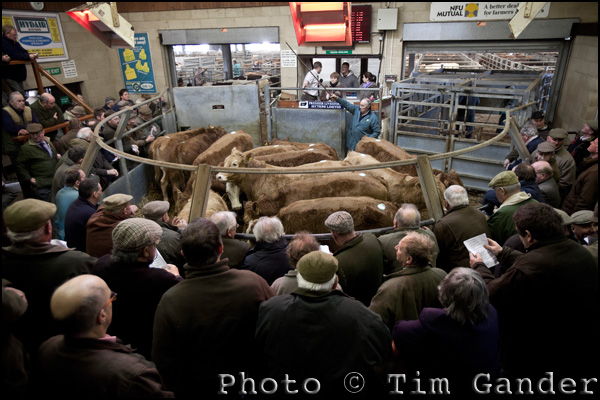
Livestock auction in Somerset

At least in a livestock auction bidding tends to go up, not down.

The parallels between the photographic industry and farming aren’t as obscure as you might think.

Imagine Getty are the Tesco/Asda/Sainsburys of the picture world, where the suppliers of the produce they sell have little control over the price they’re paid for their goods, regardless of the cost of production.

There are only so many outlets for farmer photographers, owned by some very powerful businesses that will set the selling price to wherever they think they need to in order to gain market share and make a profit.

I mention profit, but I’m not sure if Getty (who also own iStockphoto) are in profit for their stock photo portfolio of businesses, and reliable figures seem elusive, but they’re certainly good at spending whatever money they have on expansion plans.

One advantage farmers have over photographers is that they are paid for their produce by the wholesalers or retailers who then sell it on for a profit, while stock photographers give their work to the libraries for free in return for a commission, but only if a photo sells. And a photo might never sell, or might only sell for a few pence, of which the photographer might get a few pennies.

By way of leaving the farming analogy to one side, I’d like to say I have the utmost respect for farmers and I’m glad they do a job many of us couldn’t cope with.

The news that Getty have now acquired the Australian stock image library Photolibrary, close after the announcement that they’ve also acquired image-tracking firm PicScout, means Getty are still aggressively expanding and consolidating their business, but you won’t see photographers jumping for joy and I think in time neither will picture buyers be especially delighted.

Getty will want to see a return on their investments, so it may be we can expect them to switch the PicScout phaser from stun to kill as they target image infringers and recoup their money through either higher or more numerous payment demands.

As for their buying up yet another image library, what possible advantage is there to a business or a designer that they can now choose from an even larger library of the same old same old? Surely once you’ve seen one sterile business picture, you’ve seen them all. Getty can’t claim to have extended buyer’s choice any more than Heinz can claim to have extended our choice of baked beans by making more tins of the same beans.

It also appears that Getty are looking to turn the screws once again on their contributing photographers by introducing terms that mean Getty will be able to move images from Rights Managed to Royalty Free licensing, with no mechanism for contributors to opt-out of such a scheme. This leaves contributors with less control over how their images are used and the prices set. For buyers, it will mean even less exclusivity, making stock imagery even less attractive than it already is.

That final point probably explains the rise in enquiries I’m getting from businesses that are wanting to break free from the herd and be noticed (back to farming!), but I’d rather Getty used less aggressive tactics anyway because they don’t reflect well on the industry as a whole.

It’ll be interesting to see where all this activity leads. If Getty want to take a lion’s share of the market with a view to pushing up stock image prices, they may find this is a very long game indeed. I’m sure they have a plan, but in this world of over-supply and finite demand, it’ll have to be a very cunning plan or a game with infinite budget.

UPDATE: ASMP makes thinly-veiled suggestion to American photographers that if they contribute to Getty, they should consider other means of distributing their images (in other words, quitting Getty). More at PDN.

Sense and Licensibility?

First of all, let me apologise for the tardy arrival of this article. A busy week and writer’s block almost had me not writing anything at all, but I couldn’t let you get off that easily!

What finally shifted my block was a discussion on a Linked In photographers’ group forum about how professional photographers can work to reduce the negative effect of un-trained, low-skilled photographers on the industry, and the thread quickly moved onto whether or not photographers should be licensed to practice. It also descended into something of a flame-fest between some professionals and amateurs (neither side coming off looking pretty), but maybe that’s another blog article.

My personal feeling is that no, there shouldn’t be a licensing system and this article will set out why I believe that. However I do believe there should be minimum standards that clients should seek out before engaging the services of a photographer.

I probably don’t need to re-tread the well-trodden arguments about how the rise in standards of photography amongst amateurs has made the industry tougher than perhaps it ever has been in the last 40 years, though amateurs were being complained about in a book I have which dates from 1944 so it’s not a new argument.

Much of the anguish of professionals centres around what I call “epiphany” photographers. You know the ones who have quite decent jobs, but buy a digital camera at Jessops and decided what they’d really like to be is a photographer. So they either keep their day jobs and moonlight at rates to undercut professionals (and devalue their images in the process), or they leave their day jobs, commercial reality hits them hard and they undercut everyone else just to get work, with no eye on their long-term business prospects.

In these scenarios, some kind of licensing system might seem like a brilliant plan, but I just don’t see it working. What kind of regulator could tell the good photographer from the bad? When I started out I know I took some pretty bad photos, but I worked hard and trained and developed. Should a regulator have ended my career then? The picture editor I was working for at the time could have, but he obviously thought I was worth persevering with.

And at what point in the starting out process would a photographer apply for a licence? What would the conditions of a licence be? And how could a licensing system cover the diversity of disciplines from weddings to editorial through industrial, commercial, corporate…

Far simpler, I think, is if picture buyers, be they wedding couples, families, publishers or commercial businesses or agencies, make sure they check out who they are looking to book very thoroughly before they put down a deposit or commit to a shoot.

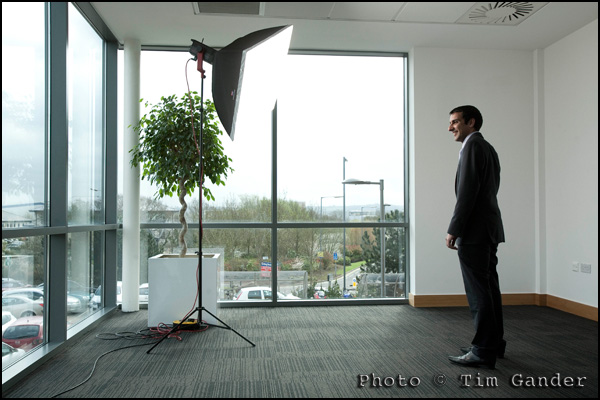
man in suit being photographed in office

Never mind that the photographer is invisible, has he got public liability insurance?

This is my list of essentials, though it can vary from sector to sector and may not be exhaustive:

  • Check out the photographer’s website. Compare it with others at varying price points to get an idea of the level of quality you’re likely to get.
  • Do some digging to make sure the website isn’t just work lifted from other photographers. Not always easy to spot, but one tell-tale sign is when the photographic style and quality varies wildly from one picture to the next.

Talk to the photographer and ask:

  • How long have they been in full-time business?
  • Do they have qualifications or training under another photographer? Either is valid in my book. Self-taught is generally not acceptable.
  • Do they have public liability insurance?
  • Do they have professional indemnity insurance?
  • What are their terms and conditions?
  • What is the licence agreement covering the use of the images?

There could be much to add to this, but perhaps the most important thing is to talk to photographers. See who you’re comfortable with and at the talking stage you should start to get an idea of the level of professional service to expect from any given supplier.

Licensing might sound like a good idea, but it can’t account for creativity, approach, style, or personality. I’m sure there are plenty of views from photographers and buyers of photography, and I’d love to hear what you think.

The Screws Becomes the News


Surprise, surprise! It turns out that phone hacking at the News of the World (aka The Screws) might just have been a tad more widespread than was previously admitted.

Now they’re offering compensation and all sorts, presumably because having already had a Royal correspondent jailed and two more senior staff arrested in connection with phone hacking allegations, senior executives may be getting a little edgy at the thought of the police investigation working higher up the chain of command.

Even executives who are no longer in the roles they were in at the height of the phone-hacking period might be getting nervous over this, because it’s a fair bet that one or two, such as former managing editor Stuart Kuttner, would have been signing off expenses for third-party phone hacking services when the practice was rife.

Of course the likes of Kuttner may not have known what they were signing off. Maybe the receipts were put through as general investigative expenses, but it has to be worth asking whether executives above editor level would have been ignorant of the nature of the expenses they were scrutinizing.

At this stage it’s only fair I point out the rather dull axe I have to grind in all this. Between (circa) 1997-8 and 2001 I was a freelance photographer for The Screws, and dedicated about 18 months of that time working 4 days a week exclusively for them.

However by late 2000 I was getting increasingly worn down by the long hours, the pointless errands and being sent to distant places to do silly jobs with no story worth reporting. That year I missed the birth of my son because I was chasing a story in France. It wasn’t the picture desk’s fault that I missed the arrival of my son. I’d opted to stay on in France to see the job through, and my son had arrived unexpectedly early, but when things turned terminally sour between myself and the paper, I was dismayed when I was told I wasn’t “a team player.” That actual phrase was used, and it stuck with me because I’d done more than miss the birth of my only son for that paper.

I’d pulled double shifts when the desk couldn’t get cover, having to spend nights in my car on more than one occasion, without sleep or comfort break waiting for some Z-list celebrity to show up. All for the princely sum of £128 (£145 for a Saturday shift woohoo!). Often the shift fee was equivalent to about £10 per hour. Ok, I’d opted to work for The Screws, but that lesson is well learned now.

On a few occasions I’d turned some insane reporter’s nonsense story into a useable scoop just by being diligent and intelligent. Clearly this also made me “not a team player.”

What finally finished my time with The Screws was when I’d tried repeatedly, and failed, to get paid the expenses I was owed. Mostly mileage.

The thing was, at the time I was working for The Screws, I was living in Portsmouth but having to drive to Wapping most of the 4 days a week. Starting at 6:30am, I’d get to the picture desk for 10, be sent on that day’s wild goose chase (pun intended) and probably get home again some 12 hours later. The reason for the insane commute was that when I started working for them, most stories I covered were in the Hampshire, Wiltshire, West Sussex region. Then they went all celebrity-led and all the “stories” were suddenly in London.

Now management knew where I lived, and it wasn’t as if the mileage rate they paid was generous, even when petrol was somewhat cheaper than it is now. But every month I would submit my invoice, including mileage, and every month a cheque would arrive for the invoice amount, less 8%.

Eventually I gave up asking nicely for what I was owed and threatened legal action. The amount outstanding was in the thousands, and I could no longer afford to work for them. The effect of the letter I sent was instant, and my time at The Screws was over. I was scared and relieved.

And who was it that was taking a scalpel to my invoices? None other than Stuart Kuttner. He must have assumed I was on the fiddle to the tune of precisely 8% every single month, but I never did receive an explanation. I did get my money in the end, but never an explanation.

While I worked at the News of the World, I had the honour and privilege of working with some of the best photographers and reporters in the industry. Unfortunately there were also reporters who clearly had substance and honesty issues. There’s no point me naming the bad apples because this was all a decade ago now, and I can’t even recall their names and nor do I care what happened to them, though I do sympathise with any of the talented people who might still be there.

Addendum: Senior reporter James Weatherup was added to the list of arrested journalists today. As yet, those three most recently arrested have not been charged.

Addendum II, This time it’s personal: Former Managing Editor, Stuart Kuttner, has been arrested, questioned and released on bail regarding allegations of making payments to police for information and on charges of phone hacking.

Reviewing the Review (so far)

Last Friday was the deadline for submissions to the “Independent Review of IP and Growth” (stay awake now) which is looking into intellectual property and copyright in the UK and how it should adapt to this digital age.

The review is headed by Professor Ian Hargreaves, who according to his blog has spent most of his working life involved in the creative industries. Well, newspapers to be precise which I would say USES creative input, but doesn’t strictly count (in my humble opinion) as a creative industry.

Much (ok, all) of the IPO review panel, was made up of corporate suits whose main interest in copyright lies in arm-twisting it from the hands of individual creators, but I don’t want this article to descend into political rantings so I’ll pause there and instead ask the question, “so what happens now?”

Not being an expert in constitutional affairs I can only be a little vague about this, and indeed Professor Hargreaves doesn’t really know either so I won’t be too hard on myself about that.

In a nutshell, the evidence is in, the review team will start to review submissions and evidence, and then report to Government in a few months’ time who will probably um and ah for a while before drafting legislation that will (probably) be deeply flawed and skewed in favour of some future Google-style startup.

So what evidence will the panel and the Prof be considering? Well I have to say, I’m a little surprised that by Friday morning there were only 180 submissions of evidence, including mine. I sincerely hope there was a late and massive surge as the day drew to a close, because that 180 will have come from all quarters – individual film makers, musicians, writers, artists, the trade bodies representing those industries as well as consumers, inventors, entrepreneurs and the publishers, broadcasters and aggregators who deliver creative content. Suffice to say a lot of submissions from many quarters and interest groups, both in favour of and against the strengthening and or weakening of copyright.

epuk logo

EPUK submitted on behalf of its 1,000 members.

However, as with previous reviews and proposals, I fear the voice of photographers will have been drowned out by those who view copyright as an impediment to theft. Perhaps drowned out is the wrong phrase to use if, as I suspect, the number of submissions from UK photographers is pitifully low.

There are thousands of photographers in this country. Think of all the wedding and portrait photographers there must be out there. The editorial, commercial, corporate, advertising, industrial, architectural photographers. You could pave a four lane motorway from here to Moscow in both directions with the skin off the backs of all the photographers in the UK (I didn’t say it would be a good motorway), but where are they when they need to defend their own business assets?

It’ll be the photographer’s enemy and constant companion apathy again. That, and the fact that many of us are heartily fed up with fighting the constant threats to our working lives, while simultaneously trying to get on with our working lives. My suspicion is that if this review and subsequent legislation don’t give the Big Boys what they want (unfettered access to anything you or I create), we’ll end up right back where we started, with another review and another call for evidence.

stop 43 logo

Stop43 submitted on behalf of photographers more generally.

Mr Hargreaves, don’t get too disheartened; Mr Gowers went before you and I suspect someone else will have to conduct another review in another five or six years. Assuming of course there’s anything left of copyright to review by then.

Don’t be submissive, submit now!

The sharp-eyed amongst you may have noticed the tardy arrival of this article. It’s all my fault. I’ve been busy working on new projects, assignments and whotnot, plus last week was half term which made for all kinds of interesting time conflicts.

But as if there wasn’t enough to be a-getting on with, the deadline for the Hargreaves intellectual property review has been looming fast, and this Friday (March 4th 2011) is the last date for submissions. I’ve been working on my submission, and I can’t stress this enough; other photographers have GOT to get their submissions in too, or forever hold your manhoods (and copyright) cheap. Do not complain later that you never got a say in how your work is exploited commercially by anyone who happens to steal it.

And businesses that commission original, exclusive photography for their websites, brochures, annual reports and the like should also consider dropping Mr Hargreaves a line, because if the worst case scenario comes to pass, it will no longer be possible to hold exclusive rights to images (whether taken by a professional or in-house) once they’re posted online, and photographers like myself may have even less say in how the work we do for you is used by others. Frankly, the current safeguards against image theft on the internet are pretty meaningless, and this is one area where the law needs to be strengthened.

Another area is that of attribution. Every photo a professional photographer takes should (if they know what they’re doing) have data embedded which gives the copyright status of the image and contact details of the photographer. It’s called metadata, and it’s imperative that any future law makes it clear that that metadata must be preserved as an image is uploaded to, moved around and/or downloaded from the internet or moved (or copied) from one medium to another to prevent the creation of so-called orphan works.

My submission is shaping up to be an explanation of the problems photographers currently face; a lack of understanding of the value of copyright, publishers and news organisations using pictures from the internet as if it were a vast, free stock photo library for them to use as they wish, and the lack of any real sanctions for photographers who find their work being misappropriated. I explain that many of the exclusive deals I have with my clients will be rendered useless unless unscrupulous businesses and publishers are forced to accept that they have to pay for their own content just like everyone else.

It’s a short article this week, because I’ve still some work to do on my submission while also trying to get work done, so I’ll leave you with the tools you’ll need to get your own submissions written and in before the deadline. Why are you still here? GO!GO!GO! and write your submission now…

Hargreaves Call for Evidence.

How to submit responses.

Cover sheet (must accompany your response!)

Meet Mr Hargreaves.

Stop43 has a tonne of information for you.

No photo this week. I didn’t want it nicked…


Inflated Claims

Here’s an interesting statistic (sorry, I meant to say “here’s a statistic” since statistics cannot, by definition, ever be interesting); while the Retail Price Index shows inflation to be up to 3.7 in December, on camera and video camera equipment it’s dropped by 17.8% (according to the BBC).

Interesting, in a cure for insomnia sort of way, but bear with me. This is going somewhere.

Prices did rise in 2009/2010 due to the strong Yen, or weak Pound, I’m not sure how these things work, but even if the currency markets reversed, that’s a heck of a difference. And while other luxury electricals also suffered deflation, none of them came close to this figure.

So what’s going on? Professionals hurting so bad they’re making their kit last longer? Amateurs getting fed up with shelling out for more pixels every 9 months? Micro-stockers finally realising they can never recoup the cost of their kit?

I doubt if any of these factors could have this kind of effect in isolation, but put the professionals, amateurs and wannabe micro-stock photographers together and they account for the entire market.

The figure reported by the BBC doesn’t separate video camera prices from SLR/compact camera prices, and I’ve no idea what’s happening in the video market so let’s pretend it doesn’t exist.

But if prices have tumbled, and may still be tumbling, what are camera manufacturers doing to fight back? Personally I think their tactic is to use advertising to mine peoples’ gullibility to new depths.

This example is a quote from a Samsung press release regarding some new lenses, “These are products that a professional photographer would be proud to use, but we make them so easy to use that a novice could get amazing results every time.” No matter what the lens is pointed at? Wow!

From various Olympus blurbs for the Pen series of cameras, I quote: “Loved by pros, Made for you” and “Itching to take professional photos but intimidated by SLRS?”

If you haven’t detected a trend yet, here’s the strap-line for the Sony NEX-5: “Performs like a pro, feels like a compact.”

What the manufacturers are trying to say is that with their latest piece of electronic wizardry you too can take photos like a pro. I can’t recall which manufacturer used the strap-line “Take pictures like a pro, but without the hassle” but it struck me that there was a new shift in emphasis here. Trying to convince people that it’s the camera, not the photographer, that takes the picture. If you just have the right tool. If I had the right piano, I’d be composing like Beethoven. Doesn’t matter that I don’t know one end of a keyboard from another.

But it isn’t just the public that are being wooed with ever more ludicrous promises. Note this nonsense from Zeiss’s press release for one of their lenses:

OBERKOCHEN/Germany, 01.09.2010. : A woman is sitting at the bar of a dimly-lit cafe. Lost in thoughts, she doesn’t notice the glass of wine the bartender places before her. From a distance, a photographer tries to capture her mood. He brings her face, which is leaning toward her phone, into focus. Everything around her becomes a blur, and the lights in the background coalesce into a wild “dance” of diffuse shapes.

This shot will only work with a fast lens with short focal length and harmonious bokeh. Carl Zeiss introduces a new lens for just such images: the Distagon T* 1,4/35.”

The press release should continue, “shortly after taking the shot, the photographer is wrestled to the ground and kicked senseless by undercover security officers mistaking him for a terrorist/pervert.”

Oberkochen? Overcooked more like. My tip, don’t believe the hype.

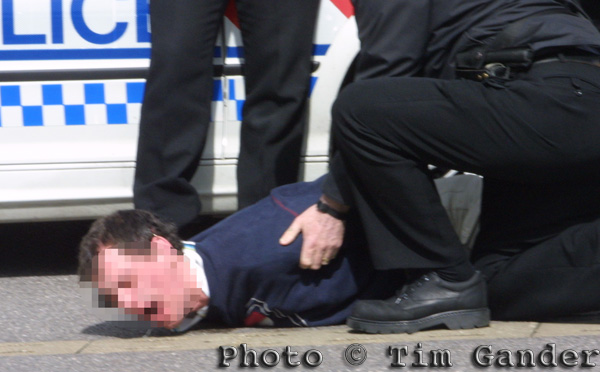
man wrestled to ground by police

Bob knew he shouldn’t have tested the new Zeiss lens in the ladies’ changing room.

Boys’ toys and PIXEL POWER!

How to make a photographer drool.

I can’t say I’m a fan of Top Gear, but there’s something about it that draws me back, resentfully, to watch each week. Usually on catch-up TV because every week I tell myself I won’t watch it and then crumble by Wednesday and sit there chortling like a.. a Mexican with jumping beans in his sombrero. Is that suitably non-PC?

It’s so stupid. The cars they review are far beyond the means of all but the most disastrously failed banking CEO. The humour is laddish and xenophobic (I’m half German and one more joke about BMW satnavs only being able to find Poland and I’ll be writing a stiff letter to the BBC).

The photography can be brilliant, but usually it has a Photoshop-on-acid look which I think has become self-mocking and clichéd. In fact, why do I watch it at all?

But I digress. The reason for my mentioning TG at all (oh look! same initials as me. I only just noticed that) is that I sometimes wonder if a similar format could work for a TV-based camera review show. It could still be called Top Gear, though I think the BBC might have a lawyer look into that, but it would also share other values of the motoring show.

Boys toys with eye-watering price tags being reviewed by paunchy middle-aged men trying to be laddish. Overuse of colour filters and vignettes. Shiny things. They could have the star with the reasonably-priced SLR to see how quickly they can shoot around a track(tor). Sorry about that joke, it physically hurt to write it.

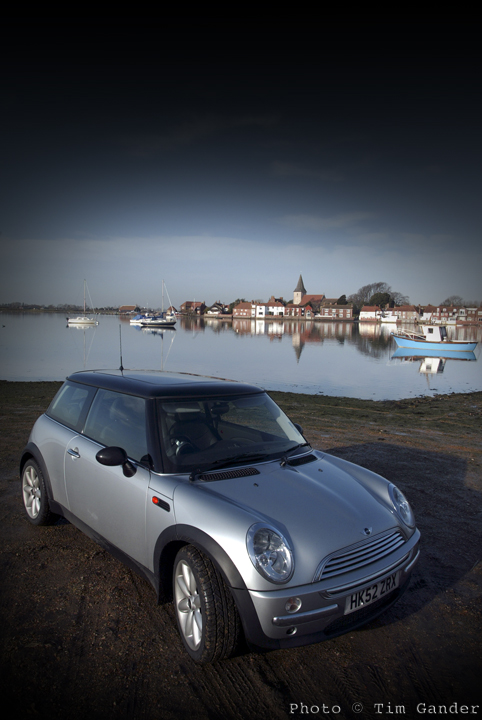
BMW mini cooper

Cars and ham-fisted vignettes would still feature strong in new show.

Then there’s The Stig: “Some say he can view a photo on flickr without commenting on the bokeh; others that he once ate memory cards with milk for breakfast.”

Three presenters, all male of course because just as women don’t drive they also don’t take pictures. They’d be boorish and full of themselves, though quite where we would find such personalities among British photographers, I’m not too sure.

And of course the real stars of the show would be the cameras. The reviewers would mostly concern themselves with testing the difference between the likes of a Hasselblad H4D-60 with 50-110 zoom lens at just over £35,000 and a Leica S2-P with 70mm lens bundled in at £20,500 (and some spare change). Provided you have to be royalty or a dictator to own the gear, they’d review it.

Naturally they would review more modest cameras, but anything much under £1,000 (no kit lenses included) would get a brief and patronizing mention during the news section, except for the Fuji X100, which would have them drooling over its Leica-like shape and handling. Oh yes, handling would definitely be mentioned. As would power, drive and manual control. “MORE PIXELS!” shouts a presenter as he presses hard on the shutter release button.

Quite how you spin a Canon 1D MKIV until smoke comes out the back I haven’t quite worked out yet, but I know it would be fun to watch. Damn it. I’m a fan of Top Gear, aren’t I…

Click! And your money is gone.


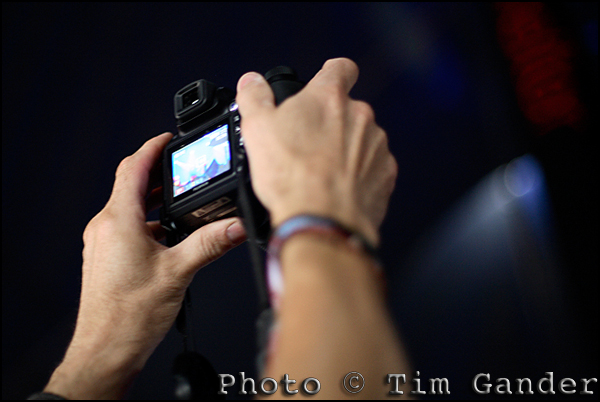
man's hands holding camera

Beware the promise that selling stock photos is easy.

It sounds so simple. All you need is the right camera and pretty soon you’ll be rolling around in piles of cash. You won’t know where to put it all. Stuff it under the mattress, and you may find yourself sleeping with your nose to the ceiling.

That is if the BBC technology show Click is to be believed. $480* for a harshly-flashed shot of a boy with his fishing catch. $600 for a photo of a cat and a dog looking at each other. I know photographs can command such fees, even selling for many thousands of Dollars for top-end advertising uses, but I’m dubious as to whether the photos shown in the BBC piece genuinely achieved these figures, or whether they were just plucked from the internet for illustrative purposes. They all looked more like royalty free (RF) microstock pictures to me, whereas the figures quoted reflect rights-managed fees. Hopefully someone at Click can let me know because the stress of not knowing for sure is an anguish to me. No really it is.

The fact is, for the majority of people hoping to turn their hobby into some kind of cash cow, RF microstock is generally their entry into the market. And within this market it is fair to say that while you can be paid money for your pictures, it is but a rare (and fast-diminishing) number of photographers who ever make any kind of income this way. All but those at the very top of their game will receive anything more than a few dollars a year from microstock sales. And I mean literally, a few Dollars.

Seeing articles like Click’s, the temptation is to start taking pictures in order to build up a stock library. You might go out and buy a new camera on the basis of all the untold riches the programme suggests are there for the taking, but exactly as the show says it’s getting harder for professionals to make money from stock, so it’s getting harder for amateurs too as the market becomes flooded with ever more contributors generating hundreds of thousands of images the market simply doesn’t need.

My advice to those who are tempted to take stock images would be to take pictures first and foremost for pleasure. Don’t turn your hobby into a monster that requires constant feeding, constant monetary resources with only the promise of a bigger hole in your finances at the end of it because microstock agencies do not exist to make money for amateur photographers. They exist to make money for microstock agency owners. Contributors to iStockphoto can expect to get a 15% cut from each image they sell. With prices often as low as $1 per image, that’s a lot of sales required to even pay back the shoe leather used to get you to where you wanted to take pictures.

Forget about fuel, the camera, lenses, flash, memory cards, computers, software and snazzy photographer’s vest that makes you look like a professional (idiot). Or the time spent getting your pictures ready for stock, captioned, keyworded and uploaded. Whatever anyone says, when you see an article telling you it’s easy to “make money” from your camera or “get paid” for your pictures, treat it like snake oil. Take pictures for fun; don’t lose the fun of your hobby.

*I don’t know why a BBC show insists on showing the stock sales in USD, but for the purposes of this article I’ve stuck with that. Maybe it’s because the BBC prefers viewers to send in their photos for free, so GBPs aren’t relevant.


Sorry, you can’t shoot here, here, or here…

A moment of reminiscence: About a year before I finally broke into photojournalism, I applied for a photography course at Bournemouth College of Art and Design and during the interview I was asked: “What would you do if photography was banned tomorrow?” I was caught off-guard, and hadn’t really made any plans for the following day. I’d assumed I was going back to work in the camera shop, but if photography was to be banned there didn’t seem much future in that. Caught off-guard I mumbled something about being keen on the music industry, and so lost the chance to get a place on the course.

Had the lecturers with their sneaky interview questions really known how desperate I was to become a photographer, they would have offered me a place on the spot – but with hindsight, I wasn’t ready to do the course and my fluffed answer proved it.

The question that scuppered my early career might seem like a daft one, but in more areas of life, and in more areas of the country, it’s becoming difficult to just go and take pictures.

Despite the popularity of sites like Facebook, people are often more guarded about having their photo taken than perhaps they were just a couple of decades ago, and sometimes understandably so, but it’s starting to look as if a back-door privacy law may be in development in our courts (mostly geared, it has to be said, to protecting the privacy of the rich and influential). This is an area I know I’ll have to revisit in more depth at a later date.

Meanwhile, many areas of town and city centres are now privately owned, with over-zealous security guards ready to pounce on anyone who looks like they might be taking photos. Canary Wharf in London is quite notorious for photographers being stopped by security bods and police on the lookout for potential terrorist scouts, though quite why a terrorist would go around with a bulky DSLR and lens is anyone’s guess. People with camera phones seem not to get stopped in quite such numbers.

Taking photos in public parks and gardens isn’t without risk of intervention either. When I needed to take a portrait of an elderly gentleman sitting outside on a park bench (which, excluding myself, elderly gentleman and park keeper, was empty) I was approached by the friendly-looking parkie who wanted to know why I was taking pictures, saying “I can’t be too careful, you might be one of them peadophiles.” I didn’t punch him as that might have been misconstrued  as a terrorist attack.

Thankfully it seems the poor record of photographers turning out to be members of terrorist cells (and the banning of the use of S44 powers) has meant the police have reduced the number of stops being made under anti-terror laws, and the insane fear of anyone with a camera being a “peterfile” appears to have subsided a little. For now.

english woodland mushrooms

There's not "mushroom" for photographers these days.

But while parks, shopping centres and internationally vital financial districts might need the cautious approach, what now of the proposed sale of over 900,000 acres Forestry Commission land? It could mean that taking pictures in the countryside will become more restricted. Of course it’s harder to police such areas, and if a landowner doesn’t want you to take photos on their land they can only ask you to leave and use reasonable force to remove you. You’re unlikely to get arrested, unless you do something really stupid, but it’s another possible hassle.

You might be wondering why I’m even mentioning this, but if landowners start to restrict public access to their woodland, and maybe start to get heavy-handed about it, they may not be able to do much in a legal sense, but it could be yet another area where photography becomes restricted.

Could we see a time where property and privacy law come together to mean we can only take photos from public footpaths of scenes with no people in? Maybe I should have taken that college question more seriously after all.


Update: If you would like to sign a petition against the UK Governments’ proposed sell-off of publicly-owned forest land, head over to the 38 Degrees website and add your voice.