Ending on a high note.

Now I know you’ll all get emotional at the news, but this will be my last blog article until Tuesday 3rd January. I need a proper break to recharge the ol’ batteries. So I thought I’d share some pictures I shot at the start of December as a last bit of fun for you before the break.

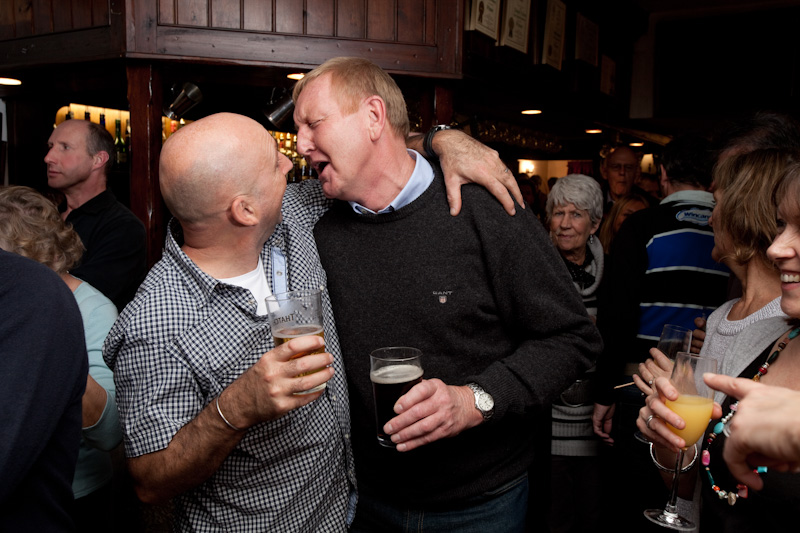
This was the combined 1st anniversary of the new landlord, Mark Birchall, at The Inn at Freshford, as well as a good opportunity for a bit of an early Christmas knees-up for the Freshford villagers and friends of Mark.

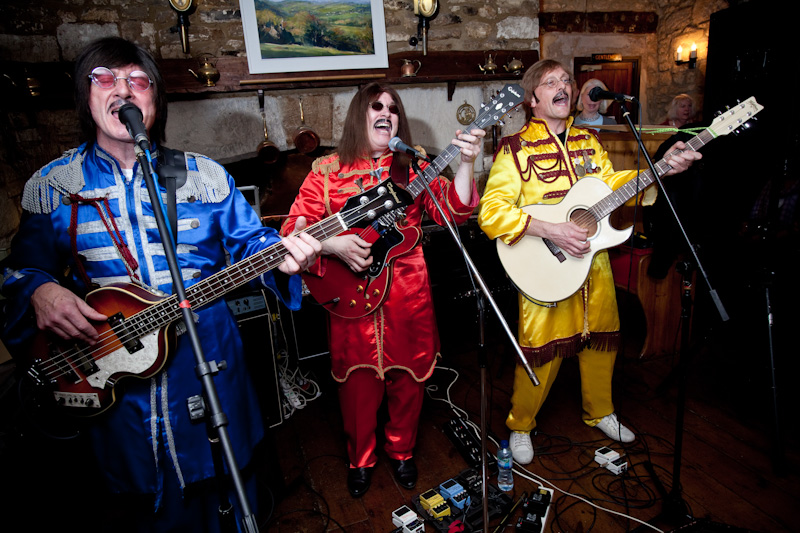
To make it extra special Mark asked Sgt Pepper’s Only Dartboard Band to come along as the live entertainment. Just a three-piece (I think Ringo was having a break; that or there wasn’t room for a drum kit), but they still rocked. I’d seen Sgt Pepper at The Cheese and Grain one New Year’s Eve, and I can testify that they’re great fun and very true to the sound of The Beatles, right down to the sarky remarks from ‘John’ and ‘Paul’.

sgt pepper's only dartboard band performing

The audience get into the spirit of the event

Not only was it a pleasure to work for Mark that evening, who has to be the most gregarious pub landlord I’ve ever met, but the music was FAB too. I hope the pictures captured something of the atmosphere which, Sgt Pepper outfits aside, was redolent of an early Cavern gig… not that I ever went to one. I was born in 1966.

Landlord Mark Burchill with the Sgt Pepper band

Merry Christmas and Happy New Year to all my readers. Only my readers though 😉

Is the gargoyle look in season?

It was around this time last year I blogged about conference photography, and since I’ve just come through another season of them again it seems timely to remind you all what a good photographic opportunity it can be.

When it comes to conferences, it’s easy for an organisation to talk itself out of hiring a professional photographer to cover the event (that’s assuming they’ve given photography any thought at all).

If you’re considering a conference you might dismiss the need for professional coverage for two main reasons:

  1. To hire a photographer for the duration of a conference is a relatively large up-front cost
  2. It’s easy to snap some pics of people talking and delegates listening, isn’t it? So collar the keen camera owner from within your own ranks and set them the task because it’s cost-free. Supposedly.

The answer to the first question is that while it is an up-front cost, that cost is often out-weighed by the value of the images delivered because you’ll have pictures to use for all kinds of post-event PR, and the eventual cost of individual images will be very low. I’m talking a few £s each, if covered properly. With quality coverage you’ll have a good selection of shots you can use repeatedly.

Conferences are also often the only time key individuals of an organisation are together, so it’s worth seeing what headshots and other useful non-conference images can be garnered to get even greater value from the photographer’s fee. Don’t go mad of course, the photographer has to spend time dealing with all the images afterwards, but properly built into the brief in advance you should be able to get more than just conference photos from the conference.

The answer to the second question is that it’s harder than you might think. You’ll see some people (professionals and amateurs alike) attempting to use whatever lighting is available, which will be whatever crazy-coloured lights the AV guys fancy throwing onto the stage. It might (might!) look OK on video, but generally looks pants in stills.

To avoid the ‘purple gargoyle’ look, and to avoid trying to shoot at 3,200 asa for bullet-like grain and still getting camera-shake, some photographers then resort to sticking a flash on top of their camera. Oh dear. Now we have white-out faces and shocking outline shadows around the speakers.

I work differently. Using my own portable flash system I ensure speakers are properly lit. Very often I can set it so that not only the speaker is lit nicely, but also their slide presentation is still visible too. It’s not always possible to do that as it depends on the venue and staging arrangements, but the focus is always on generating high quality images for the client.

If a staff member has shot the pictures, that’s someone taken away from their useful duties to perform a task they’re not up to doing competently and you’re left with unusable images, with no PR value at all.

This is why, when planning a conference and its coverage, you need to pick a professional photographer and one that knows what they’re doing.

In the past couple of months I’ve been busy with conferences for the likes of Regen South West and the Digital Curation Centre’s international conference. I’m posting some key images here so you can see how while a conference image may not make it to the walls of a gallery, neither does it have to be a comedy of photographic errors…

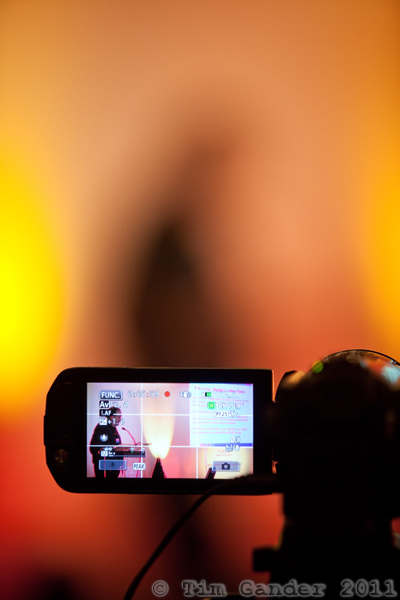
Conference speaker on video monitor.

Finding interesting views of speakers helps add variety to the picture set.

Conference speaker on video monitor.

Well-placed flash replaces the AV lighting which is often ugly


You can now see a fuller set of images from the Digital Curation Centre conference in Bristol here.

Keeping On The Ball (shortlisted for feeble pun headline of the week)

As I may have mentioned previously, I tend not to get work directly from newspapers these days. The pictures I take are usually commissioned by corporate clients, but my roots are in newspapers, so it wasn’t without a nostalgic twinge of pleasure that I got a call to take some pictures for The Sun for a feature piece on Frome Town Football Club’s girls’ team training.

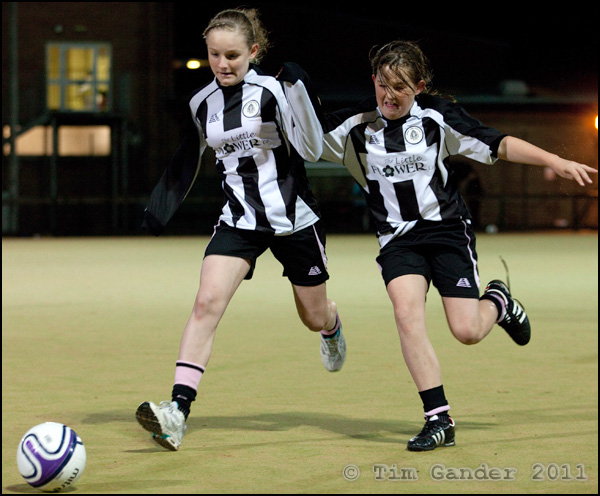
Typical of a press job it happened in terrible conditions; cold, dark, and the rain was coming down sideways. The girls train at the Frome Leisure Centre all-weather pitches, which are floodlit and I have to say that although the lighting isn’t perfect, it was better than some I’ve experienced.

In addition to the adverse weather, I feared my Canon 5D MKII wouldn’t be up to the task of sport action, and it’s true to say that since I no longer own a 1D-series body it’s not so easy to catch action with the 5D’s 3.5 frames per second, but that’s where timing and a bit of extra thought comes in.

Under the conditions, I couldn’t just “spray and pray”. I had to find the angle, see where the pools of uneven light were at their brightest, and work hard to keep focus and capture the peak of the action.

In addition, I don’t think I’ve shot football of any description in over a decade, which added an extra little frisson to the evening’s assignment. That and the fact this was for The Sun, not a local paper that would be grateful for anything recognisable as football.

I shot the standard team shots and portraits of Julie Peet, the poor, suffering coach who had to put up with the rain, the cold and the fact that these girls are… let’s just say full of spirit. It was like watching a cat-herd at work.

I’ve posted some of the results here, including the “alternative” team shot which I couldn’t resist as a more fun alternative to the standard team photo.

In the end, the job was a pleasure. These girls have incredible spirit and humour to do what they do in a sport dominated by boys. They deserve to do well, and who knows? Maybe I have pictures of some future stars!


Apologies for not posting anything last week. Work has been crazy and continues to be so. I do my best 🙂

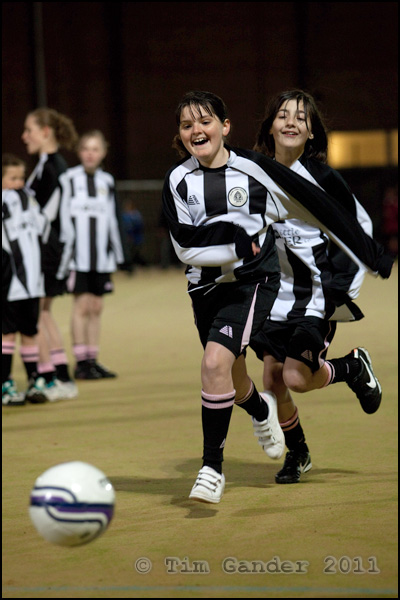
girls playing football

These girls clearly enjoy football

Community Care folds in favour of online.

It might please the accountants, but is it smart in the long-term to close print publications in favour of online?

For some years now I’ve worked on commissions for Community Care magazine, but this will be no more since the print magazine has been taken out the back and shot by its owners, Reed Business Information.

This is a real shame because Community Care was a magazine which although aimed at a fairly un-glamorous niche (social care and social work issues), it was a well-considered publication, and one of the seemingly few non-glossy mags that used photography in a sensitive, appreciative, engaging way.

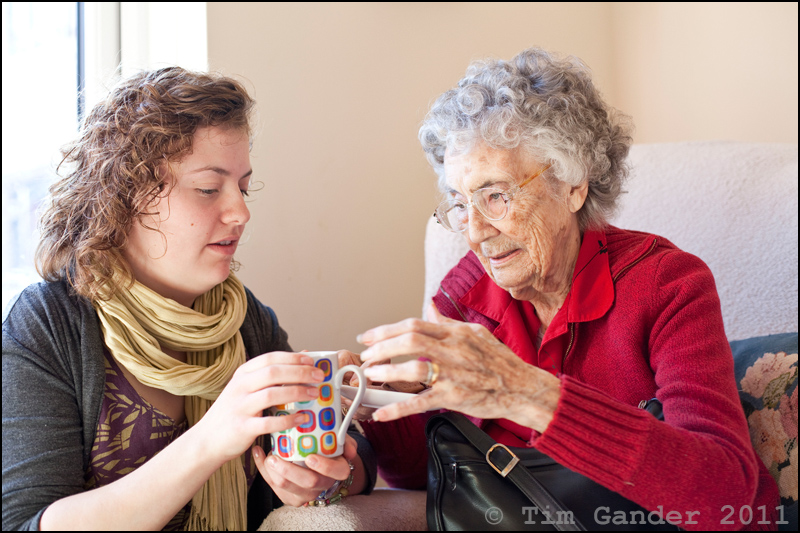
Carer and elderly lady

I enjoyed working with carers and their clients. Maybe that can continue with the online editions.

However, RBI have taken the decision to close the print title in favour of its online offering, which isn’t half as rich with engaging images. This may of course change, and it may be that they decide to spend something on original photography for the e-version.

As things stand now, the web edition images are often rather clunky stock images or low-quality snaps used very small. There seems to be a view that if an image is used at all, it should be a very distant second cousin to the text, but it’s no secret that a good image used properly will draw more eyes to an article, and isn’t that what publishers want? It all adds to the hit stats and that seems to interest publishers, even though the Community Care site appears to carry no advertising other than for industry jobs and their own conferences and events.

I’m not a publishing expert or industry analyst, but it would seem that by ditching the print version, RBI are happy to ditch all advertising revenues bar the jobs ads, unless they plan to introduce wider advertising to the website. Or put content up behind a paywall, which presumably care agencies would pay for based on the amount of access required. With some 3,000 online jobs ads per week, maybe this won’t be necessary, but leaves the publication vulnerable to one revenue stream.

Perhaps advertisers were simply becoming uneconomical to service in a printed version, but I wonder how many of the page hits on the website were generated by the print edition reminding people that the site is there? Perhaps it’s only a fraction, but it’s one thing to read articles because a magazine drops onto your desk, quite another to stay loyal when you’re fed a magazine edition via weblink. A printed magazine is a welcome distraction for many care professionals whose working lives I suspect are increasingly dominated by time at a computer monitor.

Of course I would like to hope that Community Care will still commission original imagery on occasion, but even so I have lost some great colleagues who I now know have been given redundancy notices. I won’t name them here, but they know who they are. They stayed loyal to me over the years and were always ready to show appreciation for my work. I wish them all the best for the future.

Community Care may be a small-circulation magazine, but it was a good magazine with a very valuable function. I’m not sure the website will replace the role the print edition had. We’ll just have to wait and see.

The final edition of Community Care magazine will be published on 24 November 2011.

Pixelheads: Sarah Wolf

Sarah Wolf, aged 37, lives in Frome from where she operates as Diablo PR.

What camera do you use?

I have a Nikon D40X with kit wide angle lens.

What kind of pictures do you like to take?

Landscapes and buildings are my favourite. They tend not to move about too much!

What was your most recent picture?

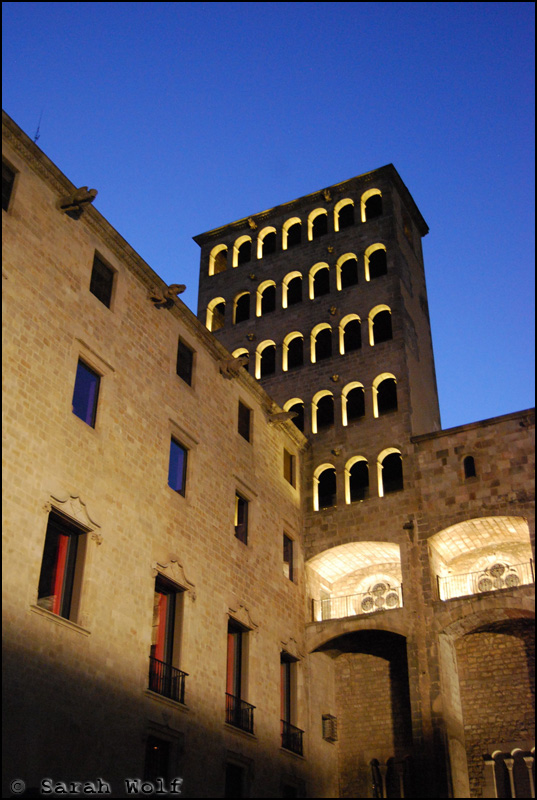
This one, a 14th century square in Barcelona – sitting with a friend, after a hot day, drinking beer, laughing and looking up at the beautiful architecture.  It reminds me of that night.

Buildings at dusk, Barcelona

Sarah's Barcelona photo holds special memories.

What picture are you most proud of taking?

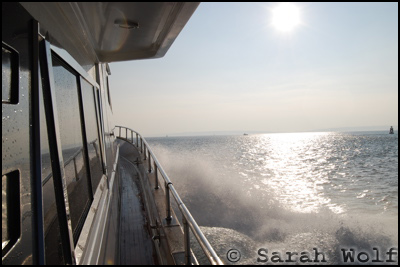
This one taken on a boat of the edge of the running rail and the sea. We were exercising the engines on a 50ft super-yacht in the Solent for a client.  It was a bitterly cold winter’s day – we were all wrapped up in layers and oilskins.  The sea was calm and I lent over the running rail, enjoying the wind and the salt when I saw the reflection of the sun on the water and just wanted to capture it.

Solent sailing

Life on the Solent can make for beautiful pictures.

If you could improve one area of your photography, what would it be?

I’d like to learn to take better photos of people and capture that moment of happiness, sadness, joy etc just through one shot. Pictures of people being themselves is what I’d like to learn how to take – just smiles and frowns and expressions without the people posing.

Would you like to become a pro one day, or is this always going to be a hobby?

Always a hobby!

If you could have taken one great photo, what would it be?

I would love to have taken the planting of the Red Standard on Hitler’s headquarters – the Reichstag in Berlin – which marked the end of Nazi Germany. The man who snapped the historic shot was Soviet photographer Yevgeny Khaldei, someone who I admire greatly particularly as he was part of the propaganda machine.  However, as a Jew, his career was cut short by the wave of anti-semitism in the Soviet Union and he was sacked in 1949.

What drives your interest in photography?

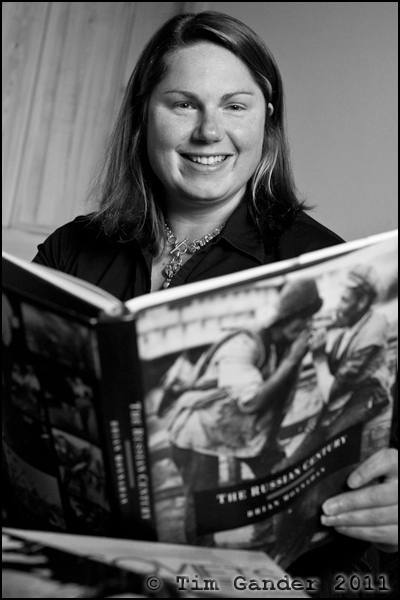
Sarah Wolf

Sarah Wolf has a passion for books on historical Russian photography.

One of the reasons that I adore photography is my love of war photos – particularly those taken in the Soviet Union.  As a Russian student, I spent many years studying the impact of Russia, and then the Soviet Union, on the course of history.  I bought many books of photography from the last 100 years and love the gritty realism of the photos of peasants working in the fields juxtaposed with the glossy photos of well-fed Party members.  You can understand a country through its photography – the photos that are published and those that aren’t (but have subsequently come to light).  Even though I no longer need to study Russian history, I will still spend many a happy hour looking through the photography books.

A sadness of the digital age, and no longer shooting on film, is that so many photos are deleted and never see the light of day.  I’m obsessive about cataloguing my life, and my family’s, through photography and have annotated photo albums going back to when I had my first camera aged eight.  Now that I shoot digitally, I print less photos and those that aren’t quite perfect are deleted so quickly, whereas in the past, there was the thrill of having your films processed and seeing your shots for the first time.  I even kept those photos that weren’t quite perfect which now provide an alternative picture of family holidays and events – you look in the background and see things that were accidently picked up and it gives a wider picture from that time than the story in the best shot that made it into the final album.

Thank you for your time Sarah.


If you would like to be featured as a Pixelhead, just drop me a line to tim@timgander.co.uk You will need to live in or near Bath, be an amateur photographer and willing to have your photo taken for the article 🙂

Latest Blockbuster: The Cow Dancerer

One of the things I enjoy about what I do is the variety. Most of my work involves business portraits or people doing things in business, but every now and then I get called upon to shoot something unexpected. Something, for example, like cows in a field. Straightforward enough, you’d think, but when you need the shot to be used as a very large, very wide, narrow banner, and you not only need the cows in the shot, but a building and some park land in the background, the tricky-factor mounts up.

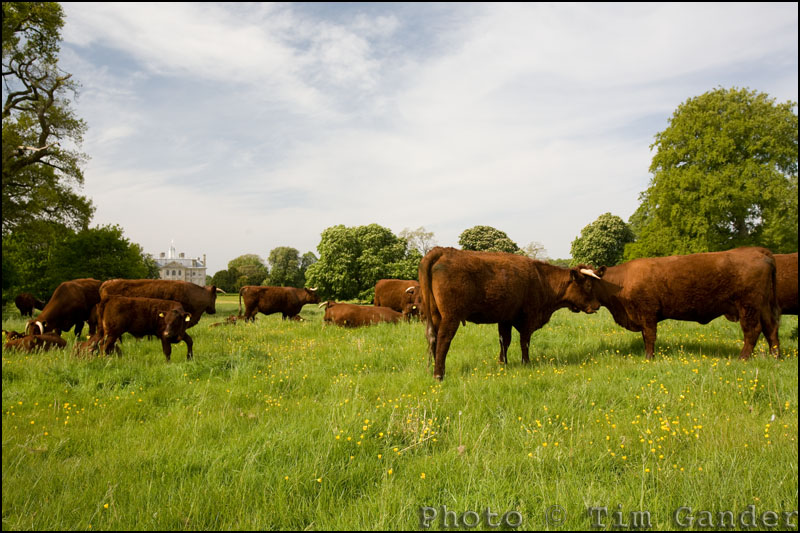
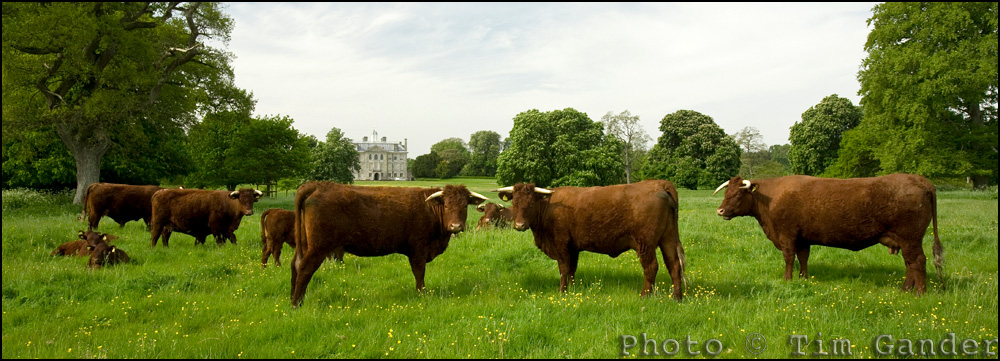
In May 2009 I was asked by National Trust to engineer exactly such a shot at Kingston Lacy in Dorset to show off their Devon Red herd that they rear there.

Having spoken to the designer who was putting the banner together (I should add the finished, vinyl banner ended up around 3 metres wide), I knew what arrangement would work, but these animals can only be herded to a certain extent and the herdsman who brought the cattle into the field for me early on the morning of the shoot had other things to get on with that day.

So there I was, alone with a field of cows, trying to work out how to get this one shot that would work. No assistant with me, I put the camera on a tripod having decided what the background needed to be, and then worked on the foreground – the cows.

At first, there were far too many animals in the shot. They were blocking out the view beyond, but then my luck changed. Some got bored and started to wander off, which then made me panic as I thought they might all walk away and I’d be left trying to herd these animals back into my scene single-handed.

Thankfully, some were obviously more into having their picture taken than others, and just the right number stayed behind. The calves settled down into the lush grass, and the adults got themselves into a line, but put their heads down to munch.

This still wasn’t quite right. I needed their heads up and turned in my direction, but how do you get a cow to look up? So I got my house keys out, took a furtive look around me, and started to, um, dance. Yes, I danced like a loon, rattling my keys in the air, to get the bovine models to look up.

 The result worked a treat. They must have thought I was mad. Luckily visitors hadn’t started arriving at the house, so my performance was only seen by cows and birds.

You might look at the final result and assume I did some Photoshop to get the cows in that line and looking the right way, but the frame you see is the frame I took, minus the top and bottom crop. Job done, one happy client, and the cows looked pretty chipper too.

If you visit Kingston Lacy, do visit the restaurant and maybe try a Devon Red steak…

Devon Red cows in Dorset

This wasn’t looking good…

Devon Red cows in Dorset.

Years of dance training finally paid off as I got the cows to look up. Click to see big.

Case Study: PR photos for multiple titles.

Although I still take the occasional magazine assignment, I don’t deal directly with newspapers as often as I used to, their rates being low to non-existent. However, the many years I did spend working for newspapers means that when I’m commissioned to undertake public relations photography for a corporate client, I have a pretty shrewd idea of what’s required.

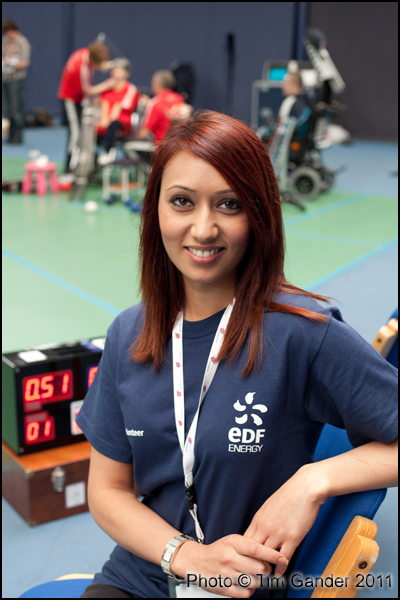
This case study centres on a recent assignment for EDF Energy, which is working with its charity partner ParalympicsGB to find ways to help reduce the environmental impact of multi-sports events and related training facilities. In this case, EDF Energy were working with ParalympicsGB athletes, coaches and managers and the University of Bath.

Over a period of two weeks in August, members of staff from EDF Energy sites around the country came to the ParalympicsGB preparation camp to assist as athletes trained at the rather excellent sports facilities of University of Bath.

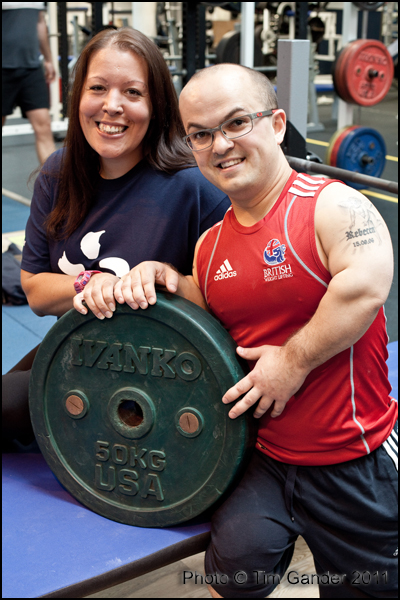
What EDF Energy required of me was an individual photo of each of their volunteers that would go to the local paper in their respective home towns as a local interest story. Of course this would also give EDF Energy some PR too, as well as ParalympicsGB and the facilities at University of Bath Sports Training village.

For a couple of hours a day on three separate dates I attended the training camp and went around getting the required shots. We’d hoped to get pictures of the EDF Energy volunteers working closely with the teams, but for the most part this wasn’t going to be possible due to the tight schedules and the intensity of the training, so it seemed the best option was to work as inconspicuously as possible to get the job done.

What I ended up with was really a series of portraits with something of the training in the background, or a relevant backdrop to try to tie the portraits in with the context of the story.

The results, some of which I’ve featured here, got good showings in the regional press, so I’d say the whole exercise was pretty successful. I wish the ParalympicsGB teams all the best in 2012.

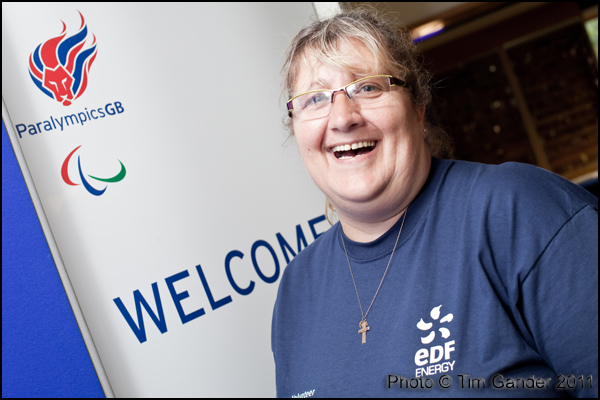
EDF staff member volunteering at ParalympicGB team training, Bath

Teams busy with training makes a good backdrop to the portrait.

EDF staff member volunteering at ParalympicGB team training, Bath

EDF customer service advisor from Hove, Louise Foreman of Newhaven, gets to chat with ParalympicsGB powerlifter Adam Alderman during a break in training.

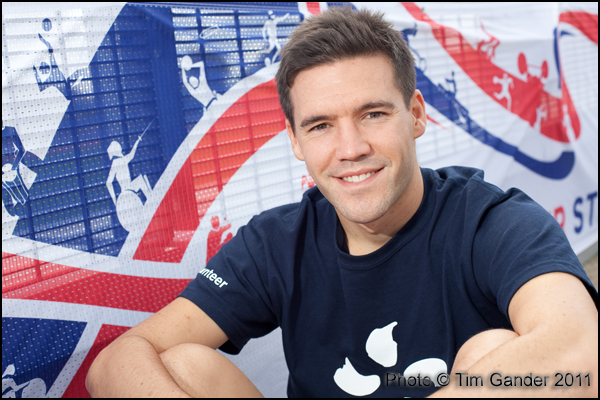
EDF staff member volunteering at ParalympicGB team training, Bath

Sometimes a banner backdrop was all that was available, but a smile lifts the picture.

EDF staff member volunteering at ParalympicGB team training, Bath

These groovy banners also made an interesting backdrop for a simple press portrait.

Pixelheads: Nicola Jones

Pixelheads is a new and occasional feature for this blog. When the mood takes me and circumstances allow, I will interview a random person about their photography. The interviews will not be with professional photographers – those can be read in abundance elsewhere. I’m interested to find out what makes a non-professional photographer tick.

Here is the first Pixelheads interview:

Nicola Jones, aged 34, of Bradford on Avon in Wiltshire, is a keen photographer, budding graphic designer, and founder of the Bradford on Avon Photography Group.

I asked her about her life, photography, influences and tastes.
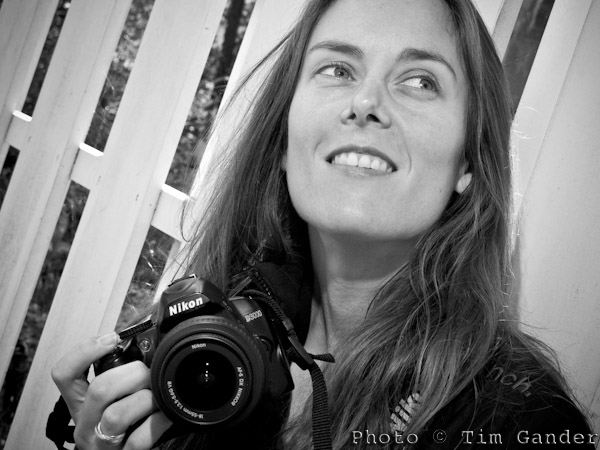
Graphic Designer Nicola Jones of Bath

Nicola Jones likes to shoot grime and decay.

What do you do for a living? 

I’m an office manager and designer and to progress my designing career I’m interning at a Bath design agency.

When did you get into photography? 

When I moved to Bradford on Avon in 2009, the place inspired me to start taking pictures.

What cameras do you use? 

I have a Nikon D3000 with 18-55mm and 55-200mm kit lenses, and a 50mm f1.8, which is my favourite lens, a Canon Powershot S90 and a Polaroid 500.

The S90 is my main carry-around camera, with the D3000 being for more complicated stuff. I love using the Polaroid camera, but the new film doesn’t work well through my camera because it’s a bit volatile in daylight, so I need to find packs of old stock.

What kind of pictures do you like to take? 

I’m a bit of a mixed bag really. I went through a big macro phase when I had a macro-enabled bridge camera – shooting things like Lego minifigs (Minifigures), but I’ve got into shooting derelict buildings because I like grime and decay. Street photography too, though not so much of that now.
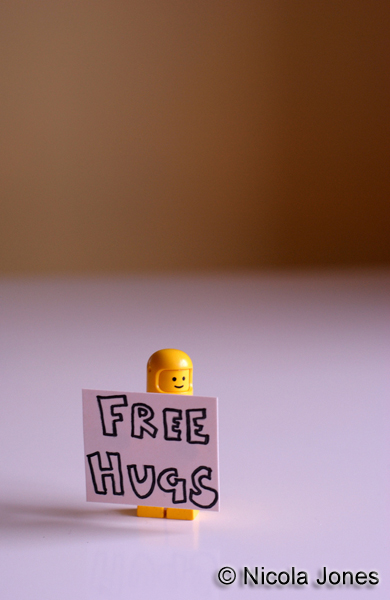
Lego minifigure with Free Hugs sign.

Nicola's minifig phase...

Tell me more about the minifigs shots. 

I started with standard figures, then they brought out series of figures (Star Wars, Batman) and I’d buy a handful of those. I’d set up film themes like Psycho, Forrest Gump sitting on a bench, that sort of thing.

Titanic? 

No, the arms don’t go out the right way for that, but I did The Shining. But I stopped doing those pics and sold most of the minifigs. I go through phases really.

Why not the street photography so much now? 

I enjoyed it, I used to snap away and not care, but had some run-ins with people complaining and I sort of lost confidence. It doesn’t float my boat as much now.

And the derelict building photography; what draws you to that? 

I’ve been to a few places; hotels old factories, that sort of thing. Obviously you have to be very careful, but it’s so interesting to capture the essence of a place. Getting a sense of what was there before, the life that was there and what used to happen. One hotel I visited still has a website as if it still takes bookings, which is quite funny.
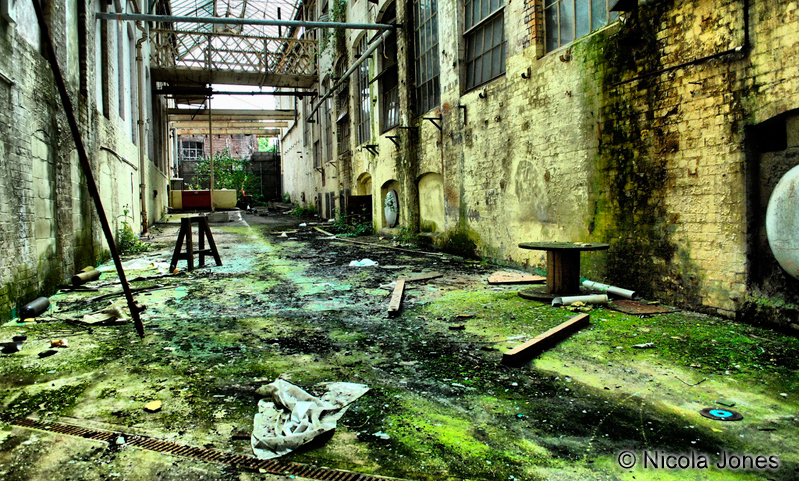
Interior view of derelict building

Vanished lives haunt Nicola's derelict building photos.

Which photographers do you admire? 

Martin Parr; I understand his approach. I just think his photos are amazing. The New Brighton series especially.

Don McCullin also, his conflict work. The landscapes don’t do it for me, but I understand why he had to do them – to get his brain back together again. Then if we’re talking portraits, it’s got to be Jane Bown.

What’s next photography-wise for you? 

At the moment I’m devoting more time to my design work, but looking forward to seeing Martin Parr’s exhibition at the Bristol M shed when I go with the Bradford on Avon Photography Group soon.

Case Study: Business Portrait Consistency

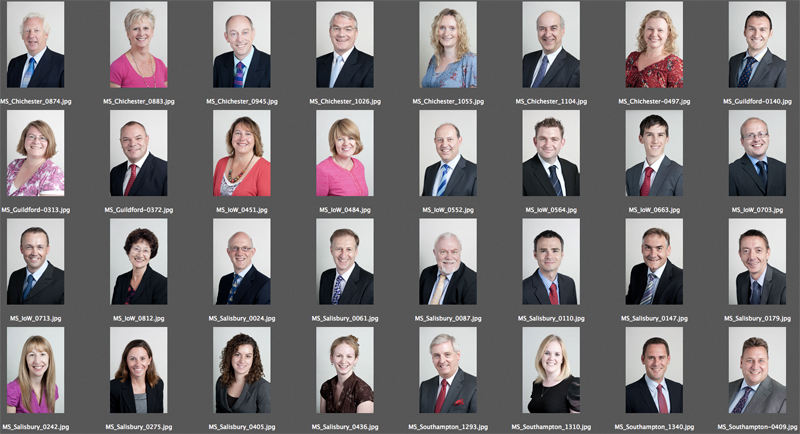
contact sheet of business portraits

Reasonable consistency across different sites is possible with the right set up and approach.

A recent commission, spread over a number of days, consisted of corporate portraits of around 50 partners and staff in accountancy firm Moore Stephens.

Simple enough, apart from three considerations: Firstly the portraits all needed the same look, secondly the staff are spread across five office sites (Salisbury, Chichester, Newport, Southampton and Guildford) and finally the style needed to match that which I’d established with the client on a shoot which happened over a year ago.

The first task then was to pull the previous headshots from my archive and double check the look and lighting of them. That’s easy enough, and I remembered what setup I’d used so simply had to replicate that for the new shots.

The simplicity of that setup also made it easier to replicate it across the sites. This was handy because different offices have different amounts of space for me to work in, so compact is good.

Different offices will also have different kinds of lighting in them, and different amounts of daylight. Really I needed to kill the daylight and ceiling lights, and set up using my portable studio lighting so that again the look would remain as consistent as possible.

I’d previously chosen quite a flat, “airy” kind of lighting because as nice as it is to use dramatic side-lighting, it can be a lot less flattering. And while everyone at Moore Stephens is attractive in person, I have to consider how they’ll look in a photo.

With corporate portraits I often emphasise to the client that these photos aren’t meant to flatter them or look good on the mantlepiece, their purpose is to make them look friendly and professional to their existing and potential clients. Even so, when shooting dozens of headshots while trying to keep people tied up for as little time as possible, the set-up I used ensured that the pictures are consistent, as flattering as they need to be and simple to execute.

Of course the proof of the pudding is in the eating, and so far I’ve had some very complimentary comments about how it all turned out.

If you have a lot of people in your business that need to be photographed, it’s worth thinking about how the look you want will translate into images which can be replicated for other staff at other sites, and how well that look will suit the people being photographed. And if it all gets too complicated, this will affect how easy it is to get everyone photographed in a sensible amount of time.

Time to get real

Sorry to bang on about this, but I’m still hearing designers say “our client wants to use stock images for their site because it’s cheap,” and what the client wants, the client gets. And that’s usually where the designer/client conversation regarding photography ends.

The designers tell me they’re frustrated, that they put all this effort into designing a brilliant site only to have to drag the project down by slapping cheesy grins and ever-so-serious-but-utterly-anonymous business faces all over it just to fill the gaps between the boring text. Or how about some pictures of flowers? Or a tree? Or a business man looking at a tree? That’s soooo inspirational.

Hey! Business people! Here’s the news! STOCK SUX! It makes your site look generic. It makes your service/product look exactly as enticing (ie not at all) as all your competitors. Stock has become completely blasé and unconvincing. It may be cheap, but it WILL cost you in sales. So while you’re busy chasing the bottom line, someone else is creaming off what would have been your top line. The less you pay for your photography, the fewer sales your business will make. End of.

I hate all that management-speak about top and bottom lines, but if yours is the kind of business that uses stock imagery for your branding, then you’re the kind of business person that goes to a lot of management and motivational seminars in dull hotel conference suites in Swindon to hear a “guru” tell you lots of buzz words you’ll never quite understand, but which make you think you’re at the “bleeding edge” of your envelope, box, bag of mushrooms or whatever. Yes, go thread the needle of success and let’s make this kite fly, but you’re not convincing anyone, least of all the clients you’re working so hard to win.

So to designers, I suggest turning the conversation around and asking the client if their website is meant to please them or please their clients. If they just want a pretty site to show their mums to make them proud, fine, but if they want to seriously gain market share in an increasingly competitive world, they’re going to have to feature what’s great about THEIR business, not use the same old images that everyone else is using for a million other sites.

If you hide your business behind a wall of fake images of models doing fake stuff, you send out the message that you don’t trust your real business to live up to the expectations of your clients. It also suggests you don’t trust your clients, so your clients won’t trust you. And if that happens, you lose sales.

Or as a business guru might say (if they had a clue about these things), “get real photography to get real business.”

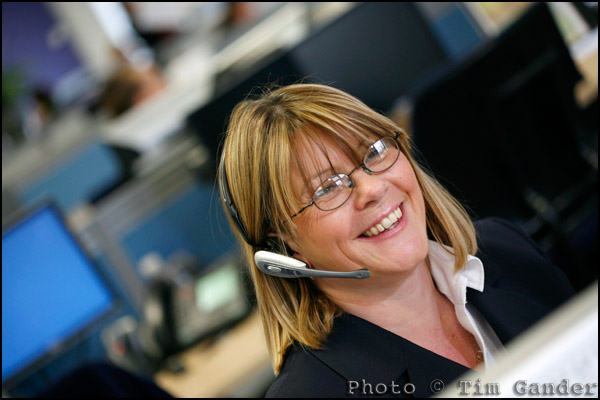
help desk employee

Feature yourself and your colleagues in “getty-esque” style pictures, but with far more honesty and integrity than a “stock” image.