Freeze Frames Win Votes

If I spent too much time listening to business people and their opinions on the importance (or lack) of photography to their success, I’d probably jack it all in and go into a career with higher public opinion ratings. Perhaps become an estate agent or politician. Maybe a tabloid journalist.

Luckily, I don’t worry about the businesses that don’t understand how essential good imagery is because that way lies madness.

Instead I concentrate on helping those who understand the difference, and who can see what good imagery can do for their chances of success. One such example is entrepreneurial maker of ice cream, Charlie Francis of Lick Me I’m Delicious in Bristol.

Now Charlie didn’t choose me. He wasn’t the one setting up the shoot, which came about as part of Barclays’ Take One Small Step competition which was set up to offer a £50,000 prize to entrepreneurs in different regions of the UK, but I’m glad I got to do the shoot because it turns out Charlie actually understands that image is vital to business. For him, it was critical to his competition chances because to win he had to garner more votes than the other contestants within his region.

Before I visited to do the shoot, Charlie and I spoke on the phone about what would and would not work, and he immediately struck me as someone who understood the fun element of his product and was willing to be very much the “personality” of his business.

It was Charlie’s idea to have a sort of Willie Wonka persona for the shoot, and I think it worked brilliantly, especially given that his ice cream is made before your very eyes using your favourite ingredients and using liquid nitrogen!
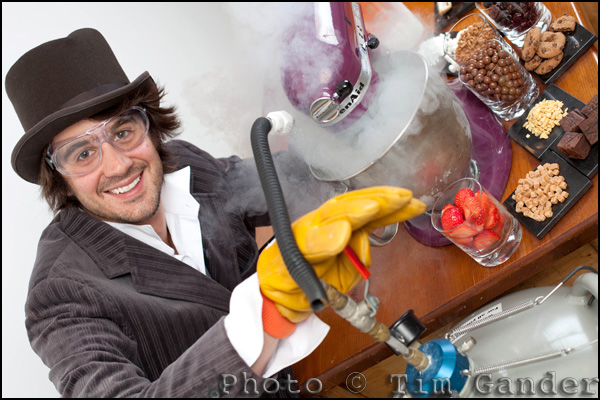
Bristol ice cream maker Charlie Francis

Use your personality to win over clients.

The pictures done and delivered to the PR agency, the competition got under way and Charlie started working hard to get his votes in. The press release went all over the region, and an unusually high number of publications included the photo – precisely because it was fun, colourful, and shot to a newspaper style.

Then last week, Charlie discovered he had won the £50,000 prize for the South West region!

Now I’m not going to say this was ALL down to the pictures. I know Charlie worked hard to get the word out and drum up support for his entry, and who doesn’t like ice cream? But the pictures were clearly eye-catching and formed an important part of the vote-winning exercise.
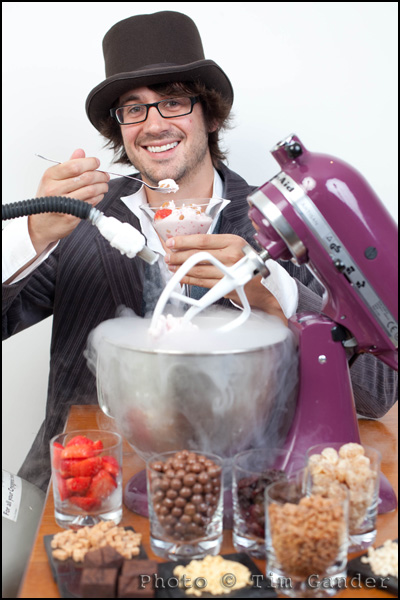
Charlie Francis, Bristol ice cream maker

A choice of upright and landscape shots helps get extra press coverage.

Of course it’s all very self-congratulatory me saying this, so instead here’s what Charlie had to say, “Tim created a set of fantastic eye catching shots which captured the magic of nitro ice cream making.  I used them on my marketing materials to pull people in and they did a tremendous job, a great piece of photographic work.”

Congratulations Charlie, and good luck with the venture. Lend us a tenner 😉
Case Study: The Case Study

While most of my work now falls into the corporate photography category, shooting pictures for websites, brochures, press releases and the like, I do still have some editorial clients.

Among them is the Institute of Directors who publish a rather swish magazine called Director. It’s a monthly title aimed, unsurprisingly, at directors and I’m always happy to hear from them because although I know I need to meet certain criteria within the brief, I also know they appreciate my own creative input which always makes a shoot more fun.

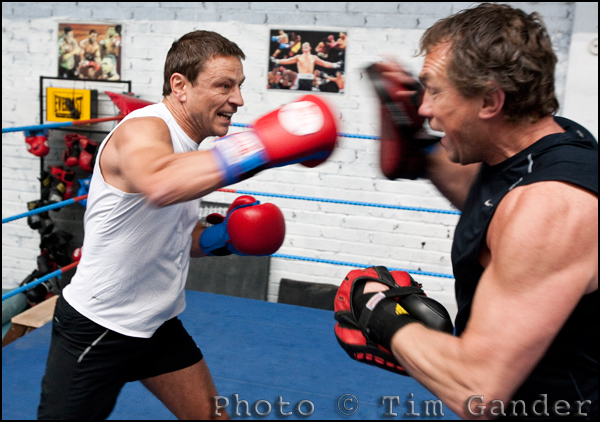
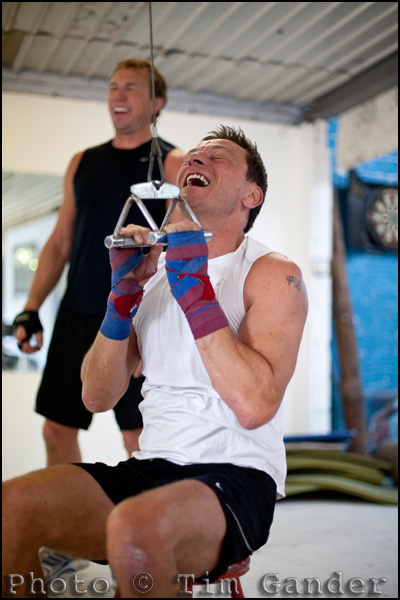
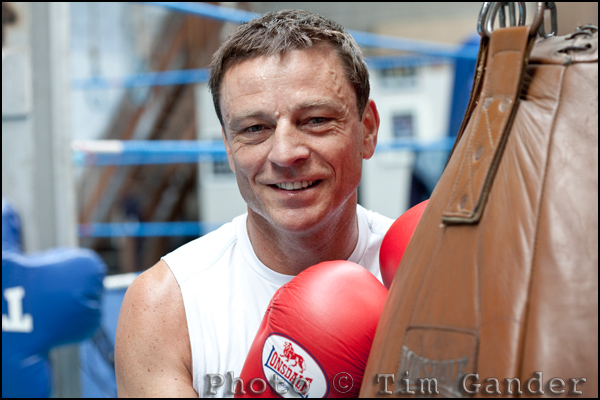
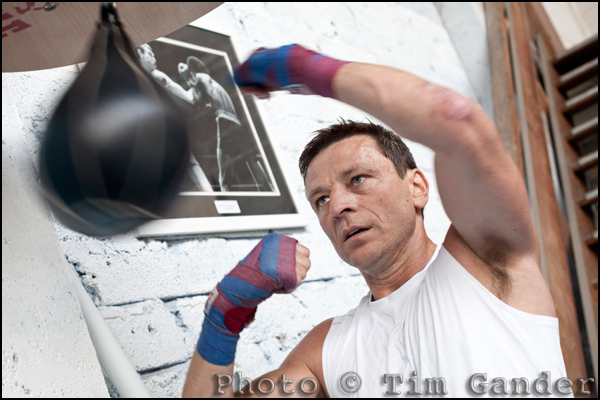
On this occasion I was sent to Penarth Amateur Boxing Club to meet Allan Meek of SCS Group in Cardiff and his boxing trainer Neil Munn, who runs the gym. I was especially excited by this commission because I knew it would give me the chance to work in a very different environment – at least something other than an office!

The article, which has now appeared in the July/August issue of the magazine, features case studies of company directors who use sport or fitness training to help them in their professional lives.

Of the three directors featured Allan got the biggest show in the magazine. I’d like to think that was something to do with the photos I took, but perhaps it would be more modest to say it was Allan’s photogenic looks and the lovely light in the gym that made the spread work.

Featured below are a few of the frames from the shoot, including some that didn’t make the pages of Director. I hope you enjoy them!

Company director Allan Meek boxing in Cardiff, Wales.

Allan Meek works at the speedball.

Company director Allan Meek and trainer Neil Munn in the ring

Allan Meek (left) training in the ring with gym owner Neil Munn.

Company director Allan Meek training in the gym with Neil Munn (background)

Allan starts to feel the burn in the gym.

Portrait of company director Allan Meek, Cardiff, Wales

An environmental portrait of Allan captures the theme as an alternative to the action shots.

Remote Possibilities

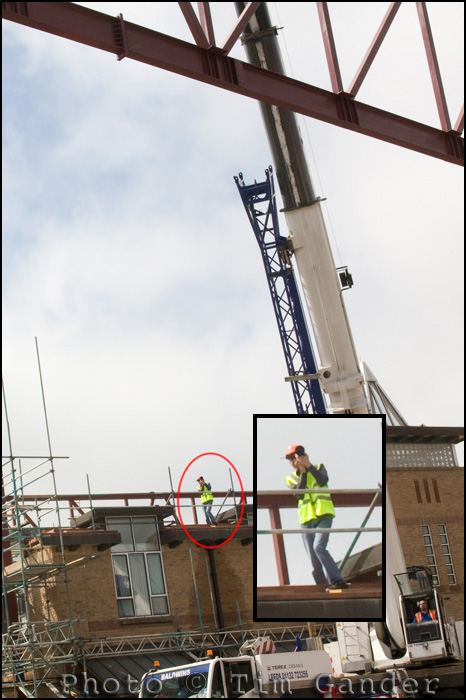
Sometimes shooting from one angle isn’t enough. Like this weekend when I was asked to take pictures of an engineering project in Petersfield, Hampshire, where I needed to split myself in two. One of me shooting from the ground, the other from the roof (see photo of camp-looking man). But short notice and budget prevented this option, so I had to improvise.

Photographer shooting from roof

Apart from my weird stance, the transmitter on my camera is firing the remote camera.

I needed to get shots of a crane lifting large steel braces to the roof of a college building, and I knew the best shots would come at different stages of the process and from both ground-level and roof-top vantage points, so I decided to cover both angles.

Setting up a ground-level camera and attaching a remote switch, I was able to be on the roof as the structure was lifted, but fire the remote camera below to get the alternative angle.

This also meant I didn’t have to run through a building site and up onto a roof to get pictures of the steel frame as it arrived at roof level.

I wasn’t sure the radio transmitter and receiver would talk to each other over such a large distance and with the signal also having to pass through the building once myself and the remote camera were out of line-of-sight.

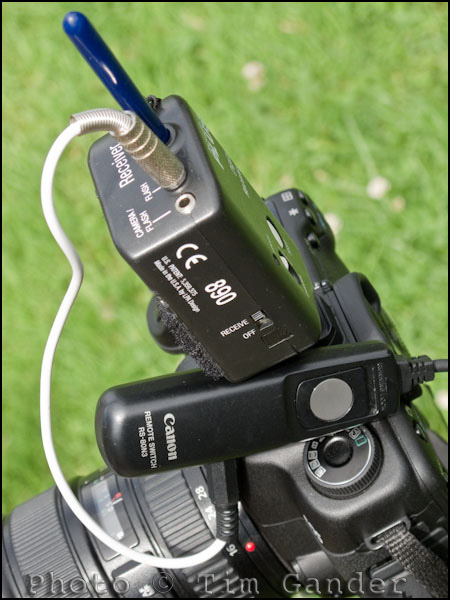
Pocket Wizard on Canon camera

The Pocket Wizard sits on the hot shoe just to keep things tidier.

Using Pocket Wizards I was able to press the fire button on the transmitter to fire the remote camera. As the trigger transmitter was mounted on my camera’s hot shoe I was also able to fire the two cameras at once if I wanted and it didn’t matter where I stood, the remote camera fired reliably.

You can buy a special adaptor to plug a pocket wizard directly into a camera, but I made a lash-up version some years ago using a Canon remote switch which I adapted to take a lead from my Pocket Wizard receiver. It’s a bit messy, it means I have to use manual focus, but it works very well.

Alternatively you can now buy some pretty cheap remote trigger sets, and though I can’t say what their range is it’s probably enough to open up some new options for firing a remote camera for self-portraits and other more creative applications.

If I’d had more time to discuss options with the crane operator and the building contractors I would have loved to have made a picture from a camera clamped to the steel structure as it was lifted into the air, but chances are I would have had a couple of useable pictures and a difficult-to-explain insurance claim for my efforts. Maybe next time…

Case Study: Studio & PR shots

Here’s a slightly unusual scenario; A client requires one set of pictures for their website, and a couple more for press release. They only have one slot in which to get everything done, so who they gonna call?

Hilton Vending is a local business owned by Martin and Sarah Killian, set up in 1992 installing drinks and snacks machines. They recently ventured onto the internet and got their first website built, but they needed a few images to personalise it. After all, their clients know them and they’ve got a friendly approach so hiding behind stock images of anonymous people was leaving their website looking a little sterile.

At the same time, they needed images to go with a press release regarding the change that is coming to, er, change. To be precise, 5p and 10p coins will be changed to coins with a different alloy content and makeup (you can find out more here) and this will result in a cost implication for any business operating coin-based services – drink and snack machines, auto tolls like the new Severn Bridge crossing, parking machines. All these systems will need to be re-calibrated. Martin wanted to publicise this change with a press release, so needed a photo to go out with the story.

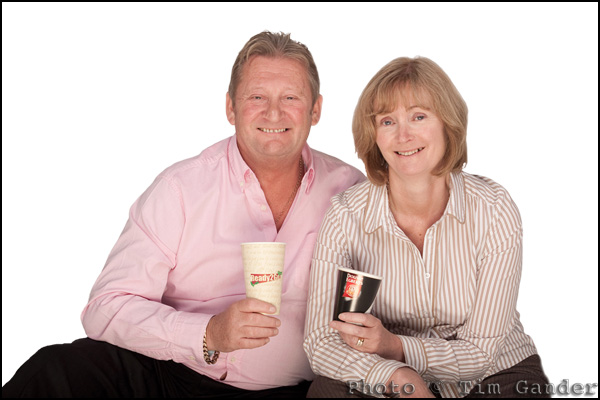
Martin and Sarah Killian of Hilton Vending, Wiltshire

This cutout was destined for the home page.

Luckily for Martin and Sarah, I was able not only to create a set of studio pictures for the website, but also illustrate the PR story with a suitable shot.

We spent a couple of hours trying different set-ups for the web photos, and in the end we got them some options which were suitable for use on various pages of the site. Originally Martin and Sarah thought they only needed a home page photo, but having got them to try various ideas we ended up with pictures they could use to spruce up the whole site.

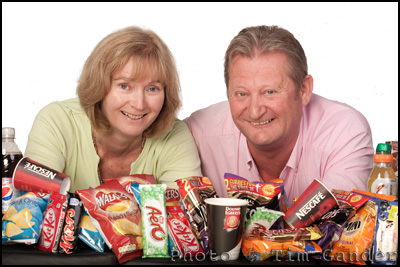
Sarah and Martin Killian of Hilton Vending with snacks

This "bonus" shot made a fun picture for the Snacks page.

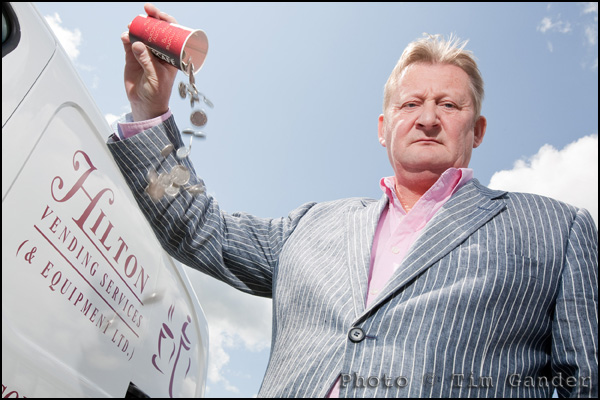
Having got the studio shots done, I took Martin outside and worked on the idea of money being poured away as a result of the forthcoming coin change. I came up with the idea of Martin pouring coins out of a coffee cup to illustrate the waste, and the kind of industry that would be affected all in one shot. Oh, and I may have snuck the company name in the background too.

Martin Killian pours money away

An eye-catching press shot, and of course there's an upright shot too.

By combining the two shoots, Hilton Vending saved time and money, and got a few extra shots they hadn’t realised they needed. We were all ready for a coffee by the end.

Case Study: The Photo Call

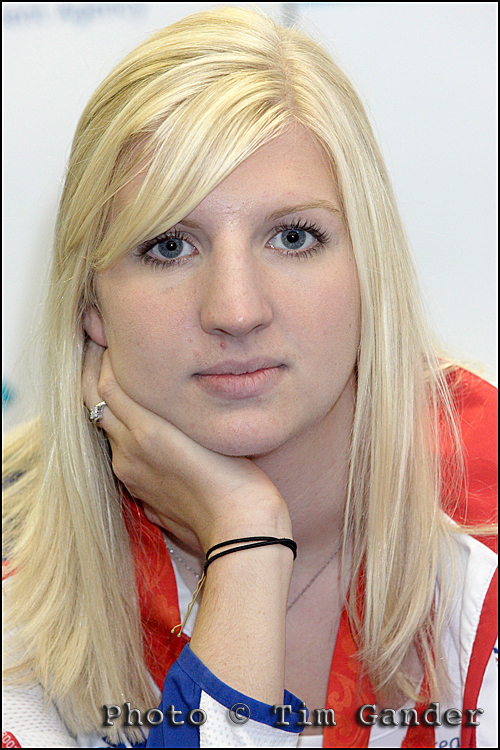
Rebecca Adlington

This photo call test shot of Rebecca Adlington was more interesting than the shot the PR lined up for us.

Since the majority of my work now involves working directly with companies on their corporate photography, I don’t get to do so many photo calls as I once did. Besides which, photo calls aren’t so popular as they once were.

Back when I was on staff at The Portsmouth News, and subsequently when I freelanced for national newspapers and agencies, photo calls were generally used by police forces for missing persons appeals or during a crime investigation. It was one way to control how much information got out to the press. Other photo calls would be for a new theatre production, a gallery opening, book signing or product launch. Anything really where a few different publications and maybe TV and radio would be invited along to help publicise something.

Though they are less common for PR uses, the police still use photo calls. For PR they can be a bit tricky to manage effectively, and if managed too effectively everyone ends up with the same stagey photo. Often a PR will do better to get some decent shots taken by a single photographer and send those out with the press release than have a room full of clever-clogs press photographers managing to make something amusing out of the wording or shapes on the wall behind the main speaker’s head. I’d still argue that press coverage is press coverage, and if the pictures are too sterile they’ll get no news space at all. You takes your pick…

Perhaps the other reason photo calls are out of favour is that newspapers have let so many staff photographers go, and cut freelance budgets so far, that they simply don’t have the resources to send someone along to an event which might take them out of circulation for over an hour while they’re wooed by PRs, held up by shifting timetables and badly planned itineraries and then have to be dragged away from the canapes and free drinks to go to the next cheque presentation.

It’s easier for a paper to wait for a finished press release, complete with photo, to waft into the newsroom so they

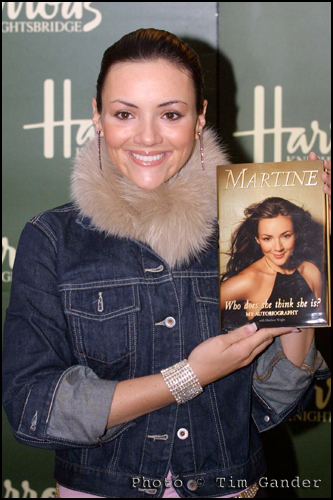
Martine McCutcheon book signing Harrods

Martine McCutcheon wrote a book about the first ten minutes of her life.

can add a reporter’s byline and publish the story and photo verbatim. Job done.

The photo call used to be a good chance for me to catch up with fellow “smudgers” from other agencies and newspapers, but on the rare occasion I am sent to one now I tend to find myself in the company of people who have a camera, but no real clue.

It may be that as new media channels open up, and quality returns to journalism (I happen to believe and hope that tablet computers may be the dawn of a return to quality content) the photo call will make something of a comeback, though I suspect it may be dead for good/better.

Does sex always sell?

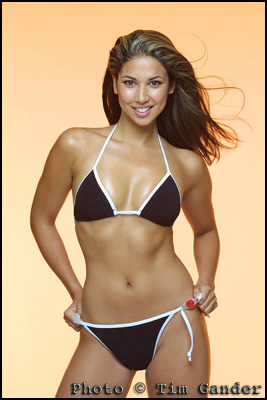
Leilani Dowding

A popular pic. Can you see why?

Another trip down memory lane this week, and this time I risk accusations of blatantly fishing for blog hits by featuring this photo of former Page 3 model Leilani Dowding. She’s modeling a bikini which Swatch wanted to promote at the time (no pun intended) as there was a watch incorporated into the design.

There is a reason for this picture being here though, because it’s been fascinating to see that although my website is dedicated to corporate, press, PR and commercial photography, this is the photo which has had the most views out of all the pictures on my site.

I don’t mind revealing that it’s had 138 views to date. That isn’t all the people that have seen it, since you can see it without clicking on the website thumbnail. That’s how many people in about 18 months have gone to the trouble of clicking on the thumbnail image to see it larger.

Bearing this statistic in mind, it’s hardly surprising that Marilyn Monroe comes in second with 103 views, but then my Skinheads picture scores 89 to achieve 3rd place. A slightly worrying top three, but of course the hits aren’t necessarily related.

Now I should be pleased that some of my pictures are so popular, but this rather odd bag of stats highlights that just having a picture seen a lot isn’t going to bring in business. Indeed, I think I can categorically say that none of those three images has ever pulled in a genuine client. My examples of corporate portraits and the like, with much more modest hits in the range of 30-50 have done a better job of bringing in work.

It just goes to show that pretty photos don’t always bring in work. A popular picture isn’t always going to bring in business. For businesses using photography, if it’s shot well and is relevant to your business it’ll have a much bigger impact on income than something which is just “very nice to look at.” This thought should guide how you present your business.

In the meantime, I can’t bring myself to take the Leilani photo down. It’s obviously bringing pleasure to some people, and she certainly adds a splash of glamour to the gallery.

As for Leilani herself, she was lovely to work with. Utterly without pretense, and of course, thoroughly professional. We’d previously done a shoot together to promote a gardening kit giveaway for the News of the World, but that picture isn’t half as glamorous!

I understand she now lives and works in Los Angeles. I doubt she remembers me 🙁

Case study: Press portrait.

For this week I thought I’d dig out something from the archive; a portrait photo taken with press use in mind to help illustrate the difference between this and a straight headshot.

In fact the photo here was commissioned by the News of the World for a business page article back in 2001. Nothing dodgy (for once), just a straight-up business story about Fulton Umbrellas‘ founder Arnold Fulton.

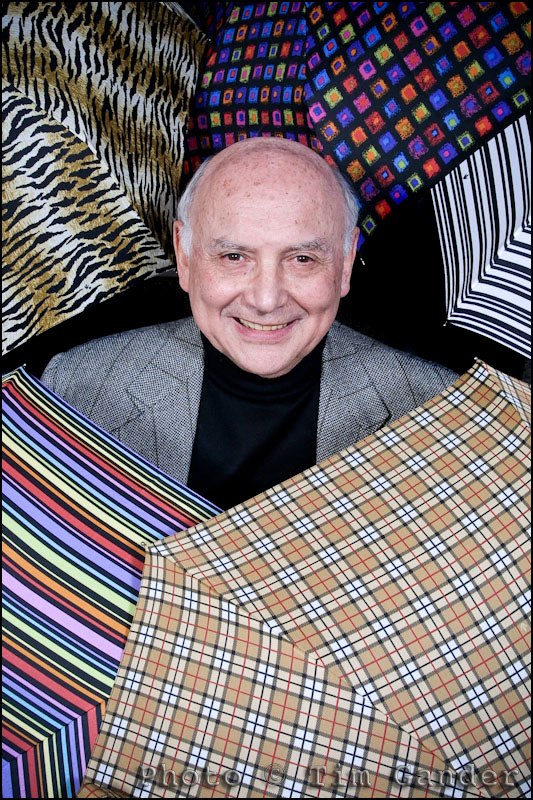
Press Portrait Arnold Fulton of Fulton Umbrellas

He's not Rihanna, but he's got umbrella ella ellas.

He was utterly charming, patient and engaging. He told me it’s ok to open an umbrella indoors provided you don’t lift it over your head, so putting my superstitions to one side I got on with opening a selection of umbrellas in the factory’s demonstration/sales room ready for the shot while Mr Fulton was being interviewed.

When you’re thinking about having pictures taken with a view to press coverage, you might be lucky and find that a newspaper wants to cover your story and they might send their own photographer to take pictures to go with the article. However, if you’re putting an article together and need pictures to send out to press, it’s worth keeping in mind that a straight headshot of the CEO (or whoever is quoted in the article) may not be enough.

Think about using elements of your business in the photo, even if you’re not dealing with physical goods. Sometimes a physical prop can be a metaphor for the service you offer, so don’t think that just because you sell pensions or insurance that there isn’t something to illustrate this.

My point being, think around your business and the story to see what might suit what you’re writing about. I’m happy (as any decent photographer should be) to discuss ideas with you. Don’t just dig out a portrait taken with the company logo in the background and assume it’ll get used. And even if it does get used, most people will ignore it as “just another headshot.” Far better to have a shot which helps illustrate the story. It will reinforce the point of the article, and most importantly of all, more people will read it.

As for Arnold Fulton, he insisted every visitor to his factory takes home an umbrella, so I chose a storm-proof golfing model which is still going strong today, which might explain why I’ve enjoyed the return of the rain even more than most people.

Photo Case Study: Industrial Photography

If I think of industrial photography what often comes to mind is the pictures of spectacular engineering projects like the Channel Tunnel, the particle accelerator at Cern, Oil platforms and large-span bridges. Vast-scale projects photographed beautifully by people with immense experience and the knowledge to make huge, impersonal industrial scenes look impressive, beautiful and moving.

But industrial photography can also be on a much smaller scale. Because of the nature of the work I do, my industrial images tend to fall more into the editorial style of photography. I’m helping smaller-scale industrialists communicate the human scale of what they do. Single human beings working hard to produce smaller pieces which, when finished, will have their own kind of beauty.

When a welder makes a beautiful weld by hand, their work is visible in the finished article, as unique as an artist’s brush stroke, though much less noticeable to the casual viewer and often hidden completely from view as the component is incorporated into a much bigger civil or industrial project.

I enjoy finding the right angle, lighting and composition to make an interesting, engaging image from what to anyone else might seem like a pedestrian, chaotic or grimy industrial scene.

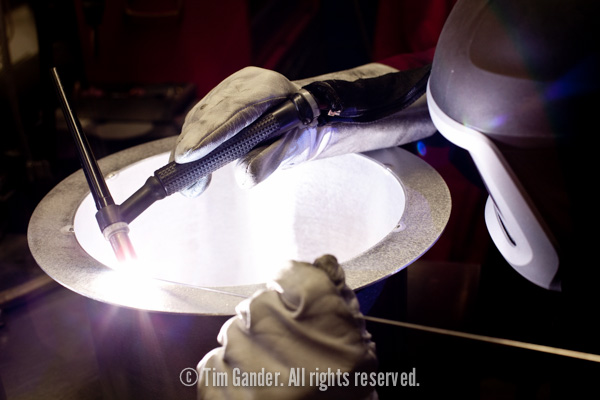
Man spot-welding a steel pipe.

Industrial details showcase your company’s skills

This shot of a welder at work at City Engineering in Bristol is a case in point. The bench was busy and workman-like, and wasn’t going to do the photo any favours, but by exposing only for the light reflected off the gloved hands and mask, and using depth of field to guide the viewer’s attention, I was able to make a simple but engaging shot showing the care and craftsmanship which, had I stepped back and shot wider, would have been lost in the scene.

While I’m not a fan of photographers saying “this shot is really great because it was so hard to get,” it’s worth pointing out that taking pictures of welding can be tricky. You have to wear a mask to protect your eyes from the intense light, but the mask is so dark you can’t see what you’re shooting  – even when the welder sparks up, your view is necessarily dim.

I used a few tricks to get the shot that was needed and none of them involved Photoshop but, obstacles aside, this is the kind of industrial photography I really enjoy. Simple, editorial, illustrative. A small tale in the much larger story of a great industrial project that I might be invited to shoot once it’s finished.

Without pictures, who can see your business?

Many’s the time I’ve “expressed an opinion” (ok, I moaned a bit) that too many businesses hide behind stock imagery. It’s on their website, their brochures, in fact everything their clients and prospective clients see.

Of course they don’t mean to hide, per se, they just don’t seem to twig that if their entire visual façade is made of anonymous pictures of anonymous people, then no one can truly “see” their business. Perhaps worse are the pictures of anonymous trees, fields, waterfalls and all the other business clichés. Businesses are made of people working for that business, not models working for a studio.

However, and this is a rare treat so make the most of it, I’m not going to bang on yet again about the perils of stock imagery. If you haven’t worked out what the associated problems are by now, perhaps business isn’t your forte and you should be looking to get a desk job somewhere that keeps you in coffee and donuts and doesn’t tax your brain too severely.

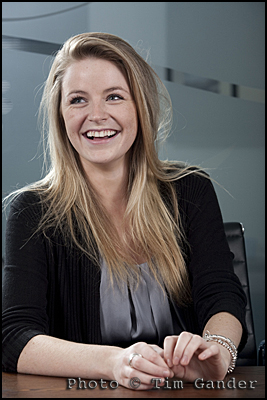
corporate business portrait of female tax adviser

Real person in real office SHOCK!

What I do want to reinforce today though is that if you are running a business, or thinking of setting one up, your business plan will have to include a certain marketing budget, otherwise no one will know your business exists. And if you’ve managed to set aside a marketing budget, you should include a certain budget for imagery within that. Don’t panic though. As I’ve said in previous posts, the joy of images is that if you commission them and set yourself up with a sensible deal, you can use the same images for web, print, e-newsletter and all the rest without having to pay a separate fee each time. Of course you need to make sure you know what you want to use the pictures for before you start, and agree it with the photographer, but there’s no reason for this to be a complicated or scary process. If it’s looking that way, maybe you should contact me and I’ll explain how my simple pricing structure works (see how I slipped that little sales plug in so subtly?)

It does seem quite common though for businesses to say they haven’t a budget for photography, but if they’re marketing themselves then they need images of one sort or another.

For the vast majority of businesses, imagery isn’t a luxury, it’s a necessity. But unlike most business necessities, it shouldn’t (if done properly) be a cost to the business. Just last week I was in conversation with a client who told me how impressed his prospective clients were that the people they saw in the sales presentations photos (taken by Yours Truly) were the same people they met on the office tour. This client believes its people are a major part of what sets them apart from their competitors, and by showing them off they win huge contracts.

So when looking at your budget for photography, perhaps it would be easier to calculate a budget for failure for not setting aside a sensible budget for corporate imagery. How much can your company afford to lose by skimping on the one thing everyone sees before they even decide to buy from you?

Time to look at your business plan again…

Best Way to Use Pictures (or BWUP if you like acronyms)

Actually, “bwup” is that involuntary hiccup you make after eating a large Sunday roast washed down with a nice bottle of red. Neither burp, nor hiccup… It isn’t often that I manage to digress within the first sentence of an article (oh dear! My Google rating!), but I liked the sound the acronym made.

Now I’ll admit I’m not technical schmecnical when it comes to the web. I don’t know how to “code” stuff, but I know what it looks like when some whizzkid has done a bit of something clever to make images prance about on a page or fade from one image to the next in a slideshow. What this article looks at is the benefits and pitfalls of two common kinds of presentation and some tips to help you get more from your corporate images.

Of course the most obvious method of presentation is the static image. No whistles, bells or silliness, but even without adornments this basic staple of websites can be used to best effect and all too often isn’t.

For the single, static image you can use newspaper rules of placement. In other words, place the image where it will have most impact, and where it will lead the viewer onto the text. In other words, in general terms, if the image has a natural “emphasis” towards the right of its frame, think about placing it to the left of any relevant text. Or, if a picture simply has to be in a right-hand column of the web page, make sure you choose one where the emphasis is to the left. Using this simple rule you can gently guide the viewer’s eye around your page and use images to push people’s attention towards those page elements you want to emphasise.

People always (ALWAYS!!!) look at images first, text second. I’m not saying they seek out pictures before bothering with the rest of the site. What I mean is, if an image is visible on the web page, that’s where the eyes will fall first. That’s the entry point for the page. That’s also why the images are so important. The very first of the first impressions about your business are made (or broken) within the images.

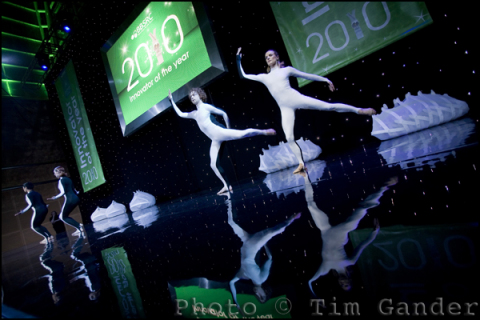
modern dancers ballet on stage

Does the image lead your eyes left or right?

With that in mind, I’m not sure I’m such a huge fan of the slideshow. My own website features one as the main element of the Home page, but bear in mind I’m in the business of selling my photography services, so presenting a selection of images in a quick and simple way is pretty important for me.

If photography isn’t what you’re selling, I would generally suggest slideshows aren’t the best idea. Very often you’ll see slideshows on the Home pages of firms offering professional services. In principle this isn’t a bad idea, except that the images are often nothing more than bought-in stock images. They have little relevance to the business itself and tell the visitor little about the business they’re looking at. I’d say if you’re going to use a slideshow it needs to feature you and/or your business partners doing whatever it is you do. For the images to work they need to be consistent and have some kind of story or theme to keep things together and relevant.

Even when the slideshow is done well, think about how it affects the viewing experience for the page. Personally I get irritated when I’m trying to read the text, but the slideshow keeps rotating in the corner of my eye. Even if I know I’ve seen all 4 images in the set, I keep glancing back from what I’m reading. The best slideshows combine the images with explanatory text, so the viewer is reading about the business while seeing images to back up the message. And yet you have to consider how long a potential client is willing to sit there looking at a spool of images, waiting for the next one to show up and not knowing how long you’re keeping them tied down for. The temptation is to click away – potentially to a different website.

If they do that, you better pray the next site is using a cheap video to get their message across. Nothing kills a potential sale like cheap video (oh OK, maybe cheap stock images come close).