See The Portfolio, Understand The Process

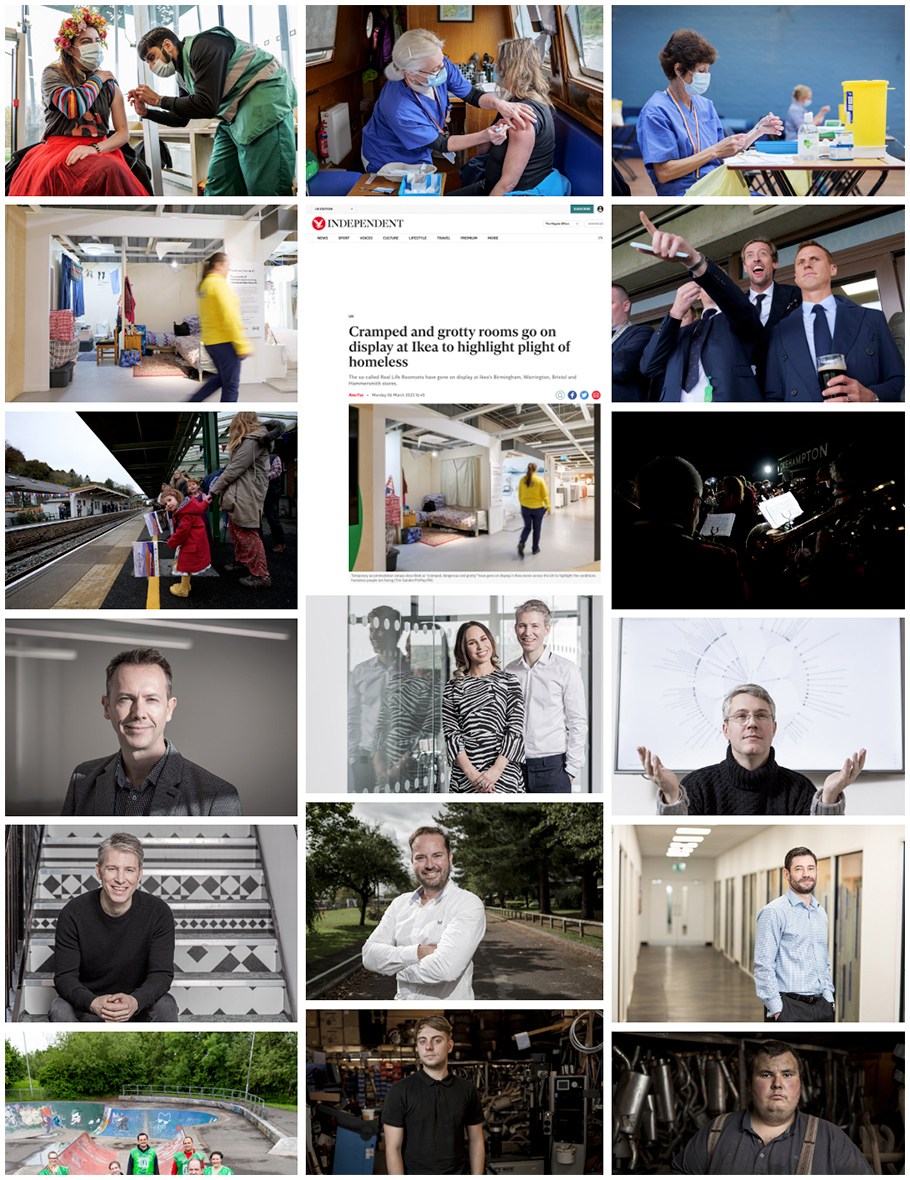
With the exception of David Bailey, every photographer has to keep their portfolio fresh and updated regularly. While for some that still means a printed volume, for most photographers it’s their website, which is what I’ve been working on lately.

The question photographers have to ask themselves as they work through this process is, “What makes a picture worth adding to my portfolio?” The question you might ask yourself is, “Why should I care?”

Well if a client understands the thinking behind what makes a good portfolio, they can also understand what a portfolio says about the photographer behind it.

There’s plenty to think about, but it’ll start with context (ie. what kind of photographer they are and what kind of work they want to attract), but setting that aside for now, the best way for me to illustrate the subject is by setting down my thoughts. Through this process, I hope you’ll gain some useful insights too.

1. Why Update My Portfolio?

This one’s simple – a regularly updated online portfolio keeps Google (and other search engines) happy. Each time a search engine indexes a website it’s looking for fresh content. Fresh content boosts the value of the site and elevates it in search rankings. I get a fair bit of work this way, so I need to keep my portfolio updated.

2. What to update it with?

Every few months I go through my Portfolio pages to see what’s especially old, or what might no longer be relevant to the types of work I’m doing or want to do.

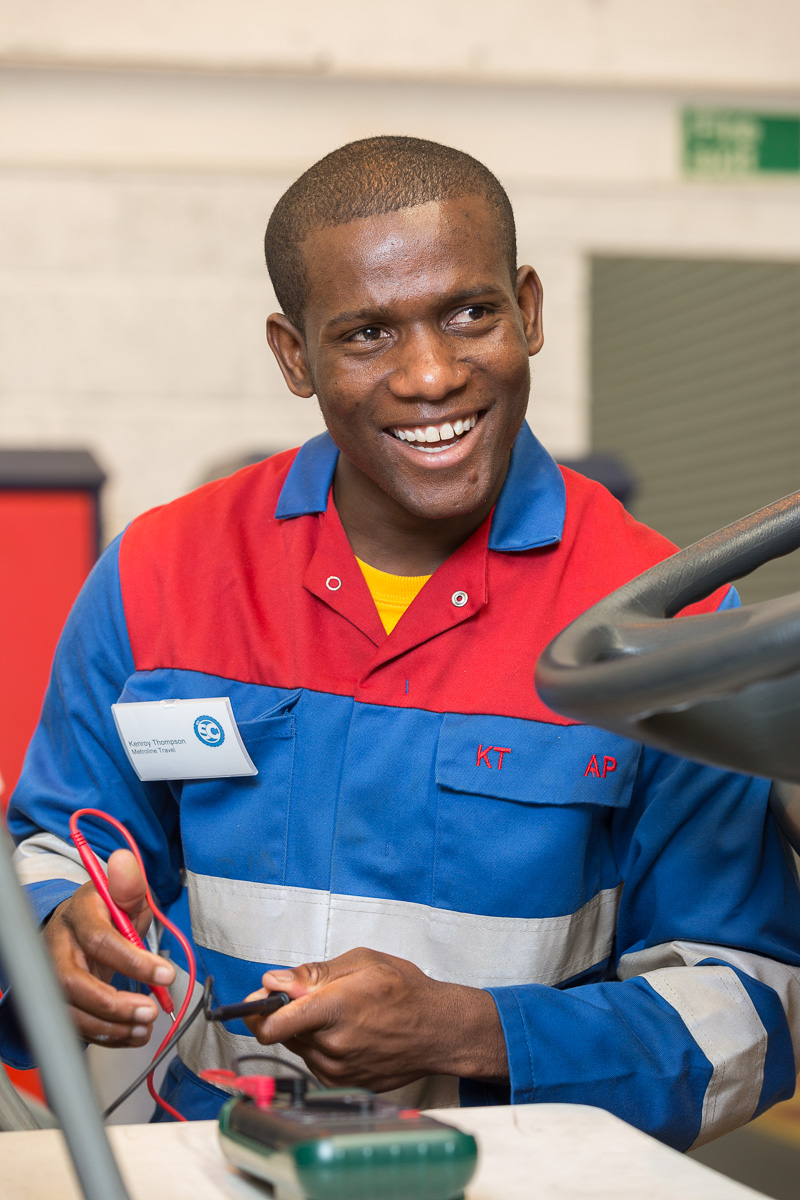
Showing certain kinds of work will attract enquiries from certain kinds of clients, which is why my site is fairly heavily skewed towards showing corporate portraits – that’s both the work I do and the work I want.

Age isn’t everything – I’ll keep older pictures in if they’re strong and still serve a purpose, but on the whole, I’m looking at recent jobs to see what might be suitable to add to or replace existing work.

When I’m trawling through my recent archive I’ll be searching for images that fall into one of the three portfolio categories: Business Portraits, Corporate Communications, Editorial & PR.

3. What Makes A Portfolio Picture?

That’s where it gets trickier, and while I don’t think I nail this one every time, I see photographers who haven’t mastered the challenge at all. They include their favourite pictures, but this is the wrong place to start.

The challenge is to disassociate yourself from the making of the picture. A portfolio picture isn’t good just because you like it. It isn’t good because it was hard to make, or because you made a silk purse from a sow’s ear.

A portfolio picture has to be good in its own right. While Google won’t even care if a picture is interesting, in focus or correctly exposed, a potential client has to be convinced by the quality of what they see. What they won’t see is the effort or the circumstances surrounding the making of that image, so its entire strength will come from its quality and content.
4. What Is The Context?

I mentioned the context in my introduction, and there I was referring to the type or field of photography being promoted. A wedding photographer will have different considerations than an industrial, architectural or food photographer.

Similarly, I need to apply different considerations when choosing images for any of my three categories. Let’s briefly go through those:

Business Portraits

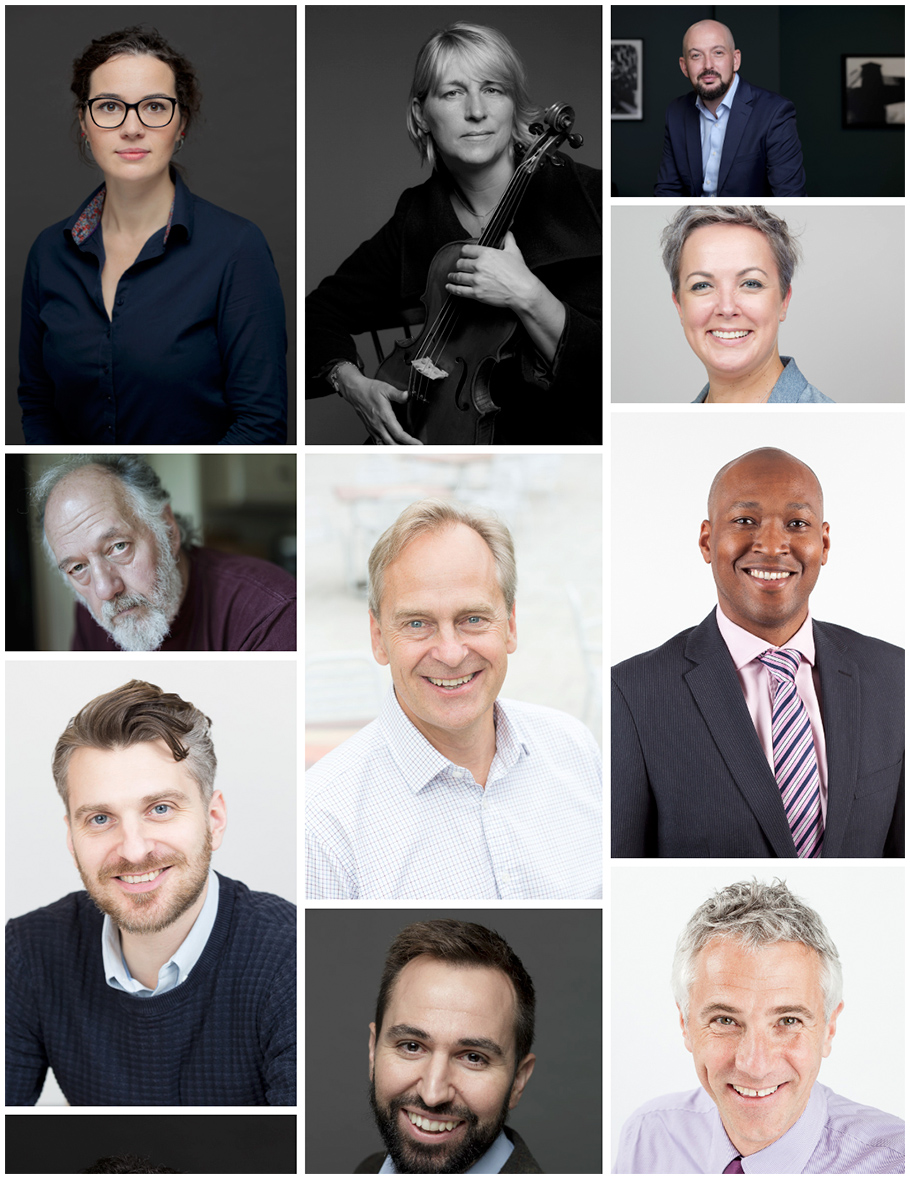
Here I want to show the quality and style of my portraiture, but I’m also looking for some variety. Beyond the basic headshot against white, I also want to show I can create different styles, moods and even orientations (upright or landscape). I also include a few images to suggest that a portrait can mean more than a simple headshot and can include some context, which stylistically starts to overlap with Corporate Communications.

Corporate Communications

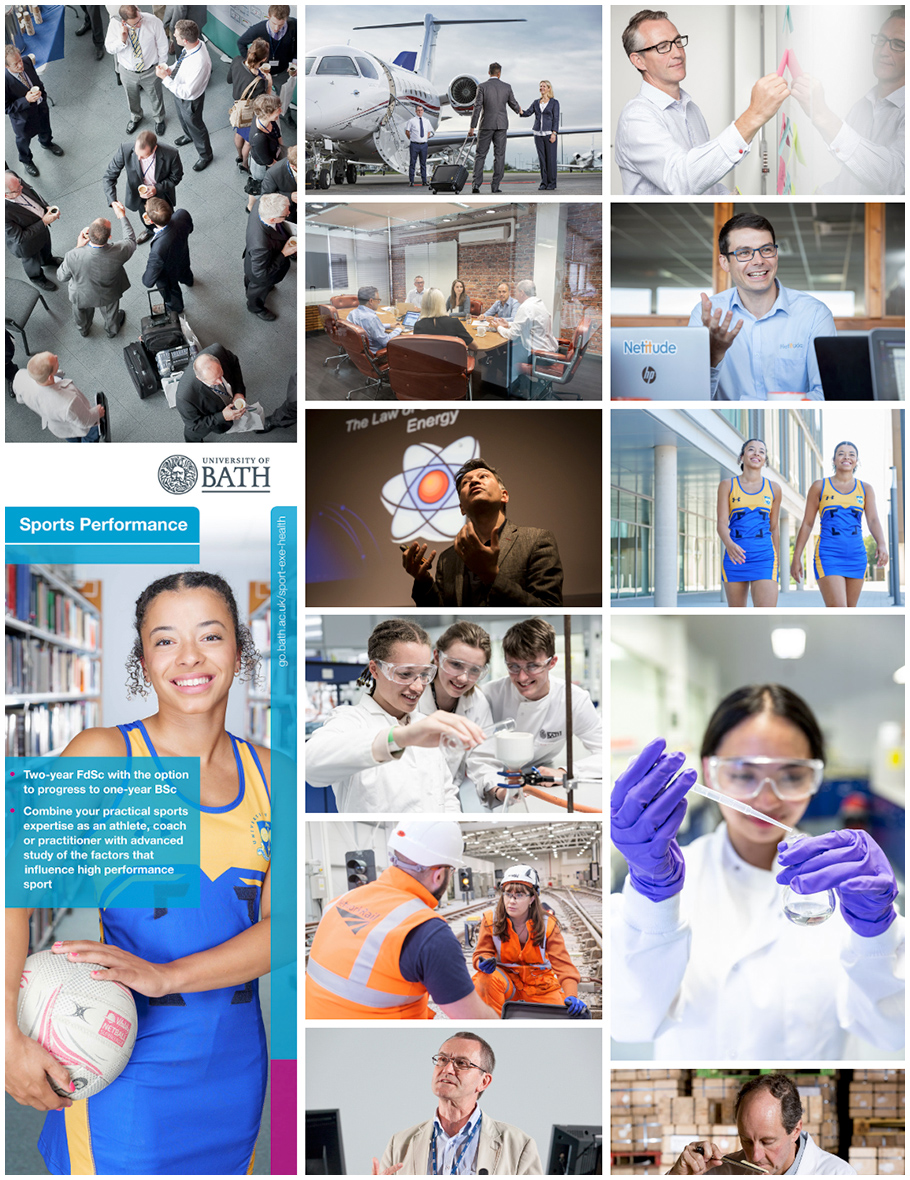
This is broader than just headshots, so it’s an opportunity to show greater creativity. These images might include props or location elements; they might be staged or fly-on-the-wall action images. People presenting, interacting with others or with their environment are fairly typical examples of the Corporate Communications image.

I should add that the term Corporate Communications refers to everything I do for my clients, but I sub-categorise these images to differentiate them from pure Business Portraits or Editorial & PR images.

Editorial & PR

This gallery is unusual in that I’ll often include screen grabs of the images ‘out in the wild’ in news media sites, allowing clients to make the connection between my work and the possible exposure it will bring them.

The nature of the category means I might be showing work which has more of a story to tell, but the image should still be as self-explanatory as possible (though my captions will also help explain the context and reason for the image).

For this category, I’m looking for images of a news or feature style. They were shot for a newspaper, press release or corporate news web page and therefore have a different look to those shot for general Corporate Communications.

Site-Wide Refresh

While the focus of this article has been on the portfolios, I also regularly update my homepage image as this is the first impression potential clients get. It also makes the site more attractive to search engines as they favour new content over old.

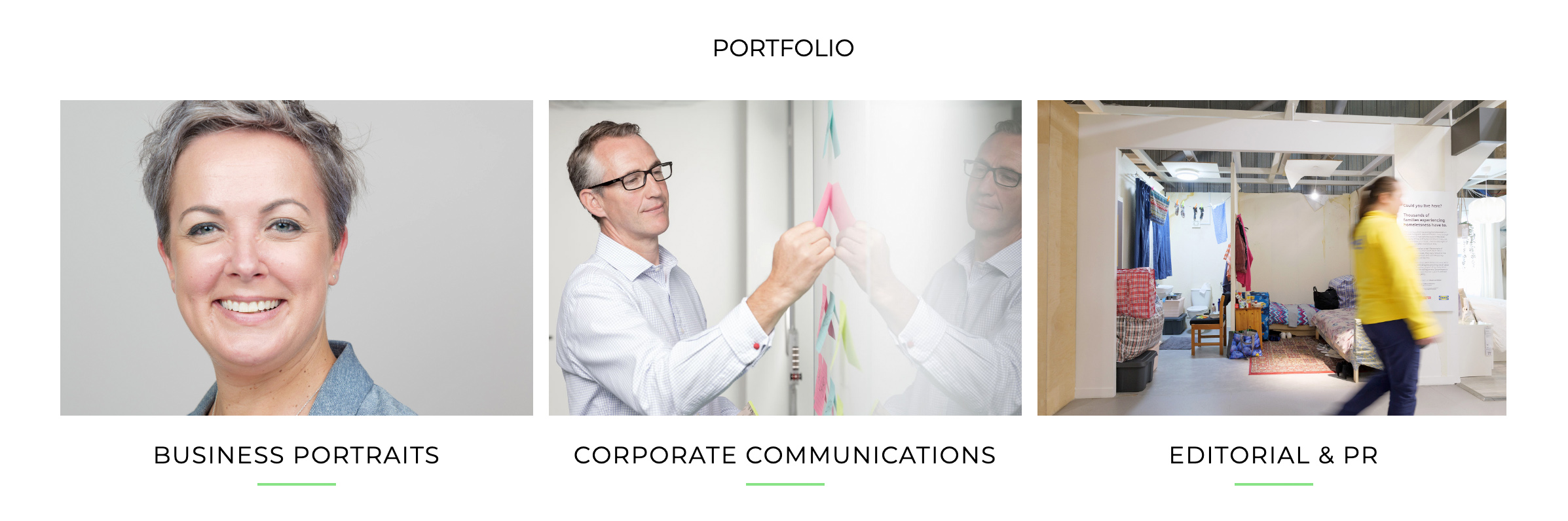
As if all that wasn’t enough, this time around I’ve also updated some of the featured pictures for the top-level Portfolio menu, again keeping the site a bit fresh for returning visitors and search engines alike.
Summing Up

In essence, if you’re a client casting around for a photographer for your next project, it’s worth having a bit of insight into what you’re being presented and why.

If a portfolio doesn’t even present examples of the genre you need, move on to the next site. For example, photographers who showcase family portraits are probably not going to grasp the particular challenges and requirements of corporate or business portraiture.

It’s important to match genre as well as style and quality to your requirements to avoid costly mistakes, and I hope this article goes some way towards avoiding that scenario.

Now you’ve read this, why not take a look back at my website? I’d love to hear if it’s changed your perception of what you see.
Head Space

Corporate portraits, one of the under-sung heroes of corporate communications. An evil necessity (for those who don’t enjoy having to sit for one), but the only way your potential clients get to see the people who make your business tick.

But in the planning of a portrait session, I think one of the most over-looked aspects of the whole process is the question of where is best for the photographer to set up. What considerations need to be factored into the planning to make it all run as smoothly as possible?

Best Place for Portraits?

Location, location, location, as the property gurus like to say, but it’s also true when finding a spot in your office in which to set up for headshots.

The first, and possibly most crucial element required is space. The more the merrier. The greater the area I have to work in, the more options I have to create a consistent look across the set of portraits.

Occasionally a client will tell me they have an empty room I can work in. There might be a 30ft faux mahogany table and 20 heavy swivel chairs in there, but as far as they’re concerned, it’s an empty room.

So now I recommend a minimum empty floor space of at least 3m (10ft) square. Bigger is better, but I can work with that.

How High?

Ceiling height also has a role to play. Many modern offices have relatively low-slung ceilings, and these can make certain lighting set-ups difficult or impossible.

For example, my preferred arrangement is to have my main studio light pointing down over the sitter’s head, just in front of their face. A low ceiling makes this difficult/impossible, especially if the ‘house style’ is to have subjects standing for their shots. It’s easier if I can sit them, but even then some ceilings are too low. This particular arrangement also requires a bit more floor space, so double whammy if I’m in a small space with a low ceiling.

Occasionally I get super lucky and find myself in a room which has a plain wall. It might not sound much, but if I don’t have to account for the space a backdrop takes up, this can save valuable space in a small room.

Background Effect

Speaking of backdrops, if a client wants a particular look to the backdrop, I then have to think about how I light it separately from the subject. Once again this takes up more space as I have to work a flash in between the back of the subject and the background. Given enough space and the right lighting set-up, I can turn a white wall into anything from pure white to pure black, or light it with a coloured gel, but all these options need space.

Stray Light

Other sources of lighting in the room can also affect how much space is required, or they can influence the final outcome.

As I’m generally working with flash for headshots, I don’t need bags of daylight or ceiling lights. I just need to be able to see well enough and for the camera to be able to focus accurately, so some light is good, too much can be bad.

What I mean by too much is when sunlight is screaming in through a side window and splashing onto the subject or backdrop. Or when ceiling lights are beaming down onto the subject’s head, which can cause ugly colour casts. These casts are often difficult to correct in post-production, so I do my best to avoid them when taking the photos.

A Little Test

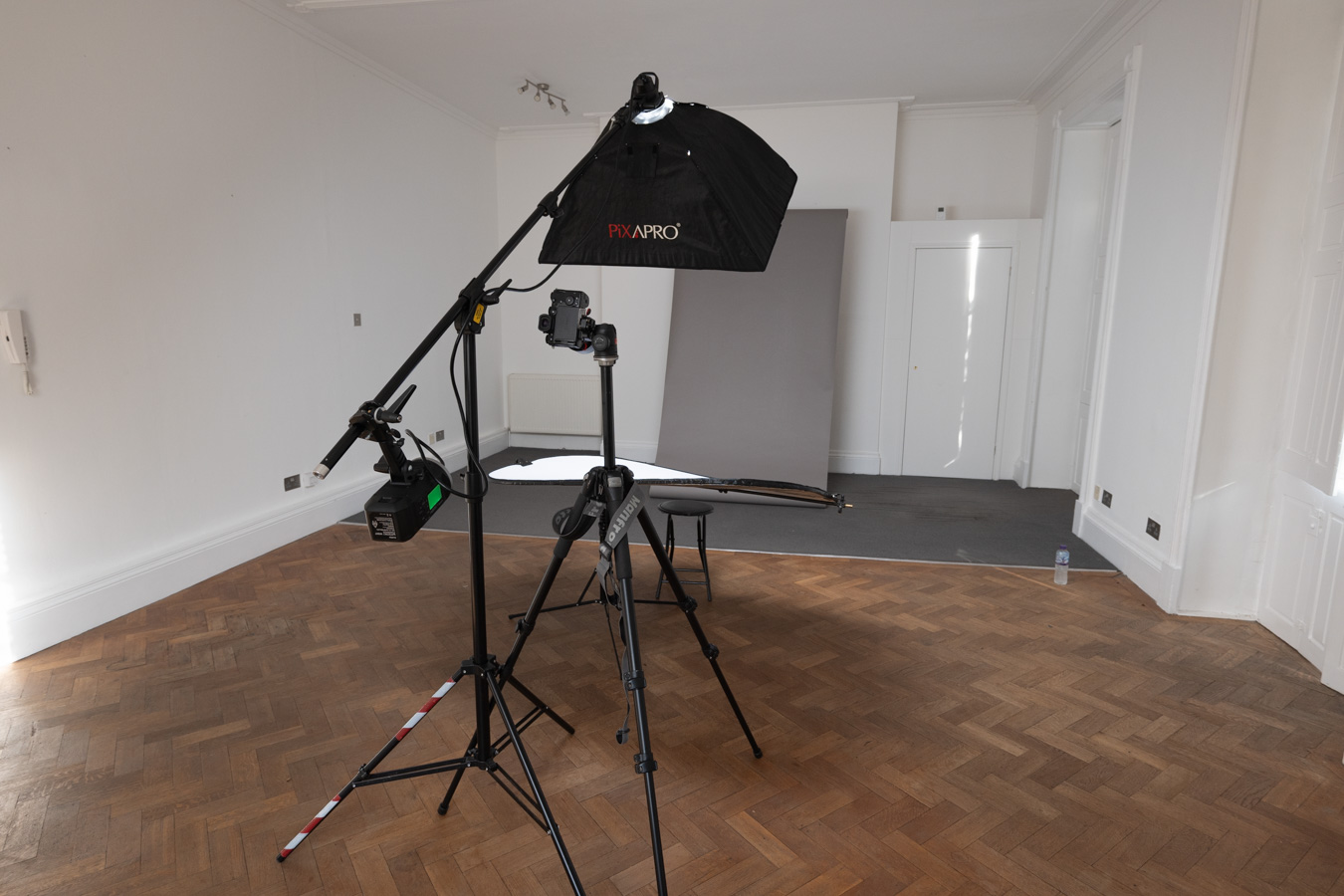
There are many factors which influence how I set up my gear for a portrait session. It can even be that the same set up in the same space on a different day can yield slightly different results, but change the room from one session to the next and it becomes a real challenge to get one batch of headshots consistent with a previous set.

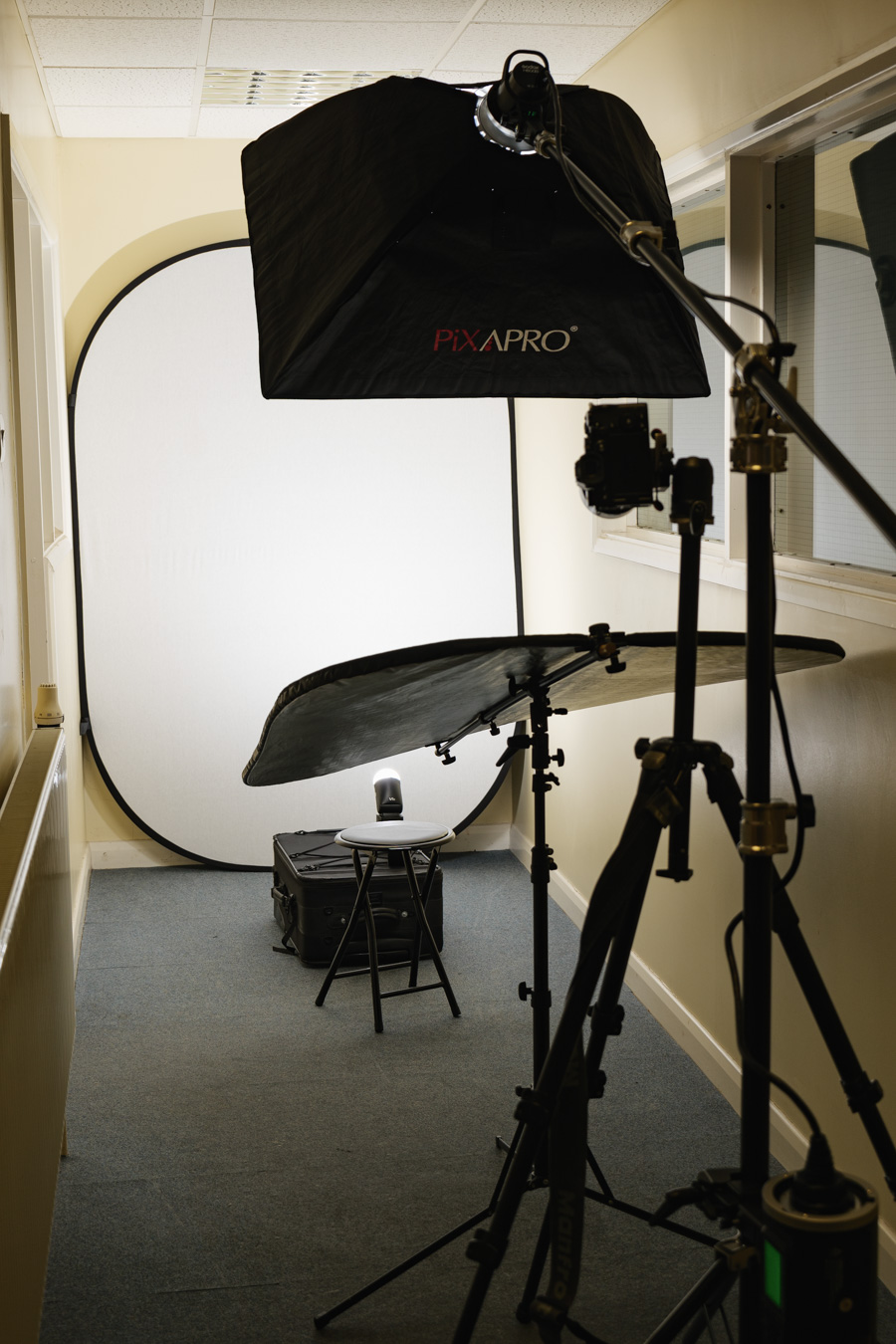
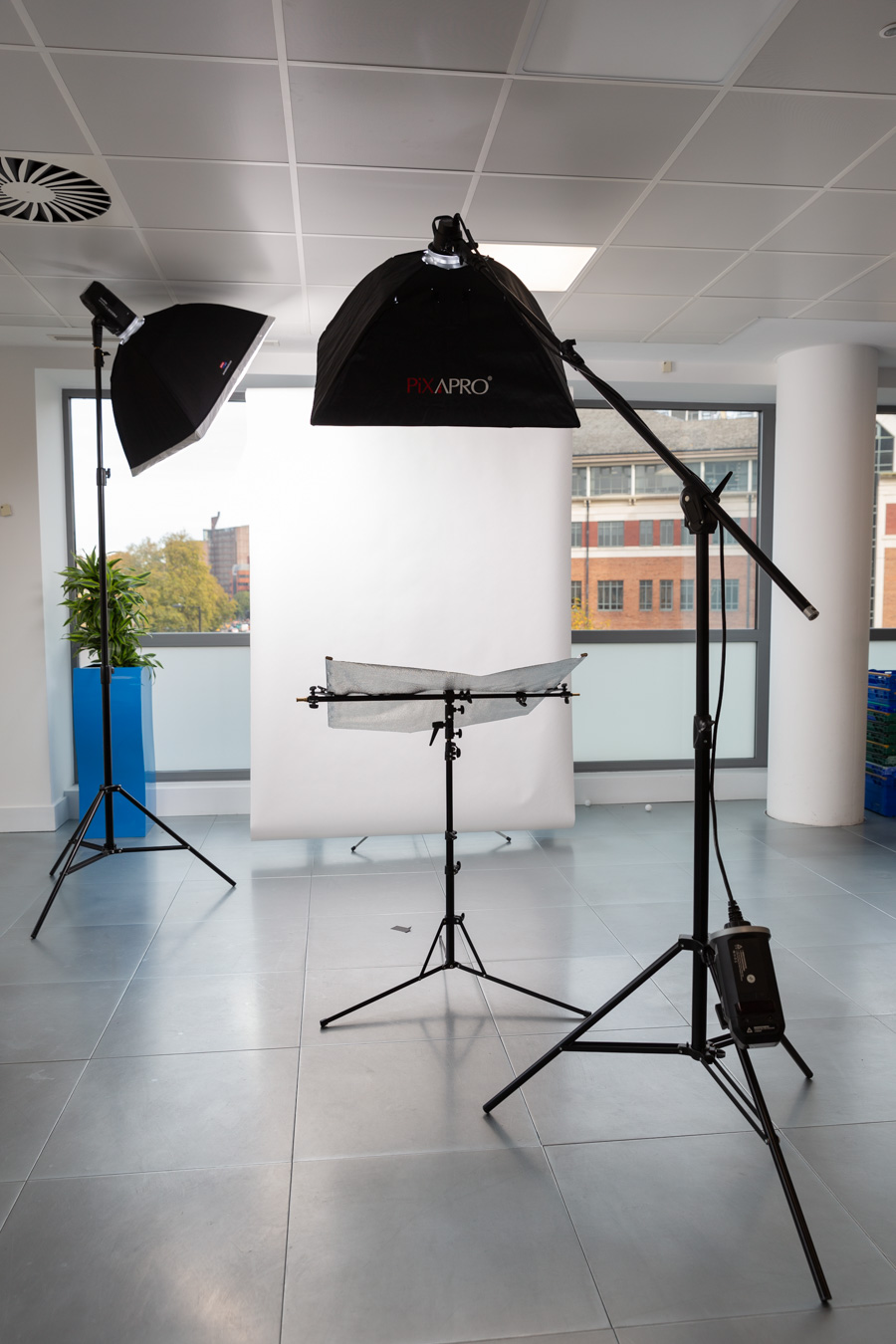
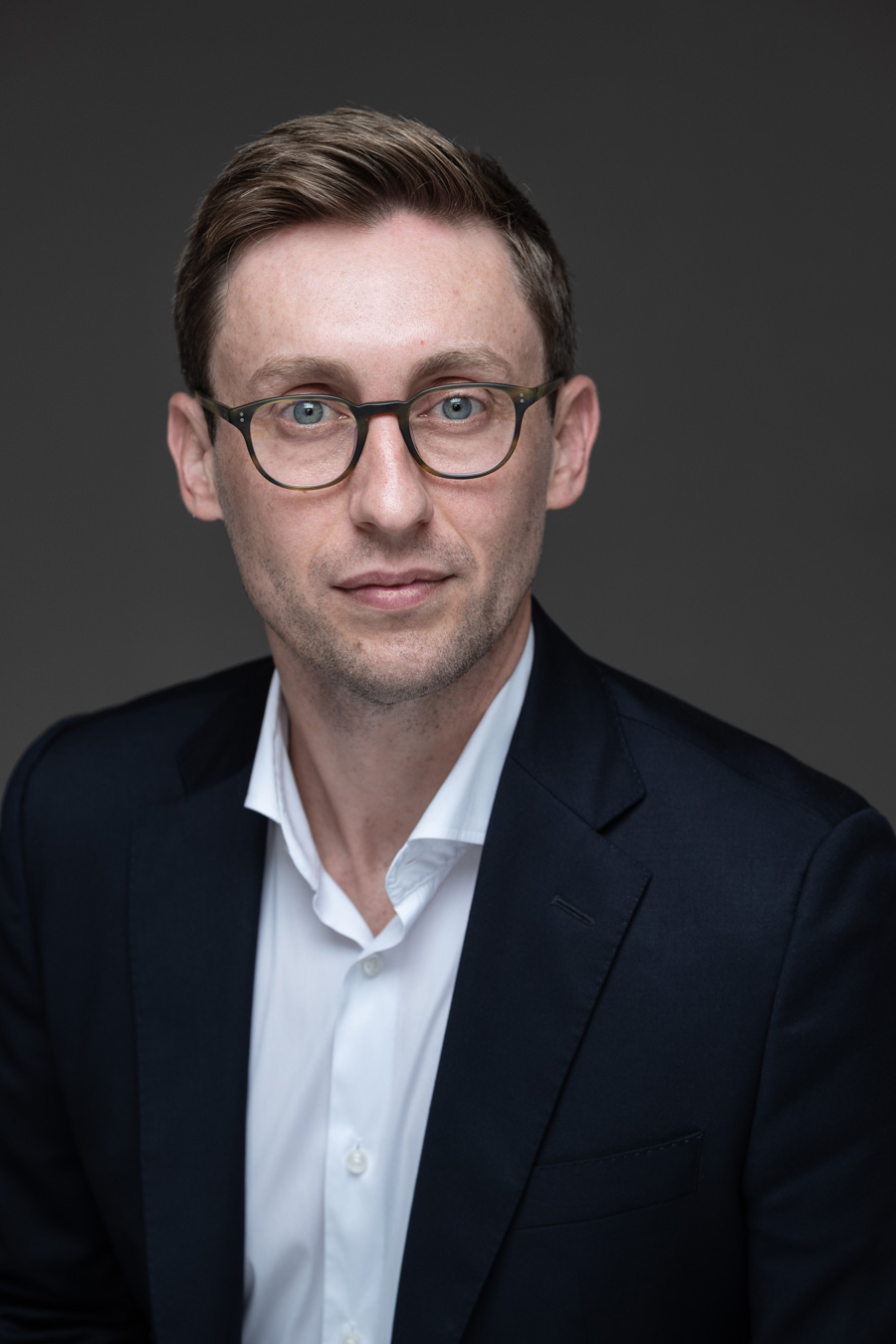
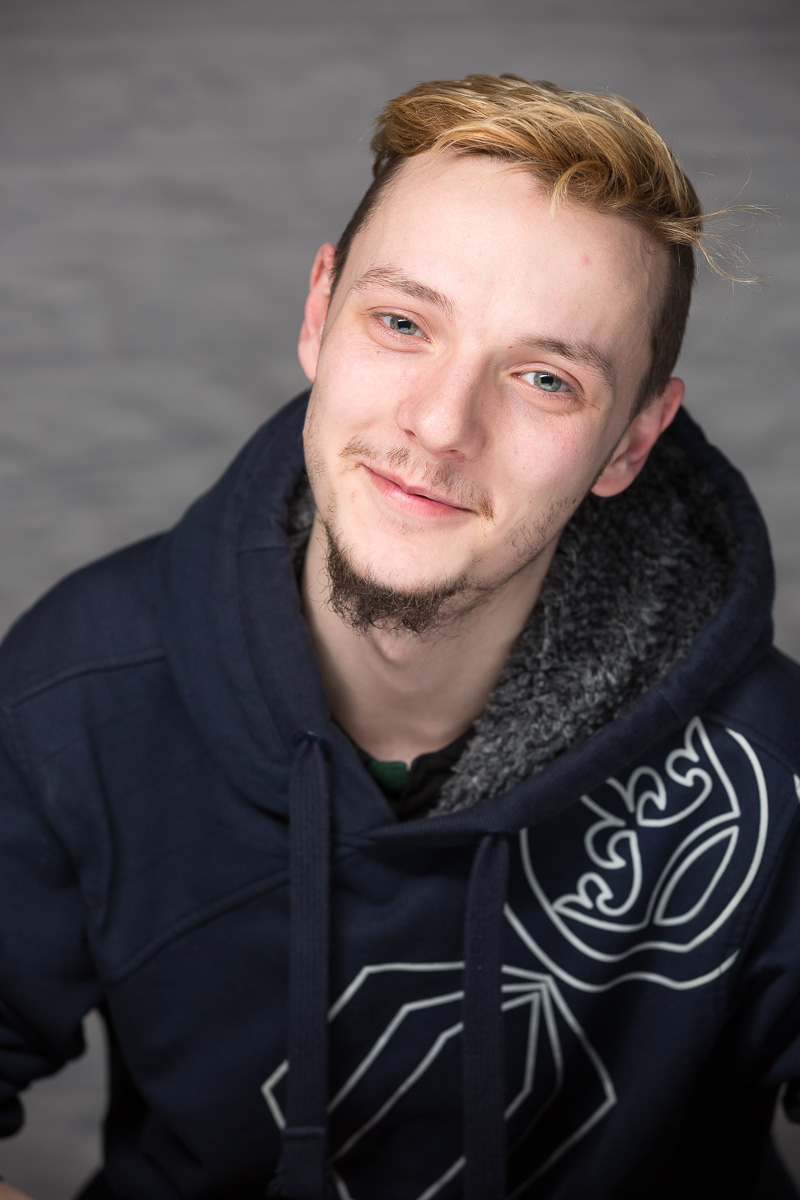
To round off the article, I’ve dug out a small selection of different spaces and set-ups I’ve used over the last few years – I always try to take a reference shot for when a client calls me in again. I wonder if you can work out which set-up was used for the portrait at the end?


Of course the best way to ensure I have the space I need for your next corporate portrait session is to get in touch and arrange a conversation. So drop me a line, let’s see if we can work out your best location, location, location.

Sound Advice

Another from my occasional series offering hints, tips and advice on video.

Sound vs Vision

Do you have any idea how important sound is to a successful video?

It’s one thing to have great visuals and a compelling storyline, but the one thing that will push your audience away is poor sound.

Ask any decent videographer and they’ll tell you this. More important than picture quality, is the quality of sound.

Now I’m no sound engineer, but I have built up enough basic understanding to know how to organise a video shoot to get the sound quality my clients need. That’s even when they don’t know what they need. Mainly that involves not allowing interviews to happen right next to a road drill. It means knowing when to use a boom mic, when to use a lav mic etc.

One of the first things I learned was to get the mic as close as possible to the sound source. That means those little shotgun mics you see mounted on cameras, well they’ll do an ok job. But if you really want to hold audience attention, nothing beats a close mic on the speaker.

Sound Analogy

In this way, I find it easier to think of sound and microphones in the same way I think about light and studio flash. By placing a flash close to the subject I can more easily control the balance between flash and ambient light (that is, daylight or room light).

Similarly, bringing the mic closer to the subject captures more of the speaker’s voice, less of the background noise. With sound it’s then easier to mix in ambient sound from a separate recording of the space if needed. It’s not a perfect analogy, but it helps.

Terminology

I don’t wish to bog you down in the complexities of sound capture, but it’s worth understanding a couple of basics. Why, as a client, would you need to know this stuff? Well it’s so when I talk to you about where best to shoot an interview, you have an understanding of what I’m thinking about and why certain options might be ruled in or out.

Depending on the space and its ambient noise, there are some basic choices to start with. First will be location. Of course this might be dictated by what the visuals demand, but wise choice of microphone will help eliminate the issues a particular location might have.

There are a few different types of mic, and the below are the ones I use:

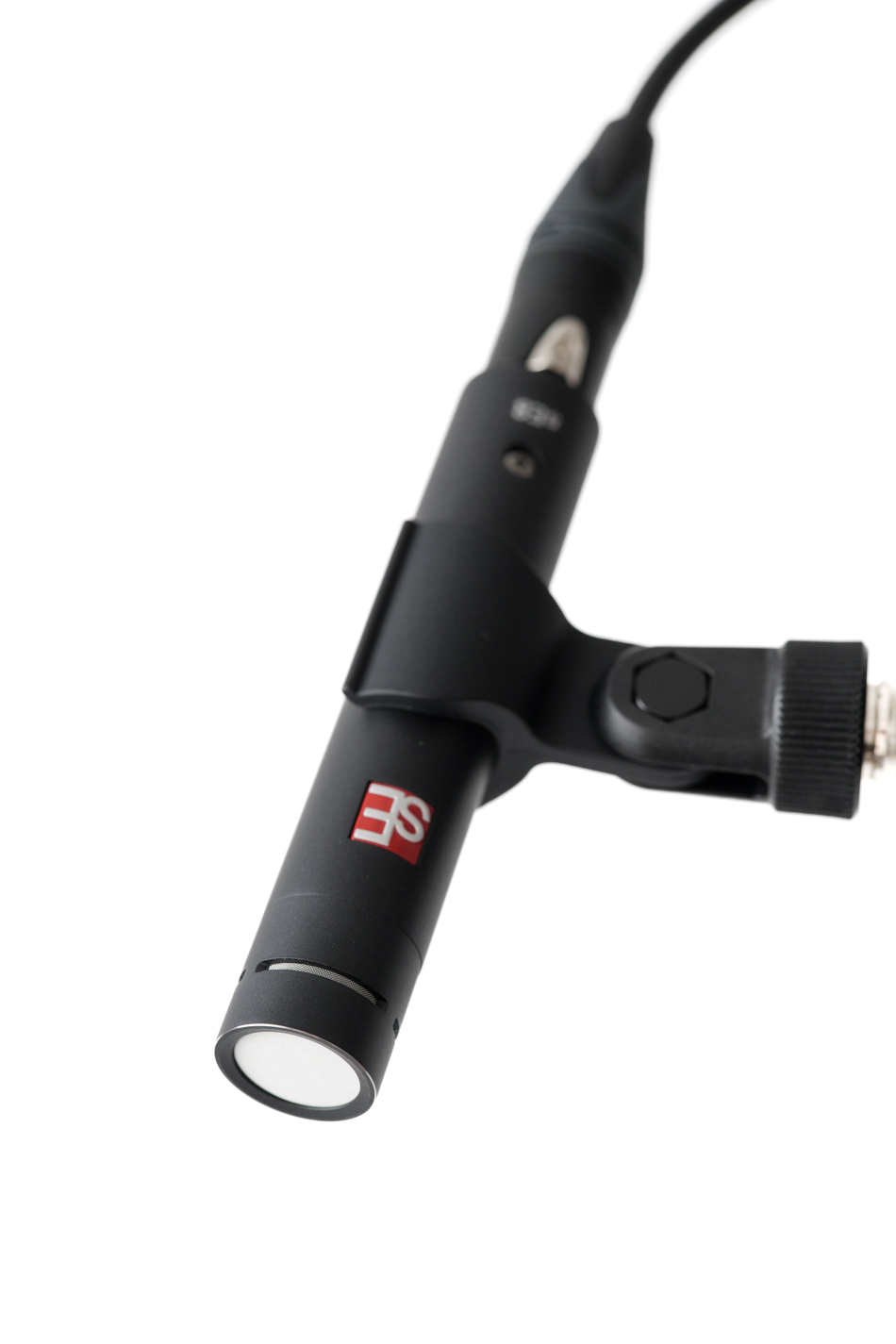
Close-up photo of a SE Electronics pencil condenser mic clipped to the end of a stand against a white background.

A pencil condenser mic will give the best result for indoor interviews

Lav mic. For outdoors, lav mics work pretty well. A lav (aka lavalier, or lapel microphone) clips to the lapel. They’re designed to pick up as much voice as possible, ignoring background noise, but they’re not perfect. I have a couple of lav mics for when I need two people on sound.

Boom mic. A boom mic is a long, slim microphone that sits on the end of a boom arm. Sometimes shielded in a blimp (one of those Zeppelin-looking things, sometimes covered in fur), a boom mic is designed to pick up sound from a very specific angle and is best for outdoors use when conditions permit. It’s a bit like how a telephoto lens is designed to narrow-in on a scene. I have one for when the need arises. In fact it was the first mic I used regularly because they can be picked up quite cheap.

Pencil Condenser mic. My personal favourites. These look like stubby boom mics (see photo). They can have a variety of ‘fields of view’ depending on their internal design. For reasons of sound physics (ie something I don’t understand well enough to explain), they work better indoors than boom mics. I have two of these as I prefer them to lav mics and they’re great for two-person interviews.

A Trunk Full of Sound

Now a proper sound engineer will have a suitcase full of microphones. Many of each variety, more than I’ve mentioned above, and duplicates of each in case of technical failure. They’ll have mics which will have cost £thousands because they need the best quality and longevity. Consequently, for the services of a sound engineer, expect to pay a hefty price. It’s not unjustified, but it’s more like Hollywood budget than SME marketing funds. By contrast, I have more than my average client needs, but nothing like the quantity or quality of a full-on sound engineer.

My aim with sound is to make sure my clients get better than they thought they needed because THAT is what will hold audience through their video. And if getting people to watch your video to the end isn’t your goal, what is?

Real World Example

As a real example of the challenges faced by the videographer tackling sound, the video below was recorded in a very echoey space with noisy engineering works going on next door. Setting the mic as close as possible to the sitter helped with the worst of it, but now I have better mics and more experience, I’d do an even better job today!

For more examples, see my Video page. Or just to have a chat about whether I can help with your next video project, drop me a line.


The Pop-Up Job

One of the toughest tasks for a photographer can be to shoot a photo which works well in an extreme shape. Ultra-wide and extreme deep crops from a standard image ratio can create challenges. Shooting a full-bleed image for a pop-up stand is a perfect example of this.

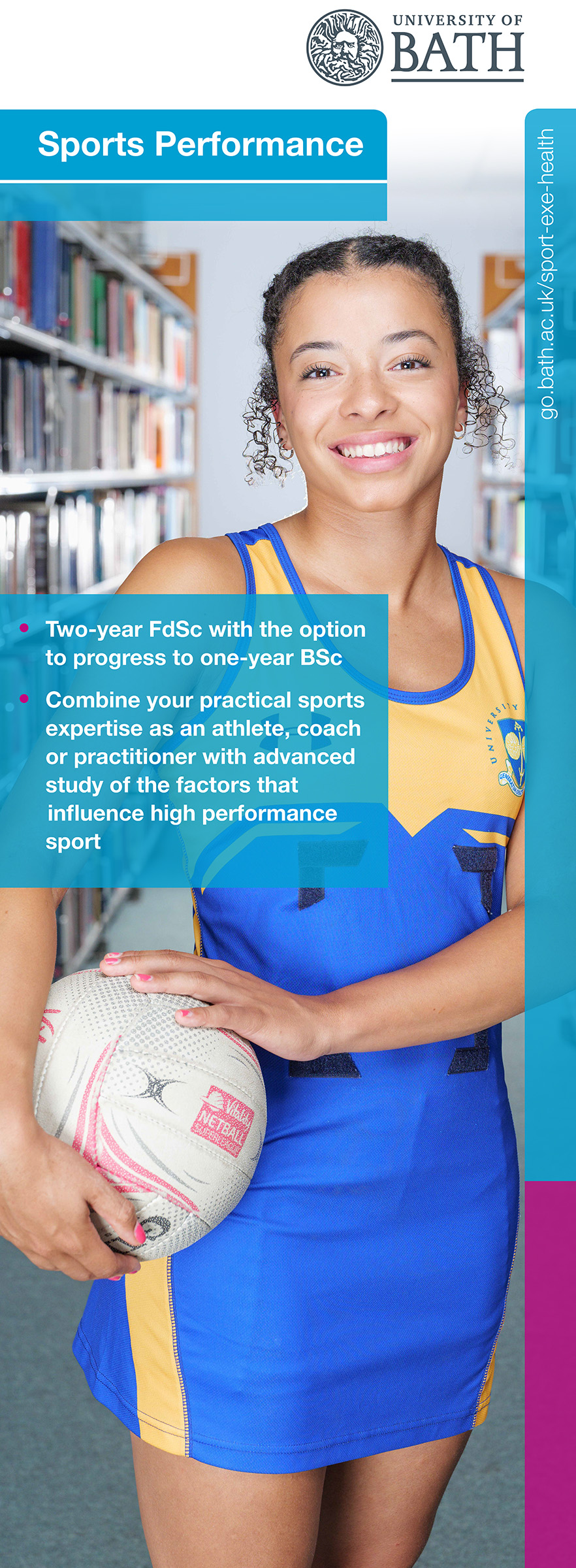
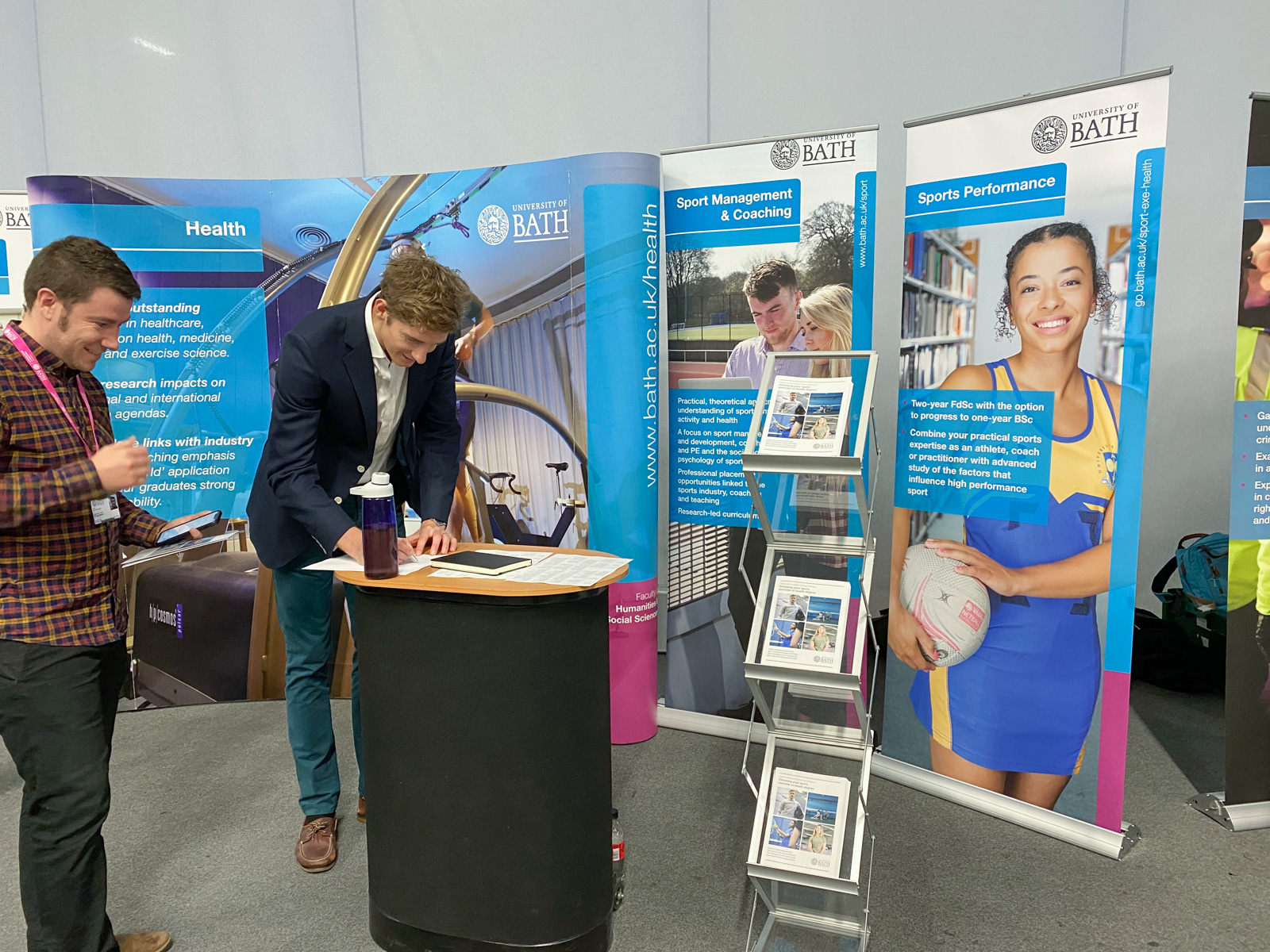
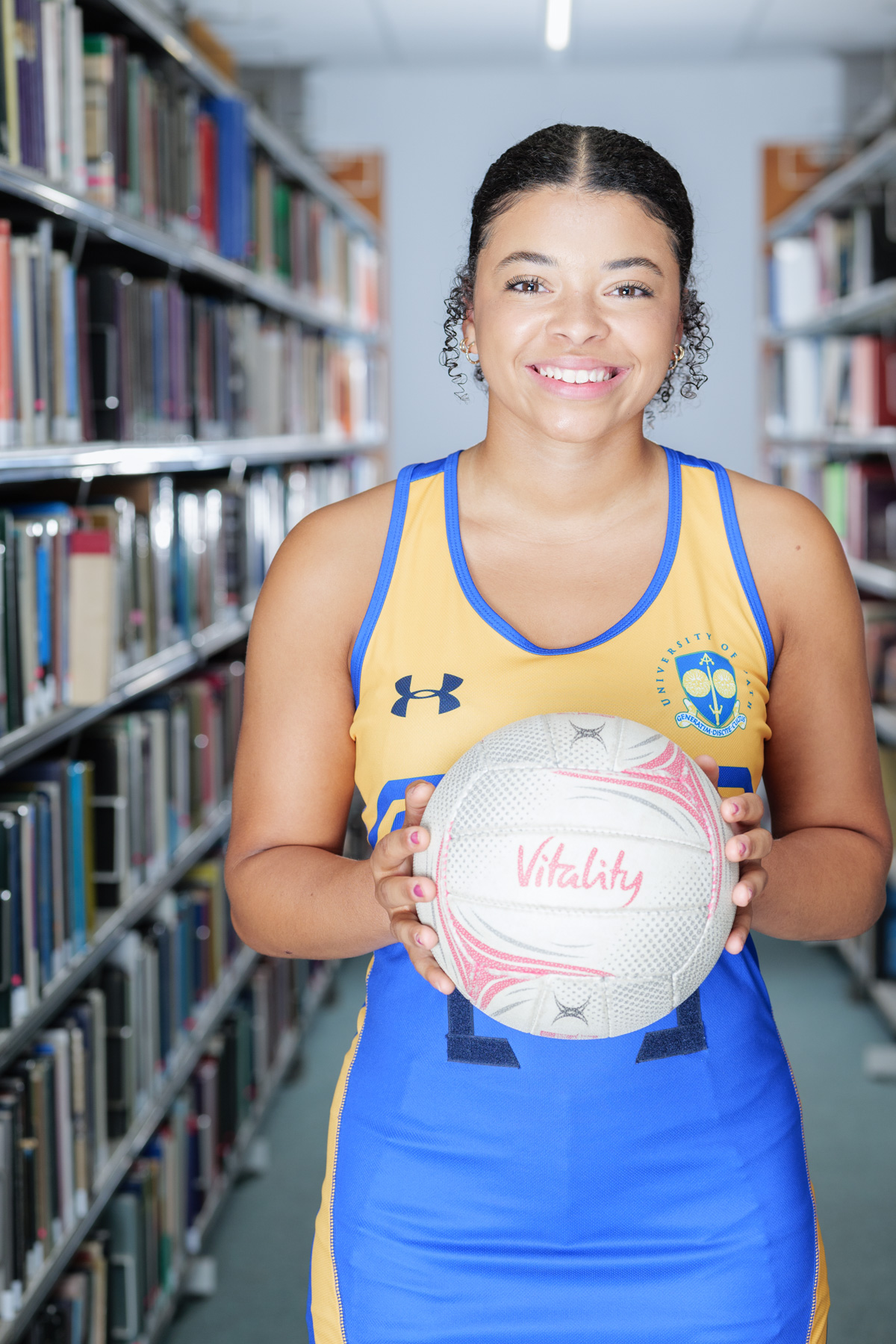
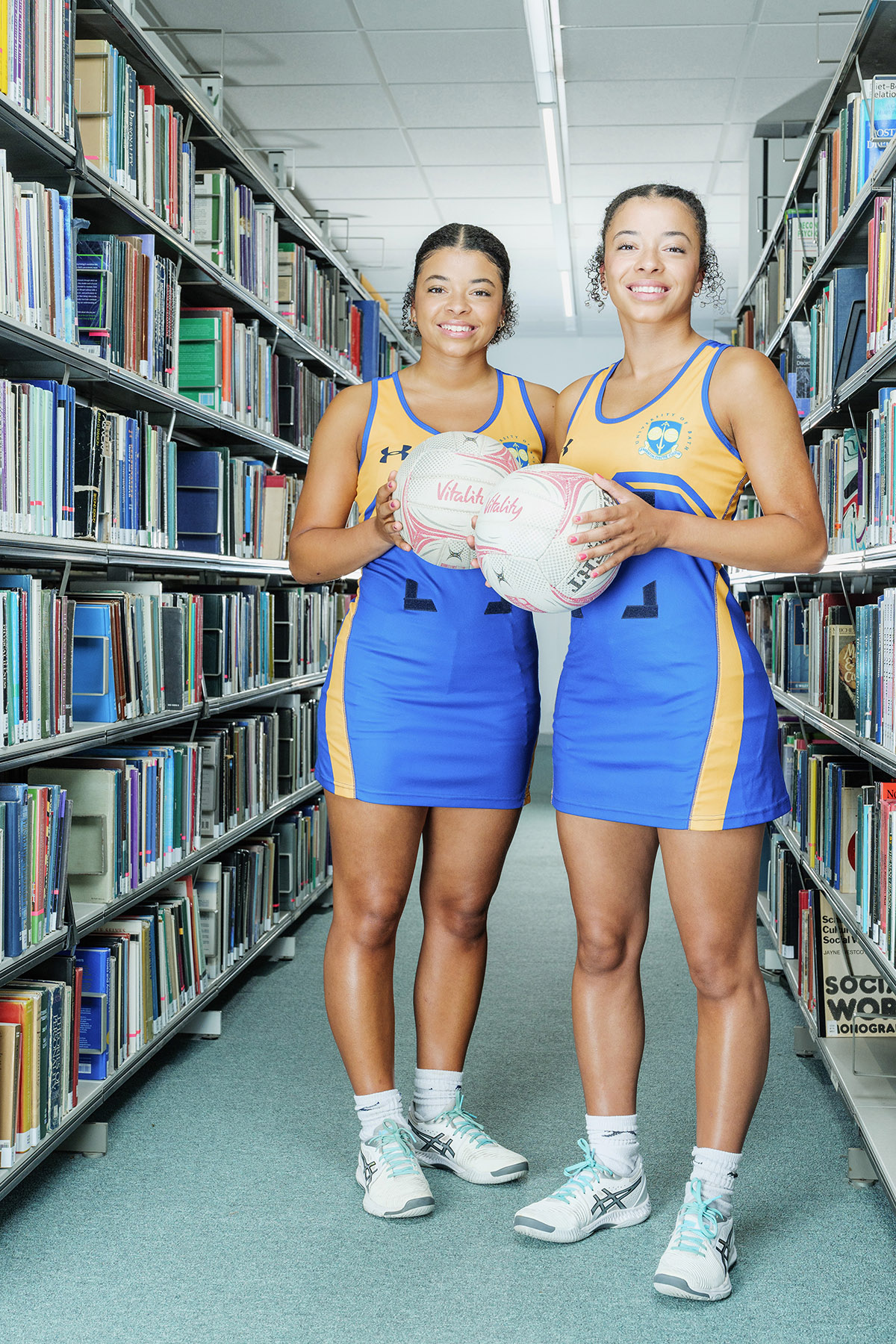
A good illustration of what I’m talking about is the recent shoot I undertook for University of Bath’s Faculty of Humanities and Social Sciences. They needed a new image for their Sports Performance course pop-up banner which was needed for the university open day on September 10th. It wasn’t a massively tight deadline, but things had to move apace to get the image to the designer in good time.

The concept was to have a student in sports kit with a library scene behind. I’d shot something similar back in 2013, but where on that occasion I photographed the student against a plain backdrop so they could be cut out and placed against a library shot (literally a library shot of the library), on this occasion we decided to get the whole image done in-camera.

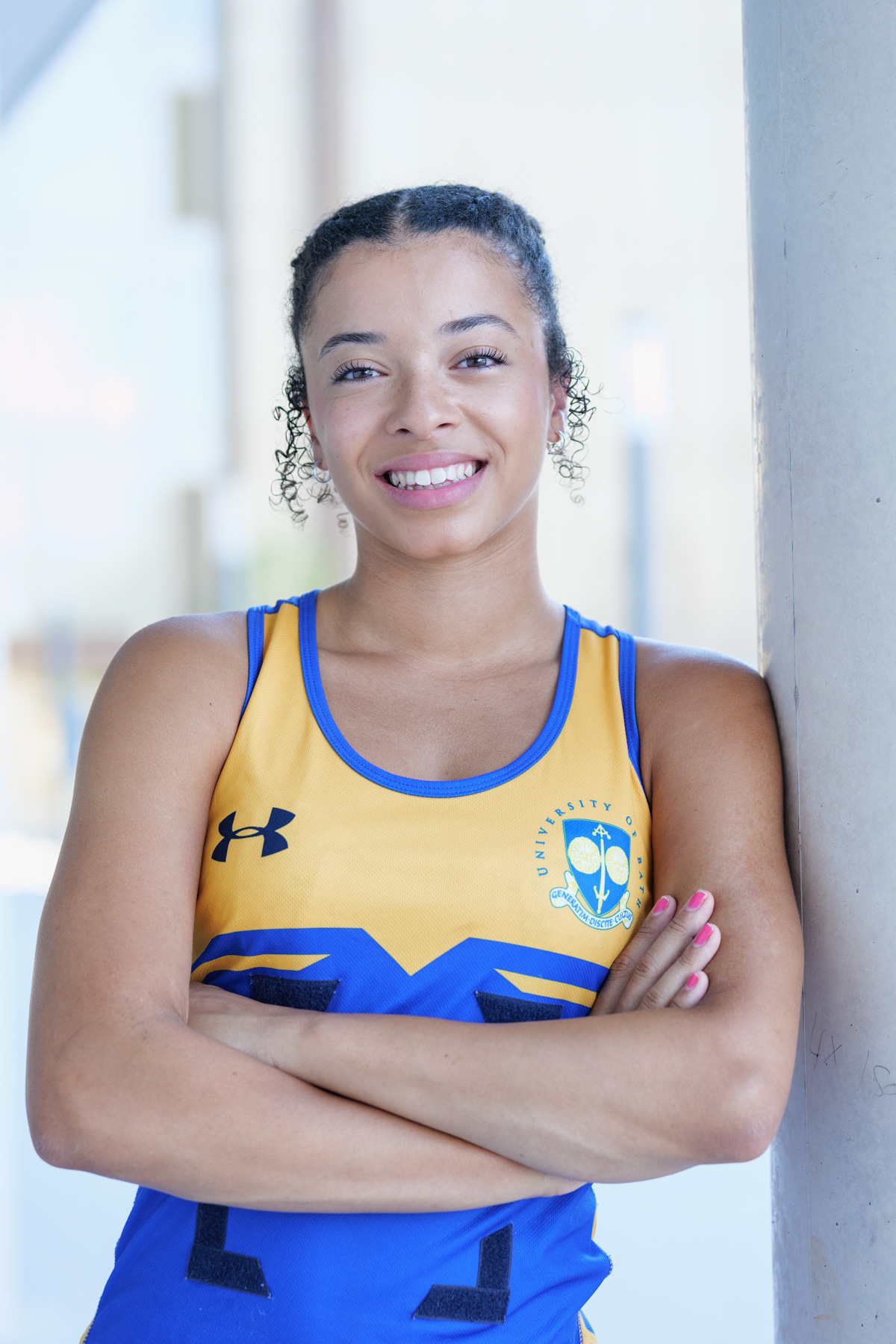
Twin netball players Jasmine and Jemma Nightingale very kindly volunteered to model and we set the shoot up on the 4th floor of the university library. It had the benefit of being relatively quiet, so I wouldn’t disturb too many students, and it just happened to have the right aisle configuration to work. It’s amazing how many aisles just weren’t right. Too narrow, a pillar, a window on the back wall, not “library-ish” enough; I eventually found one aisle I could work with.

I set up portable studio lighting to get full-length, even light on the sitter (I shot mostly individuals of Jemma and Jasmine). Even this was quite awkward because there wasn’t much floor space for lighting stands, and I also had to set up lights behind the sitter to lift the background so it didn’t look gloomy.

There were overhead strip LED lights in the ceiling which also needed to be on, but they were motion-sensor controlled. Every now and then I’d have to jog down the aisle to make the lights come back on. I certainly got my steps in that day!

Of course I forgot to do the BTS shot (I’ll remember one day!), so I can only show you the end result.

But the location worked well. I made pictures with each student individually and a few of them together. The latter didn’t work so well for the tight upright format, but did make good alternative shots the university can use in other ways.

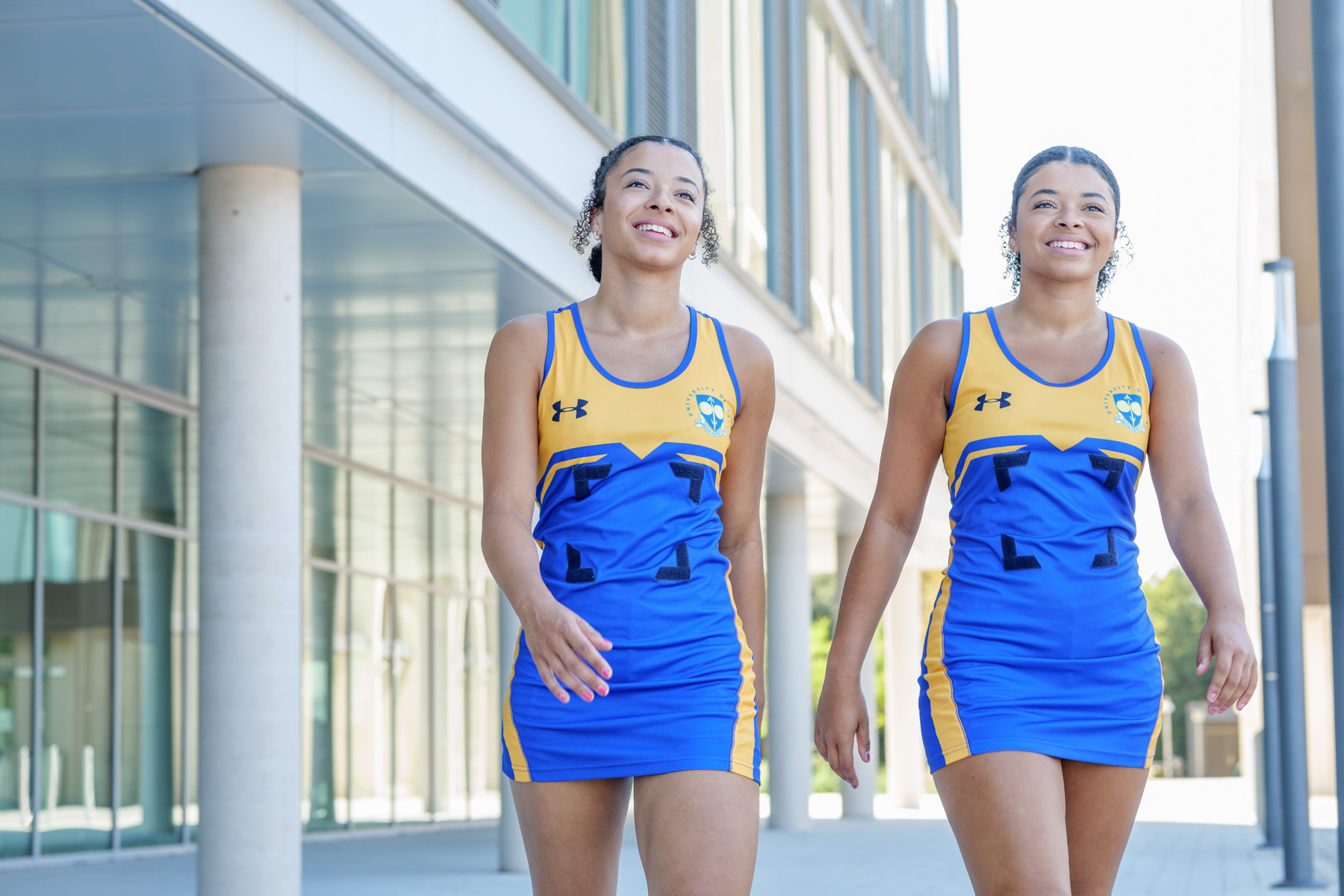
Once I was happy we had what we needed, I packed down the kit and we headed outside for a few alternative shots, again mainly for other uses.

Among my favourite shots from that session is the one of Jasmine and Jemma walking through the scene – their confident smiles and purposeful strides set against a modern University of Bath building (it happens to be the School of Management) make this a multi-purpose image that will sit well in either a web or print design.

One other technical aspect I brought into play was Lightroom’s new Enhance feature. Using AI, Lightroom can double the resolution of the camera’s native image. In the case of the pop-up stand image, that meant I could supply a file which was now 12,000 pixels on the longest side rather than 6,000, giving the designer a greater quality print out on the finished display.

Thanks to Sophia who sent me the photo of the stand in-situ on the open day, and I have to say I’m really pleased with how well the image works in the design, how it really ‘pops’ and catches the eye.

This kind of project is a creative and technical challenge, but with pre-shoot planning, adaptability on the day and careful treatment of the image files afterwards, it all comes together for a really satisfying result.

If you’re looking to have images taken for potential use in exhibition materials, bear in mind that they may need to be taken specifically for the format you’re working in. Stock images probably won’t be high-enough resolution (and will be too generic anyway), so feel free to drop me a line to discuss your needs and ideas to ensure you’re getting the best for your project.

Buckle Up! It’s going to get rough (again)

The previous 15 years has been a tough time for many, myself included, so what will this coming recession mean and what can I do to help your business?

The short answer to either of those questions could be ‘not a lot’, but I think there are ways we can coordinate our approach and help each other. Here’s a broad outline of my plans as we head into choppy waters.

In the wake of the pandemic, I set up a Startups Exclusive package. Aimed at those starting up new businesses, perhaps as a result of being made redundant or deciding on a career change after being furloughed, this is my most competitive package and is a gesture to help individuals or teams of up to three to get their branding images in the bag. It is limited to genuine startups though, so please don’t try to book this if you’re an established business 🙂

Since the fallout of the pandemic is still with us, compounded by Putin’s nasty little war, it seems fair to keep this package going for the foreseeable future.

The other way I can help your business communicate with your audience is through video work.

Now I’m not going to pretend video is cheap. Cheap video is cheap, but that doesn’t work for most professional businesses. Even the YouTube and Instagram influencer crowd has had to up their game, but good quality video, the kind you’d want representing your brand, has become far more accessible than it used to be.

With sensible pre-production planning, a day’s video shoot can often be edited a number of ways to suit different platforms and target specific audiences. It requires close collaboration and good communication to get the most out of a video session, but the results achievable with relatively modest outlay can be far better polished than anything a solo photographer could offer just a few years ago.

To help clients save valuable marketing budget, I’m very open with clients about what I can do for them in terms of video. Before there’s any commitment between us, I’m happy to discuss an outline brief with you. If your project requires a crew or production company, I’ll tell you I’m not the solution you need. You’ll either have to increase your budget and find the right supplier, or trim your expectations to match your available budget.

If what you want is office B roll (a flavour of your team, culture and working environment, for example), that I can do. I can undertake interview projects, short promo videos – it basically comes down to what you require and what resources will be needed to achieve that.

Ultimately, where this helps businesses is they can now access a quality of video they simply couldn’t raise budget for previously, and video has definitely become more important in corporate communications than ever it was previously.

Underpinning the services I offer, I’ve always believed that communication, coordination and flexibility are the best routes to success. I’ve been freelance for almost 25 years now, and in that time I’ve seen clients flourish and I’ve seen clients fail.

Thankfully far more have flourished than have failed, but I can honestly say that the failures were always the ones least open to communication with me, least willing to take advice on how best to make a project work and a realistic view of the resources required. I was simply a tool for the task, rather than a collaborator in their project.

It will have been a wider, embedded corporate culture which lead to this failure for sure, but if you’re open to communicating, being realistic about what it costs to achieve your goals and can be flexible to adapt to changing needs, we can help each other.

The one thing to keep in mind is that I want you and your business to succeed, even through the toughest times. If we can achieve that, just think what we can achieve in calmer waters!

If any of this chimes with you, why not drop me a line? It’d be great to hear from you.

A Shot In The Arm for Vaccinations

Just as I thought things were getting quieter for August, last week went from just one photography job on the diary to four. Three were last-minute requests, but all were welcome. All of them were thoroughly enjoyable.

Off to the Races!

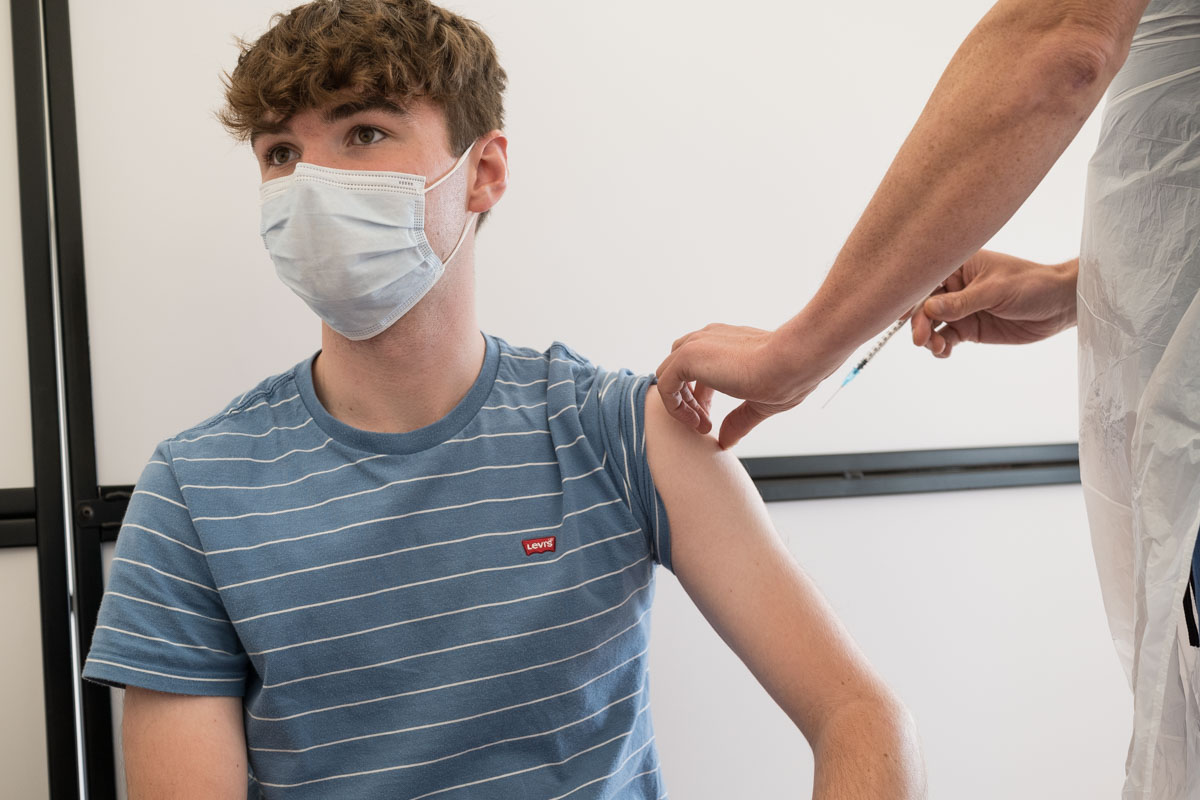
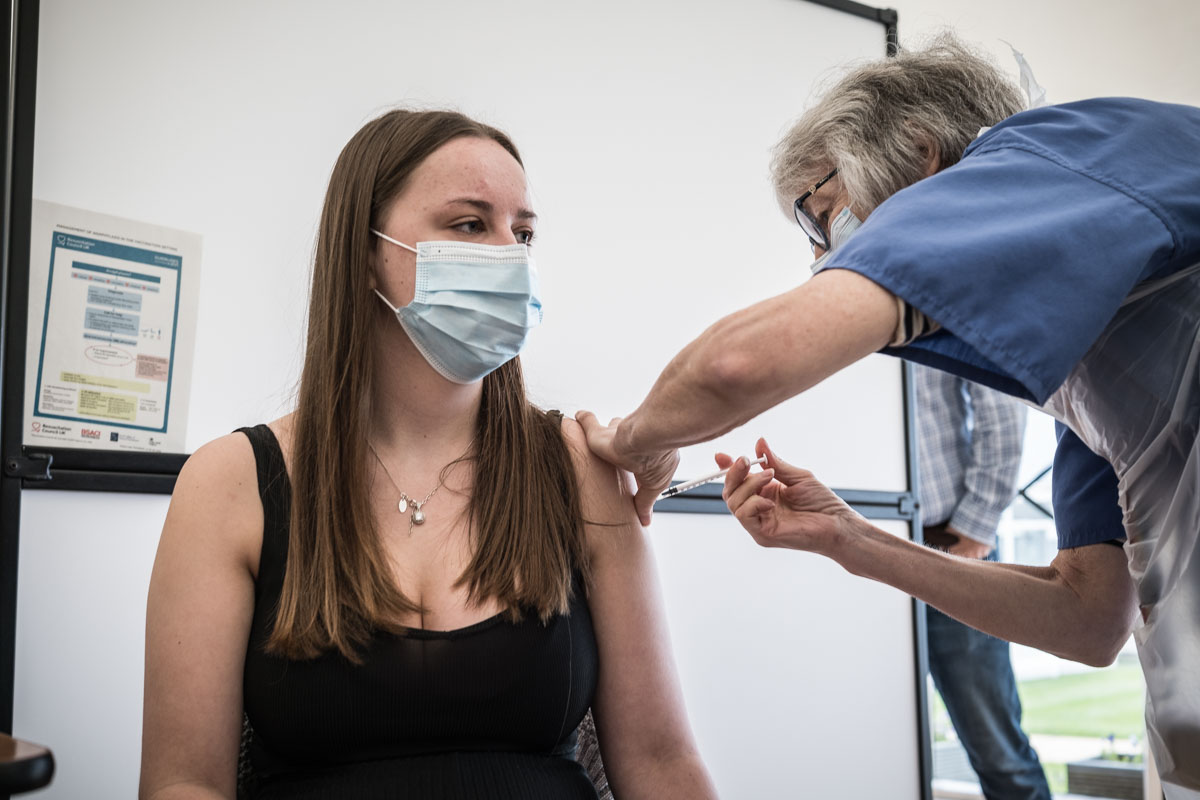
The photo session I’m featuring here took place on Thursday when I was asked to make a series of images to promote Covid vaccination amongst the younger population.

16 to 25-year olds have been called forward by the catchily titled NHS BANES, Swindon & Wiltshire CCG to have their vaccinations at Bath Racecourse and I was asked to create a set of images showing the journey through the vaccination process.

I’ll only feature the two images which have already been used in the Twitter campaign so far, but the set came to almost 90 images, more of which I’m sure will be published in the future and across multiple media.

The Look and the Flow

A couple of critical factors helped keep this set tight; avoiding holding anyone up and ensuring only those who’d granted permission were included in the photos. This is a delicate area requiring care and diplomacy. The bull-in-a-china-shop approach isn’t my style anyway, and wouldn’t have got me anywhere.

But working nimble and alert and using a simple set-up all helped give the set a certain look. All the shots were taken using available light and the majority were taken on a single, fixed lens (as were the two images here).

In fact using just one fixed lens also helped keep the set unified, and this helps the story to flow. It’s a technique I use whenever possible, and certainly on anything requiring a photo-documentary approach.

Photography with a Purpose

I would have loved to have documented more of the covid crisis right from the start, but without a media outlet or a client commission, it would have been a reckless exercise. I’m pleased I got this opportunity, and though it was brief (and intense!) I can at least hope that my images will help encourage a younger cohort to step up for their jabs.

For the very latest information regarding Covid, please visit NHS.org.

I’ll Make These b****y Pictures Move!

There is a vague recollection in the furthest reaches of my mind of my dad making a joke about “moving pictures” while shaking a photo up and down in his hand. It involved the “b” word and was very funny. You had to be there.

Which brings me in the clunkiest way possible to the announcement that I have added moving pictures to my suite of client services. They’ll even have sound! And they’ll be in glorious colour (actually, black and white is also an option, but let’s not get ahead of ourselves).

Yes, lockdown has given me the opportunity to learn a huge amount about shooting video, recording sound and using editing software to bring it all together. I’m not going to pretend I’m the next Martin Scorsese, I still have much to learn, but I’ve used the time to get the basics nailed down.

My focus will be on corporate testimonials, talking heads and interview pieces, giving businesses the material they need to keep putting fresh material out on social media. I think video is well suited to this kind of use and will help my clients communicate more effectively than they might with just a text-based blog.

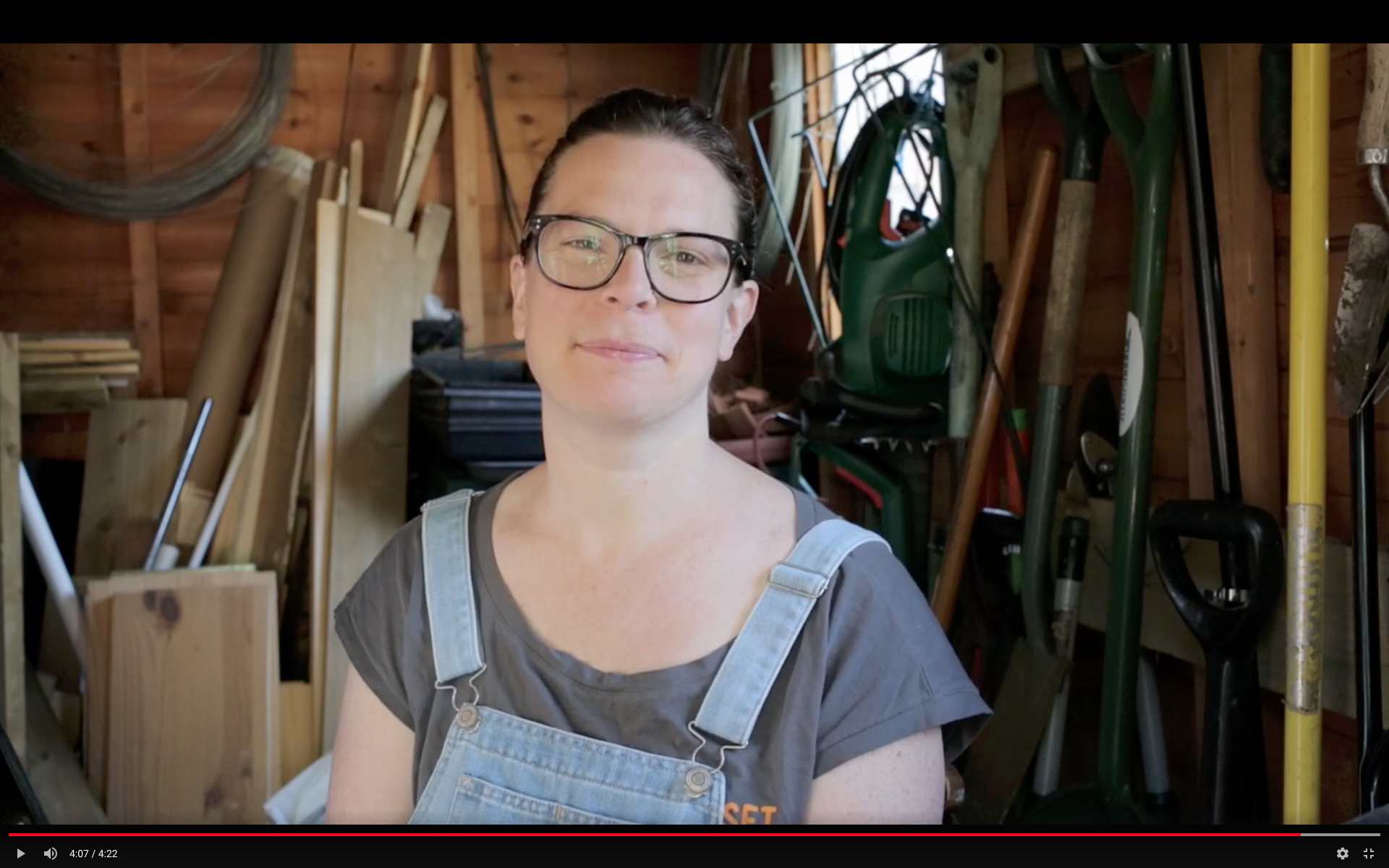
To give myself material with which to practice camera settings, focus, exposure, colour balance, sound recording, editing, and so on, I shot a short film at home using the best model I could find in my house (my wife). She did a fantastic job, and while the result is probably not what you would call corporate style, it demonstrates much of what I’ve learned in this exercise. You can see the film here.

The result is just over 4 minutes long and it’s entitled A SHEDx Talk with Dr Helen Roberts. I hope you get a few minutes to watch it, because the feedback I’ve had so far has been that it is calming, soothing and inspiring!


Slave to the Algorithm

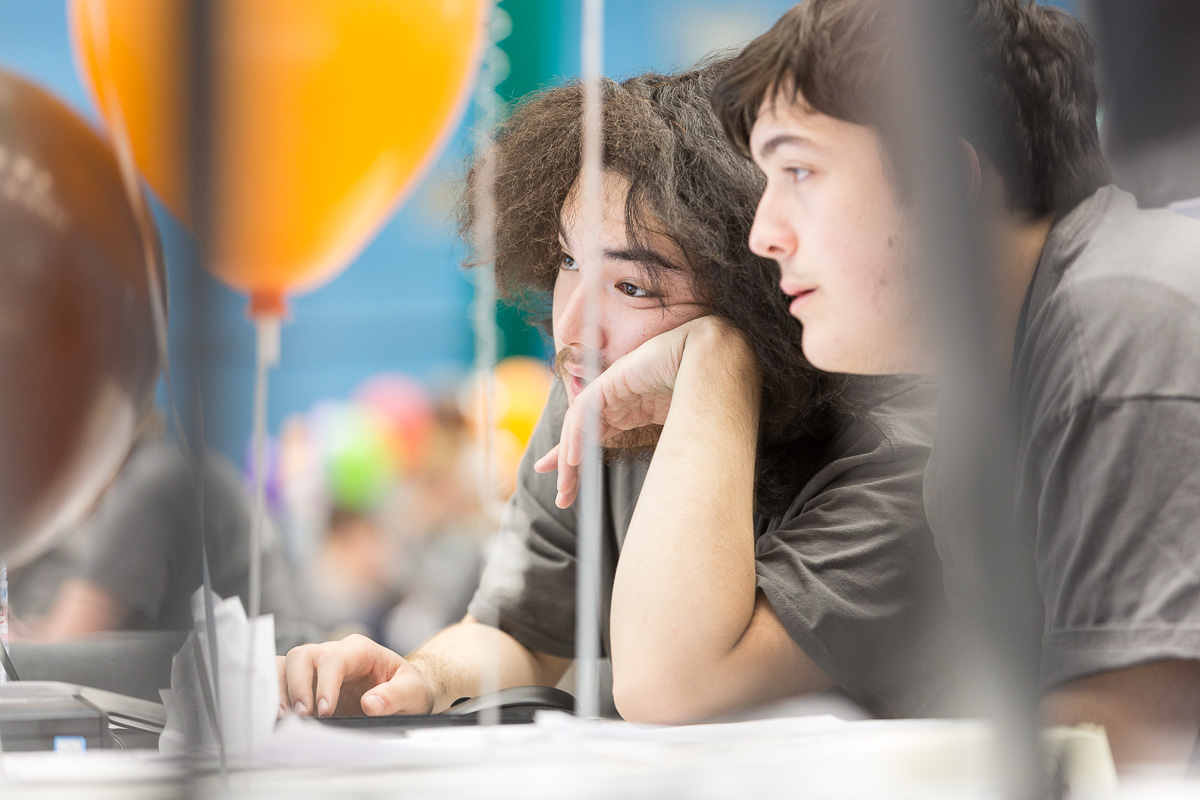
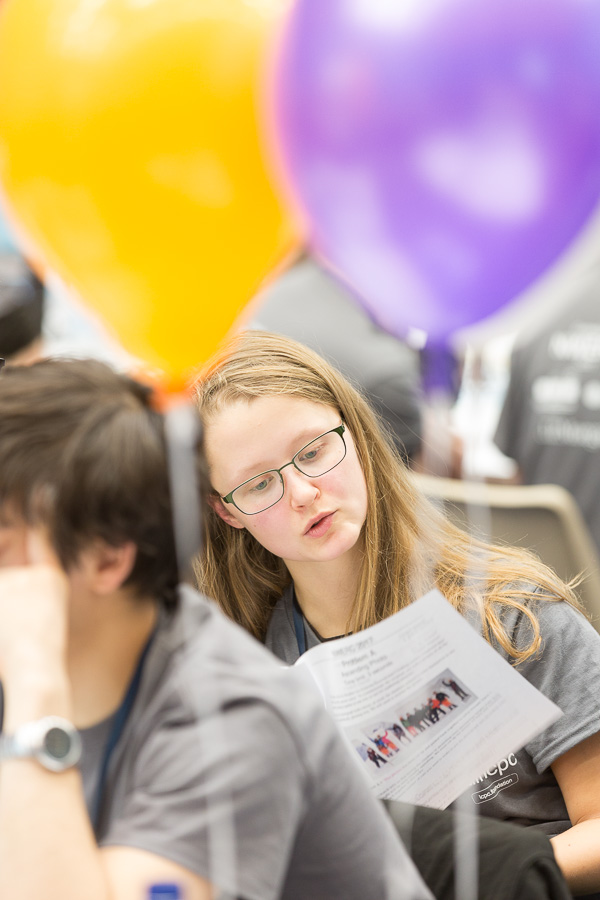
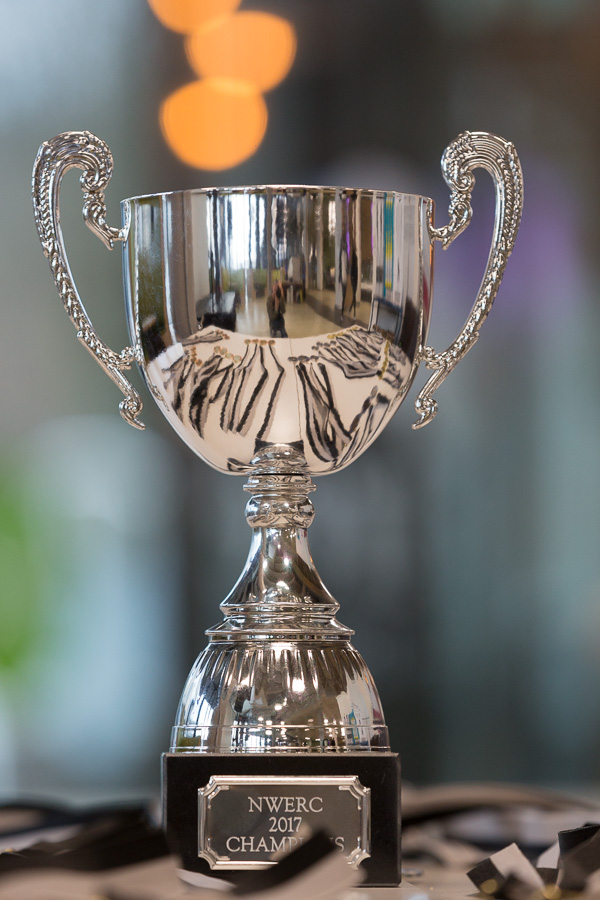
Photographing events doesn’t get more funner (new word) than when I’m left to get on and be a fly on the wall, and the NWERC is a fine example of an event packed with opportunities for any keen-eyed, camera-toting fly.

Now, rather than me trying to specify the essence of the event, and getting it horribly mangled, how about I let the event speak for itself. From the NWERC website,

“The Northwestern Europe Regional Contest (NWERC) is a contest in which teams from universities all over the Northwestern part of Europe are served a series of algorithmic problems. The goal of each team is to solve as many problems as possible within the 5 hour time limit.”

Got it? Good, but what’s my role in the event? Well obviously to generate photos which can be used by the event organisers, host and participating universities in order to generate publicity for future years’ events.

My main task is to capture the runners-up and winning team as they take to the stage once all the scores are in, which is all good fun in and of itself, but the bit I really enjoy is when I’m roaming the hall during the last hour or so of the coding time.

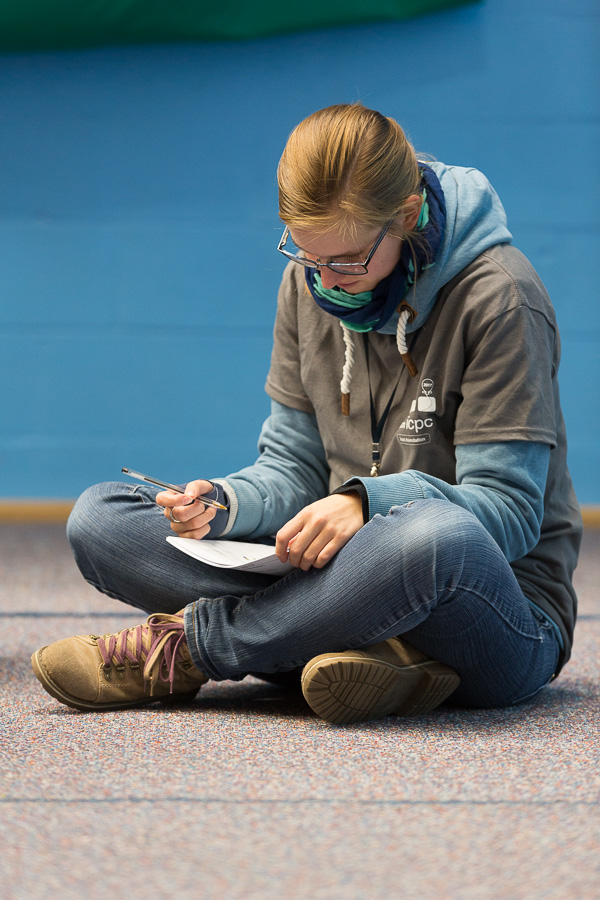
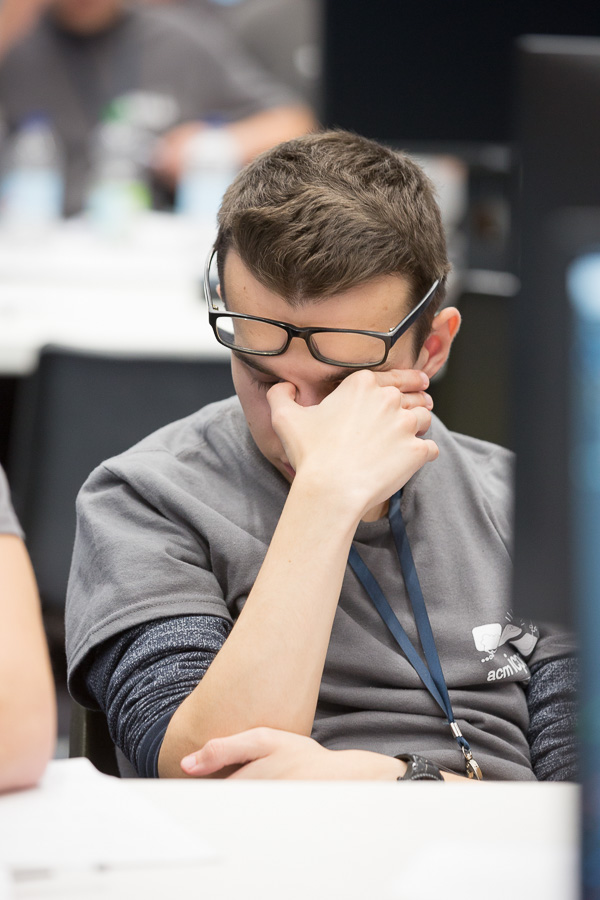
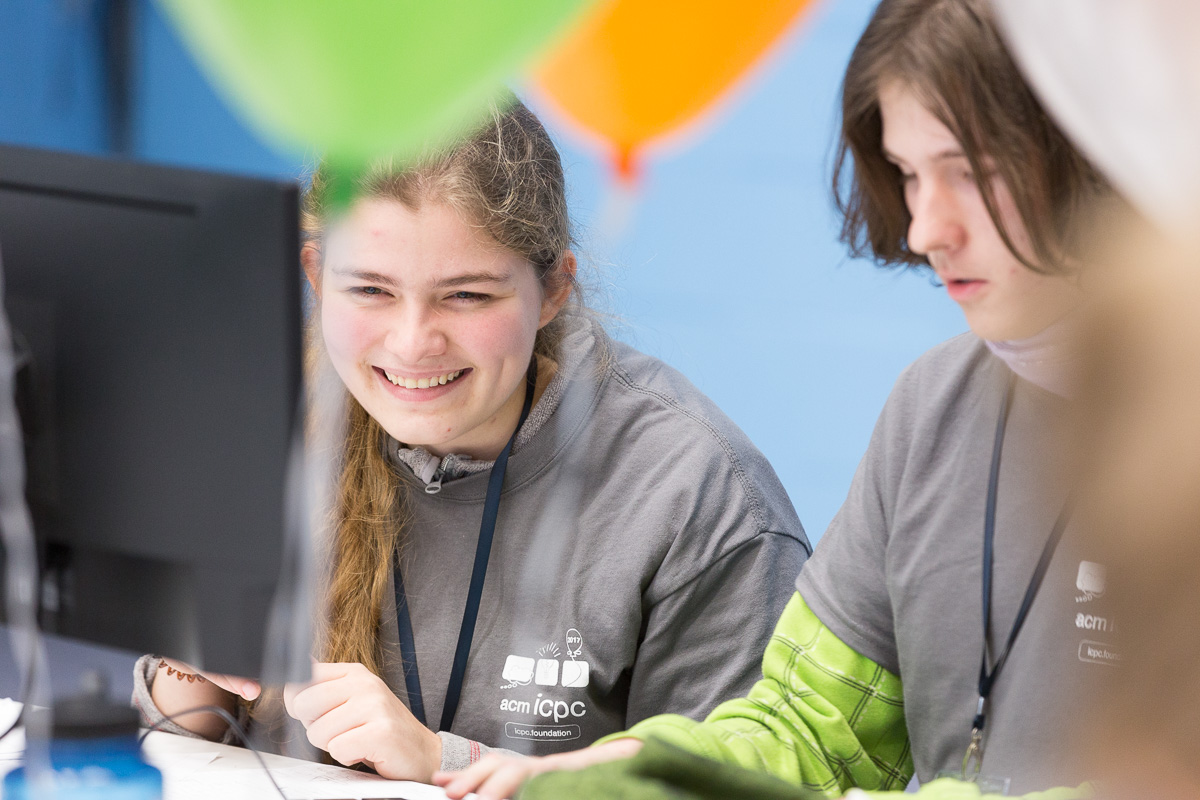
That’s when the teams are either at their most ecstatic or at their wits end. Last November’s event was the second year running I got the commission, so I knew what to expect and where to go for the best images.

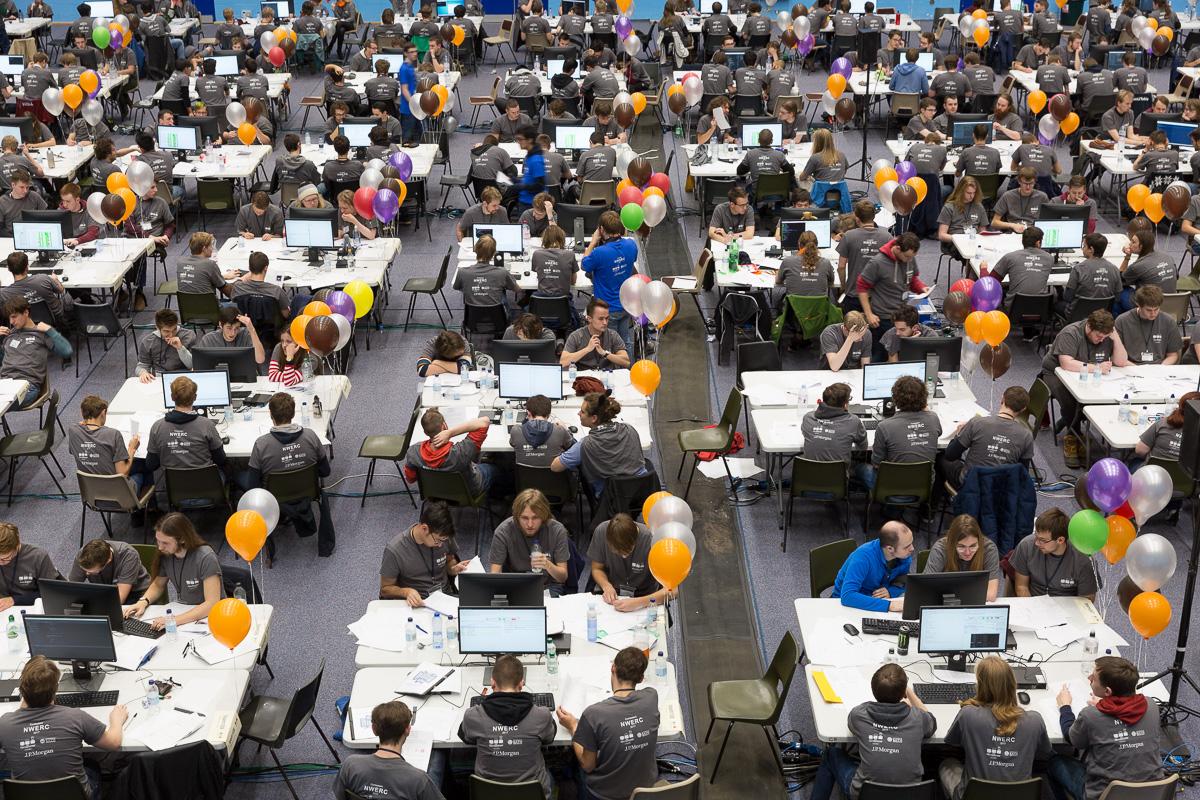
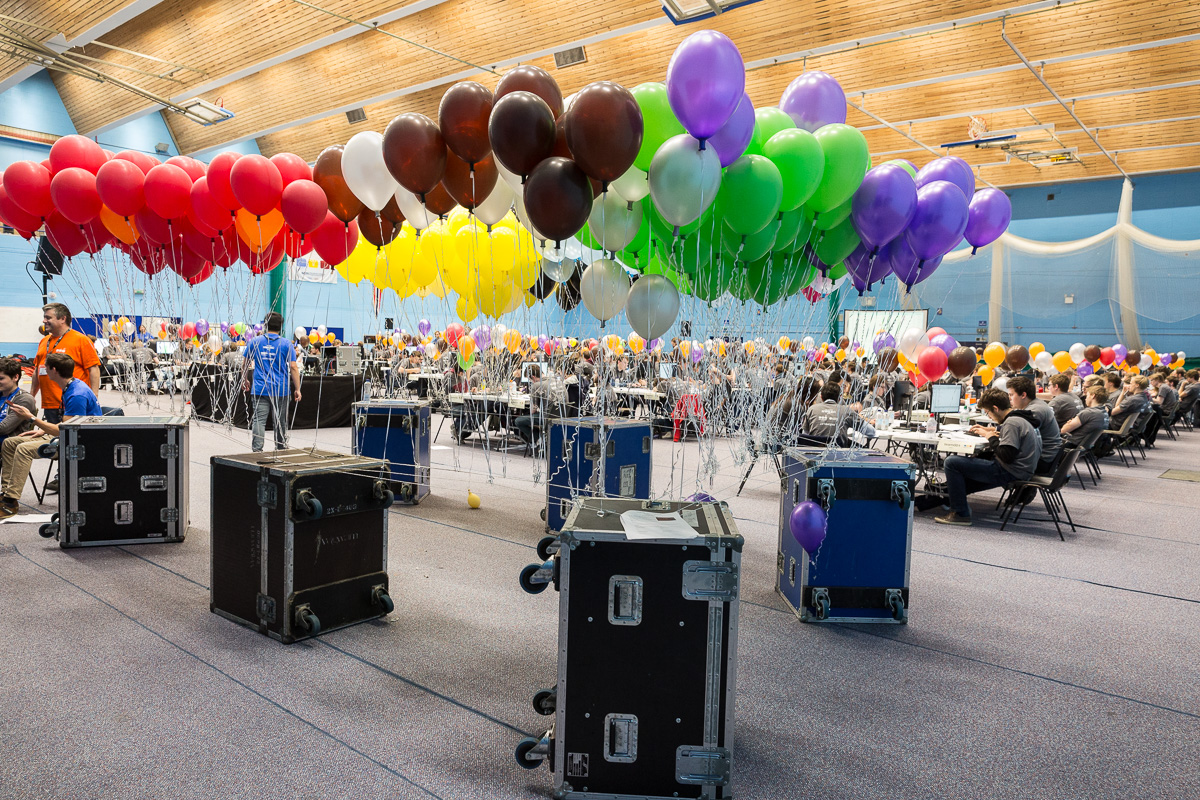
Starting with a fairly spectacular scene showing the sports hall packed with aching brains, I then made my way to ground level to get in amongst the coders and record the triumphs and tragedies as they waged war with algorithmic problems.

And if you’re wondering what’s with all the balloons, a team would receive one each time the automated scoring system detected they’d cracked a problem. You can imagine the pressure of seeing other teams amassing more balloonage (another new word) than yours. I thought some of the teams were ready to float off!

Sadly for me the event isn’t happening in Bath this year, but it may return another year. If it does, I’ll be ready and waiting to get my wings buzzing and my segmented eyes trained back on the subject. As long as I don’t go completely Geoff Golblum, I’ll enjoy being a fly on the wall once again.

2017 In Review

In keeping with a tradition which stretches back oh, at least some years now, it’s time for me to review my year in pictures. I hope you enjoy the brief selection of photos in the gallery below.

Actually, what an incredible year it’s been! I’m not sure I’ve ever had such a busy year since I went freelance 19 years ago, so I’m looking forward to 2018 more in anticipation than trepidation.

January was a total whirlwind as the Faces of Routes project went from conception to launch in less than five weeks. The reaction from Frome people and beyond was stunning (and I don’t often use that word) and the Routes service was saved for another few years. In an ideal world, this service would be centrally funded, but for now it relies on donations and grants.

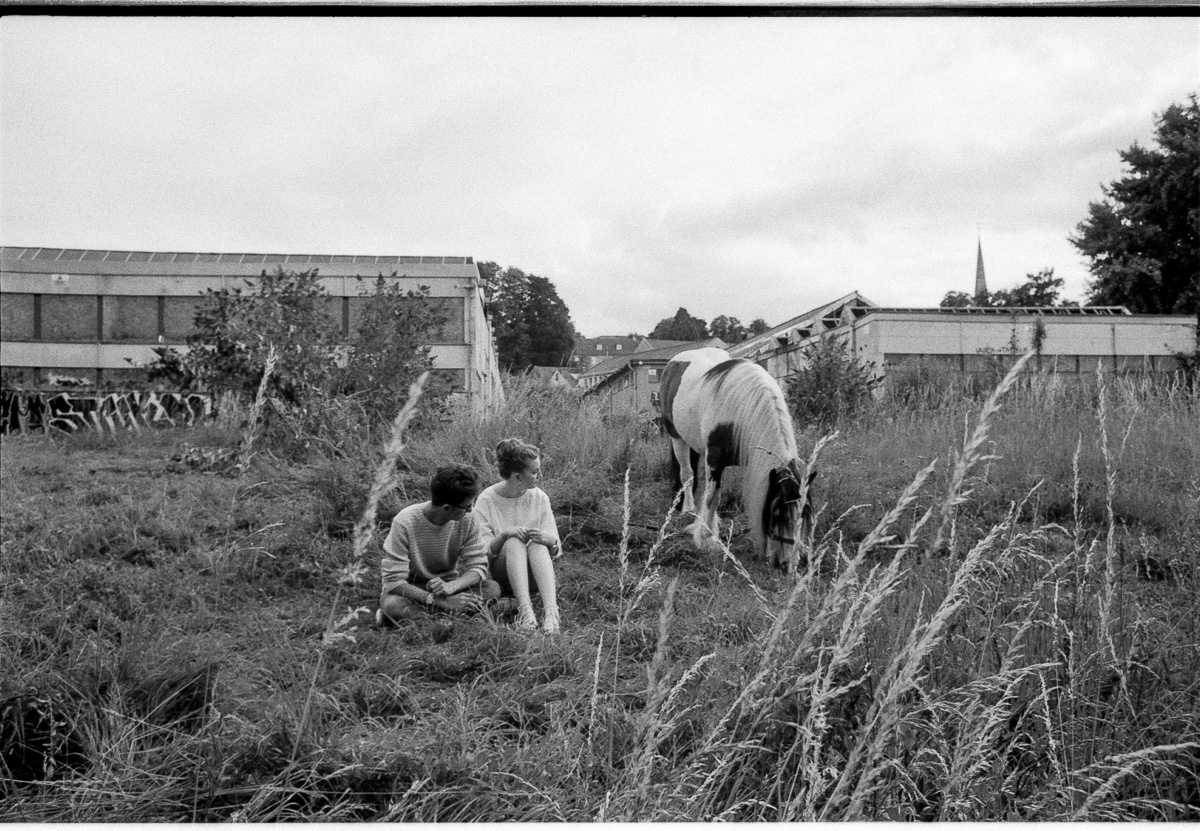
The Routes project largely came about because I was itching to do a personal project with a bigger purpose, but it also gave me the boot up the backside I needed to spur me on to undertake more personal projects generally. So it was good timing when a neighbour offered me his old medium format camera and lenses at a very reasonable price.

I’d been meddling with film again in a lighthearted way, but finding myself well-equipped with a solid film camera, and having dusted off my old 35mm film equipment, something was starting to take shape.

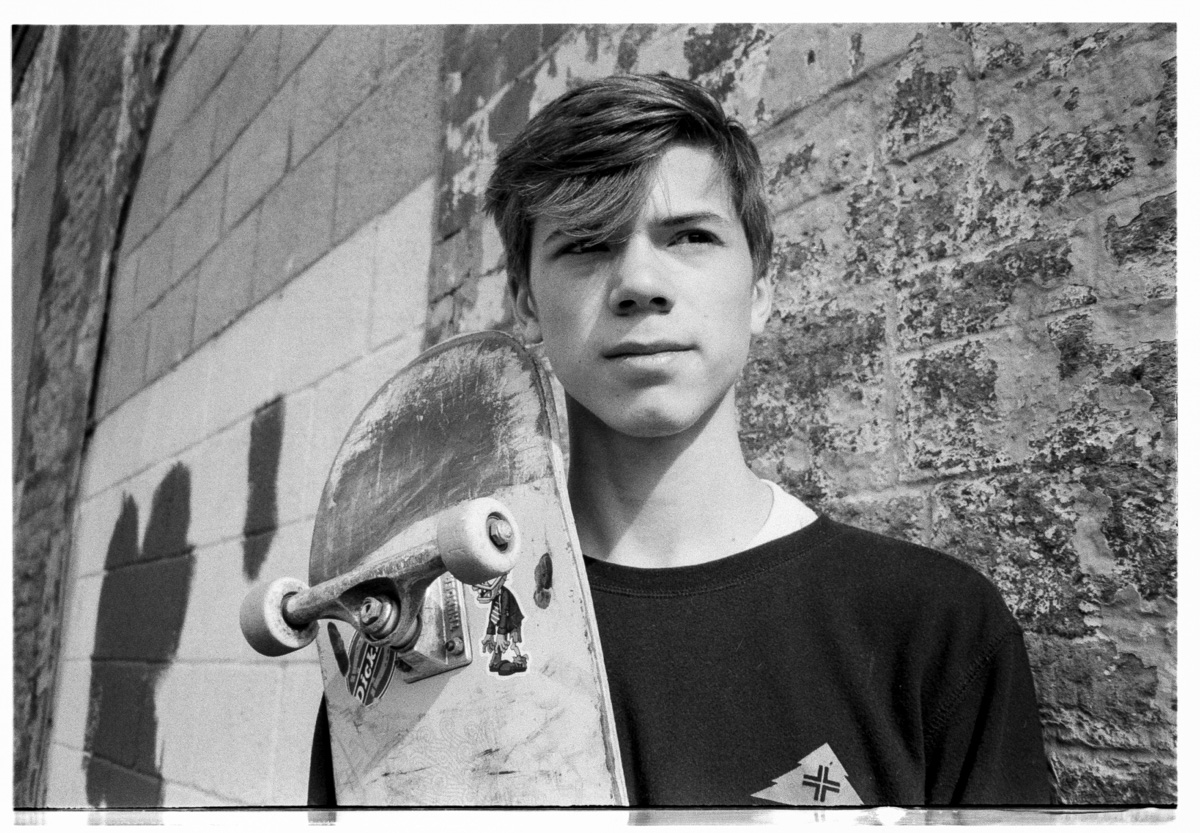
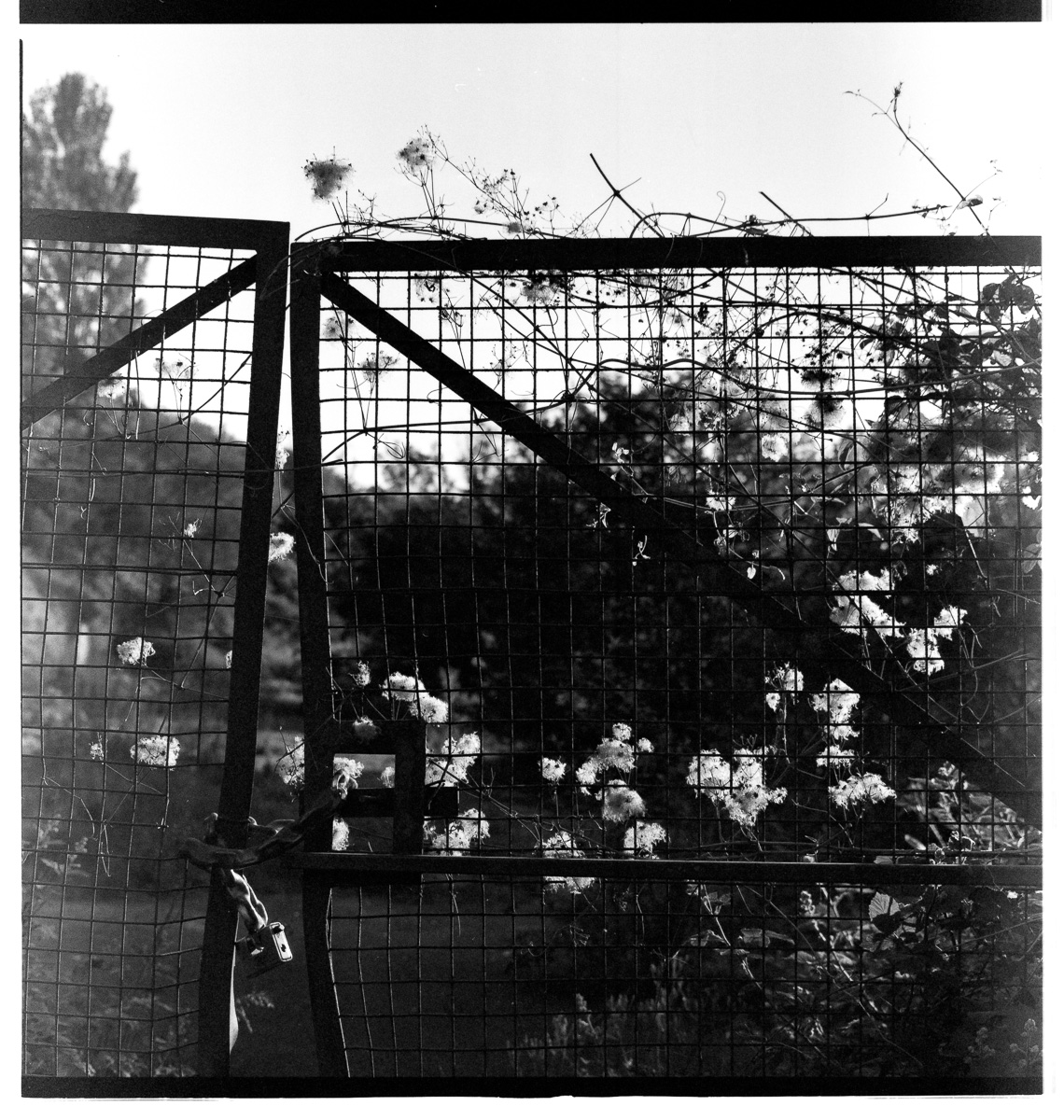
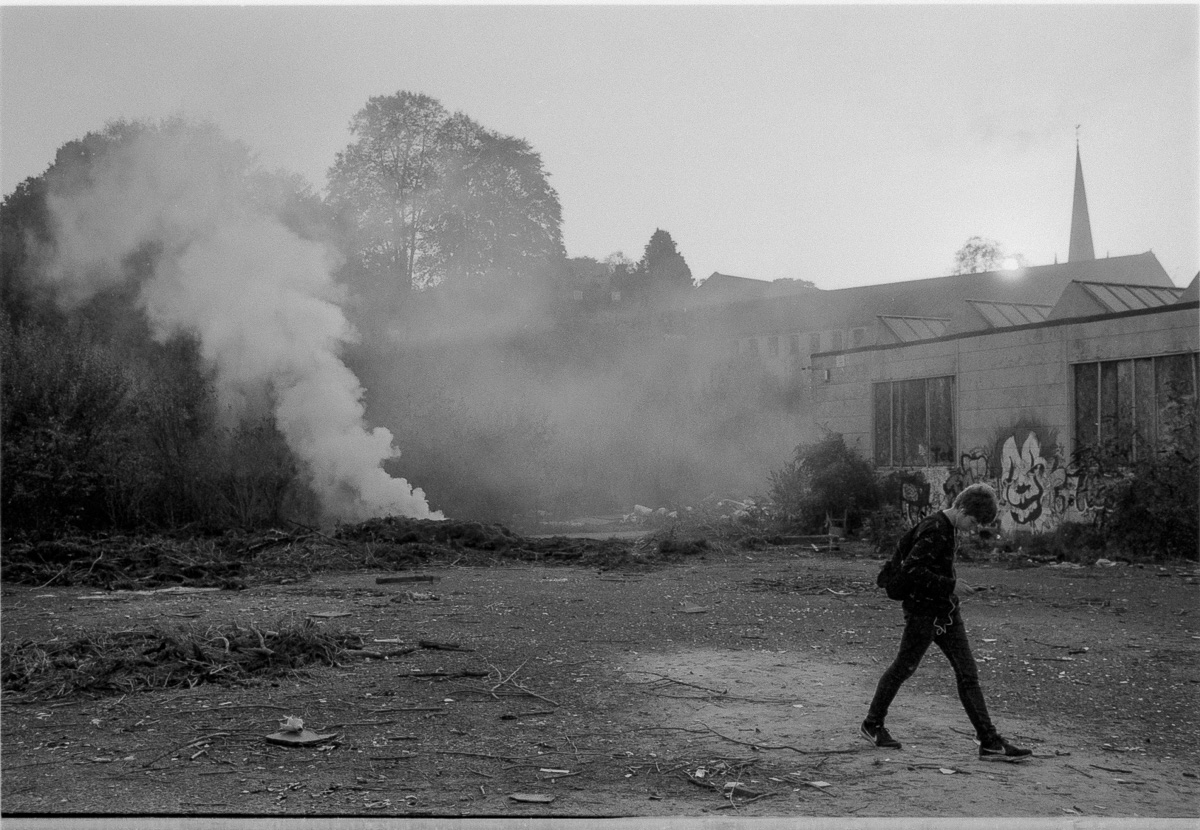
After a couple of false starts, out of some random whim that I can’t now remember having, I acquired a freezer drawer full of expired film of varying types and formats and the Saxonvale project was born. It doesn’t yet have its own gallery in my portfolio, but you can spot some examples in my Personal Favourites section.

So far Saxonvale has largely been an Instagram project, but I’ll add more to my website in time.

Through all this, the paid work has just kept coming; January turned out to be much busier than I would normally have expected. In fact that pattern repeated through the year, including August when my diary would normally have tumbleweed blowing across it.

Now it’s mid December and things are definitely winding down a bit for Christmas, but it’s been another good month. So I’ll leave you with some highlights from the year and take this opportunity to thank you all, clients and casual visitors alike, for all your support through 2017.

I wish everyone a merry Christmas, happy New Year and all the very best for 2018. Oh and this will be my last post this year, see you all in January!


Gimme Some Room!

Much of my business photography consists of taking portraits of, rather predictably, business people. So far so good.

This pretty much always happens at their place of work because that means less disruption to their busy schedule and I can create a set of portraits covering all the colleagues that happen to be in the building that day. Still so far so good.

Where “so far so good” becomes “ummm” is when I’m shown into a meeting room/stationery cupboard which is so crammed with immobile tables and heavy chairs/stationery that I have no space to actually take pictures.

I do make a point of requesting a space roughly 10 foot square, but sometimes the message gets lost or it’s assumed the boardroom table can be moved when I get there. More commonly now, tables are cabled to the floor with telephone and computer wires, which will only stretch so far before they go PING! and the IT department has to be called in.

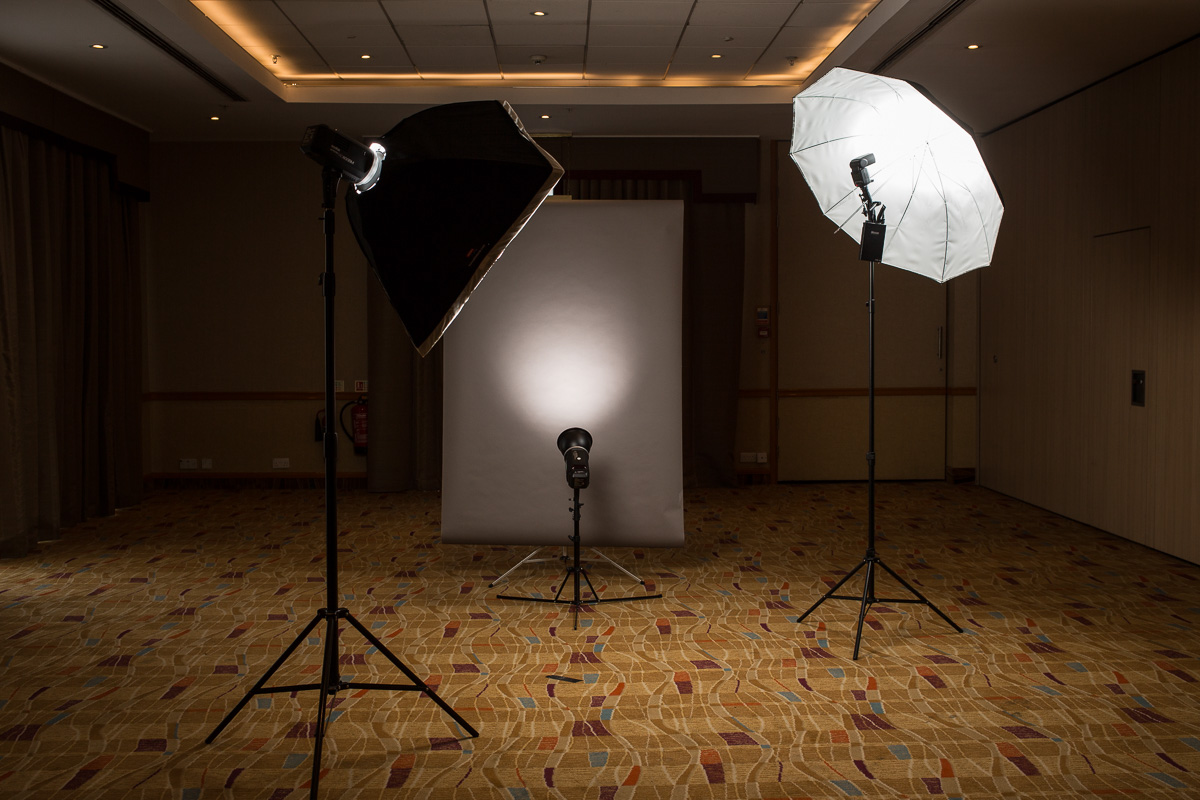
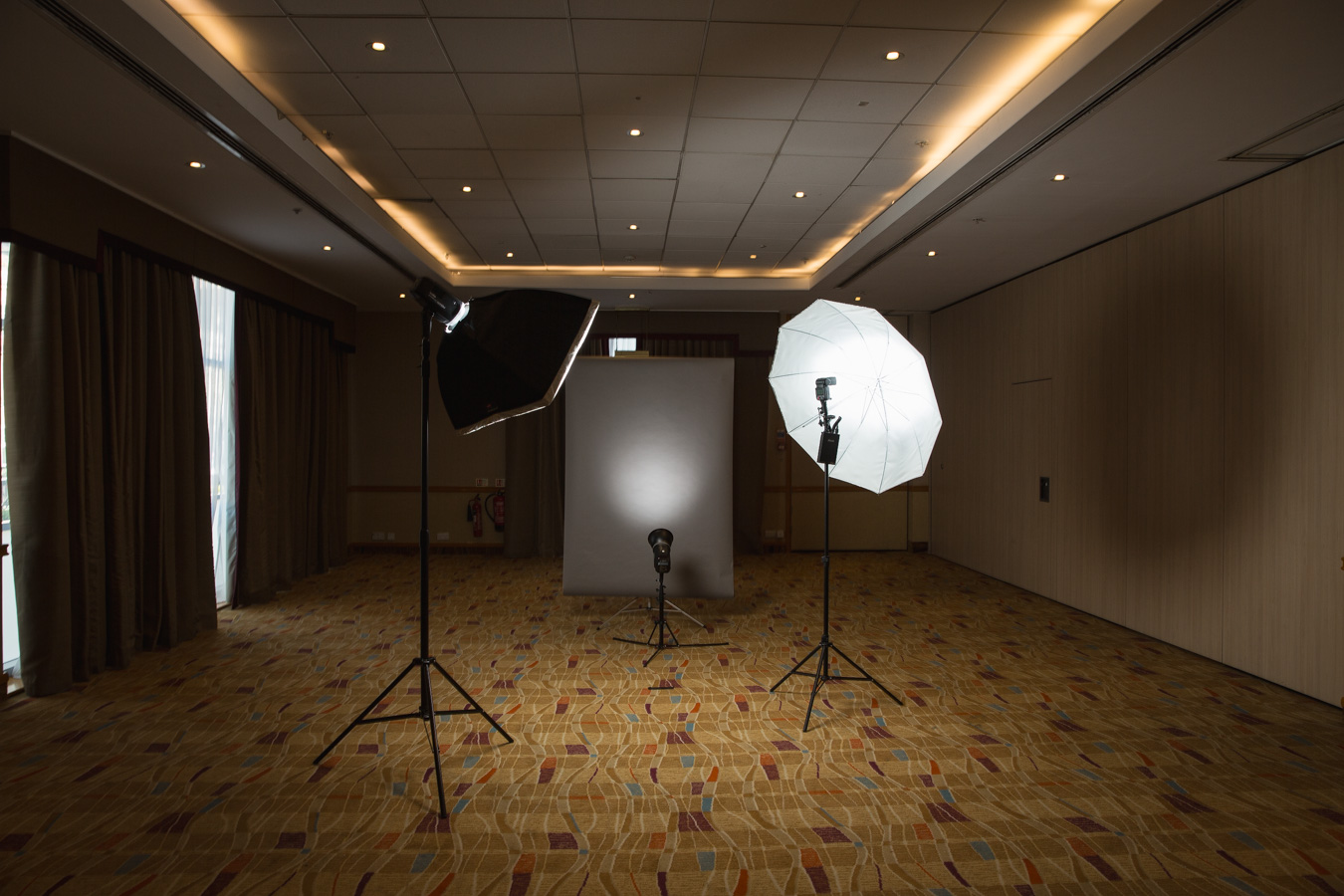
So to say I was utterly delighted with the space I was given this week is an understatement – half a ballroom in a hotel. All to myself, with nothing, and I mean absolutely nothing taking up floor space. In fact I had to pull a small table into the room so I could check off peoples’ names as I went without having to squat on the floor.

A photographer's backdrop and studio flash equipment are set up in a large empty room in the Hilton, Walcot Street, Bath, UK

A great space for portraits

I thoroughly enjoyed setting up my backdrop and lights slap bang in the middle of the space. It gave the whole thing a slightly surreal air and the people who came in to have their photos taken were astonished that the room they’d been assigned for their meeting was so much smaller than the one reserved for me.

Of course the ballroom wouldn’t have worked for them because they needed AV and a projector for their presentations which the ballroom didn’t have, but it did make me feel very special and it also meant I had bags of room to control how the lights lit the backdrop and the sitters. It meant I could work towards a very particular look without too much difficulty.

Ok, not the most exciting tale in the world, and it’s not as if I’ll be dining out on that one ever, but it’s a fine illustration of how giving the photographer ample space to work will not only make their life easier, it’ll also mean they can work to achieve more accurate results in-camera and ensure that so far so good endures right through to “that’s a wrap”.