I’d rather be writing about something else

Here we go YET AGAIN! I’m starting to get just the tiniest bit annoyed* at attempts by government to destroy copyright law while claiming it’s progress.

This time it’s the Intellectual Property Office (IPO) showing a distinct lack of intellect on the issue.

Last time this was tried, back in 2010, we were at the cusp of a new government and the Digital Economy Act was being hammered out in Parliament. The clause of contention for photographers was Clause 43 which would have allowed the use of orphan works (photos whose author could not be traced) without the copyright holder’s permission.

Luckily for us, after intense lobbying by photographers, the Stop43 campaign and others, the Conservatives (then in opposition to the Labour government) agreed to pass the act only if clause 43 was removed.

Now it’s back, but this time it’s even worse and it’s now part of a bill, the Enterprise and Regulatory Reform Bill, which is unrelated to copyright and therefore fewer people are aware of its existence. Even worse, if passed as primary legislation any future changes to the act will be permissible as secondary legislation without the need of a return to Parliament. Didn’t I previously say democracy was being undermined?

Clauses 67-69 effectively strip the automatic right of copyright from anyone who creates a work including photographs. Within those three clauses you lose the right to control your images if they are found on the internet but not easily traceable to you, you lose the right to say whether or not a photo can be used in any given context and you lose the ability to negotiate your own fees should you decide to sell rights in your photo. In addition, the bill extends exceptions to copyright so more people can use your work, including commercially, with no need to ask permission first.

Of course this is a dire situation for photographers whose livelihoods are built on copyright, but it will affect anyone who takes a photo they wish only to be used in limited ways. Amateurs and professionals alike will be affected.

The clauses also ride roughshod over the rights of the subjects within photographs to decide the limits of use of their likeness. It breaches international copyright laws, though apparently the IPO don’t know enough about copyright to understand this. In short, it is an ill-conceived mess reminiscent of reforms to the NHS, education, just about anything ministers decide to change before they’ve properly considered the issues involved.

What professionals and amateurs need to do is lobby their MPs, lobby the Lords and make it clear these clauses do not belong in this bill. Copyright may well need reform, but it’s too big an issue to shuffle past our noses disguised within another bill, and these clauses are not the answer. If the question is how do we stimulate growth in the UK economy, the answer has to be better planned than this.

Further reading and guidance on how you can get involved:

http://thebppa.wordpress.com/2013/02/19/the-copyright-fight/

http://www.stop43.org.uk/ 

*My entry for Understatement of the Year Awards 2013

Horse Meat Found in Cheap Photography

I was listening to Billy Bragg being interviewed on the radio the other day and while he was never one of my favourite artists, he has always made a fair amount of sense. On this occasion he was even good enough to admit his voice was never his strong point. Perhaps the closest we’ll ever get to an apology for his vocal on Between the Wars.

During this interview Billy was talking about the state of the record industry and the difficulty young working-class singers and songwriters face when trying to get a big break because of the way the industry has changed. The interviewer suggested that surely the market would seek out the best talent, regardless of background, to which Bill replied, “You know what happens if we leave it to the market, you get horse meat in your burgers.”

The wider point Mr Bragg was making was that the record industry no longer has a filter in the form of the likes of John Peel who would have plucked an artist from obscurity on the basis of a few good songs regardless of background. Billy believes it’s often the privileged kids from public schools who get the break and as he put it are “clogging up the charts.”

This “class” issue is an interesting one affecting photojournalism, and has lead to a situation where photographers have to self-fund coverage of events, then hope to sell the images to publishers who can force prices down because as they see it the pictures have already been shot and the photographer will be grateful to claw back some of their costs, never mind make a living. Success is now more to do with whether you can fund your shoots rather than pure talent.

I rarely shoot editorial in the purest sense now. Newspapers rarely call me up to shoot assignments for them (my previous post explains where they get pictures from since the collapse of their budgets), though I still shoot PR pictures in a style to suit newspapers. I won’t fund assignments in the hope of selling something later. I do shoot personal projects and if I sell something from those that’s fine, but it’ll be at my own prices and on my own terms.

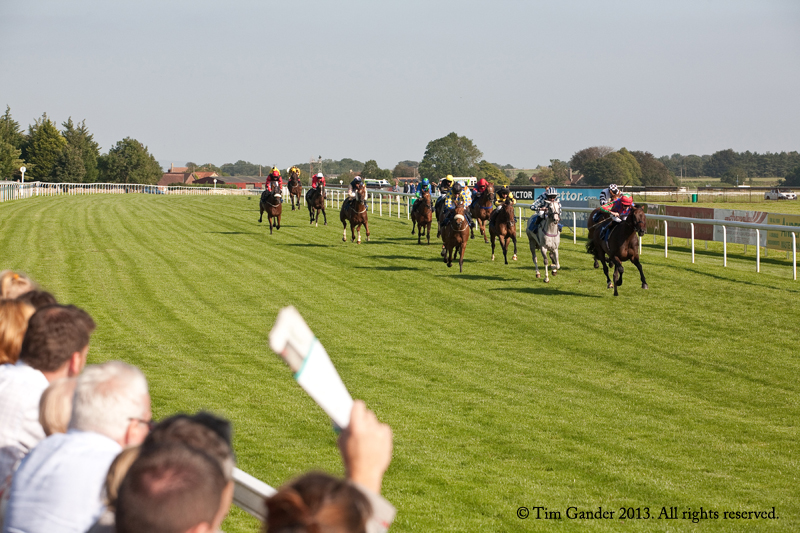
Horses racing the final furlong at Bath Racecourse

Is your corporate image a winner, or a Findus dinner?

In the corporate photography sector there is also downward pressure on prices, but I decided a couple of years ago, even in the grip of a deep recession, to set my rates and stick to them. I have to say I’m glad I did because when I see some of the work being churned out by photographers charging significantly less than me, I’m happy to boast that their clients are not getting what I offer. I don’t think I’m some David Bailey of the corporate photography world, but I know what I do well, I stick to doing it and I charge what I believe is a fair rate for the quality and service I offer.

I genuinely believe if a corporate client is only interested in getting the cheapest photography they can find, they won’t get anything worth having. Newspapers have already proved this theory. Their imagery is more horse meat than beef right now. Businesses wanting to avoid the Findus fate will invest properly in their images because people aren’t stupid. They can spot bull in photos and they don’t need a DNA test for that.

Democratising Photography is Killing Democracy – An Essay

Alongside “digital revolution”, the phrase “democratisation of photography” is one of the most irritating phrases to come out of the… um… digital revolution.

Both are self-serving expressions designed to suggest something unrelentingly positive and benign; a conjuror’s sleight of hand designed to distract us from the awkward realities they conceal. The digital revolution (or reduction of everything to digits) has plenty of winners and losers, a subject worthy of another article. Here I’m looking in particular at what “democratisation of photography” means and its consequences.

Democratisation of photography refers to the ubiquity of cameras and the relative ease of publishing or sharing images electronically. In the days of film it wasn’t that so few people took photos or that you needed a licence to own and use a camera, it’s just that now everyone has the ability to publish their photos where once this was the preserve of the professional. Photo-sharing has made public what once was hidden away in shoe boxes in the attic.

While it’s true that publishing a photo is easier than ever, is this democracy? I mean, REAL democracy? Are peoples’ lives improved as a result? Will governments fall because the tools to publish are no longer confined to the photojournalist? I fear we may find we lose more than we gain in this exchange.

There was a time, not that long ago, when photographers of a very high calibre were employed in fairly high numbers by newspapers to take the majority of the images that were published. These men and women of Her Majesty’s Press would be out on the streets acting as the eyes and ears of journalists who were generally chained to their desks where they could stay warm in Winter, cool in Summer, drink coffee and write some nice words to go around the photos in the newspaper.

Much of what photographers covered was mundane and routine; Sunday church fetes, cheque presentations and mayoral visits, but also very often at the sharp end of things. Road traffic incidents, court hearings, sieges, house fires, reports of break-ins, covering the misdemeanors of government officials or those in charge of our children, all of life was visible to the press photographer’s lens, where it might not otherwise have been visible to wider society. And yes, sometimes a bit too much of life – the celebrity end got out of hand to say the least, but again that’s a separate article.

Photographers often found themselves at a tangent with officials of the state, having to educate police officers and court officials on the law surrounding the seizure of journalistic material or the right to take pictures from a public place, and often the photographer would win (and get the shot) because they’d been trained in these specific areas even when the officials they faced had not.

That era of scrutiny and resistance to mis-used power may well be over. The Bristol Evening Post has made all its photographers redundant. Not a single staff photographer any more. Much the same story has been repeated at titles all over the country and the network of dedicated, trained, experienced freelancers is dwindling as rates have dropped below levels enough to sustain a business. The training structures for photographers are falling away too.

Many of the photos you see in your local paper now are supplied via a PR agency or taken by readers and newspapers are happy to exploit as much free content as they can get their hands on. Unfortunately this has lead to a drop in the quality of local reporting. Many journalists only have enough hours in the day to sit and re-write (or copy and paste) press releases.

Local papers no longer battle on behalf of their readers or uncover the stories that used to help them sell. When newspapers rely on the public to submit pictures of events, sometimes scenes of crime or accidents, they’re effectively using untrained photojournalists (citizen journalists, another dreadful term) in situations where only trained professionals should be. Even at events as benign as the switching on of town Christmas illuminations there have been occasions when amateur photographers have been told to delete photos from their cameras or face arrest. Without the training to defend their rights, some comply.

How has all of this come about? Partly the general decline in newspaper readerships and thereby their advertising revenues, a decline which started long before the internet became the threat to newspapers that it is today. Executives could have invested in the future of newspapers, instead they insisted on unrealistic profit margins, only attainable by the stripping of assets and a decline in investment in journalism.

Newspaper executives believe their salvation lies in charging for online and dwindling print advertising, while not paying for the things that make people want to read their publications; good journalism reinforced with good photography.

What this coincidence of internet innovation and executive incompetence means is we no longer have the voice we had. It’s a mistake to believe online campaigns can take off where newspapers now fail. We need well-trained journalists, photographers and editors to distill the issues that affect our daily lives and this must start with regional papers, firstly because national newspapers often pick up on local stories, secondly because although we may currently still have some of the best writers and photographers in the world among our national press, there is no longer the training ground and career structure in the regions that will feed into the nationals in generations to come.

I very strongly believe that a lively press is the foundation of real democracy. I believe newspapers could regain some lost ground by investing in their online versions, which are by and large risible, but it’ll take a very courageous chief executive and a great deal of shareholder patience to succeed. Quality, in-depth news coverage requires real human resources and deep pockets. There is no way of doing it on the cheap.

It’s astonishing that in the light of the Leveson enquiry newspapers continue to under-invest in editorial staff. Training is vital to prevent future misadventures, yet many newspapers rely on unpaid interns to make up the shortfall in the newsroom. In terms of photojournalism there will be less scrutiny of those in public office and an increase in incidents of members of the public getting into trouble or hurt when they try to do a professional’s job.

Democracy isn’t cheap and it certainly means more than the ability to take and share photos. Let’s not be distracted with all the cool new stuff we can do while some of the necessary stuff that used to happen takes us into a future where real democracy is devalued, swept aside to make way for the digital revolution.

Retail Chain Reaction

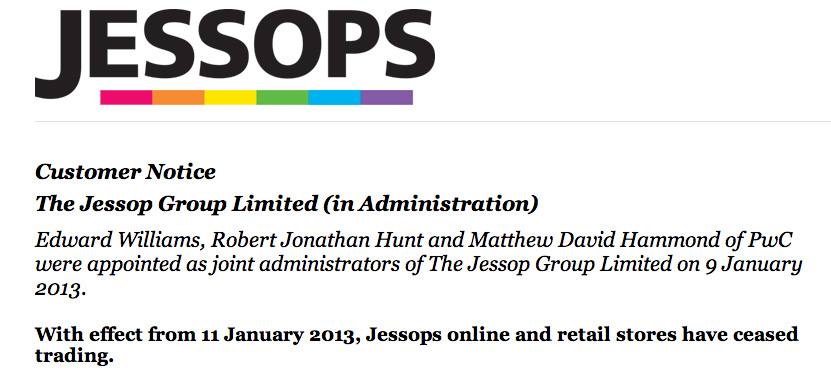
The announcement last week of the closure of the Jessops chain of photographic stores was said to be sad. I agree it’s sad for the staff affected, but I never had much affection for the stores which failed to distinguish themselves very much from the likes of Comet (which also went into receivership last year). Jessops seemed to exist merely to push cameras as if they were just another consumer durable which admittedly, they largely are, but cameras definitely require a more deft sales pitch than washing machines or widescreen TVs. I should know, I spent three years selling cameras back in the late 1980s before I went freelance.

Screen grab from Jessops website

Jessops website sets out the situation

Retail analyst Neil Saunders told BBC News that both amateurs and professionals migrated away from Jessops because amateurs have smartphone cameras (true) and because professionals could find better deals at specialist online stores. Hmm… Closer to the truth is, professionals never bought from Jessops as a rule so probably had little effect on their trade. And amateurs who are keen enough to want more than a smartphone are as likely to buy from online retailers as anyone.

Amalgamating the amateurs happy with their iPhones, those wanting something more but choosing to buy online and the few professional photographer customers Jessops had switching to online and the over-all number of professionals dwindling as the industry comes under pressure from microstock and budget cuts, you start to get a picture of how Jessops’ days were probably numbered regardless of what they did.

Mr Saunders’ observation (admittedly a brief sound-bite for BBC News) ignores the fact that Jessops also had an online presence. It’s just that it suffered the same ills as the high-street offering, being not a very exciting place to seek out and buy camera equipment.

As with many retailers, and indeed many high-street photographic retailers, Jessops’ problem was a lack of understanding of where the market was heading, the market heading off too fast and the retailer being too slow to react to the changes. By the time Jessops knew what was wrong (if they ever knew) it was too late to turn the ship around.

I fear Jessops may not be the last of the high street photographic retailers to hit the wall. As I mentioned, I spent a few years working in a camera shop, London Camera Exchange in Bath to be precise, and I fear such shops with their friendly, knowledgeable staff will soon vanish too. Independents seem equally ill-equipped to cope with the shifts in customer preferences. Look at their websites and you’ll see why.

London Camera Exchange specializes in part-exchange on camera equipment, but this side of the business took a massive hit with the rise of Ebay. Meanwhile the new equipment side of the business is being hit by online retailers and this formula for disaster is hitting many independents. Does it have to be so?

Hindsight, the best thing since sliced bread (and with hindsight I wish I’d invented that too), tells us that if the independents had taken on the internet sooner and better, they may have stolen a lead on the likes of Ebay. A specialized, safe place to buy and sell used camera equipment, perhaps even with a warranty service, would have given the likes of LCE a chance. If you look at what they actually offer, I’m not convinced the web is helping them.

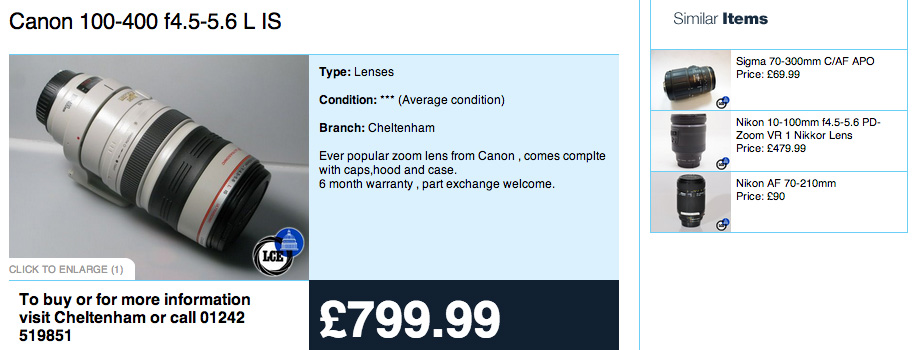
Search their used section and you’ll see items for sale, but you have to contact the store to buy. You can’t make an online purchase. And the list of similar items brings up goods which are distinctive in their un-similarity to what you searched for (see photo). These issues alone point to a lack of understanding of or investment in their website.

London Camera Exchange Website

London Camera Exchange website is a little underwhelming

It could well be too late and too big an investment for independents to turn their web offerings around, and that’s a shame because it will mean fewer high-street independent camera shops where you can get friendly advice, hands-on experience with cameras or the option to buy secondhand knowing you have somewhere to return the item should there be a problem.

I’ll state here I also write for Wex Photographic, an online photography retailer, and their staff and service are excellent in my experience. But they don’t do secondhand…

Will Instagram go the way of the telegram?

Happy New Year! I wish all my readers the very best for 2013. And what subject gets the first post of this year? Instagram of course!

As many of you will be aware there was something of a kerfuffle over a change to Instagram’s change of terms and conditions, which strongly suggested they would acquire the rights to sell users’ images to advertisers without permission or payment.

It was obvious from the moment Facebook had a fumble down the back of the office sofa for spare change and found $1 bn to buy Instagram that things would not stay the same. They’ll want their money back, one way or another, and the easiest way to achieve that is to have the ability to sell all the free content that is pumped into Instagram every day, not to mention a colossal backlog of images already there. The biggest library of mini images in the world.

Forget about whether the average Instagram photo is sellable or not, when something is that popular the infinite monkey syndrome kicks in. Among all the of photos of people’s pets and cappuccinos will be the occasional, arresting photo that might sit very well with a corporate ad. Don’t worry about image size either. Used small on a website, many smartphone photos will be adequate, and when the photo has zero cost to the advertiser, believe me adequate is more than adequate.

What interested me more than the nature of the T&C changes was some people’s reactions to them, specifically the reactions from people who have the opinion that if you’re an amateur your photos don’t matter, and if you’re a professional, why are you putting photos on Instagram or even on the web at all? Which I find an astonishing position to take.

I quote from one commenter (Shoogly Peg; real name I presume) on the BBC News website:

“Where, exactly, will these advertisers use your images when advertising? Where most people go obviously. Yes, social media websites, where you can already see an adundance [sic] of faces. Unless you are a pro photographer, no need to get bothered. And if you are a pro, why are you using this app?”

I’ll explain why I use Instagram. It’s fun. As a professional, am I excluded from having fun? Shoogly’s view isn’t an isolated opinion though. Whenever this kind of issue has popped up in the past, there have been comments about how professional photographers shouldn’t use the web to promote themselves, or that if they do have the audacity to do so, they should fully expect their work to be copied and used without permission or payment.

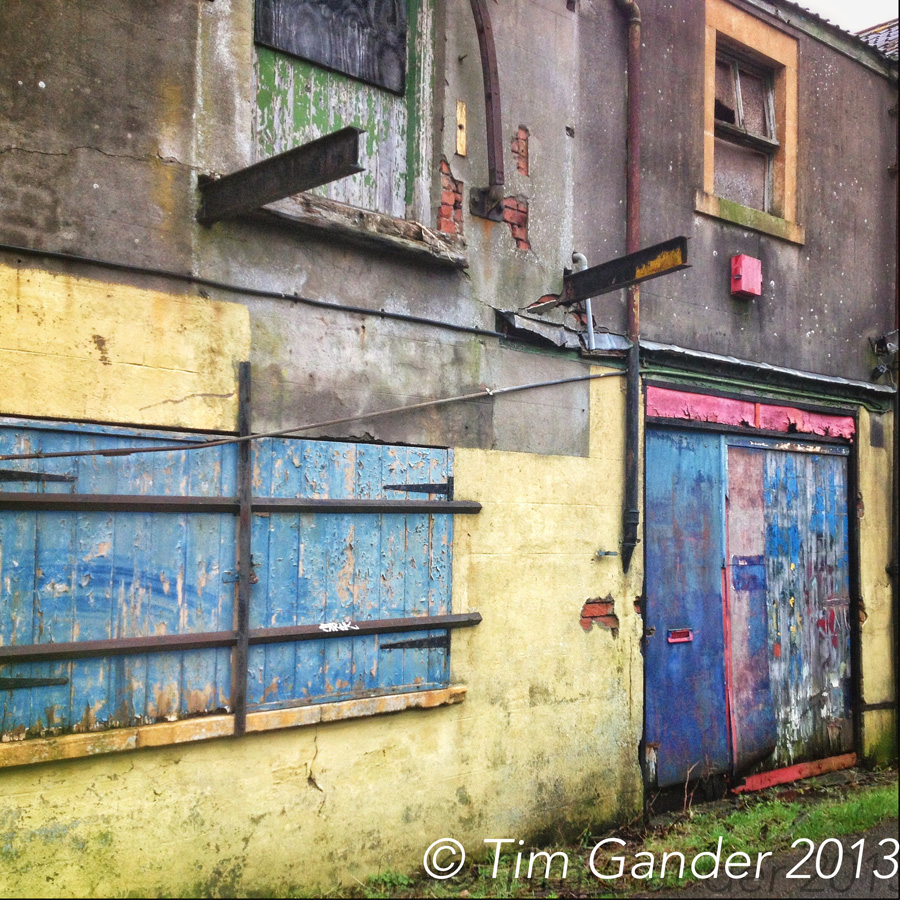
derelict building exterior in Frome

Sorry for having fun. I should leave that to amateurs

Clearly this argument is a nonsense. I get a fair bit of work through having a website, and I use the web to deliver images to clients. Am I not allowed to show my work without it being stolen?

Back to Instagram and their T&Cs, after patronizing us all with a statement telling us Instagram were sorry we were all too stupid to understand a legal document and not to worry our pretty little heads about it, they do appear to have reigned things back somewhat. The question is, what will they do to make money if they can’t sell user content? I’m sure we’ll find out soon enough, but I’ve seen a few users empty or delete their accounts. I’m fairly certain Instagram won’t disappear, but I think it might lose much of its sparkle and will have to change into something it wasn’t intended to be if Facebook want to make money. Perhaps “the internet” is learning that you can have free or fun. Not both.

Merthyr, My Dear

The annual tradition of municipal Christmas light switching-on ceremonies has now been joined by a new yearly tradition, that of harassing people who take photos at the events.

This year’s winner of the PhotoScrooge Awards (TM) is Merthyr Tydfil County Borough Council, according to reports in Amateur Photographer, as freelance photographer Andrew Bartlett was approached by undercover security (council worker dressed as an Elf) while he was taking photos at their public event.

I won’t go into more detail of the story here as you can read all abaht it on the AP site, but here I want to look more closely at the statements subsequently issued by the council.

Part of the problem is that the council press office have issued a statement in which they say that anyone using a camera at council-run events should apply in advance for permission. That would include parents taking photos of their own children, which is clearly a nonsense and I’m sure the council will end up not requiring a form to be submitted in advance of any parent with a camera. Or anyone, for that matter.

The other problem is they say they have a close working relationship with amateurs who share their pictures with the council in return for a byline.

As reported by AP:

‘To clarify what seems to have been misrepresented and misunderstood on this issue, the Council, as a corporate parent takes a sensible approach that is intended to safeguard both the subjects and the photographers.

‘Indeed, this process has regularly enabled amateur photographers to work successfully with the Council at various events, where they have freely shared their photographs afterwards with the Council for promotional purposes, and – in return – the Council has credited the amateur photographer.’

I have no idea what a “corporate parent” is, but it sounds positively Orwellian. I’m glad Merthyr council isn’t my mum or dad. Seriously though, the council wants to put barriers up to professional photographers covering events by having them fill in paperwork in advance, which for most freelancers (as most photographers are now) simply isn’t practical, yet they’ll allow un-trained amateurs who probably lack even the most basic public liability insurance to snap away because the pictures are free for the council to use.

The council may think it’s a great way to save money, but this ignores the fact that paying photographers for a professional service puts money back into the local economy. Photographers are also shoppers. They also buy food and eat out locally. They buy Christmas presents in local shops and visit local attractions.

Quite apart from the complete nonsense of Merthyr Landfill council’s approach, they’ve taken a view on the value of photography which is an insult to the professionalism of many photographers and also damages the local economy. Quite a feat to hit so many birds with just one stone.

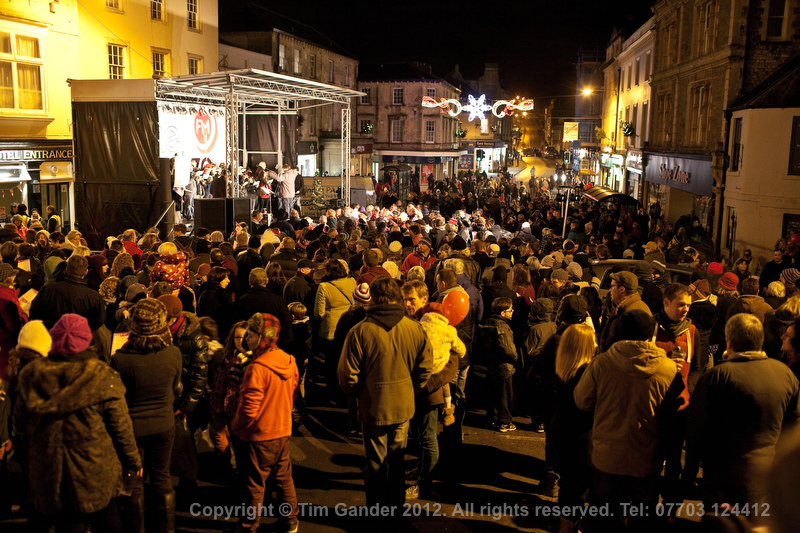
Christmas light switch-on, Frome, Somerset

At Frome’s switch-on this weekend there were plenty of people using cameras without harassment

Work-Life Balance of a Photographer

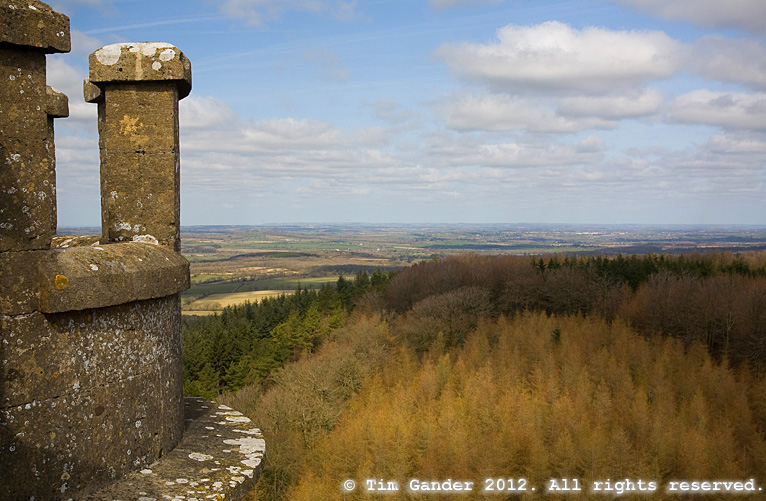
View from King Alfreds Tower, Somerset

Getting into the Somerset countryside gives me work-life balance

It strikes me that the phrase “work-life balance” was a lot more fashionable just a few years ago. Maybe it’s just my perception that it’s not used so much now, but I also wonder if it was more popular pre-recession, when it was thought the economic wonder would never end and people could carve themselves a bit more leisure time, be more flexible about the work hours they kept and spend more time with family, simultaneously expecting income to remain on an upward curve.

Then The Crash came and everything changed. You work longer to earn less. You work longer to keep your job and seem more indispensable than your colleagues and hope to avoid the chop when jobs are cut. Competition for jobs becomes fiercer and this is much the same for the self-employed.

Being a freelance photographer tends to mean my hours are set by my clients. Of course to a certain extent my hours are dictated by the effort I put into promoting myself which has an impact on how many clients I have. After that, it comes down to when my clients need me.

It’s sometimes quite difficult to explain to people, especially those in salaried positions, the reality of being a freelance, that although I’m self-employed I have very little direct control of my diary.

If I have no bookings I can do what I like; promote myself, go networking, meet new or existing contacts for coffee or go for a long bike ride. But this isn’t an ideal scenario. Networking and bike rides can be done flexibly, but aren’t paid activities. Naturally I hope having coffee with a contact will lead to paid activity, but networking is a long slog and not guaranteed to result in work. Cycling almost never ends in paid activity.

Anyone who works as a freelance, and I think especially photographers and writers, will understand that as far as work-life balance goes, you work when work is offered. And when work isn’t on offer, you work on finding it. Both involve work, neither activity involves the “life” part of work-life balance.

This is no sob-story though. I thoroughly enjoy my work, even if it can seem precarious at times. I chose early on in my career not to sell myself cheap, so my diary rarely bulges with commissions from clients wanting bargain prices over quality. I work with clients who appreciate what I do and are willing to pay fair rates for my work. This means I can earn a living without grinding myself into the dust. It may not give me a luxurious lifestyle, or money for many fripperies and “things” but it does give me occasional leisure time at times when in a salaried position I’d be stuck in an office.

I think I’d call that work-life balance. It has to be. It’s all I have.

An Instagram Update

Those of you who pay attention will recall I recently wrote about my first foray into Instagram. I said it was more about the filters and effects than the content of the photos and I now think I was wrong.

It’s true many people shoot and edit their images in Instagram, but the beauty of Instagram is that it is primarily a way of sharing images. The pictures themselves don’t have to be shot in Instagram, or even on an iPhone to be shared this way.

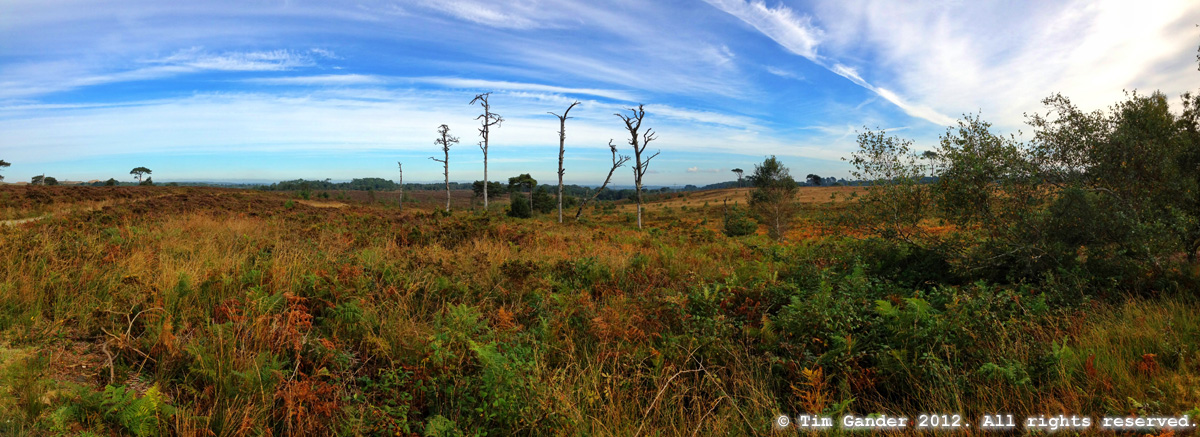
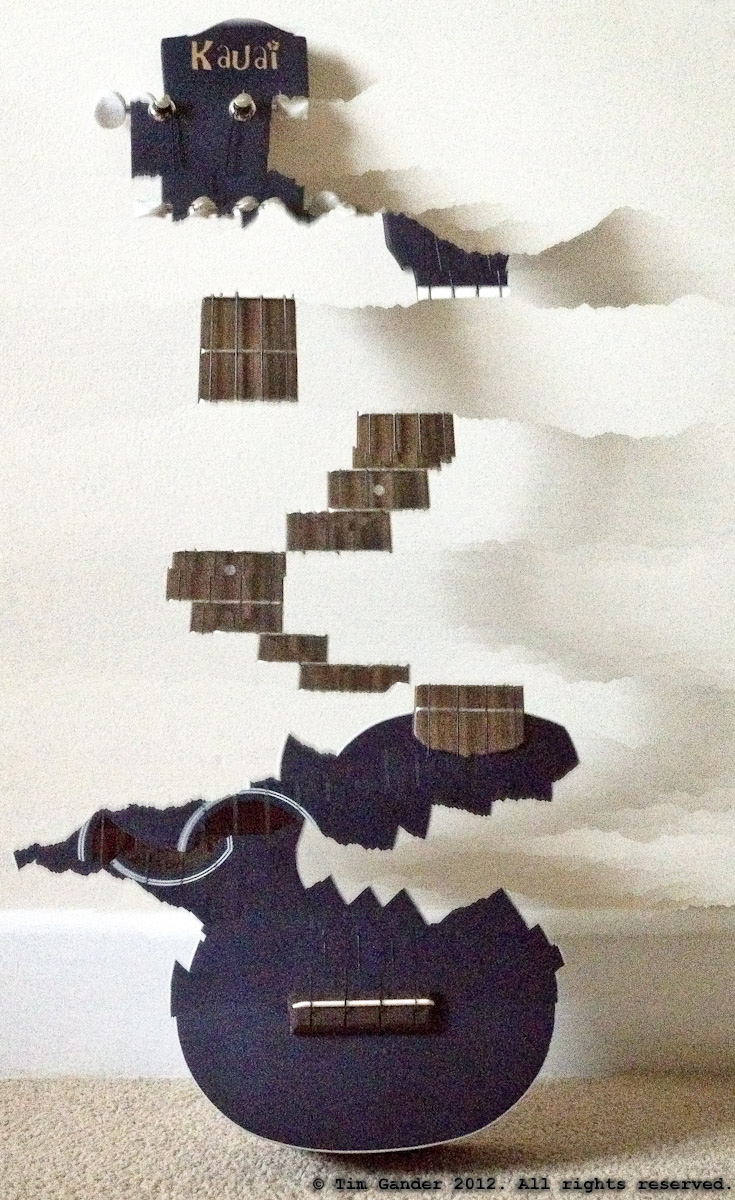
I’ve uploaded images from my professional portfolio as well as more fun pictures from my personal life. A more recent fascination for me has been the introduction of the Panorama mode with the new iPhone operating system. Not only can I now shoot panoramas using this function, I’ve also been experimenting with it to see what weird effects can be achieved by panning in a way the phone and software don’t expect and seeing how they deal with it. As an example, see my “torn” ukulele photo below my more standard panorama.

panoramic photo of heathland near Bournemouth, Dorset

A fairly standard panorama, though I’m impressed with the iPhone’s quality here.

photo taken using the iPhone's panorama function to create an abstract photo of a ukulele

Torn Ukulele effect using the panorama mode on the iPhone4s


Other Instagrammers build up massive followings and the most successful of them do it by shooting in a very consistent style – whether on their iPhone or by uploading images from their SLR cameras isn’t always clear, but consistency seems to be the key issue. I personally prefer to share a mixture of portfolio, experimental and personal-moment (drunk in the pub) snaps. I might take a photo of some recently published work and share it on Instagram so people get a better idea of the kind of work I do. I simultaneously share my Instagram posts on Twitter and sometimes Facebook too, which means I can reach an even wider audience.

If you’re on Instagram look me up @takeagander and let me see what you do. One account I’ve been especially impressed with recently is @tonytanktop who creates larger images from tiles of individual ones. A brilliant way of using the technology and the sharing platform in an unexpected way. I suggest you look him up too and prepare to be dazzled.

I think it’s fair to say, I’m starting to understand Instagram a lot better. It’s becoming a business tool as well as a way to have fun. My initial cynicism (and I’m a natural cynic about these things) has given way to greater curiosity to explore more boundaries.

Stock as Barometer

Though I’ve derided photographers for supplying the micro-payment stock sites like iStockphoto and Shutterstock, I do have a few stock images with Alamy.com on the basis that though sales might not be as frequent, I do at least get semi-respectable rates for my pictures when they do sell.

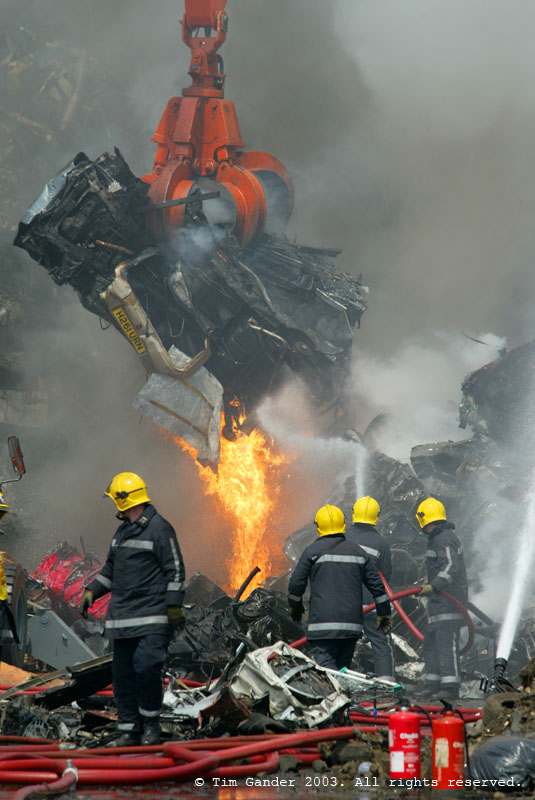
I do get some odd-looking sales though, like this one from August for a Spanish direct mail/brochure use in the banking and finance sector. Looking at the content of the photo, it makes you wonder what the client’s message is. A bonfire of capitalism?

scrap yard fire in Portsmouth

A vision of things to come?

Never one to gloat, but…

It’s hard to fight back the tears as I write this, but I’ll do my best. What has got me reaching for the handkerchief is the news that Stuart Kuttner, former managing editor of News of the World, is to be charged with conspiring to intercept communications without lawful authority. I’m not going to go into masses of detail now. There’s plenty of background to this story on the web and in my previous posts here and here.

Suffice to say this story isn’t over yet and I’m sure Kuttner has the funds for a top-flight lawyer, but wouldn’t it be nice to see a bit of karma for once? If convicted, Kuttner could face a prison sentence and certainly if the charges are proved in court, the flagrancy of his behaviour would increase the chances of a custodial sentence.

Does this news give me any great pleasure? Schadenfreude maybe? Kuttner forced me out of working for the News of the World about 12 years ago because I asked to be paid what I was owed. I’d rather he’d been a decent human being when I was there than have it come to criminal charges for phone hacking (not sure what’s happening with the allegations of signing off expenses for payments to police officers), but given I can’t control other peoples’ behaviour I’ll accept that this is as close to karma as I’ll get.